💡 Read the Full 12-Day Egypt Diary Series:
Looking for the exact logistics, hotel links, and Uber tips? Head over to my [12-Day Master Planning Guide].
We arrived in Luxor by river, carried in by the Nile after four days of temples, early alarms, and a desert convoy to Abu Simbel. Now, for the first time since boarding the cruise ship, we had no group to follow, no boat schedule to respect, and three full days to spend entirely as we pleased. Our Luxor travel experience in the world’s greatest open-air museum was about to be
the final and most intense chapter of our 12-day Egypt journey.
📋 In This Post
Karnak Temple: The Most Astounding Site of Our Luxor Travel Experience
We hadn’t planned to visit Karnak Temple with the tour group. The original plan was to do it independently the next day. But the boat docked in Luxor ahead of schedule — around 3 p.m. — and our guide made the case: why wait? We joined the group for one last afternoon together, and I’m glad we did.
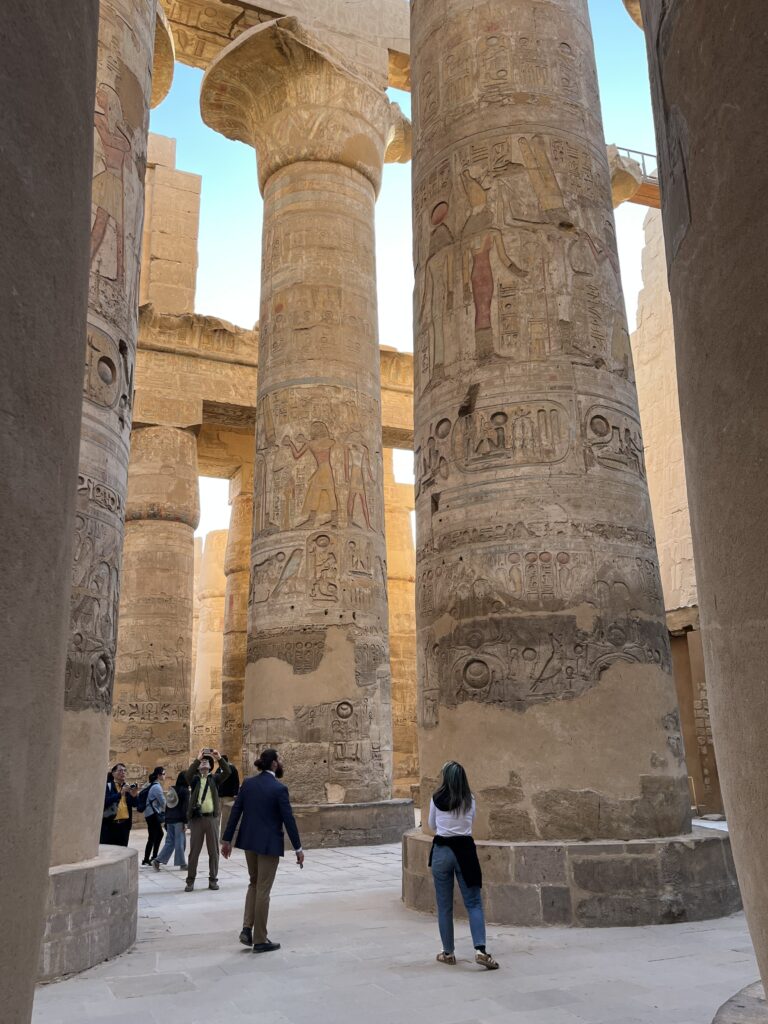
Karnak is astounding in a way that’s hard to prepare for. The site covers over 200 acres — a number that sounds large until you’re actually walking through it and the scale starts to make a different kind of sense. The famous Hypostyle Hall alone contains more than 130 massive columns, some still sheltered enough from the sun to show their original vivid colours. Standing among them feels less like visiting a ruin and more like being inside something that has simply refused to end.
One detail that stayed with me: near one of the statues, a small dirt pile remains. Our guide explained that ancient Egyptians built these enormous structures using earthen ramps, piling soil higher as the columns rose, then removing it all once construction was complete. Here, they left a little behind — an accidental artifact of the process itself, still visible thousands of years later.
The sacred lake was another highlight. At its edge stands a granite scarab, a symbol of the god Khepri. Our guide told us to walk around it seven times for luck. Whether it works or not is a matter of belief. What it definitely produces is laughter — a small, human moment in the middle of something very ancient.
Karnak alone would have justified the entire Luxor travel experience, but it was only the beginning.
🎬 A Film Connection
Standing among the columns, our guide mentioned something I hadn’t expected: the famous boulder scene in the 1978 film Death on the Nile — often assumed to take place at Abu Simbel — was actually filmed right here, in Karnak’s Hypostyle Hall. Spotting the columns on screen later gave the scene an entirely different charge.
Luxor Temple at Dusk — and the Paris Connection
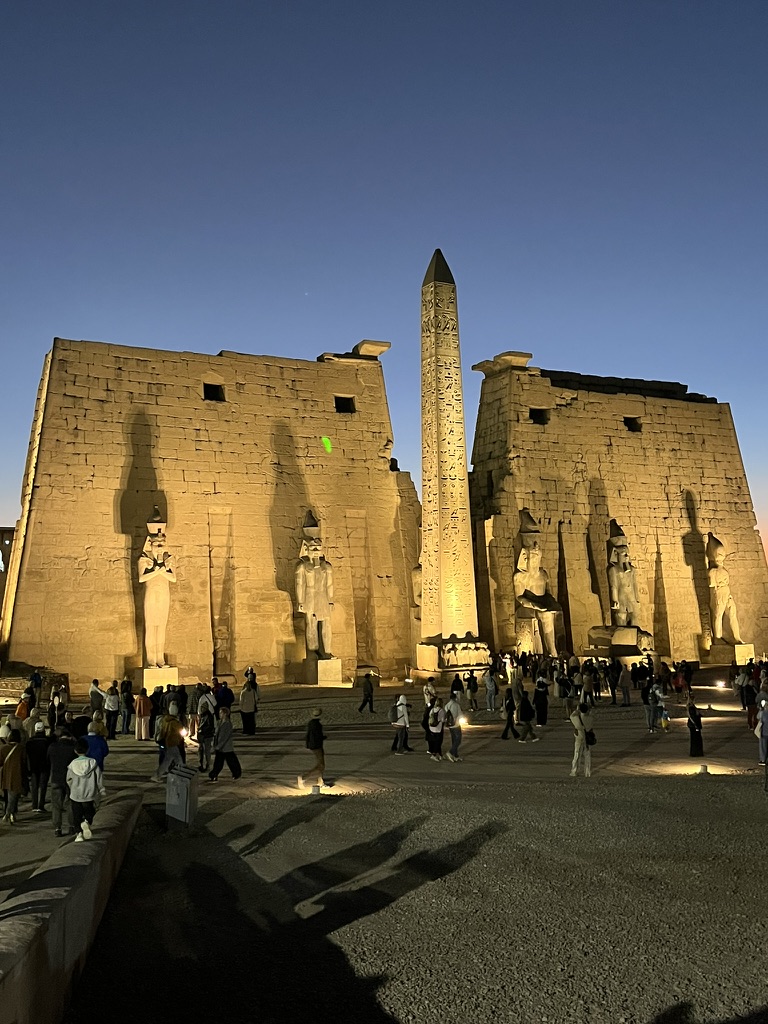
After Karnak, the guide steered us briefly into a perfume shop — a classic group tour detour that we endured patiently — before driving us to Luxor Temple as the sun was going down. The timing turned out to be perfect. Evening lighting transforms the temple, warming the stone and adding a mysterious depth that afternoon sun flattens out completely.
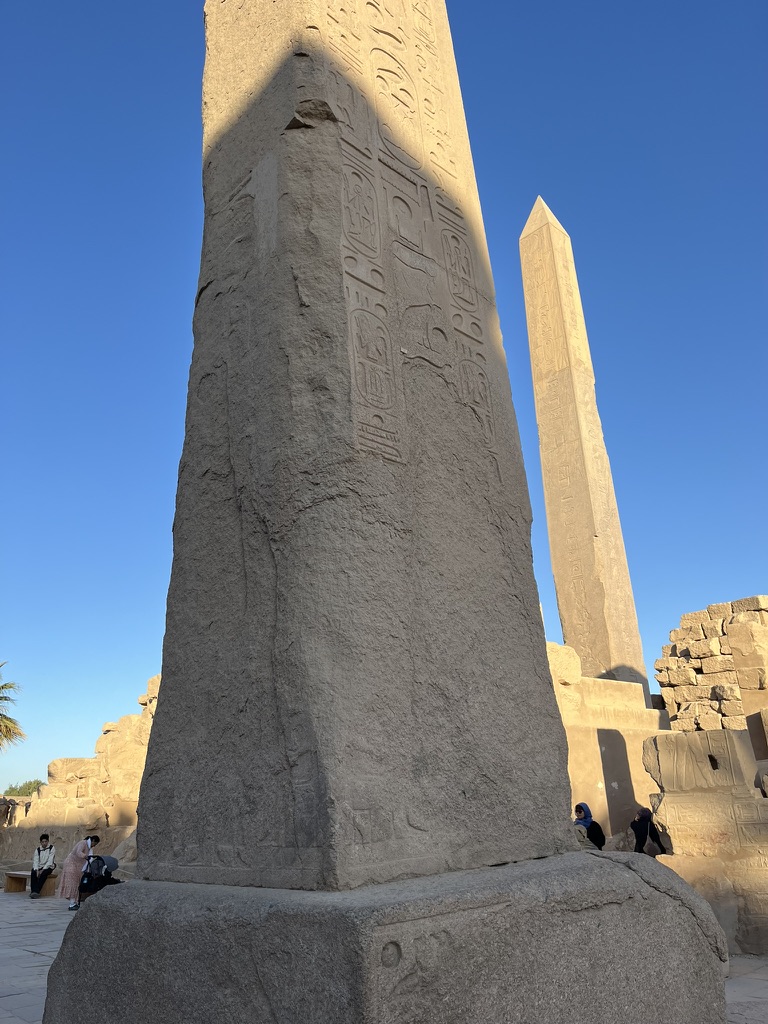
The obelisk at the entrance stopped me immediately. I’d seen it before — or rather, its twin. The other obelisk from this same entrance now stands in the Place de la Concorde in Paris.
The story behind it is one of those historical footnotes that seems almost too good to be true. Muhammad Ali Pasha originally offered both obelisks to King Louis-Philippe of France as a diplomatic gift. Louis-Philippe accepted one but declined the second, citing a minor imperfection. So Luxor kept it. The guide delivered this with perfect deadpan: “Otherwise, both would now be in Paris.”
The obelisk that stayed also once had a golden tip, like the one in Paris — taken long ago, destination unknown.
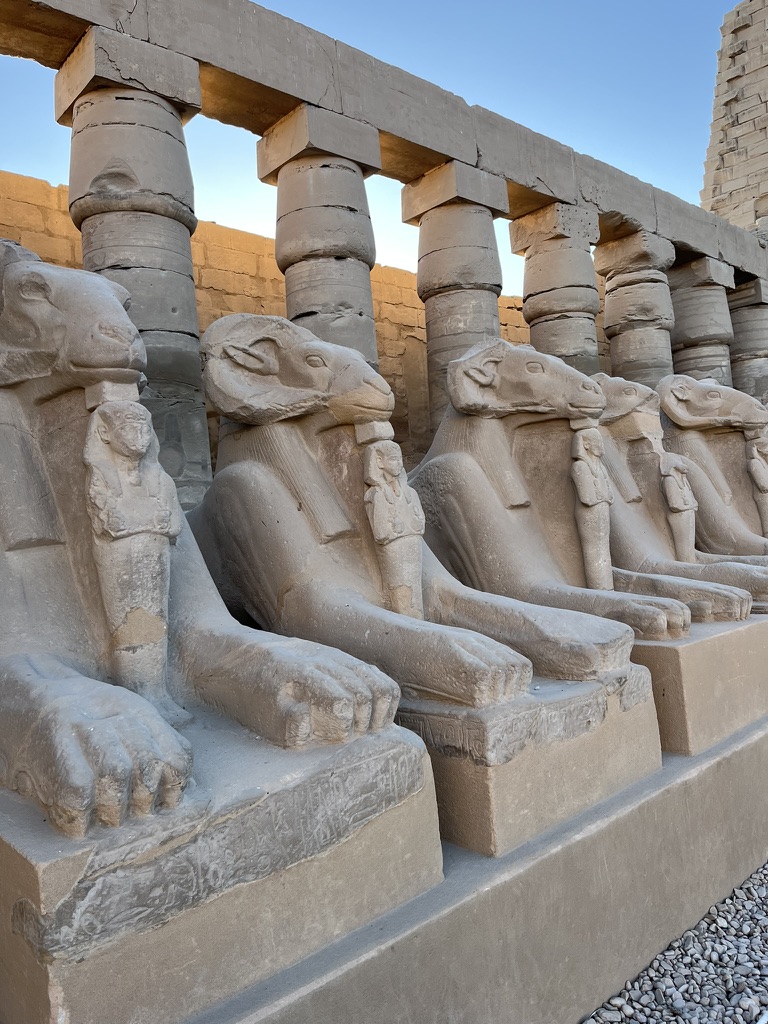
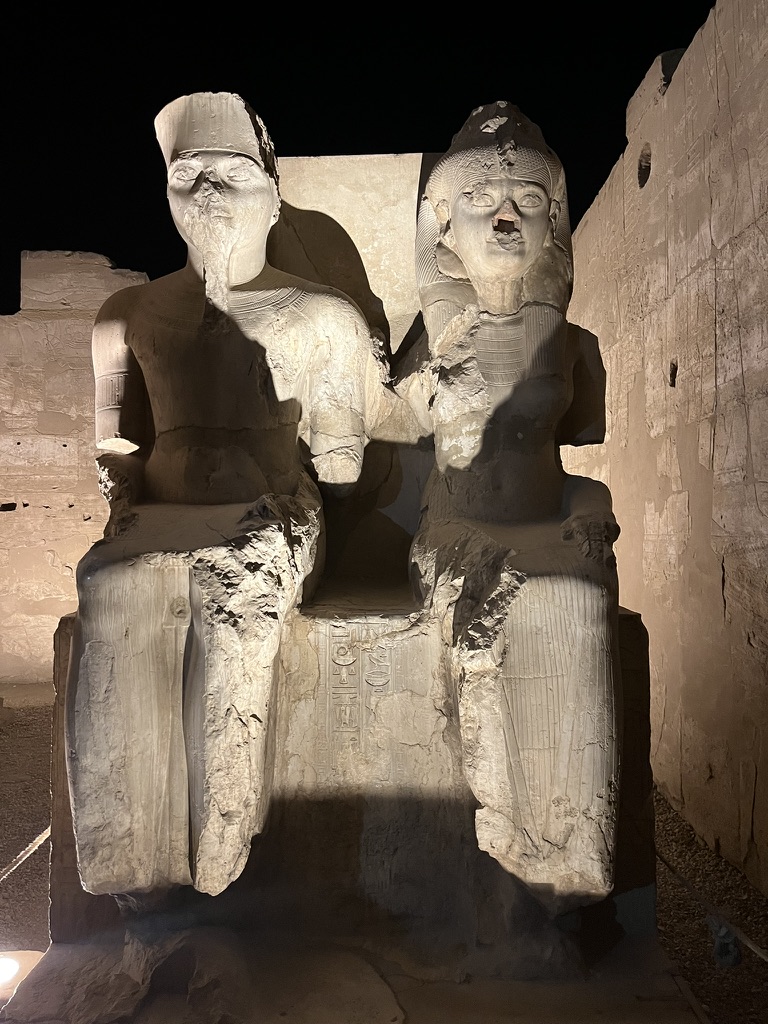
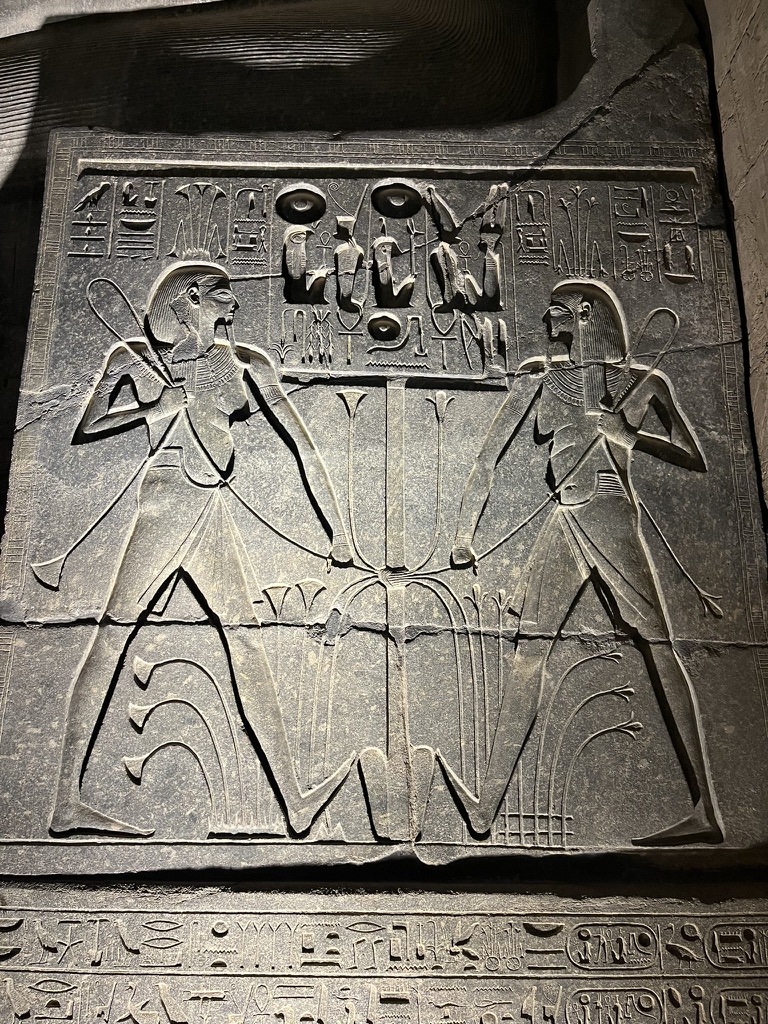
Inside, Luxor Temple tells a layered story across time: built around 1400 BCE under Hatshepsut and Thutmose III, expanded by Ramesses II, and later modified during the Roman era when a church was added within its walls. Smaller than Karnak, it earns its place through atmosphere rather than scale. At night, it’s one of the most memorable sights in Egypt.
A Free Day: Markets, Feluccas, and Strawberries
The last evening on the boat ended with a belly dancer and a tanoura performer — a traditional spinning dancer in a whirling, colourful skirt — arranged by the guide as a farewell for the group. We said our goodbyes to the Australians, the Italians, the couple from Mexico, the New Zealanders. Even for someone who doesn’t naturally gravitate toward group travel, it had been a genuinely good experience.
The next morning, we were on our own schedule.
The hotel owner welcomed us warmly — early check-in, a quiet room at the back away from street noise, and an offer of breakfast that we declined since we’d already eaten on the boat. We had coffee instead, at the hotel café, while the hostess chatted with us and offered tour packages. We told her maybe tomorrow. Today was for wandering.
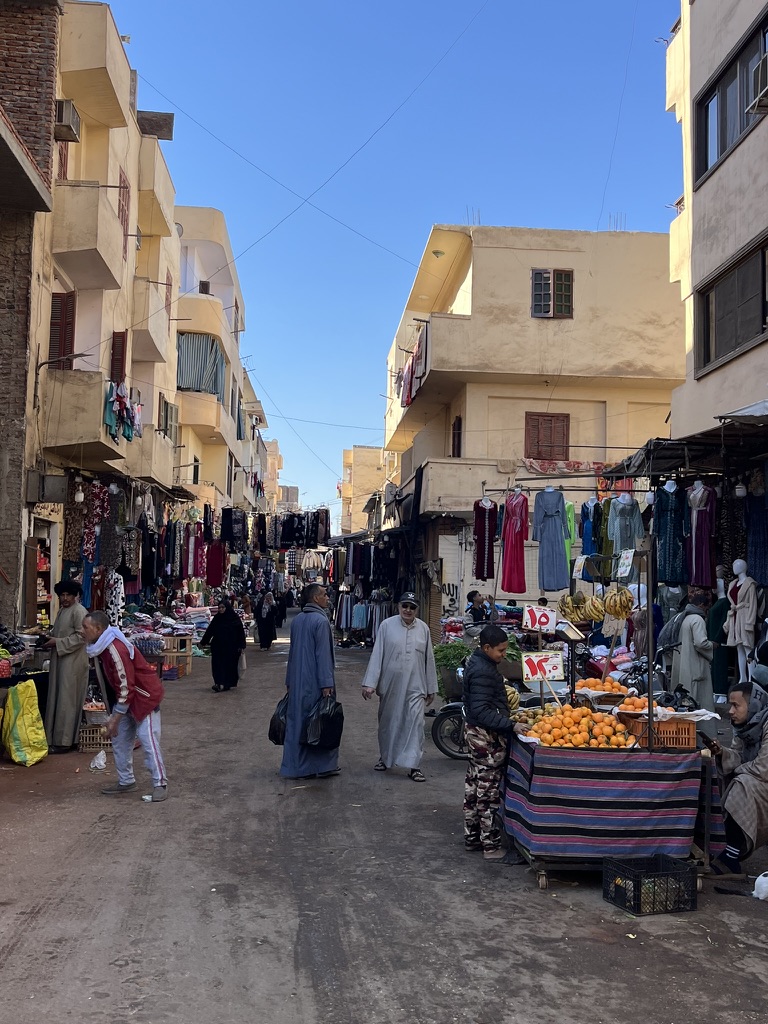
The local market near the hotel turned out to be excellent. Egyptian fruit — strawberries and oranges, in particular — is some of the best I’ve ever eaten. The year-round sun does something to the flavour that’s hard to explain until you taste it. We bought more than we could realistically carry.
Lunch was on a rooftop restaurant nearby, with good views and carefully prepared food. Egypt has a particular pace in the kitchen — dishes arrive slowly, almost meditatively — but the quality consistently justifies the wait.
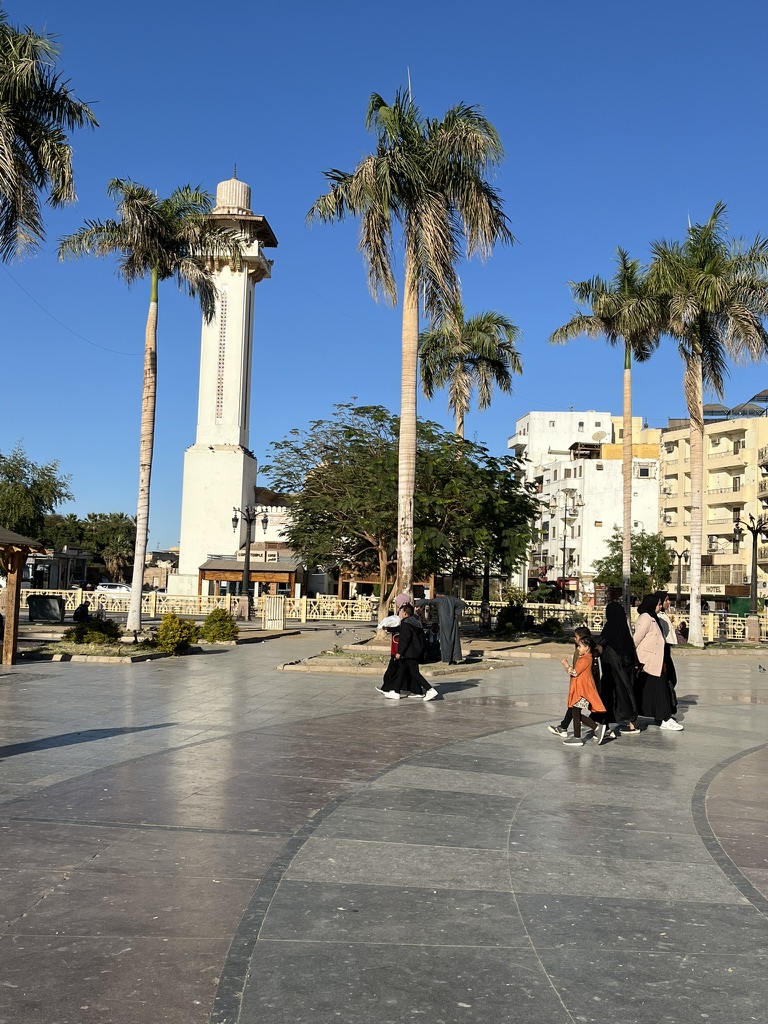
In the afternoon, we strolled through the Luxor market, which felt like a calmer, more local cousin of Khan el-Khalili in Cairo. We picked up a few souvenirs, watched daily life move around us, and eventually drifted toward the square in front of Luxor Temple, where locals were feeding pigeons and sitting in the sun. Everywhere we walked, someone offered a horse carriage ride, usually marketed as a “Ferrari premium experience” for a dollar. We smiled, declined, and kept walking.
Sunset on the Nile by Felucca
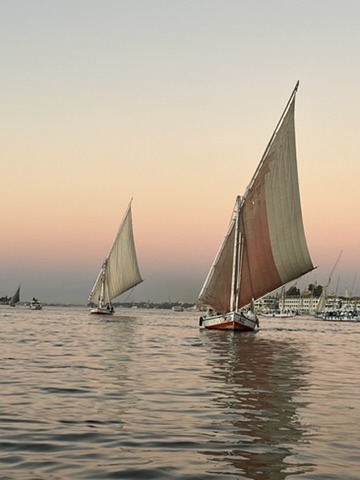
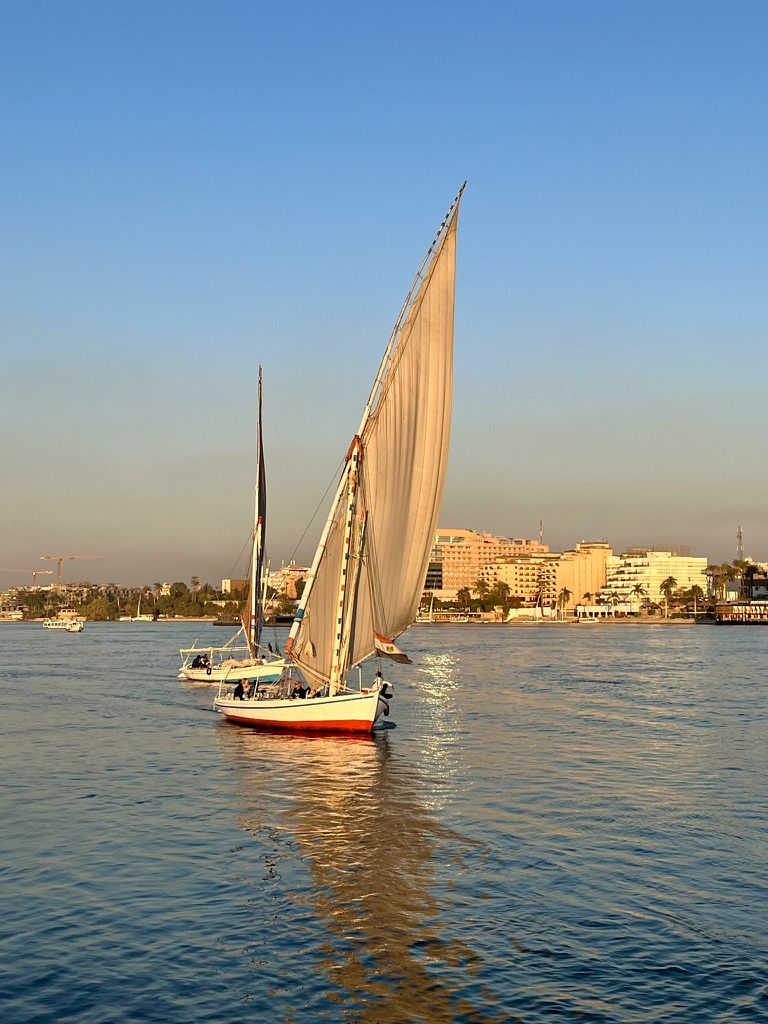
As the sun began to drop, we made our way to the Corniche, where felucca boats line the bank. After a short negotiation with a pair of cousins who operated one together, we agreed on $10 for a sunset cruise.
It was exactly the kind of slow, unplanned afternoon that Luxor rewards when you give it time.
Day Two of Our Luxor Travel Experience: Hatshepsut & the Valley of the Kings
For our second active day, the hotel hostess arranged a driver for just $20 — drop-off and pick-up at both sites, then back to the hotel. We deliberately started at 11 a.m., well after the tour groups had arrived and begun cycling through.
The driver crossed us over the bridge to the West Bank, and almost immediately the landscape changed: hills dotted with tomb entrances, desert cliffs, and almost no modern buildings in sight. This side of the Nile feels genuinely ancient in a way that the East Bank, with its hotels and markets, simply doesn’t.
Hatshepsut Temple
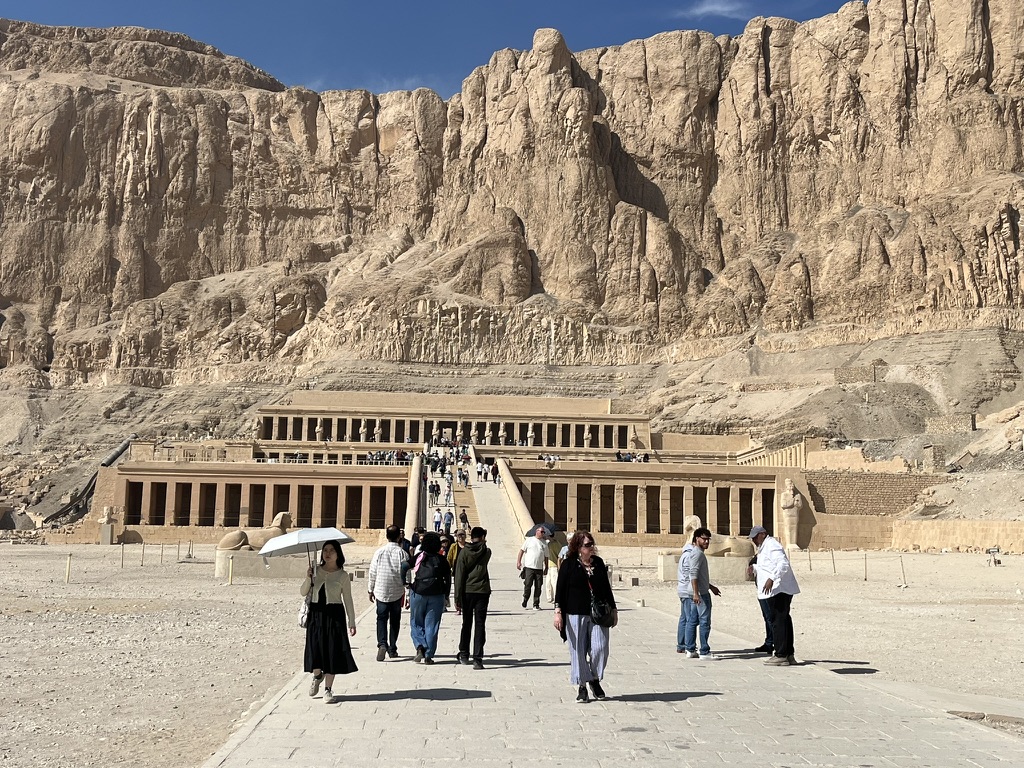
The first glimpse of Hatshepsut’s mortuary temple is genuinely breathtaking — not because of its scale, but because of how perfectly it fits its setting. The temple is carved into a natural cliff amphitheatre and stretches across three wide terraced levels, the architecture and the landscape so seamlessly combined that it looks less built than grown.
Hatshepsut was one of Egypt’s rare female pharaohs, and after her death, her successor did everything he could to erase her from history — her name chiseled out of inscriptions, her statues destroyed. It didn’t work. We remember Hatshepsut. He is mostly a footnote.
Valley of the Kings
The standard ticket for the Valley of Kings includes three tombs. We bought it, and then added the separate ticket for KV9 — the tomb of Ramesses V and VI — based on research done before the trip.
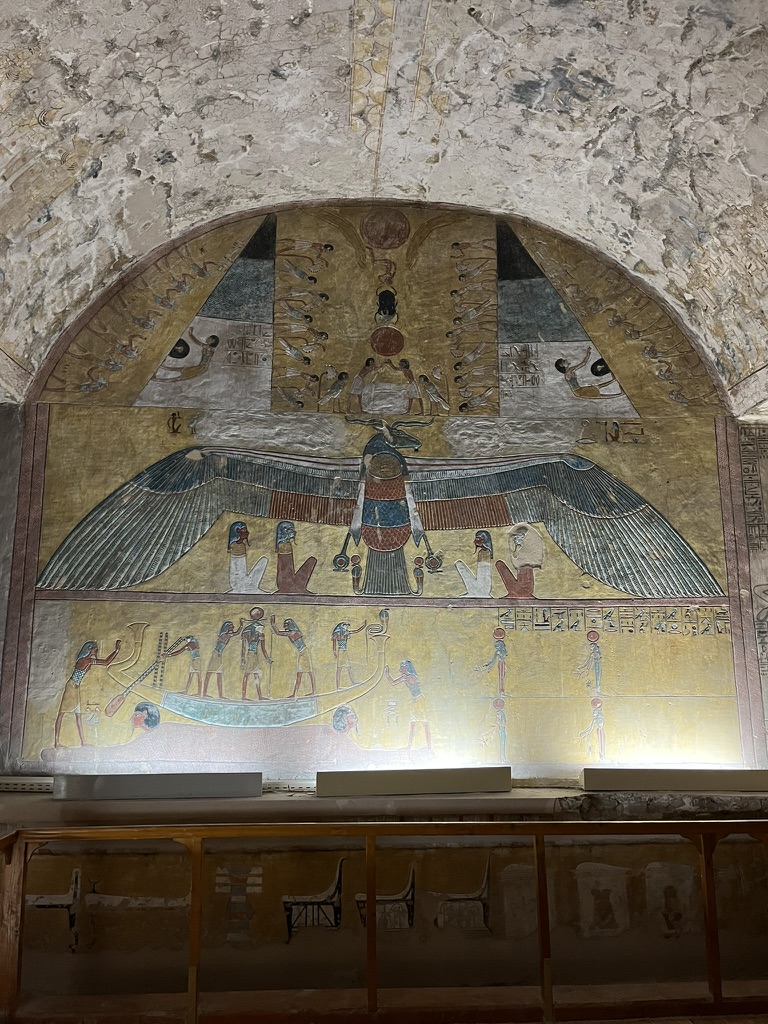
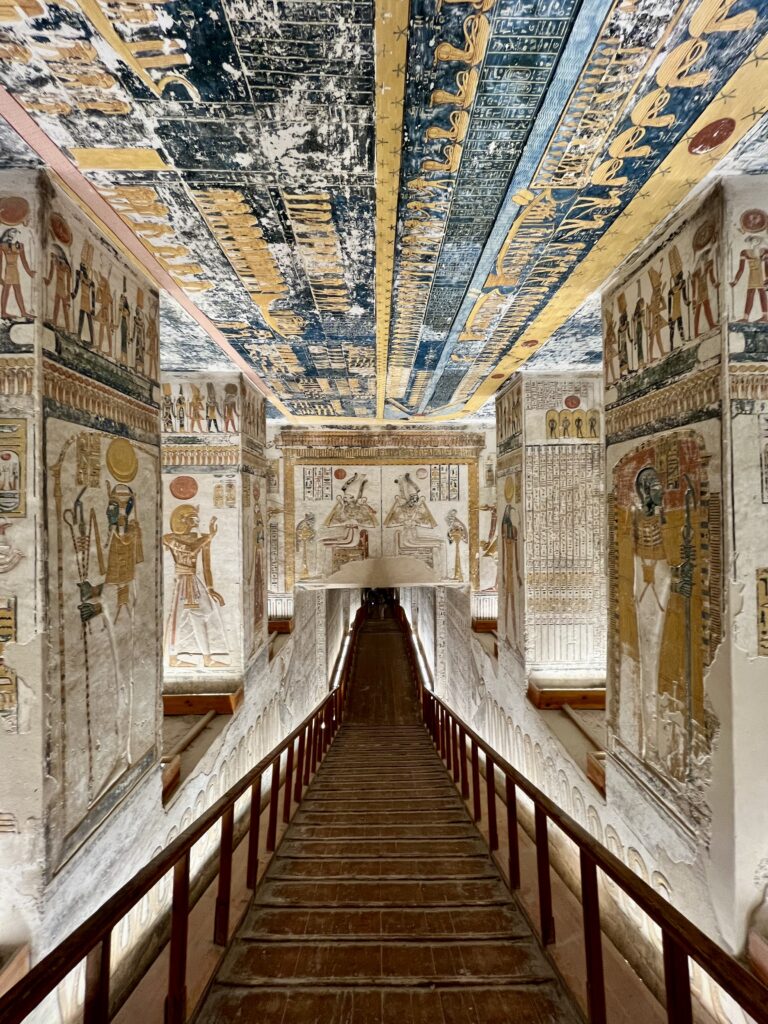
Our first tomb, KV2 (Ramesses IV), was an immediate revelation. After days of temples open to the sky, stepping into a sealed royal tomb recalibrated everything. The colours inside were vivid — preserved by darkness for thousands of years in a way no exterior surface can be. The ceilings alone were worth the ticket: elaborate astronomical maps and religious texts stretching overhead in detail that felt almost impossible.
KV14, the tomb of Tausert and Setnakht, was less elaborate but fascinating for its multiple chambers and the visible evidence of being repurposed from one ruler to another. KV11, Ramesses III’s tomb, was even more impressive than KV2, though much of the interior was protected behind glass panels — necessary for preservation, but it did slightly reduce the feeling of intimacy.
We saved KV9 for last. Because it requires a separate ticket, almost no one else was inside. We had the tomb very nearly to ourselves.
KV9 is extraordinarily long — deep corridors leading through multiple chambers, every surface decorated with scenes from the Book of Gates and the Book of Caverns. The variety of artwork, the scale of the decoration, and the near-total solitude combined into one of the most immersive experiences of the entire trip. It was worth every extra pound.
This was the moment our Luxor travel experience shifted from impressive to unforgettable.
💡 Valley of the Kings Tip
The standard ticket covers any three tombs of your choice. KV9 (Ramesses V and VI) requires a separate add-on ticket but is almost always less crowded — making the extra cost doubly worthwhile. The cafeteria inside the site sells very little beyond chips and biscuits, so eat before you arrive.
On the drive back, the driver stopped briefly at the Colossi of Memnon — two enormous seated statues rising from a flat plain, the only surviving remnants of what was once the largest mortuary temple in Egypt. A five-minute stop, but one of those images that stays with you.
Day Three: The Off-the-Beaten-Path West Bank
With one full day left, we wanted to return to the West Bank and see a different side of ancient Egypt — not the pharaohs and their grand monuments, but the people who built them. The same driver, arranged again through the hotel. “Visit them all,” the owner said. “The driver will wait.” That unhurried flexibility set the tone for everything that followed.
We left at 9 a.m. and stopped near the Colossi of Memnon to buy tickets for all three sites — necessary because none of them sell tickets at their own entrances.
Deir el-Medina: The Village of the Tomb Builders
Deir el-Medina was the village where the artisans who built the royal tombs of the Valley of the Kings and Queens actually lived. These workers were deliberately isolated — forbidden from crossing to the East Bank of Luxor to prevent any secrets of the royal burial sites from leaking out. They spent their working lives in a walled settlement between the cliffs, invisible to the rest of the city.
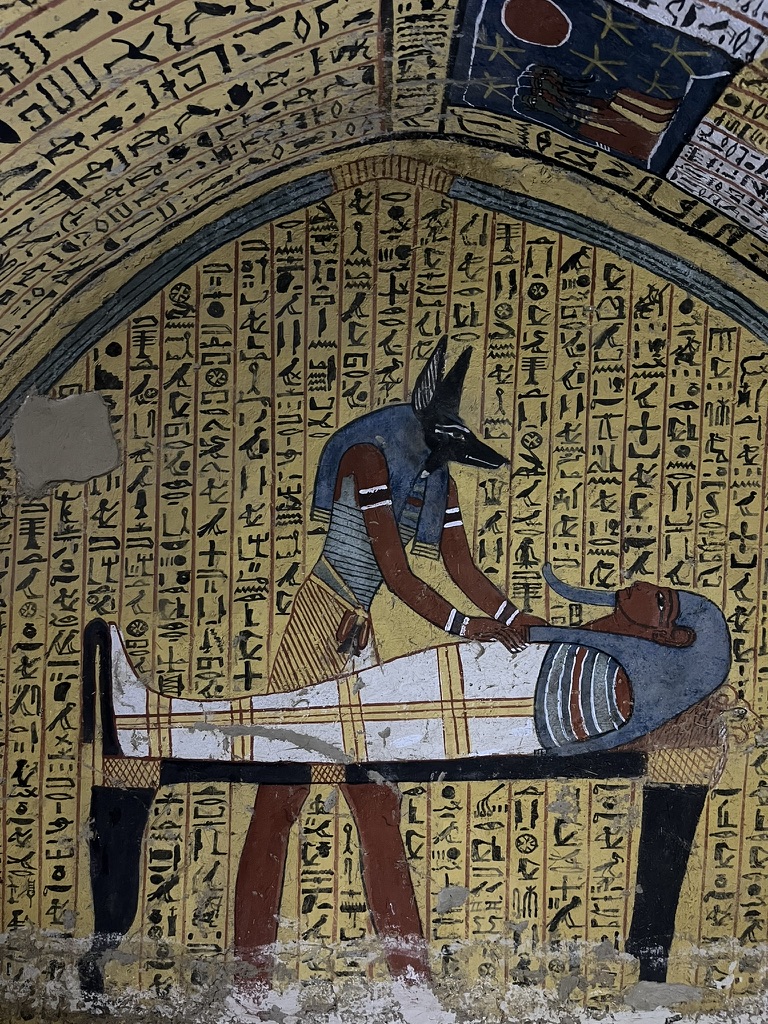
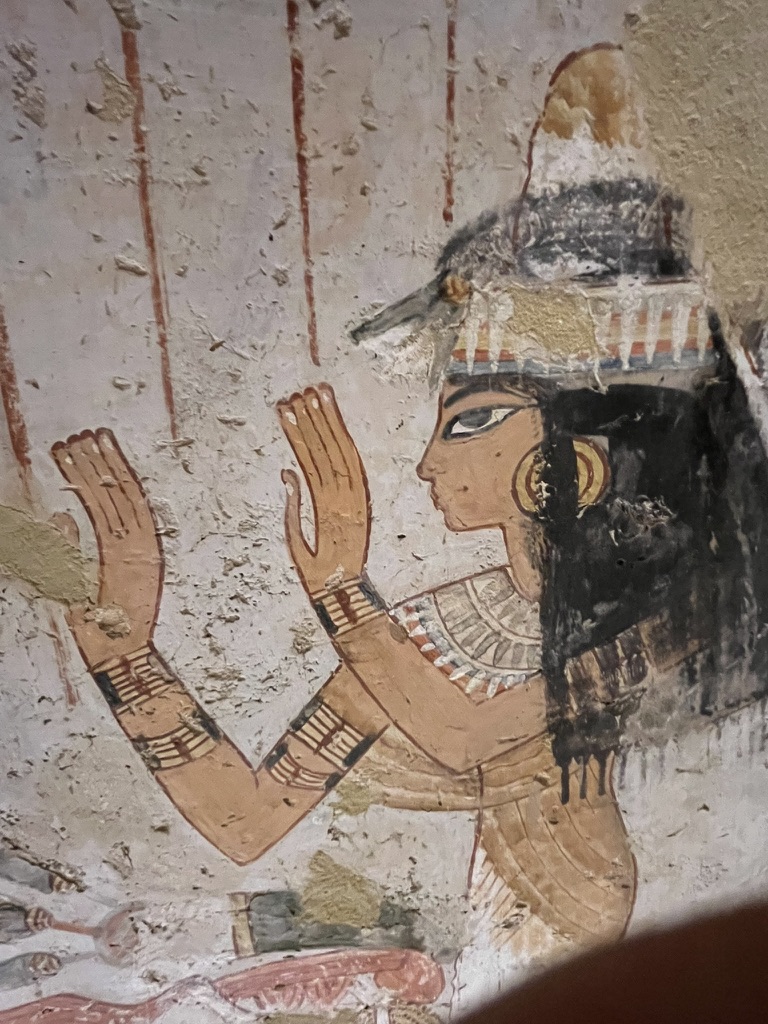
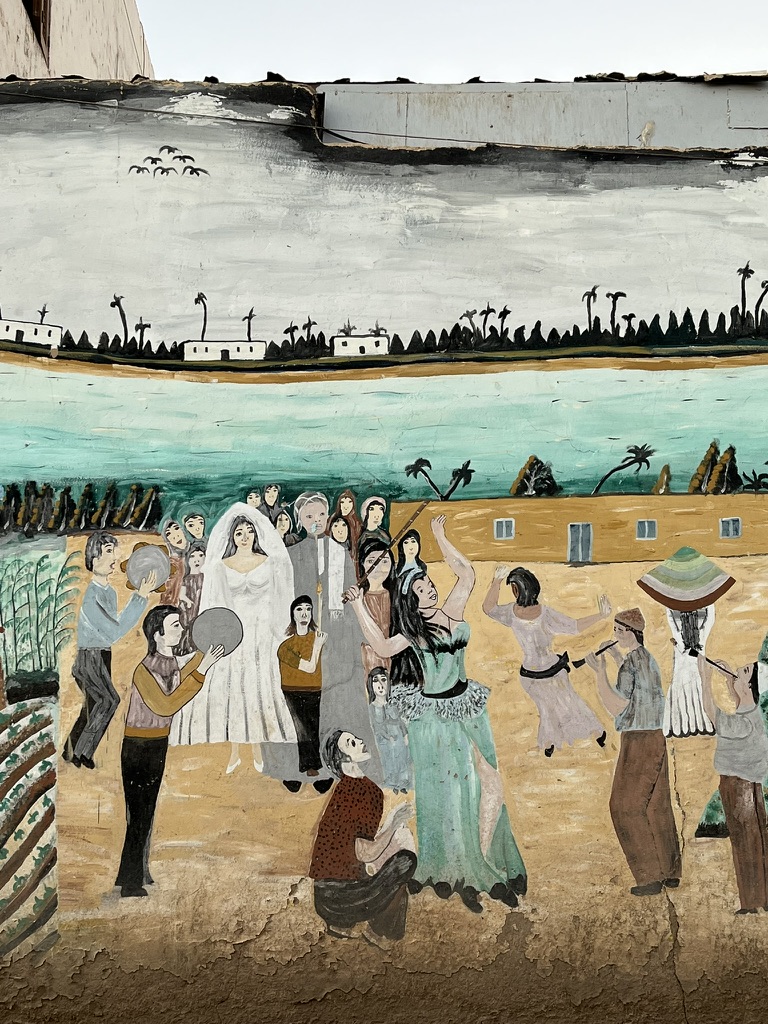
What makes Deir el-Medina extraordinary is what they did with that isolation. Their own tombs — the final resting places they built for themselves — are covered in some of the most vibrant and detailed paintings in all of Egypt. Unlike the carved reliefs of the royal tombs, these are true paintings: scenes of harvests, music, family life, and everyday celebration, done with a warmth and humanity that the grand monuments rarely achieve.
Tombs of the Nobles
At the Tombs of the Nobles, a guide near the entrance offered to lead us and warned that there were hundreds of tombs and it was easy to get lost. We thanked him and said no. With almost no other visitors around, finding the tombs ourselves felt like part of the experience — wandering the hillside, scanning for entrances, guessing the right paths.
We chose the Tomb of Nakht and the Tomb of Menna. Nakht’s tomb was empty when we arrived, and for a brief moment it felt like we had stumbled into something we weren’t supposed to find. The paintings inside were remarkably vivid: Nakht and his wife, musicians playing a lute, harp, and flute, farmers in their fields, grape vines heavy with fruit. These are images not of gods or conquest but of comfort, music, and a good life imagined extending into eternity.
The Tomb of Menna held one scene I kept returning to: Menna depicted in two mirrored poses on a papyrus skiff, drifting through a marsh. Serene, unhurried, timeless — a vision of an ideal life pressed into stone.
Medinet Habu: Ramesses III’s Forgotten Rival to Karnak
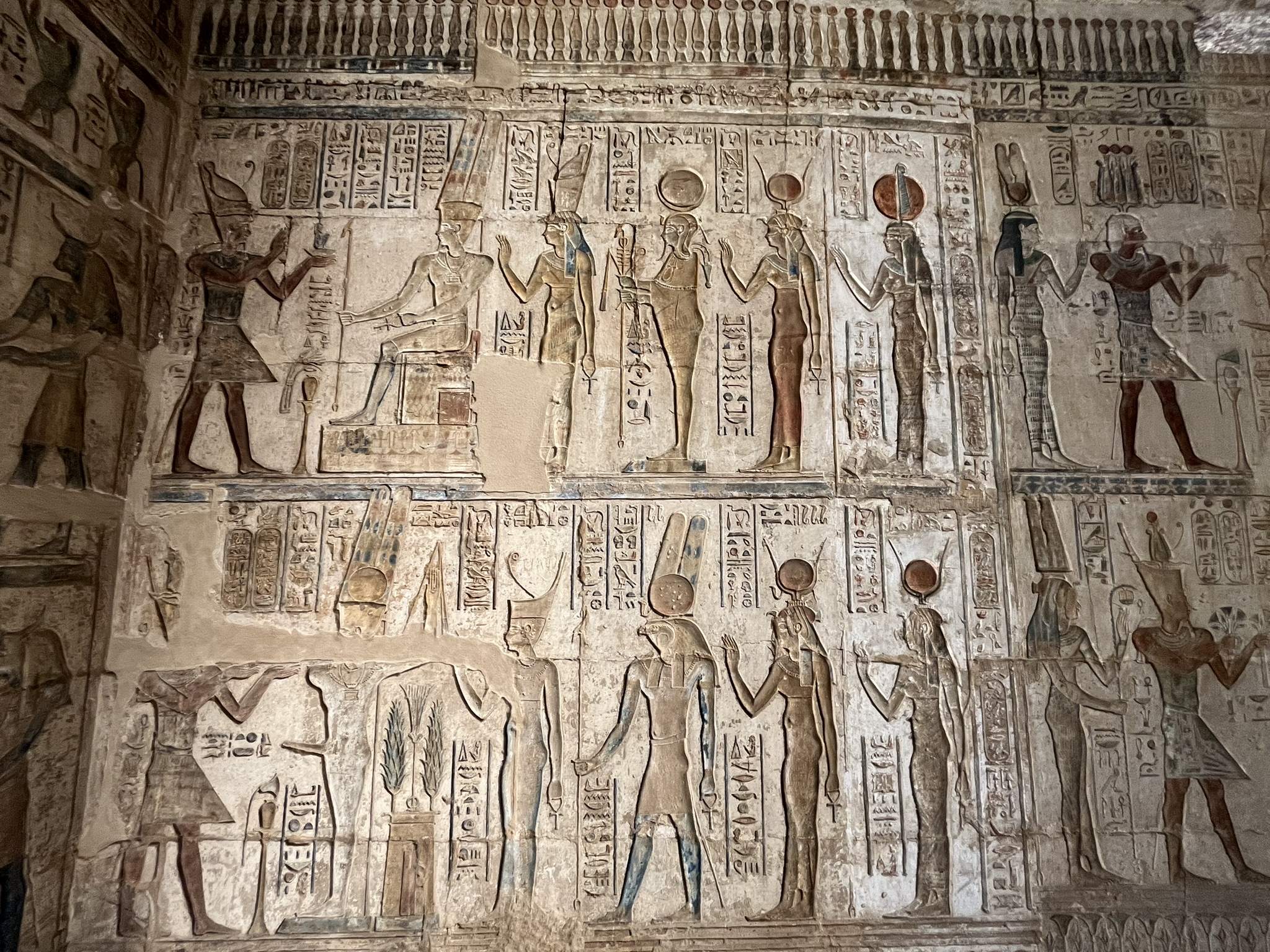
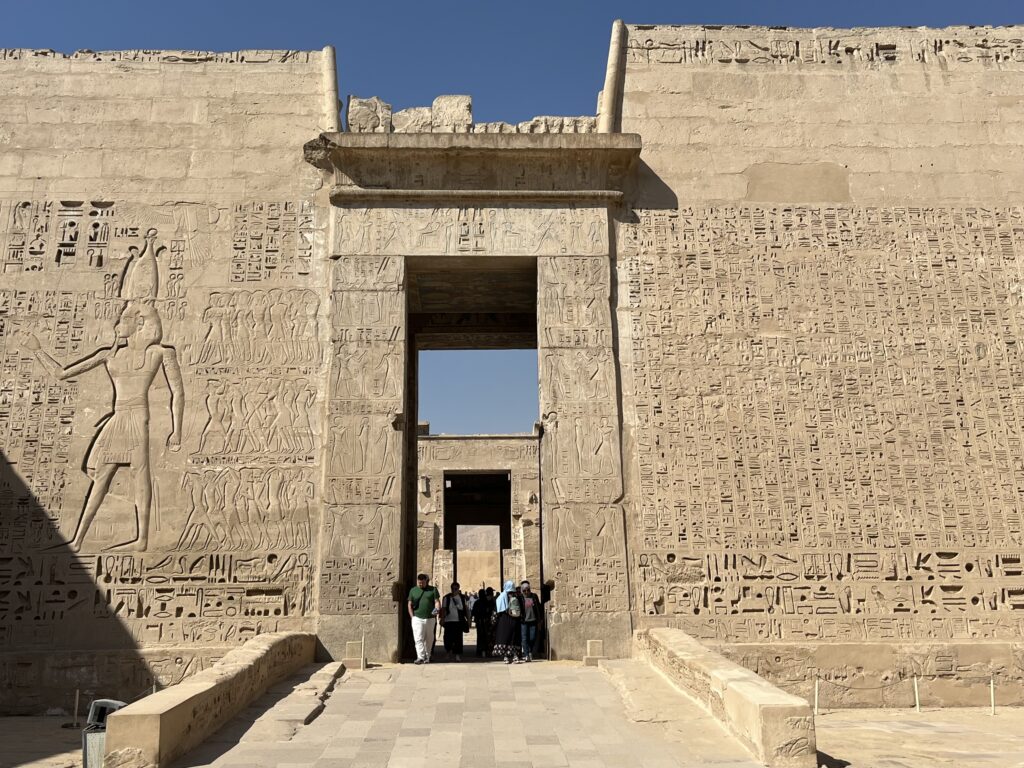
Our final stop was Medinet Habu, the mortuary temple of Ramesses III. It sees a fraction of the visitors that Karnak does, which is a strange oversight given what’s inside. The outer walls are covered in enormous battle reliefs — the pharaoh smiting his enemies in that maximalist, self-aggrandising style Egypt does better than anyone.
But inside the courtyards, the colours. Some of the best-preserved original pigment I’d seen anywhere in Egypt — blues, reds, and ochres as vivid as if the paint were still drying. After thousands of years under the open sky, their survival felt almost miraculous.
A Sunset Detour and the Horse Cart Ending
We returned from the West Bank just after 1 p.m., and the day still wasn’t finished. The hotel had bundled together our second West Bank day, a boat ride to Banana Island, and the airport drop-off the next morning — all for $50 as a package. Banana Island didn’t sound particularly exotic, but we wanted one more sunset on the Nile, and that was reason enough.
We were supposed to meet the hotel hostess, Inji, at a nearby tea house at 4 p.m. When we arrived, Inji hadn’t made it — but the hotel’s breakfast chef was already there, calmly smoking shisha. His English was excellent. He’d learned it starting at twelve years old, working at a West Bank hotel and picking it up directly from Western tourists. When I asked how many days a year it rains in Luxor, he laughed and said: “You should ask how many years.”
Eventually Inji arrived, slightly flustered, with the news that the driver was no longer available. We’d walk to the boat instead — only ten minutes, and very on-brand for a relaxed Luxor afternoon. The boat departed around 4:30 p.m., and the chef suggested we linger on the river a while longer to catch the sunset before heading to Banana Island. Sunset on the Nile has a particular calm — golden light spreading across slow water, time drifting along with the current.
Banana Island turned out to be less an island and more a stretch of the West Bank shoreline covered in banana plantation. Inji plucked bananas straight from the trees and handed them to us to feed the monkeys. Pleasant, lighthearted, exactly what it promised to be.
The Horse Cart and the Unresolved Bill
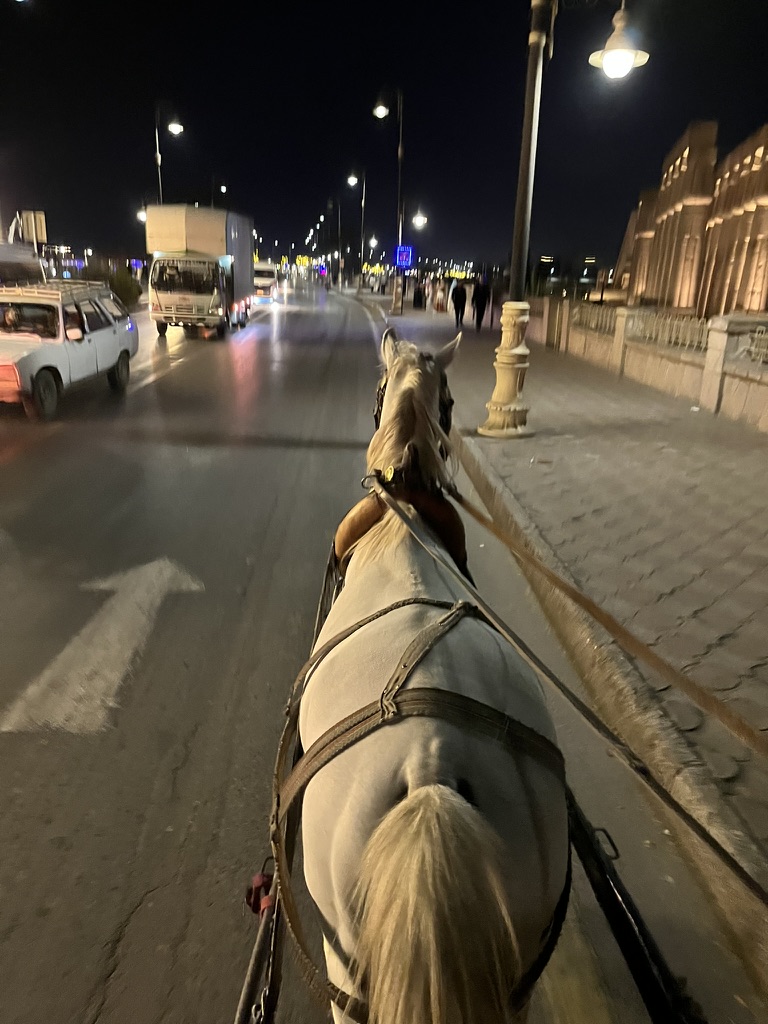
On the return, Inji apologised for the delay and offered to make it right: a horse cart ride through Luxor, a full hour, to see the city. The chef headed back to the hotel. We climbed into the cart and rolled past Luxor Temple, the train station, and into the city centre, Inji chatting animatedly with the driver in Arabic — what may or may not have been a negotiation about the fare.
Then, mid-ride, Inji suddenly hopped off. “I’ll meet you back at the hotel,” she said, and disappeared.
The driver continued on cheerfully, stopped to buy us two freshly squeezed sugarcane juices — sweet, icy, unexpectedly good — and delivered us back to the hotel about half an hour later. We gave him 100 EGP as a tip and started to climb out.
He stopped us calmly. “And the money for the ride?” Six hundred EGP, he said.
We blinked. We explained that the hotel had arranged it. He did not look convinced. At that moment, several hotel staff appeared, waved us gently inside, and began a conversation with the driver in Arabic.
Later, I asked the front desk what had happened — and where Inji was. The clerk smiled and waved it off. “Don’t worry. Everything is settled.”
Bye Bye, Luxor
Our last morning in Luxor was deliberately unscheduled. With a flight back to Cairo in the afternoon, we let the city set the pace.
We walked to the city centre on foot — the same streets we’d rushed through by horse cart the evening before, now at a completely different speed. The train station first, then naturally into a local fresh produce market. Strawberries and oranges again. Oranges were 15 EGP per kilo — roughly 30 cents. At prices like that, it becomes a moral obligation.
By this point in the trip, we could recognise Arabic numerals — a small skill that had turned surprisingly useful for reading Uber licence plates and market price tags. A practical souvenir, as useful as anything we bought.
We wandered into a neighbourhood that felt entirely local. A few curious glances, but complete ease. Men sat outside small shops, smoking water pipes, chatting as if time had politely stepped aside. We passed a small mosque where women in black robes were sitting outside, some crying quietly — a funeral, perhaps, or something else. A reminder that ordinary life continues here, right alongside the tourism, indifferent to it.
Hunger eventually led us to a three-storey local restaurant serving koshari — Egypt’s national dish, usually vegetarian, though we ordered a version with chicken and beef. Delicious. Bottled water arrived at the table automatically, the way bread does in some European countries. No questions asked. Hydration first.
Back at the hotel, we said goodbye to the owner and the front desk staff — people we’d genuinely grown to like over our stay. The driver took us to the airport, and as we passed each landmark, he offered his own cheerful farewell tour:
“Bye bye hotel. Bye bye Luxor Temple. Bye bye…”
And just like that — bye bye, Luxor.
Back to Cairo: A Different City, a Different Hotel
Our EgyptAir flight touched down in Cairo around 4 p.m. Still early, so we skipped the hotel pickup and went with Uber. One small discovery: Uber can’t reach the arrivals level at Cairo airport — you take the elevator down to the parking garage, where the driver walks you to the car. Worth knowing in advance.
Cairo traffic was already in full swing. Our driver tried several times to turn into the narrow alley near the hotel, eventually gave up, and we hopped out to cross the multi-lane road on foot. By now, crossing Cairo streets no longer felt like a challenge. It felt routine. Earlier in Luxor, a passing cyclist had called out without even turning his head: “Wow, you walk like an Egyptian.” Apparently, it shows.
The new hotel was in a different part of the city — and the difference was immediately visible. Paris-style buildings lined the streets outside, people were dressed fashionably, and the atmosphere felt worlds apart from Luxor’s relaxed pace. Even the air was cooler. The old-style elevator inside the hotel — metal frame, manual doors on both sides, clearly operational since roughly the 1940s — worked perfectly, which somehow made it even more charming.
Two glasses of freshly squeezed juice appeared in the room shortly after we settled in. Egypt takes hospitality seriously, across every type of accommodation.
Dinner was at a small, highly-rated local restaurant nearby. Before sitting down: “Do you accept credit cards?” No — but they accepted euros and dollars. The owner suggested we walk one block to an ATM, which we did. The food made it worth the detour: grilled beef and chicken shawarma, tangy pickles, and a sauce we couldn’t identify but immediately wanted more of. Cairo in the evening was noticeably cooler than Luxor had been, so we moved from the balcony table inside. Another city, another rhythm — unmistakably, we were back.
The Last Full Day: The Egyptian Museum and Khan el-Khalili
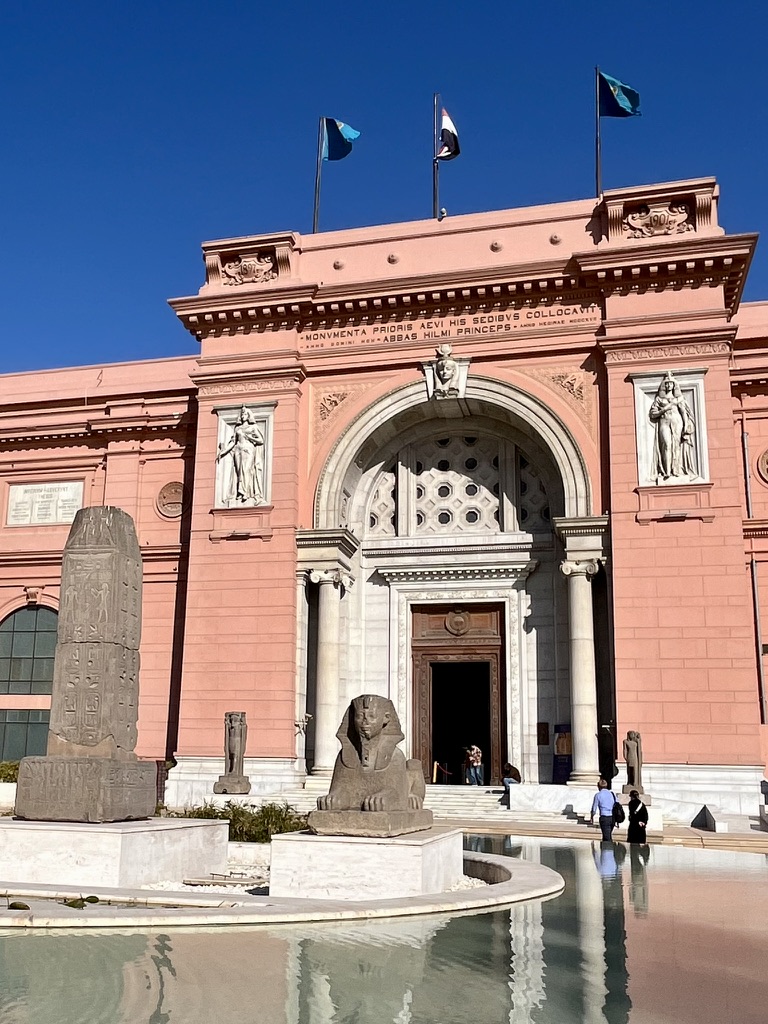
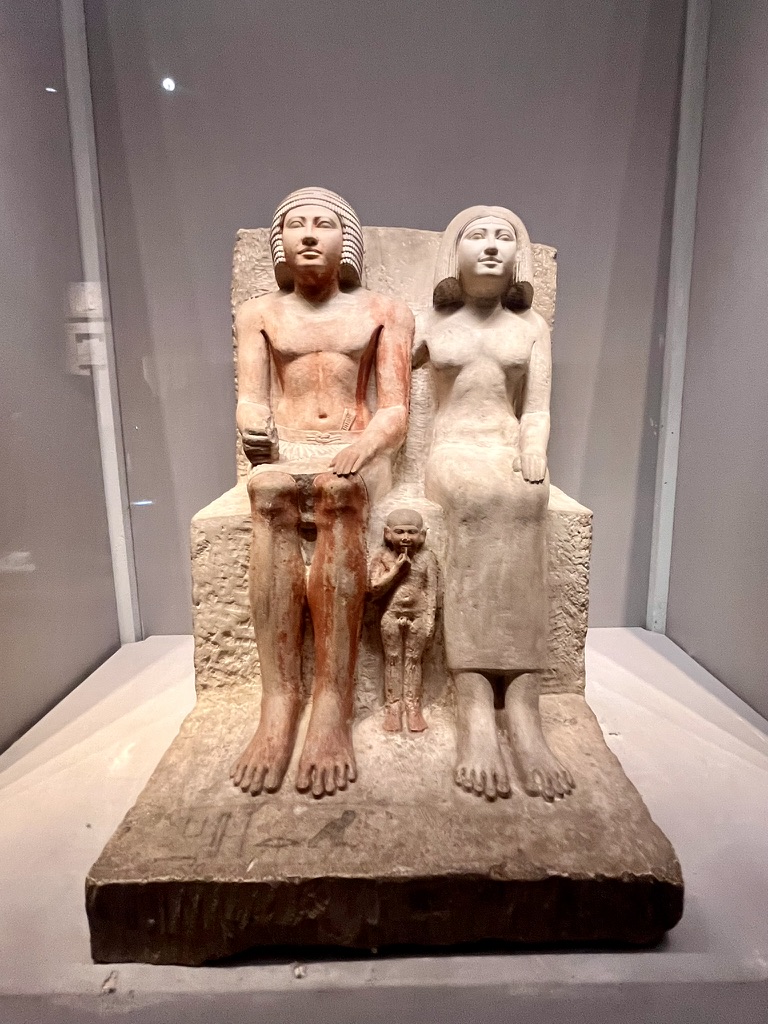
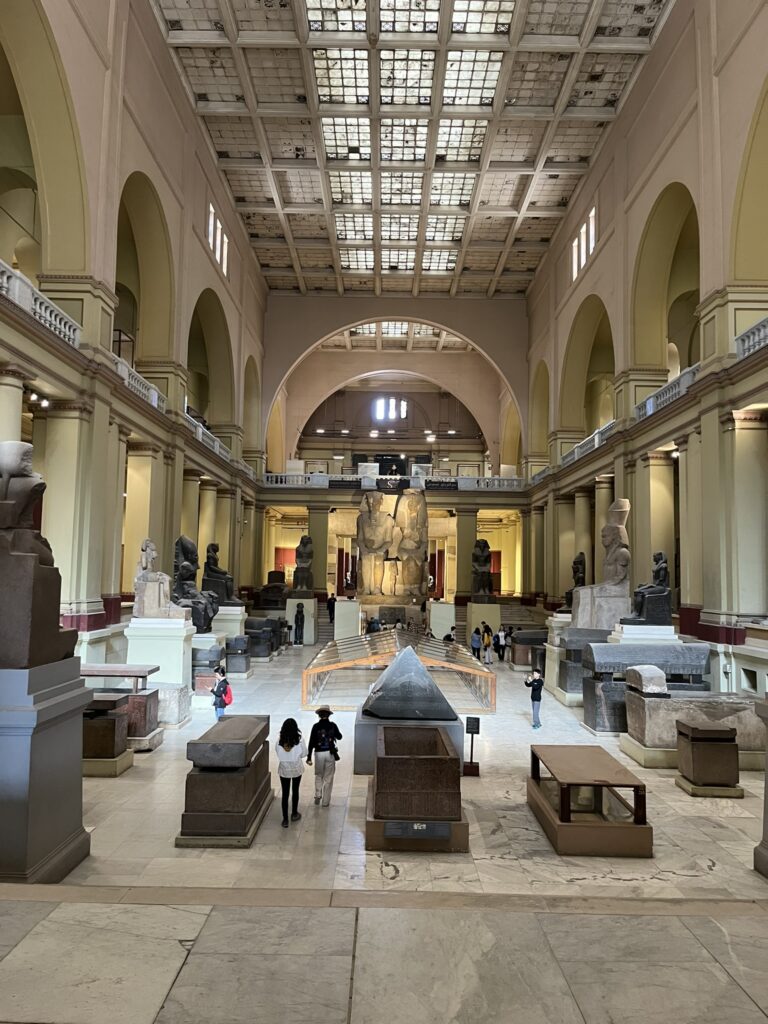
For our final day, we headed to the Egyptian Museum — the original one on Tahrir Square, not the Grand Egyptian Museum in Giza we’d visited on Day 2. With Tutankhamun’s most famous treasures now moved to GEM, this museum has lost some of its headline power. But it remains one of the most important collections in the world, and it tells a different kind of story.
Arriving across the street around 9:30 a.m., an elderly gentleman approached us with advice we hadn’t asked for but were glad to receive: go in after 10, he said. Too many tour groups right now. After 10, it’s much quieter. And you don’t need a guide — everything is in English.
He then walked us to a nearby souvenir shop. We followed, browsed the usual items downstairs, and discovered an entire floor of Egyptian perfume oils upstairs. The saleswomen demonstrated their blends and explained that the oils were pure — nothing diluted. The prices were noticeably better than the perfume shop our Nile cruise guide had taken us to in Luxor, so we bought several bottles, some for ourselves and some as gifts.
When we were done, the shop owner insisted on sending someone to escort us across the street to the museum. We were, by this point, fully certified at crossing Egyptian roads. But we accepted gracefully.
Inside, no tour groups. The old gentleman had been exactly right. We declined the guide — the English labels were clear throughout — and wandered at our own pace through rooms that felt less like a curated exhibition and more like a private archive overflowing with things of incalculable importance.
The building has stood since 1901 and it shows — in the most fascinating way. The ground floor holds statues and massive reliefs; the upper floor contains mummies and sarcophagi. Room after room, treasure after treasure, the collection spanning from prehistoric Egypt through the Greco-Roman period. It’s a museum that rewards wandering over planning.
In the afternoon, we made a final trip to Khan el-Khalili for last-minute gifts. Cairo had apparently entered rush hour early — cars completely gridlocked while pedestrians, motorbikes, and optimism continued moving through the gaps. We got out of the Uber half a mile short and walked the rest on foot, winding through the noise and density of the city on its own terms.
Leaving Egypt
Our flight from Cairo to Istanbul departed at 5:40 a.m. The alarm was set for 2:30.
The night before, we asked the front desk whether calling an Uber at 3 a.m. would be a problem. The clerk smiled. “Cairo never sleeps.”
When we came down to the lobby in the early morning darkness, the night clerk disappeared briefly into the kitchen and returned with a small bag. “We’ve prepared breakfast for you to take.” A simple gesture — but incredibly thoughtful, and very Egyptian.
Out on the street, we called an Uber. Almost immediately, a message came through from the driver: Good morning. That didn’t sound right. In Giza weeks earlier, every fraudulent driver had opened the same way — friendly message first, then the ask. I replied politely. Sure enough: since he’d have to return empty, could we pay 30 euros cash?
⚠️ Final Uber Reminder: The Pre-Dawn Scam
The app-messaging scam appeared one last time, even at 3 a.m. in central Cairo. The pattern was identical to Giza: a friendly opening message, then a cash request to compensate for the return journey. We canceled despite the driver insisting we’d miss our flight if we waited.
The rule holds anywhere in Egypt: if a driver messages you before or during a trip to renegotiate — cancel immediately. The app will find you another one.
Three minutes later, a second driver arrived — no message, no drama, no negotiation. On time, and perfectly fine.
The second Uber glided through nearly empty streets, the city lights glimmering quietly around us. Cairo at 3 a.m. is a different city — calm, unhurried, almost unrecognisable from the place that had been gridlocked just hours earlier.
Twelve days. It had gone by faster than it should have.
Yes, there had been hassles — Uber scams, early alarms, overpriced perfume shops, an unresolved horse cart bill, a flight delay here and there. But none of that stayed. What stayed was everything else: the moment the pyramids stopped being a photograph and became something real. The baby crocodile incident on the Nile. The four faces of Ramesses II emerging from rock at Abu Simbel. The mango juice at Kom Ombo. The artisans’ tombs at Deir el-Medina, painted with more humanity than any royal monument. The breakfast the night clerk packed at 3 a.m. without being asked.
Egypt, you surprised us — in the best way.
📍 The Complete 12-Day Egypt Diary
- [Part 1]: Pyramids, Planning, and the Chaos of Cairo — arrival, the Citadel, Coptic Cairo, Giza, the GEM, and getting wonderfully lost in Islamic Cairo.
- [Part 2]: Aswan, Abu Simbel, and Sailing the Nile — the cruise decision, Nubian village, Philae, Abu Simbel at dawn, Kom Ombo, Edfu, the Esna Lock, and arriving Luxor by river.
- [Part 3]: Luxor’s Tombs and the Journey Home — Karnak, Luxor Temple, the Valley of the Kings, Hatshepsut, Deir el-Medina, Medinet Habu, feluccas at sunset, and a 3 a.m. farewell to Cairo.

Hi, I’m Frank J – Egypt Self-Guided Travel. I explore Egypt solo and share tips, stories, and practical advice to help you plan your own adventures safely and enjoyably.