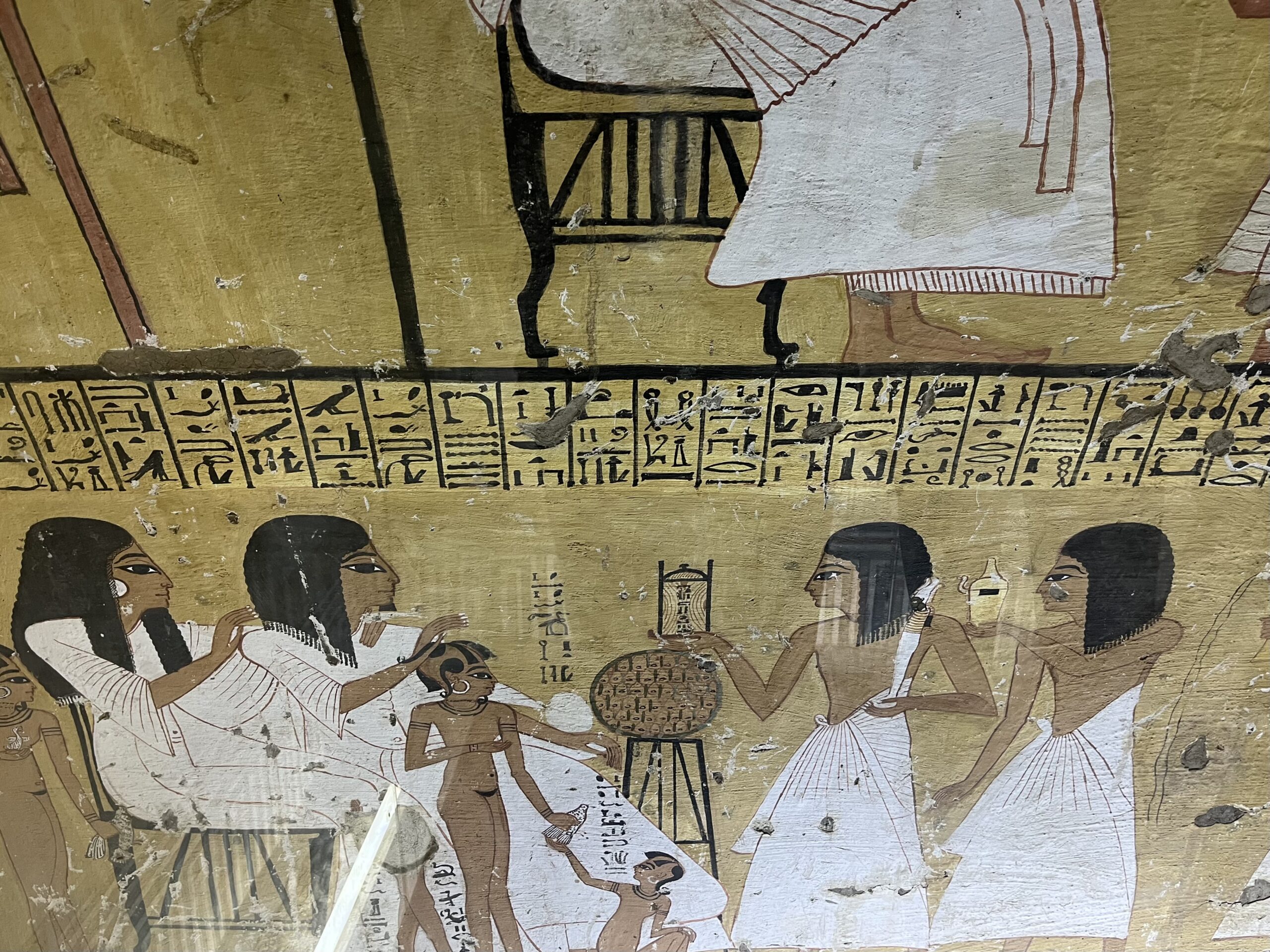
I broke away from my Nile cruise tour group in Luxor because this city deserves more than a hurried afternoon. After being mesmerized by the Valley of the Kings and the Temple of Hatshepsut, I knew I had to return to the West Bank for a second day. What I found — on the advice of a hotel owner who has since become a good friend — was the most intimate, least crowded, and in many ways most moving collection of ancient art I encountered anywhere in Egypt.
✍️ How to Use This Guide
The Luxor hidden tombs reward those who move beyond the Valley of the Kings: Deir el-Medina (the Artisan Village), the Tombs of the Nobles, and Medinet Habu temple. It covers every tomb worth entering, the ticket logistics at the West Bank Ticket Office, the optimal visiting order, and what to expect inside each chamber. It draws on a full second day on the West Bank, explored entirely self-guided.
For Karnak, Luxor Temple, the Temple of Hatshepsut, the Valley of the Kings, and all practical Luxor logistics — transport, money, safety, where to stay — see the companion guide: Luxor: Valley of the Kings & Beyond (2026).
📋 Table of Contents
I. Why Luxor Hidden Tombs: The “Other Side” of Ancient Egypt
The Valley of the Kings is where you understand why the pharaohs wanted to live forever. These three sites are where you understand everything else: who built those tombs, who governed the civilisation that produced them, and what that civilisation looked like when it wasn’t trying to impress the gods.
The contrast is the point. The royal tombs are monuments to divine power — their walls painted with spells and cosmological narratives, their scale designed to overwhelm. The artisan tombs, the nobles’ chapels, and Medinet Habu temple are something more personal: a record of work, ambition, daily life, and the particular pleasures that people in ancient Egypt considered worth preserving for eternity. Grain harvests, musicians playing at banquets, a man kneeling beside a cool stream in the shade of a date palm. Not gold, but the simple, beautiful peace of a life well-lived in the sun.
Most tour groups skip these sites entirely. That is their mistake and your advantage. If you skip these Luxor hidden tombs, you miss the most human side of ancient Thebes.
💡 A Note on Notation
A note on notation: throughout the West Bank, tombs are identified by a “TT” number — TT1, TT52, TT69, and so on. TT stands for Theban Tomb, a unified numbering system used by Egyptologists to catalogue the hundreds of private tombs across the entire area. It covers the artisan tombs at Deir el-Medina and the nobles’ tombs equally — so TT1 (Sennedjem, in the artisan village) and TT69 (Menna, among the nobles) are part of the same master list. This system is how tickets are sold and how guides refer to specific tombs.
II. Tickets, Transport, and the Golden Rule of the West Bank
The Golden Rule: Ticket Office First
Unlike the Valley of the Kings or the major Luxor temples, the sites in this guide do not sell tickets at their gates. This is the single most important logistical fact to understand before setting out. Arriving at Deir el-Medina without a ticket means turning around and driving back to the ticket office — which adds 30–45 minutes to your morning and costs you the quietest early hours.
The place you need is the Antiquities Ticket Office, also known as the West Bank Ticket Office. It is a modest building near the Colossi of Memnon, clearly signposted on Google Maps. Tell your driver this is the first stop, before anything else. Every site visit on the West Bank begins here.
⚠️ Come Prepared to Buy
The ticket office staff are there to process transactions, not to advise on itineraries. You need to know what you want to see before you reach the window. Read this section in full before you arrive, decide your combination, and write it down. The officers move quickly and the line behind you will be impatient.
Getting a Driver: Why Your Hotel Is the Right Call
Hire your car through your hotel rather than flagging down a street driver. The practical reason is language: most drivers at the roadside have limited English, which creates real friction when you need to communicate a multi-stop itinerary involving ticket offices and specific tomb numbers. Hotel staff, by contrast, speak English and will brief the driver clearly before you leave — covering the ticket office, the correct order of sites, and the stops you want. This turns a potential source of frustration into a smooth, well-sequenced day.
💡 The Official Website Question
The Egymonuments website lists some ticket prices and hours, but the information there is not always current. Use it as a rough guide and verify with your hotel the evening before. Prices and tomb rotations (particularly at Deir el-Medina) can change without the website being updated. The ticket office itself is the authoritative source..
III. When to Visit and the “Underworld to the Sun” Order
Arrive at Dawn
Arriving at 6:00 a.m. is not just a practical tip — it is a fundamentally different experience. At dawn, the West Bank tombs are profoundly silent. The light is still low, the tourist convoys haven’t arrived, and the atmosphere allows for a quality of attention that simply isn’t available at 10 a.m. The painted walls in the artisan tombs were made to be contemplated. That contemplation requires quiet, and quiet requires early.
Budget at least a half day for all three sites. These are authentic, unhurried places — you’re not fighting for space at any of them — and rushing diminishes exactly what makes them worth visiting.
The “Underworld to the Sun” Visiting Order
The sequence matters. Start with Deir el-Medina, move to the Tombs of the Nobles, and finish at Medinet Habu. This order builds visual and emotional impact deliberately: from intimate artistry underground to the grand, sun-drenched courtyards of a temple. It also mirrors a journey from darkness to light — from the private world of artisans who carved tombs in the mountain to the triumphant, sun-catching reliefs of a pharaoh’s military victory.
| Order | Site | Character | Best Time |
|---|---|---|---|
| 1st | Deir el-Medina | Intimate, underground, vivid painted tombs. Small chambers, close walls. | Dawn — 6:00 a.m. |
| 2nd | Tombs of the Nobles | Open chapels, larger chambers, celebration and daily life. | Mid-morning |
| 3rd | Medinet Habu | Grand open-air temple. Colonnaded courtyards, battle reliefs, preserved colour. | Late morning, any time |
IV. Deir el-Medina: The Secrets of the Artisans
Locals call this site simply “Medina.” Among the Luxor hidden tombs, Deir el-Medina is the most intimate and emotionally powerful. It was the home of the elite craftsmen — the painters, sculptors, and draughtsmen — who carved and decorated the royal tombs across the Valley of the Kings. Researchers often describe them as a comfortable “middle class,” but standing among the stone foundations of their village, embedded in the harsh mountain walls of a remote valley, what comes through more strongly is the isolation. These men and their families were forbidden from crossing the Nile to protect the royal secrets they carried. They lived and died here, in this small, enclosed world, generation after generation.
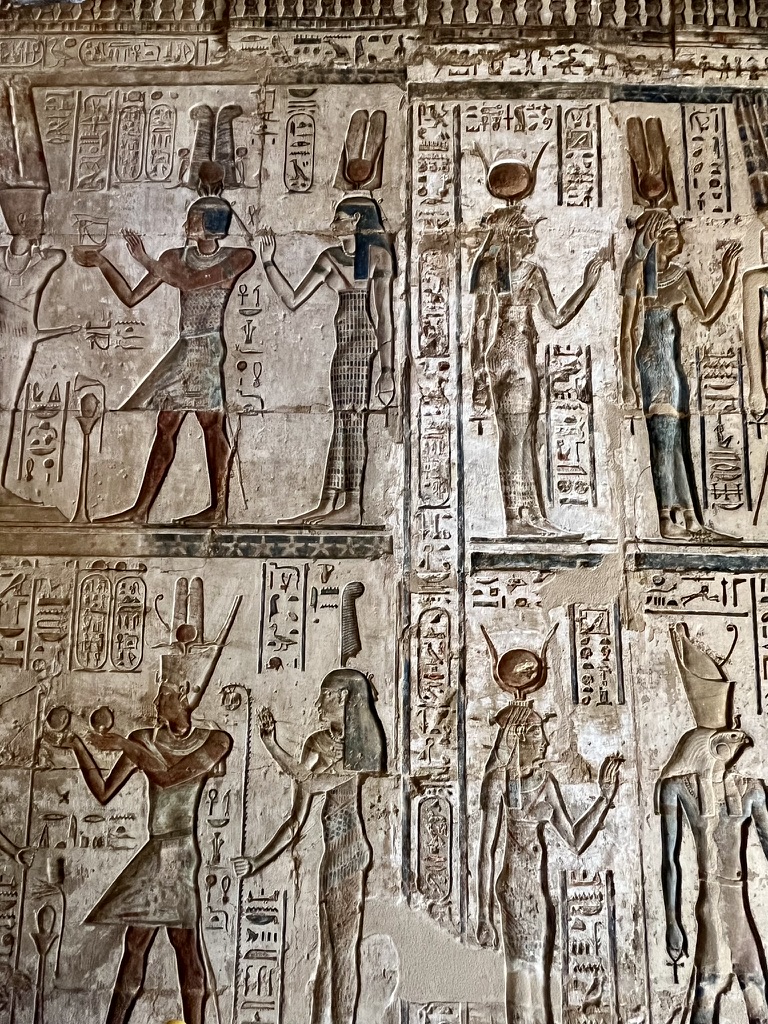
As you enter the site, you’ll see the amphitheatre of stone foundations — the mudbrick lodges where these keepers of secrets made their homes. On the far side of the valley sits a small Ptolemaic temple dedicated to Hathor, still beautiful and still the subject of active research. On our visit, a section was cordoned off with filming equipment; researchers were preparing renovation notes on the vivid figures of Ptolemy IV still visible on the walls.
Understanding the Tomb Rotation
The general ticket for Deir el-Medina typically covers three tombs, and the selection rotates. The tombs below represent those most commonly open. Confirm with the ticket office on the day, but the ones described here are the ones you most want to see.
The Tombs — What to See and How
The masterpiece of Deir el-Medina, and the reason to visit the artisan village above all others. The background colour is a brilliant, glowing yellow — a permanent sunshine that feels immediately unlike anything in the royal tombs. The most famous scene is the “Field of Reeds”: Sennedjem and his wife depicted together in an idealised afterlife, ploughing, sowing, and reaping a golden harvest. There is no gold here, no divine iconography, no spells for the underworld. Just a man and his wife doing the work they loved, in a landscape of impossible beauty. It is, somehow, more moving than any royal tomb. Practical note: the wooden spiral staircase down to the chamber is very tight. Move slowly and hold the rail.
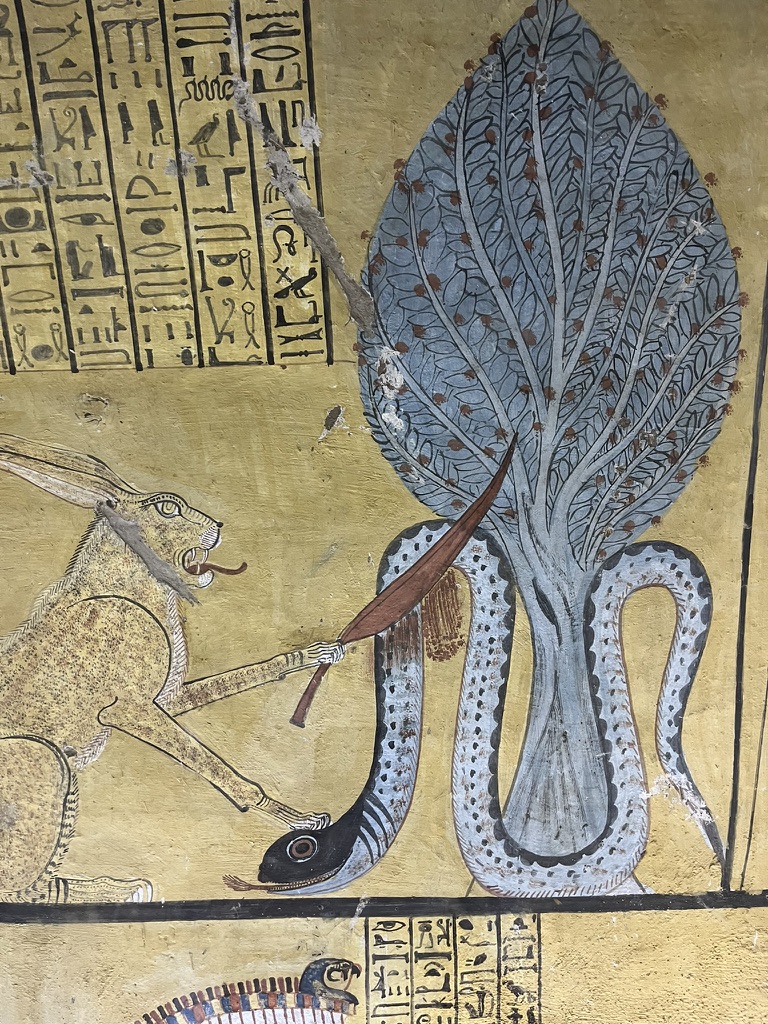
Famous for its sophisticated 20th Dynasty style and one of the most striking single images in all of Theban tomb art: the Sun God Ra depicted as a great cat, slaying the serpent Apophis beneath a persea tree. The scene captures a moment of cosmic drama — the eternal battle between order and chaos, light and darkness — rendered with the confidence of a master painter who knew exactly what he was doing. The rest of the tomb is equally assured. This is a senior craftsman’s work, and it shows.
Three tombs sharing a courtyard, belonging to members of the same family. What makes them remarkable is their stylistic restraint: where Sennedjem worked in full polychrome colour, these tombs use simplified or largely monochromatic schemes — yellow and black, or yellow with careful linear detail. Far from feeling diminished, the effect highlights the raw talent of the draughtsmen. You see the hand behind the art. These are not the showiest tombs at Deir el-Medina, but they are the ones that make you understand what skill looked like when it was working quietly.
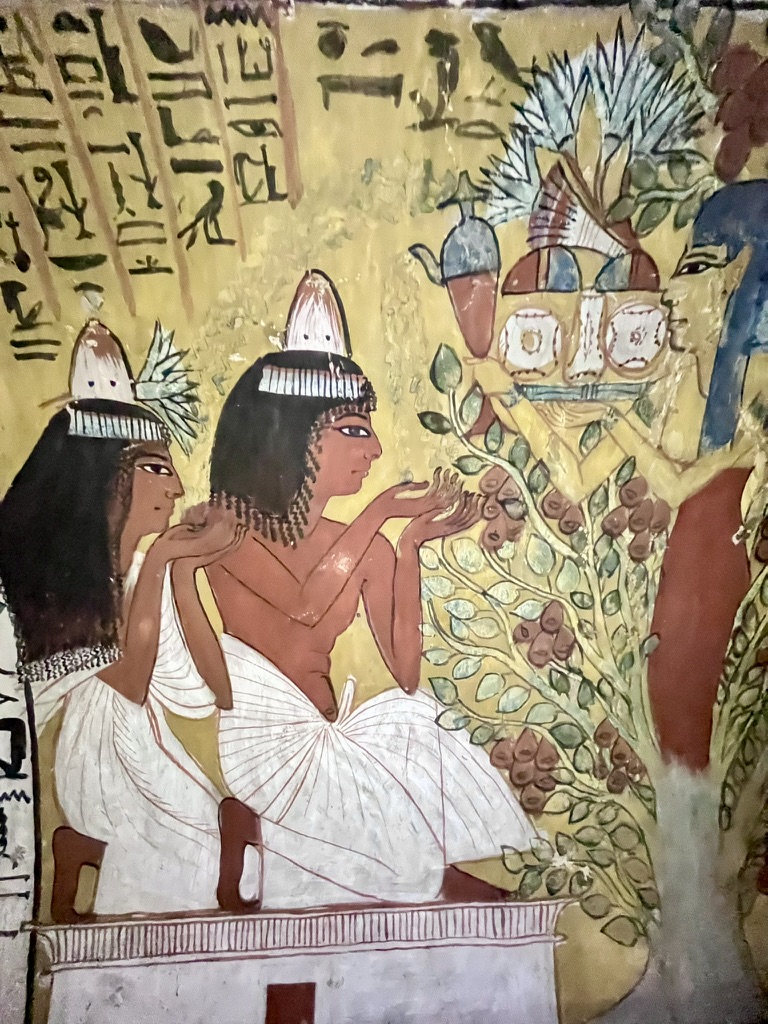
Located higher up the hillside than the other artisan tombs and requiring a separate ticket of 120 EGP (60 EGP with student ID). The most famous image here is on the right-hand wall of the burial chamber: Pashedu kneeling beside a cool blue stream in the shade of a date palm, drinking. After hours in the bright desert, the painting’s sense of shade and water and rest is almost physically refreshing. Worth the extra ticket if you have time and energy after the main tombs.
Located higher up the hillside than the other artisan tombs and requiring a separate ticket of 120 EGP (60 EGP with student ID). The most famous image here is on the right-hand wall of the burial chamber: Pashedu kneeling beside a cool blue stream in the shade of a date palm, drinking. After hours in the bright desert, the painting’s sense of shade and water and rest is almost physically refreshing. Worth the extra ticket if you have time and energy after the main tombs.
💡 Save TT1 for Last
Visit TT359 and TT218–220 first, then finish with Sennedjem. The escalating quality of what you see builds toward TT1’s yellow brilliance as a finale — and it lands harder having first seen what the other artisans produced. Arriving at TT1 after the others is the correct sequence for maximum impact.
V. Tombs of the Nobles: The Power Players
There are over 400 private tombs in the Nobles’ section of the West Bank, belonging to the high-ranking officials, viziers, and administrators of ancient Thebes. It is one of the most visually rich Luxor hidden tombs clusters.
If the artisan tombs are about longing — for sunlight, for space, for a life lived above ground — the nobles’ tombs are about celebration. These were powerful men who lived well, and their tomb paintings record the festive abundance of that life with extraordinary vitality.
When we arrived, a gatekeeper on a motorcycle welcomed us at the entrance. By the time we’d walked up the hill toward our first tomb on foot, he had already revved past us, sped ahead, and had the gate to Menna (TT69) open and waiting. That is the kind of unhurried, attentive experience the Nobles’ tombs offer. You are not competing with tour buses for space.
The Tombs — What to See and How
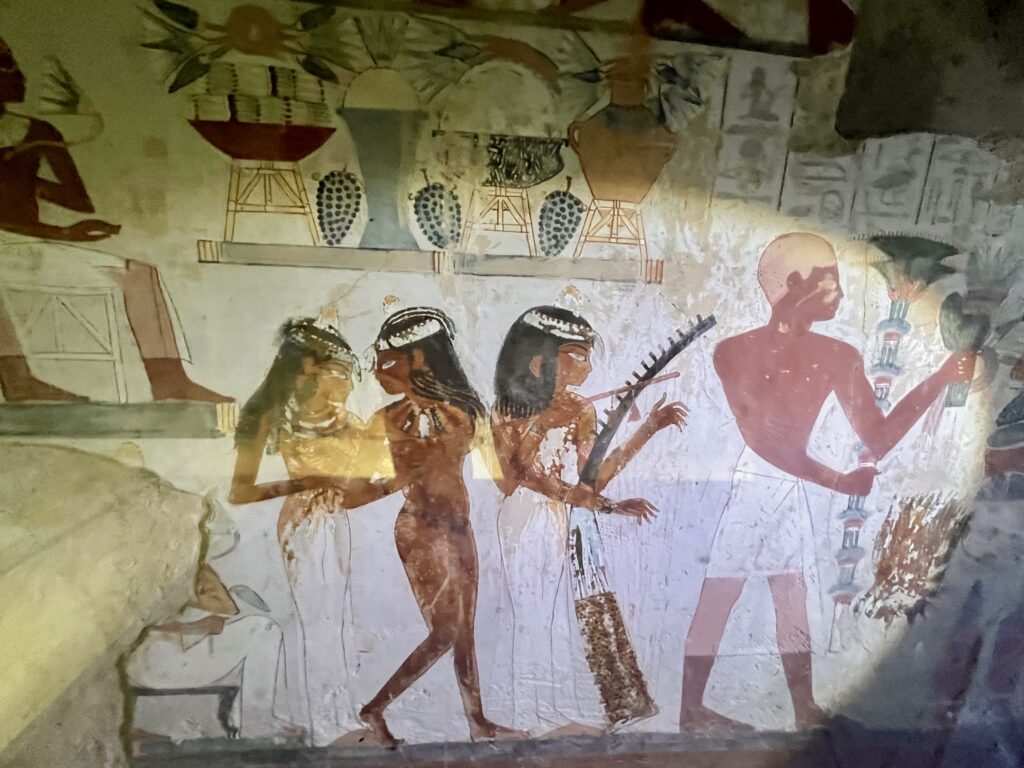
Small. Iconic. The wall paintings of three female musicians — playing harp, lute, and double-pipe — are among the most reproduced images in all of ancient Egyptian art, and for good reason. Their grace is extraordinary: the figures lean slightly, the instruments are rendered with technical precision, the fabrics of their dresses are translucent in the way only the finest New Kingdom painters could achieve. You can almost hear the music. Nakht was a “Scribe of the Fields” and astronomer to the pharaoh; his tomb is proof that great art doesn’t require great size.
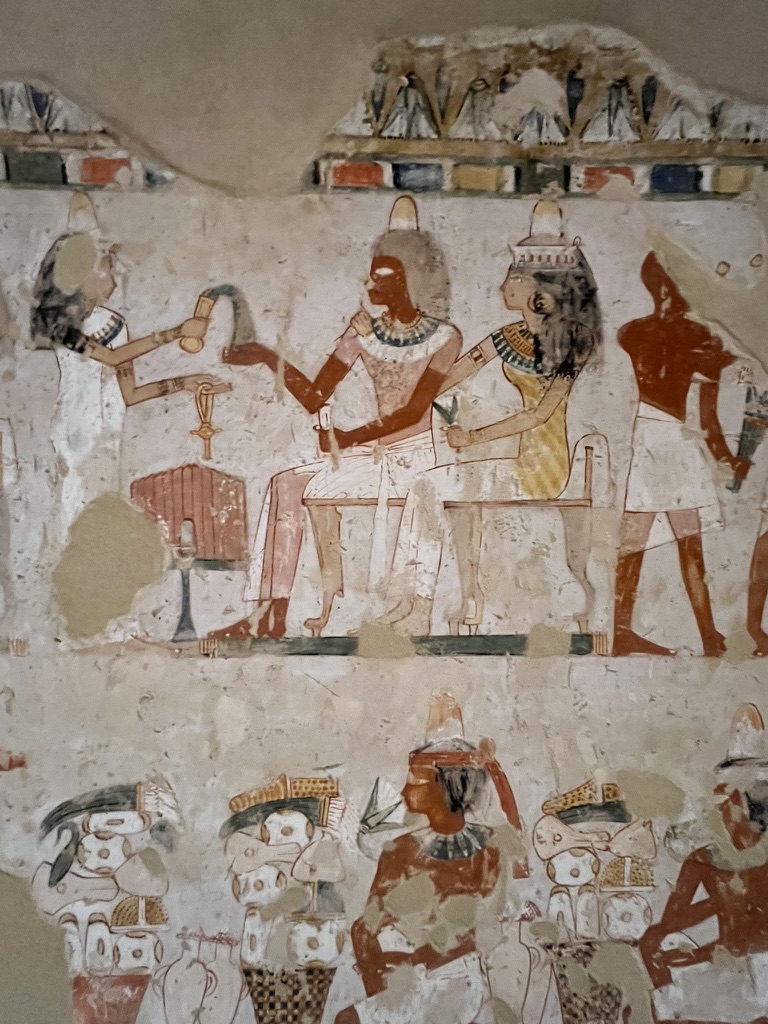
If you buy only one ticket in the Nobles’ section, this is the one — ideally paired with Nakht as the standard combination ticket. Menna was a Scribe of the Fields, and his tomb is an explosion of daily activity rendered with astonishing freshness. Detailed grain harvests show surveyors measuring fields and labourers stacking wheat. The “weighing of the heart” scene in the afterlife is one of the clearest depictions of the entire ceremony available anywhere in Luxor.
The marsh scenes — Menna spearing fish and hunting birds with his wife and daughters alongside him — are the ones that stop people cold. Butterflies, cats, and a lurking crocodile, rendered with such precision that it reads less as ancient art and more as a nature documentary from 3,400 years ago. The colours look recently touched up. They have not been touched at all.
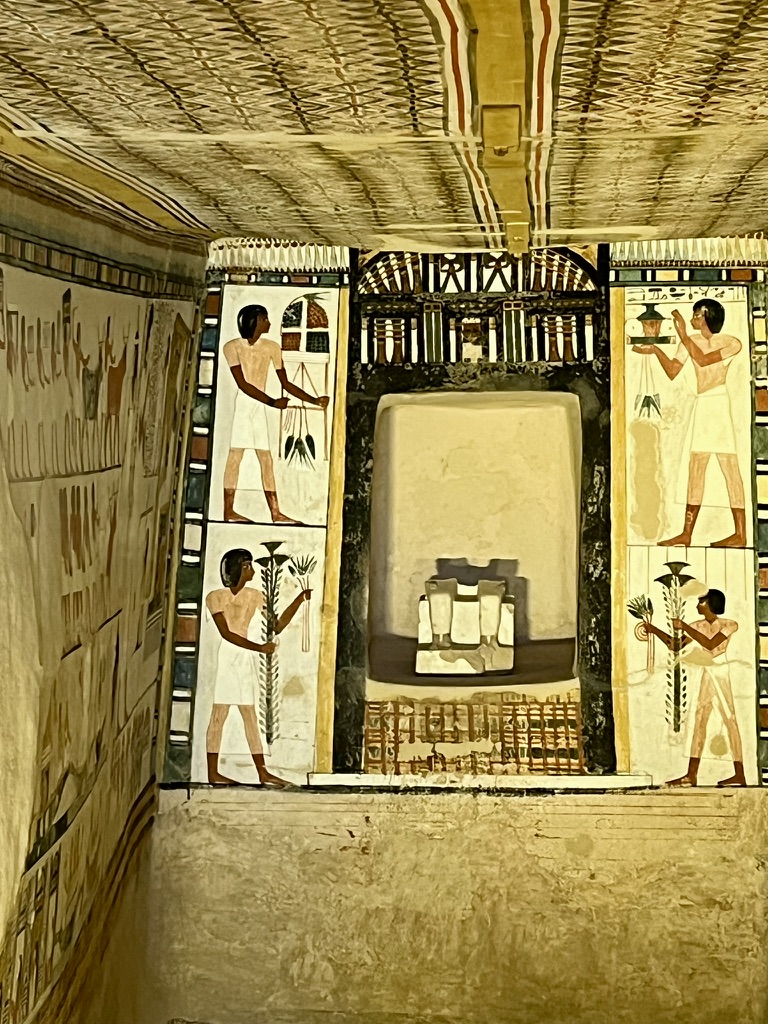
Sennefer was Mayor of Thebes under Amenhotep II, and his tomb’s antechamber ceiling is one of the most immediately striking things in the entire necropolis: a dense, naturalistically painted grape arbour covering every centimetre of the ceiling, vines curling over the columns and spreading outward like a living canopy. You look up and the effect is immediate — the tomb has been nicknamed the “Tomb of the Vines” and the name earns itself in the first five seconds. Worth the separate ticket if the rest of the morning hasn’t exhausted you.
Ramose was a vizier under both Amenhotep III and Akhenaten — which means his tomb straddles one of the most dramatic stylistic transitions in Egyptian art history. Enter the tomb and you see the traditional, formal style of the earlier period on one set of walls: crisp lines, idealised figures, every element in its assigned place. Turn to the other walls and the style shifts entirely to the naturalistic Amarna art of Akhenaten’s reign — fluid, expressive, deliberately human. It is the only tomb in Luxor where you can see both worlds within the same chamber, separated by only a few steps.
💡 Save Menna for Last
Visit Nakht first — let the musicians set the tone — then move to Menna as the finale. TT69 is the most complete, the most vivid, and the most emotionally affecting tomb in the section. Arriving there after Nakht allows the contrast to work properly. Menna is where the Nobles’ tombs justify themselves entirely.
VI. Medinet Habu: Victory in the Sun
By the time you reach Medinet Habu, you will have spent the morning underground and in low-lit chambers, surrounded by painted worlds that feel intensely private. Medinet Habu is the deliberate opposite of all that. It is enormous, open to the sky, sun-catching, and built to be seen from a distance. The transition from tomb to temple — from darkness to daylight, from personal art to imperial statement — is one of the most satisfying Luxor hidden tombs experiential shifts available on the West Bank.
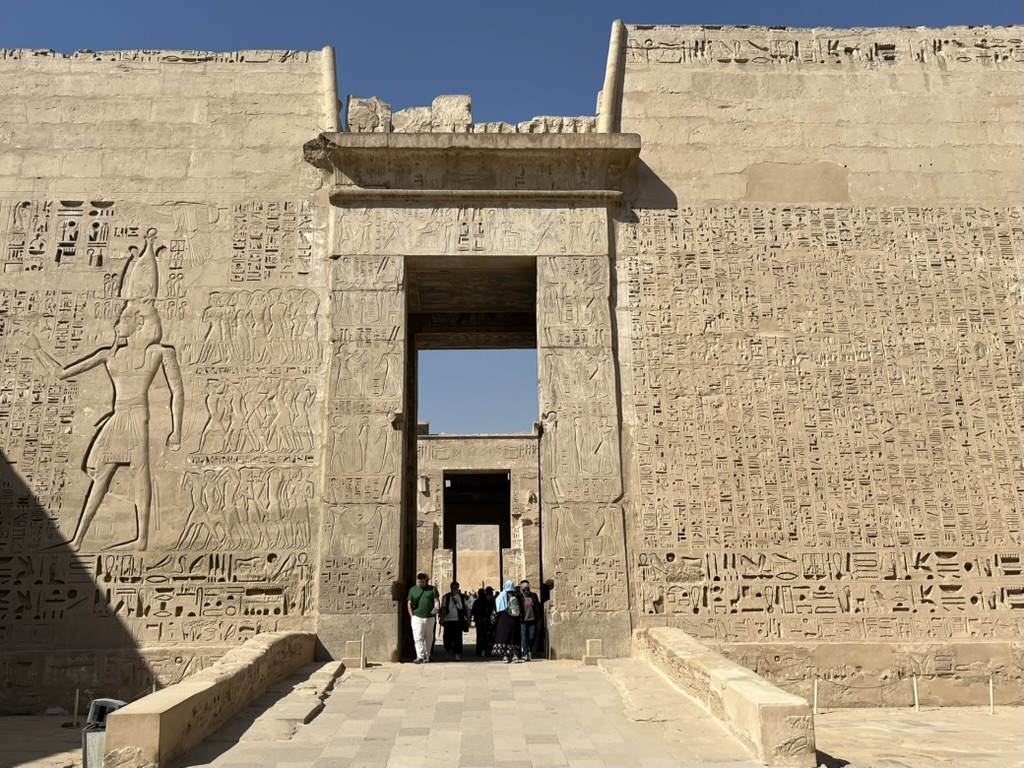
The temple was built by Ramesses III to commemorate his victories over the “Sea Peoples” around 1175 BCE — one of the largest military engagements in the ancient world, and one whose precise historical identity remains debated among scholars. Whatever the Sea Peoples were, the battle reliefs recording their defeat are some of the most detailed naval combat scenes in ancient art: ships locked together, warriors grappling at close quarters, the chaos of water battle rendered in deep-cut stone that catches the Egyptian sun exactly as intended, 3,200 years later.
What to Look For
The naval battle reliefs on the outer walls are the historical centrepiece — dense with detail, readable from close range, and extraordinary as a record of what organised violence looked like in the ancient world. Take time with them before entering the main complex.
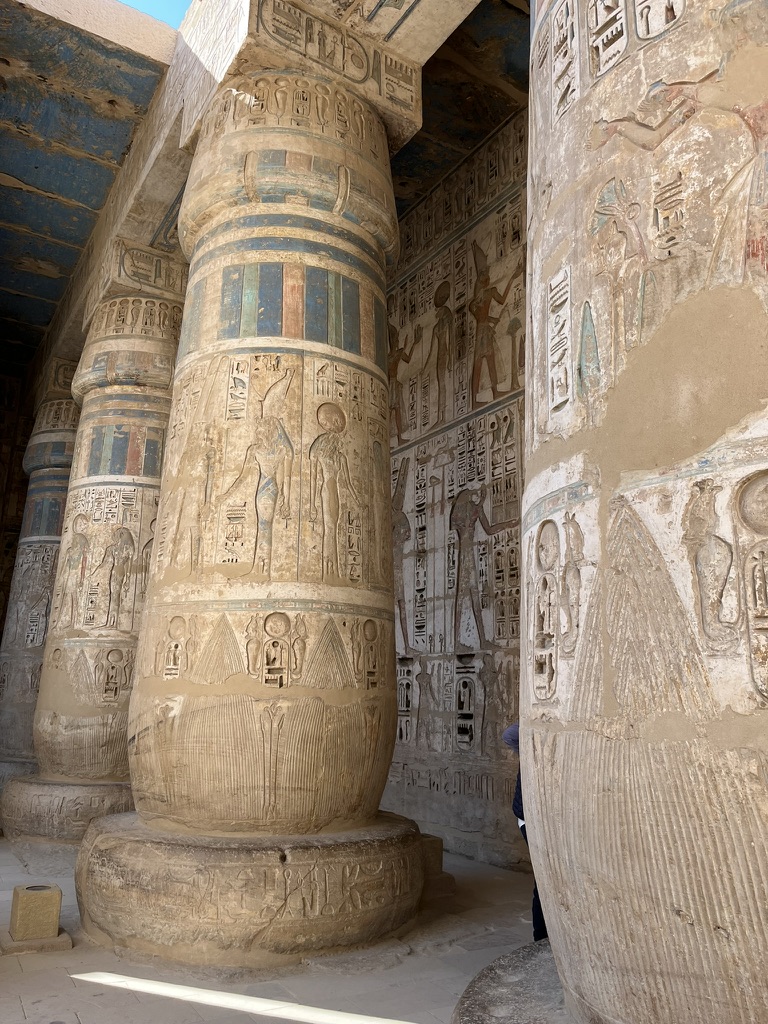
The preserved ceiling colour inside the colonnaded courtyard is the visual highlight. Blue and red paint, 3,200 years old, still vivid enough to read clearly. Medinet Habu is less heavily restored than Karnak and receives far fewer visitors, which means you can stand directly under those ceilings without competing for sight lines.
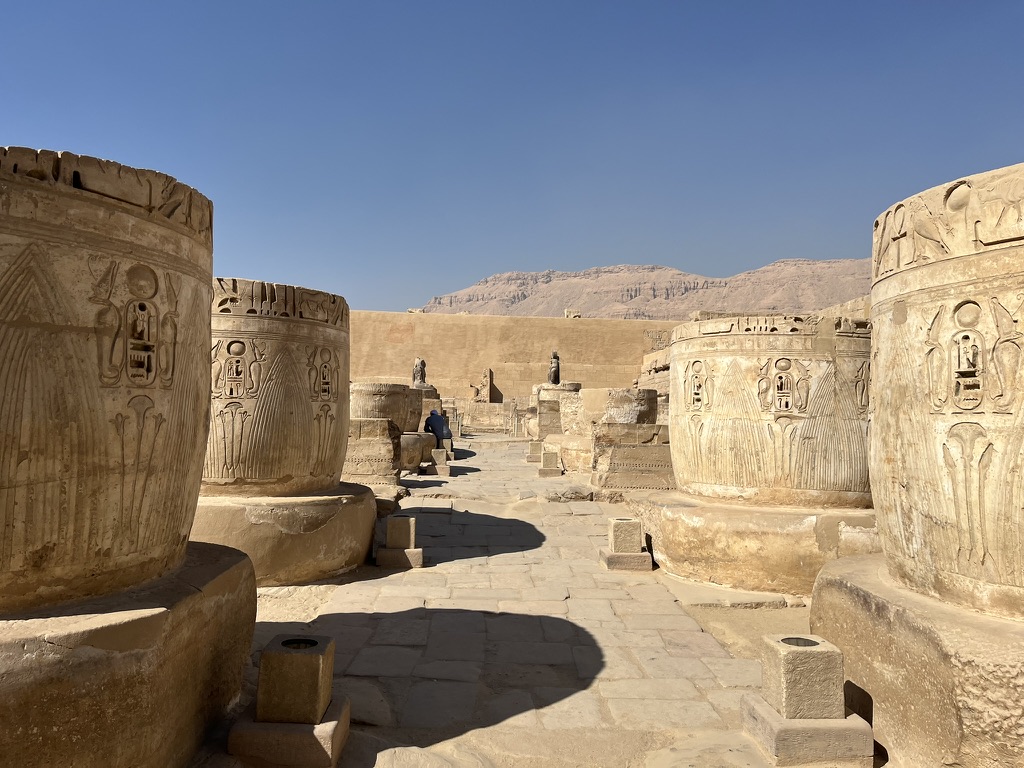
The grand open courtyard at the heart of the complex is the emotional finale. After the enclosed, subterranean world of the morning’s tombs, the experience of standing alone in a massive, sun-drenched, colonnaded space — surrounded by ancient stone and near total quiet — is one of those travel moments that arrives without warning and stays long afterward.
VII. Tickets, Prices, and Opening Hours (2026)
Ticket Prices
| Site | Ticket Type | Standard | Student (ISIC) | Recommendation |
|---|---|---|---|---|
| Medinet Habu | Entire site | 220 EGP | 110 EGP | Recommended — do not skip |
| Deir el-Medina | General (village, temple, 3 tombs incl. TT1, TT359, TT218–220) | 220 EGP | 110 EGP | Recommended |
| Deir el-Medina | TT3 — Pashedu (add-on) | 120 EGP | 60 EGP | Optional — worth it if energy allows |
| Nobles’ Tombs | TT52 Nakht + TT69 Menna (pair) | 200 EGP | 100 EGP | The essential pair — start here |
| Nobles’ Tombs | TT96 Sennefer + TT100 Rekhmire (pair) | 200 EGP | 100 EGP | Optional — Sennefer’s ceiling is exceptional |
| Nobles’ Tombs | TT55 Ramose (single) | 200 EGP | 100 EGP | Optional — unique for the art history |
| Nobles’ Tombs | All 9 tombs | 1,250 EGP | 625 EGP | Only for specialists with a full day |
💡 The Recommended Spend
For a thorough but focused half-day, the optimal ticket combination is: Deir el-Medina general (220 EGP) + Nakht & Menna at the Nobles (200 EGP) + Medinet Habu (220 EGP) = 640 EGP standard / 320 EGP student. Add TT3 Pashedu (120/60 EGP) if you have energy. Add Sennefer (200/100 EGP) if the vineyard ceiling appeals. Buying tickets for all nine nobles’ tombs is only worth it for those with a deep scholarly interest in the necropolis — one or two pairs is the right call for everyone else.
Opening Hours (2026)
| Site | Summer | Winter | Ramadan |
|---|---|---|---|
| Medinet Habu | 6:00 AM – 5:00 PM | 6:00 AM – 4:00 PM | 6:00 AM – 4:00 PM |
| Tombs of the Nobles | 6:00 AM – 5:00 PM | 6:00 AM – 4:00 PM | 6:00 AM – 4:00 PM |
| Deir el-Medina | 6:00 AM – 5:00 PM | 6:00 AM – 5:00 PM | 9:00 AM – 3:00 PM |
6:00 a.m. is the target. All three sites open at dawn and the first hour — especially at Deir el-Medina and the Nobles’ tombs — is categorically different from any other time of day. The absence of tour groups, the quality of the early light, and the silence of the mountain valley at dawn are not minor advantages. They are the experience. Ramadan hours at Deir el-Medina are significantly shorter than at the other two sites — check ahead if visiting during Ramadan.
A Note on Tipping
Inside the tombs, guards sometimes point out specific paintings or use small torches to illuminate scenes in corners where the light doesn’t reach. This is genuine service and worth acknowledging — but tip only if you found it valuable. I tipped the Sennedjem guard 50 EGP because his description of how the artisans organised their working lives, and what the scenes in TT1 actually represent, was genuinely insightful and added something real to the visit. A guard who simply waves a torch at a painting without commentary warrants a smaller tip or none at all.
VIII. West Bank Quick-Reference Cheat Sheet
Screenshot this before your trip — covers every decision you’ll need to make at the ticket office and on the ground.
📋 West Bank Hidden Sites — Quick Reference — Screenshot This
| Item | Key Information |
|---|---|
| Golden Rule | Ticket office FIRST — no gate sales at any of these three sites |
| Ticket office location | Antiquities (West Bank) Ticket Office, near the Colossi of Memnon |
| Transport | Book through your hotel — English briefing to driver prevents language friction |
| Ideal arrival | 6:00 a.m. — dawn silence is categorically different from any later time |
| Visiting order | Deir el-Medina → Nobles’ Tombs → Medinet Habu (“Underworld to the Sun”) |
| Deir el-Medina ticket | 220 EGP (110 student) — covers village, temple, TT1, TT359, TT218–220 |
| TT1 (Sennedjem) | Save for last at Deir el-Medina. Brilliant yellow background. Very tight staircase. |
| Pashedu (TT3) | Separate 120 EGP ticket. Higher up the hillside. The kneeling drinking scene. |
| Best Nobles’ pair | TT52 Nakht + TT69 Menna — 200 EGP (100 student). The essential combination. |
| Menna (TT69) | Save for last at the Nobles. Most complete tomb. Butterflies, cats, crocodile. |
| Sennefer (TT96) | Optional — vineyard ceiling is extraordinary. Separate ticket pair. |
| Medinet Habu ticket | 220 EGP (110 student). Do not skip even with temple fatigue. |
| At Medinet Habu | Naval battle reliefs on outer walls first. Then ceiling colour inside the colonnade. |
| Tipping guards | 50 EGP if commentary was genuinely valuable. Less or nothing for torch-waving only. |
| Optimal total spend | 640 EGP standard / 320 EGP student for Medina + Nakht/Menna + Habu |
IX. Frequently Asked Questions
Can I buy tickets at the entrance to Deir el-Medina or the Nobles’ Tombs?
No. This is the most important logistical fact about these three sites. Tickets are not sold at the gates — you must purchase them at the Antiquities Ticket Office (West Bank Ticket Office) near the Colossi of Memnon before going anywhere else. Arriving at any of these sites without a pre-purchased ticket means driving back to the ticket office, which adds 30–45 minutes and costs you the quiet early hours. Always — always — go to the ticket office first.
How long does the full three-site visit take?
Budget a minimum of half a day — four to five hours — for a thorough visit to all three sites. Arriving at 6:00 a.m. and moving at an unhurried pace, you can finish at Medinet Habu by noon or shortly after. This leaves the afternoon free for lunch, a rest, or the East Bank temples if your energy holds. Trying to rush through all three in under three hours is possible but misses the point — these are sites that reward slow, attentive visiting, not efficient processing.
Which tombs at Deir el-Medina are most worth seeing?
TT1 (Sennedjem) is the single must-see — the brilliant yellow “Field of Reeds” scene is unlike anything else in the Theban necropolis. TT359 (Inherkhau) is a close second, with the iconic image of Ra as a cat slaying Apophis. Both are included in the general ticket. Save TT1 for last to build toward it. If you have energy and budget for the additional 120 EGP, TT3 (Pashedu) with its drinking scene is worth the separate ticket. The monochrome family tombs (TT218–220) are interesting for what they reveal about artistic style but are the weakest of the group.
Is Medinet Habu worth visiting if I’ve already been to Karnak and Luxor Temple?
Yes, without qualification. Medinet Habu is a different experience from both Karnak and Luxor Temple precisely because of what those sites lack: quiet. At Karnak, you navigate crowds and tour groups at every turn. At Medinet Habu, you can stand alone in a massive colonnaded courtyard. The preserved colour on the ceilings is better here than anywhere else in Luxor. The naval battle reliefs on the outer walls are among the most detailed ancient military scenes anywhere in Egypt. Temple fatigue is real — but Habu is the cure for it, not another dose.
Do I need a guide for these sites?
Not for navigation — the sites are compact and easily followed without guidance. A knowledgeable Egyptologist adds genuine depth at the artisan tombs specifically, where understanding what each scene represents and why the artisans painted particular subjects transforms the experience. The guard at Sennedjem’s tomb (TT1) provided an informal commentary that was genuinely valuable — this is worth 50 EGP as a tip. At Medinet Habu, the battle reliefs on the outer walls are legible enough to interpret independently. The Nobles’ tombs fall between the two: most visitors find the explanatory panels sufficient, but a guide who knows the tombs well is a meaningful upgrade.
Is the Tomb of Nefertari (Valley of the Queens) open, and how does it compare?
At the time of writing, the Tomb of Nefertari is closed. It periodically reopens but at a significantly higher ticket price than any tomb in this guide — historically over 1,500 EGP. When open, it is considered one of the finest-painted tombs in Egypt, and visiting it would be worth the price. In its absence, Deir el-Medina — and specifically TT1 Sennedjem — represents the best alternative for extraordinary artisan tomb painting on the West Bank. My hotel owner put it simply: “Go to Medina instead. It is much better.” After visiting, I’d say it’s comparable, not merely a consolation prize.
📍 Related Guides in This Series
- Part 3 of My Egypt Diary — the full story of the Luxor West Bank Hidden Gem days, including the moment TT1’s yellow walls made the whole second day worthwhile. Also Part 1 and Part 2 of My Egypt Diary in other Egypt locations.
- Luxor: Valley of the Kings & Beyond — The Complete Self-Guided Guide (2026) — the main Luxor guide: Karnak, Luxor Temple, the Avenue of Sphinxes, Hatshepsut, the Valley of the Kings, transport, safety, money, and the city itself.
- The Grand Egyptian Museum (GEM): The Complete Self-Guided Visitor’s Guide (2026) — the GEM in Giza houses many of the objects that the artisans and nobles of Thebes died protecting. The two destinations are linked by more than geography.
- Master Egypt Itinerary: The Complete Self-Guided Blueprint — how Luxor’s two days fit into the full Egypt trip structure.

Hi, I’m Frank J – Egypt Self-Guided Travel. I explore Egypt solo and share tips, stories, and practical advice to help you plan your own adventures safely and enjoyably.