Egypt is not a difficult country to navigate independently — but it is a country where small details matter. The gap between a smooth trip and a frustrating one is usually not about the monuments; it’s about transport logistics, cash strategy, and knowing which situations to handle firmly. This Egypt travel safety guide distills everything learned across 12 days of self-guided travel into one practical reference.
✍️ How to Use This Guide
This is a companion to the [Egypt Culture Guide]. That guide covers hidden gems, food and culture aspect of Egypt. This one covers the logistics of traveling in Egypt — and what to do when things don’t go to plan.
The two itinerary guides 12-Day Egypt Master Guide and the 3-7-9 Day Itinerary Library reference both this guide and the culture guide to lay out Egypt travel routes if you have 12 days or less.
📋 Table of Contents
I. Egypt Travel Safety Guide: What’s Real and What’s Overstated
The most common question before any Egypt trip: “Is it safe?” After 12 days of walking Cairo, Luxor, and Aswan solo — including at night — the answer is yes, with an important distinction worth understanding before you arrive.
Egypt is intense, not dangerous. The physical safety risks that worry most first-time visitors are largely overstated. What you’ll actually encounter is persistent commercial pressure: vendors, commission-seekers, and people who open conversations with “Hey, I remember you from the hotel” or “I’m the chef — come see my cousin’s shop.” These people are not threatening. They want a sale. The solution is not wariness — it’s a calm, firm “La, Shukran” (No, thank you) delivered without stopping or making eye contact, and then continuing to walk.
The “La, Shukran” Method
Two Arabic words will handle the majority of unwanted interactions across the entire trip. Say “La, Shukran” — No, thank you — calmly and without breaking stride. Do not stop to explain why you don’t want the camel ride, the papyrus, or the perfume. The moment you engage with a reason, the conversation becomes a negotiation. Eye contact invites follow-up. Forward movement ends it.
It takes a day or two to stop feeling rude about this. Once it becomes instinct, Egypt becomes considerably more relaxed.
Self-Guided Travel Is Entirely Possible
Signs at major sites are in English. Google Maps is accurate throughout Egypt. Hotel staff are consistently helpful with logistics and local knowledge. You do not need a private guide to navigate the country safely — the infrastructure for independent travelers is genuinely good. Where a guide adds real value is historical depth at temples, not logistical survival.
Crossing the Street
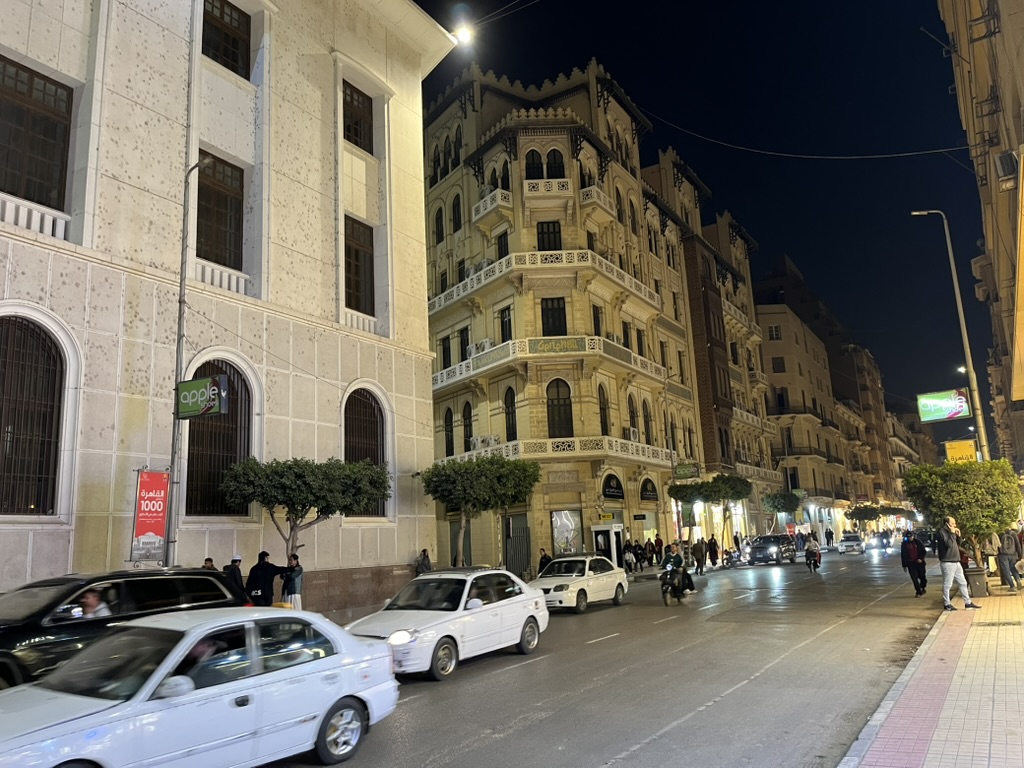
Cairo traffic operates by a logic that looks like chaos but has internal rules. Crosswalks are decorative. Cars don’t stop — they flow around pedestrians who move predictably. The technique: walk at a steady, unhesitating pace. Drivers calculate their path around your current speed. If you stop suddenly or jump, you break their calculation. If you’re nervous at first, find a local crossing at the same moment and match their pace exactly. By Day 3, it becomes automatic. By Luxor, a passing cyclist called out without even turning his head: “Wow, you walk like an Egyptian.”
II. Cairo Airport: The Arrival Playbook
Visa on Arrival
For most nationalities (USA, UK, EU, Australia), the visa on arrival is the fastest and simplest option. Bank kiosks are located in the arrivals hall before passport control — $25 USD, single entry. The process takes about 20 seconds at the counter. One practical note: bring new, crisp $20 and $5 bills. Tellers routinely reject notes with small tears or ink marks. The e-visa option exists but the on-arrival stamp is typically faster and avoids any pre-trip portal issues.
SIM Card
Buy it here, in the luggage hall, before you leave the building. Vodafone and Orange both have desks. A physical SIM with 30GB costs around $10 and will last the entire trip. Don’t wait until later — airport pricing is competitive, and having data before you reach the taxi queue is worth a five-minute stop.
Getting to the City: The Parking Lot Rule
This is the single most important thing to know about Cairo Airport. Uber cannot pick up at the arrivals curbside. That lane is reserved for taxis. If you open Uber while standing outside arrivals and wonder why drivers keep messaging that they can’t find you — this is why.
The process: exit arrivals, find the outdoor elevators, take them down to the parking lot (Section B5 is typically where drivers wait). Stay inside the terminal until your driver confirms they’re actually in the lot — the moment you step outside, taxi touts will approach. Matching the car to the number plate is essential. See the Arabic numerals section below.
For late-night arrivals (after midnight), a pre-booked hotel transfer at around $15–20 is worth the peace of mind. Navigating the parking lot in a new country while jet-lagged is a solvable problem, but not one worth solving at 2 a.m. on your first night in Egypt.
💡 Reading Egyptian Number Plates: The Essential Cheat Sheet
Egyptian license plates use Eastern Arabic numerals, which look different from the 0–9 system in your Uber app. Three digits cause the most confusion for Western travelers:
٥ = 5 ٧ = 7 ٨ = 8
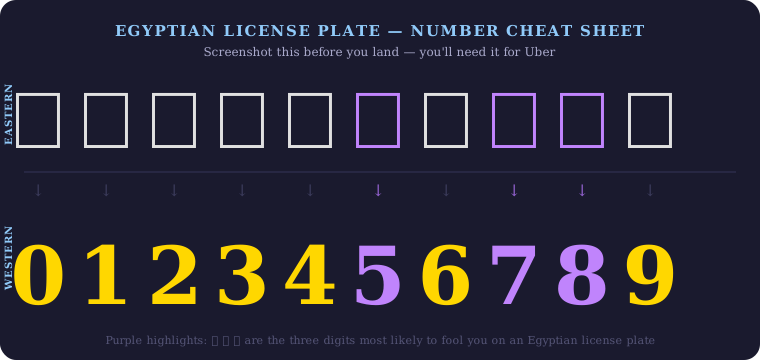
Save this on your phone before the trip. After a few rides you’ll recognise them automatically — but in the chaos of a busy parking lot on your first night, having it as a reference saves real time and stress.
III. Uber in Cairo: The Ground Rules
Uber is the right tool for the vast majority of Cairo journeys. It’s reliable, affordable (most rides cost a few dollars), and eliminates the negotiation that comes with unmetered taxis. A few rules make it work significantly better:
Use it everywhere except Giza exit. Uber to the Giza Plateau works fine. Uber back from Giza to Cairo is where problems concentrate — see the full section below.
Don’t engage with in-app messages. Under normal circumstances, an Uber driver has no reason to message you before pickup. If a driver messages asking about the fare, requesting cash, mentioning traffic surcharges, or asking you to meet somewhere other than the pin — cancel immediately. This is a near-universal opening move for the fare inflation scam. A legitimate driver arrives, drives, takes the app payment, and that’s the entire interaction.
Khan el-Khalili: use Bab al-Futuh. Setting your Uber destination to the market itself puts you in a gridlocked alley where cars barely move. Set the destination to Bab al-Futuh instead — the historic city gate a short walk from the market. From there you walk through the illuminated mosque streets into the bazaar, which is both faster and significantly more atmospheric, especially at dusk.
Late-night Uber works — with a caveat. Uber is available 24 hours in Cairo. For very early morning rides (3–4 a.m.), allow extra buffer time. On our departure morning — a 3 a.m. call for a 5:40 a.m. flight — the first driver immediately sent a message asking for 30 euros cash “because he’d return empty.” We canceled. A second driver arrived three minutes later with no drama. The system works; some individual drivers test it.
The Cairo Transport Matrix
| Situation | Best Option | Notes |
|---|---|---|
| Airport arrival | Uber (parking lot B5) or hotel transfer | Hotel transfer worth it for late-night arrivals |
| Central Cairo journeys | Uber | Reliable, fixed price, rarely more than $3–5 |
| To Coptic Cairo | Cairo Metro | Clean, cheap, bypasses surface gridlock |
| To Khan el-Khalili | Uber to Bab al-Futuh | Avoid setting destination to the market itself |
| To Giza Plateau | Uber | Reliable outbound; problems are on the return |
| From Giza back to Cairo | Uber + taxi fallback | See full Giza section below |
| Airport departure (pre-dawn) | Uber | Works, but cancel and retry if driver messages first |
IV. The Giza Uber Trap: A Full Breakdown
The area around the Giza Plateau and the Grand Egyptian Museum is the only place in Egypt where we consistently encountered transport fraud — and it happened on both our visits. Understanding exactly how it works makes it easy to handle.
How the Scam Works
A driver accepts your Uber request, then immediately sends an in-app message. The message is usually friendly: a greeting, a question about your destination, an offer to discuss the route. What follows is a request for cash — often framed as “ten times the app price,” “a flat rate for the distance,” or “extra because he’ll return empty.” The cash amount is always dramatically higher than the app fare.
The pattern is consistent enough that a simple rule applies: if a driver messages you at Giza, cancel the ride. No exceptions, no reading the message to judge intent. A legitimate driver does not need to negotiate before pickup.
If You’re Already in the Car
This happened to us once. A driver asked for a higher price the moment we got in. The response: say calmly that you only pay the price shown in the app, and ask to be let out. Say it once, without arguing or explaining further. Most drivers back down immediately when they realise you won’t negotiate. If the car doesn’t stop, call out the specific demand again and reiterate that you’re getting out. We were moving slowly enough in Giza traffic that this wasn’t complicated — we simply got out and canceled.
The Taxi Fallback
When Uber fails at Giza — and it may take several attempts to get a legitimate driver — walk about 50 yards from the main entrance before reopening the app. If multiple cancellations don’t resolve it, look for a clearly marked taxi with visible identification. Agree on a price and currency before you get in. The going rate from Giza to central Cairo is around $10–15 — more than double the Uber price, but significantly less than what fraudulent drivers ask. Never use an unmarked car.
Giza Entrance and Exit Logistics
The official entrance is the Pyramids Visitor Centre — the old hotel-side entrance near the Marriott Mena House has been closed since mid-2022 and does not appear reliably on older maps. Use the full name “Pyramids Visitor Centre” when setting your Uber destination.
The Sphinx entrance remains open and is often quieter than the main gate, particularly in the early morning. Fewer tour buses use it, and it provides a different route through the site. Use “Great Sphinx of Giza” as the Uber destination for this entrance.
⚠️ Getting from the Sphinx Entrance to GEM by Uber
The stretch between the Sphinx exit and the Grand Egyptian Museum entrance is the hardest Uber call in all of Egypt. Multiple fraudulent drivers often congregate at this specific point. It may take three or four cancellations before a legitimate driver accepts.
If you cannot get a legitimate Uber after several attempts: take the Giza Plateau’s free internal shuttle back to the main entrance, then walk to GEM. It adds time but removes the stress entirely. Alternatively, negotiate with a marked taxi outside the Sphinx gate — expect around $5–8 for the short distance to GEM.
V. Transport in Aswan
Aswan operates differently from Cairo in one important way: Uber does not exist here. The apps to know are InDrive and standard taxis.
InDrive is available in Aswan, but with a practical catch: drivers are often not permitted inside the airport perimeter. A driver may message you asking to meet outside the gates — judge this on a case-by-case basis, and trust your instincts if a pickup arrangement feels off.
The most reliable approach at Aswan Airport: use the InDrive price as a reference, then walk to the regular taxi queue and negotiate from that baseline. Expect to pay 20–50% above the app price to get out of the airport. This is normal and accepted. Once you have a price agreed and confirmed, the rides themselves are straightforward.
For the rest of Aswan — hotel to dock, dock to temples, local errands — taxis and horse-drawn carriages are the standard options. Prices are low by any international standard; negotiating is expected and not uncomfortable once you’ve done it once or twice.
VI. Domestic Flights: Book Smarter
Fly, Don’t Train
The debate between domestic flights and the sleeper train (Cairo to Aswan, for instance) resolves quickly once you compare the actual experience. For foreign travelers in 2026, the flights cost roughly the same as sleeper train tickets — sometimes less — and save 10+ hours of travel time. The train booking process is also genuinely confusing online and not well set up for international visitors. Unless you want the train experience specifically, fly.
The EgyptAir Currency Hack
When booking on the EgyptAir website, change the currency to EGP (Egyptian Pounds) before searching for flights. The site defaults to a higher “international” rate in USD or EUR. Switching to EGP before selecting your flight regularly produces a noticeably lower fare — sometimes equivalent to a full night’s hotel.
The Schedule Warning
EgyptAir changed our flight times twice without sending an email notification either time. Check your booking directly on the EgyptAir website manually — every few days in the weeks before the trip, and daily as the departure approaches. Do not rely on email alerts. This is particularly important if you have tight connections between domestic arrivals and international departures.
💡 International Departure Buffer
Always allow at least four hours between a domestic arrival in Cairo and your international departure. EgyptAir is generally reliable, but the buffer matters. Egypt’s pace applies at airports as readily as it applies everywhere else, and a compressed connection on your last day is the most avoidable source of trip-ending stress.
VII. Nile Cruise Logistics
Direction and Duration
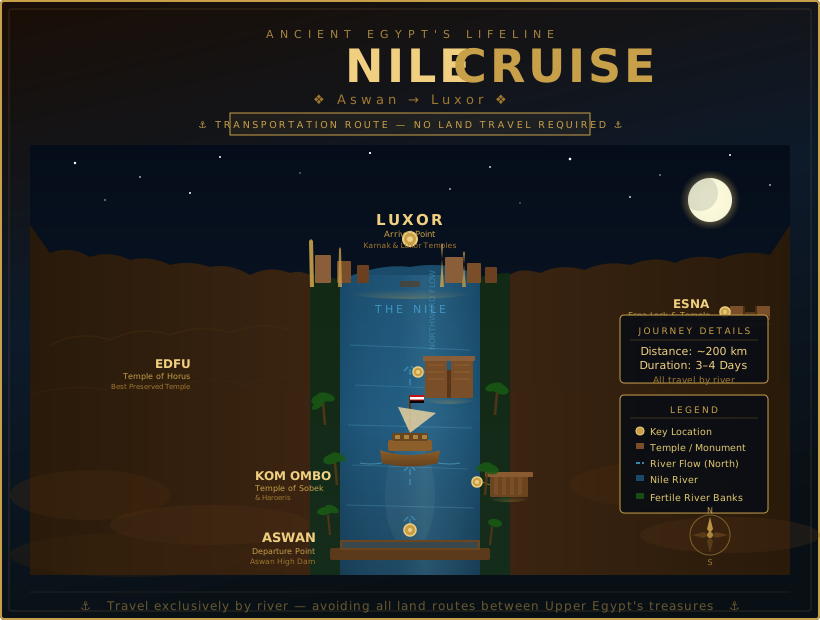
Always book Aswan to Luxor (downstream). The upstream reverse adds at least a day against the current and is less efficient. The standard downstream route is four days and three nights — the right length for seeing Philae, Abu Simbel, Kom Ombo, and Edfu without rushing.
Booking Strategy
Solo cabin bookings online tend to be significantly overpriced compared to group cruise packages. Most platforms don’t even tell you the boat name until after booking — reviews matter more than price when choosing. Two practical options: book a group package through a platform like TripAdvisor (practical and affordable), or head to the Aswan docks on arrival and book a last-minute cabin directly. The dock approach can yield better rates — boats regularly have unsold cabins the day before departure — but you cannot plan around it, and availability is not guaranteed.
Tipping on the Cruise
Budget approximately $10 per day per person for boat staff and another $10 per day per person for the guide. Our guide communicated this directly and clearly on the first day. It’s the standard and the expectation — build it into your budget before you board.
The “Missing Boat” Mystery
At every dock along the route, cruise ships moor side-by-side, three or four deep. If you return to the dock and your boat doesn’t appear to be there, it has not moved without you — it’s behind another ship. You may have to walk through the lobby of one or two other boats to reach yours. This is standard, expected, and mildly surreal the first time.
Using the Cruise as Transportation Only
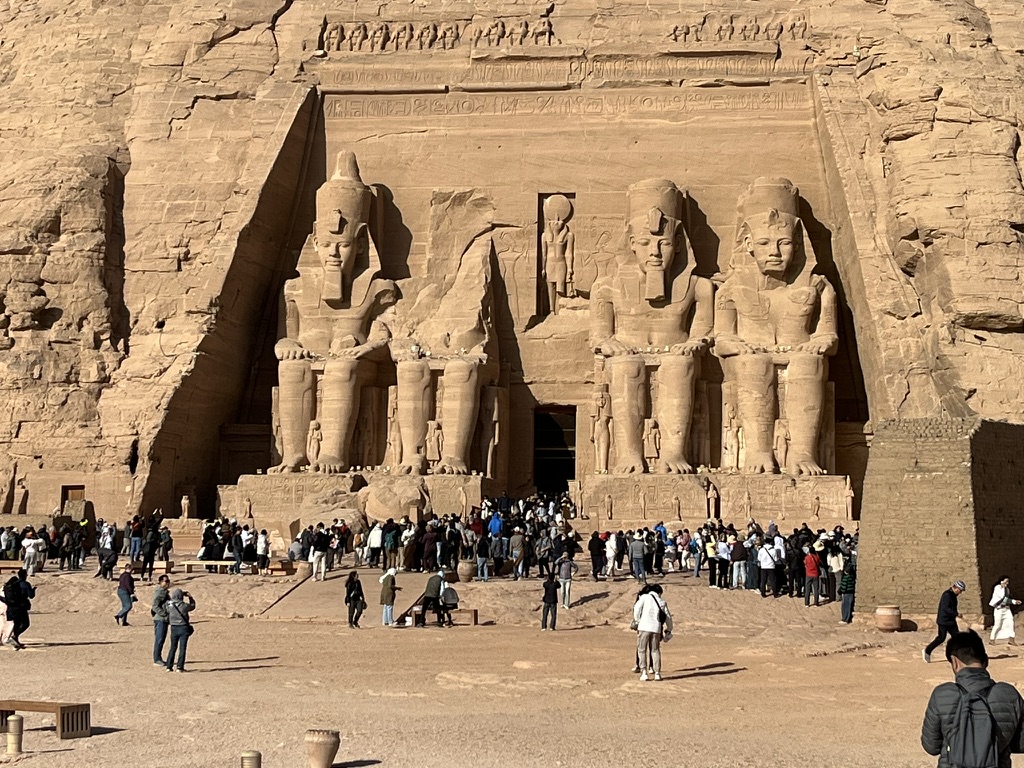
You are not required to join every group excursion the cruise includes. On our trip, we joined the group for Aswan’s highlights, Abu Simbel, Kom Ombo, and Edfu — but once the boat reached Luxor, we left the group and explored the Valley of the Kings independently, arriving after the morning tour convoys had cleared. The cruise became a comfortable floating hotel with the group tours as optional extras. This hybrid approach works well for independent travelers who want the Nile experience without surrendering all scheduling control.
VIII. Crowd Timing at Major Sites
Most organised tour groups operate on the same schedule — early morning arrivals, mid-morning peak, dispersal by early afternoon. Timing your visits around this pattern makes a real difference at Egypt’s most popular sites.
| Site | Avoid | Best Time | Notes |
|---|---|---|---|
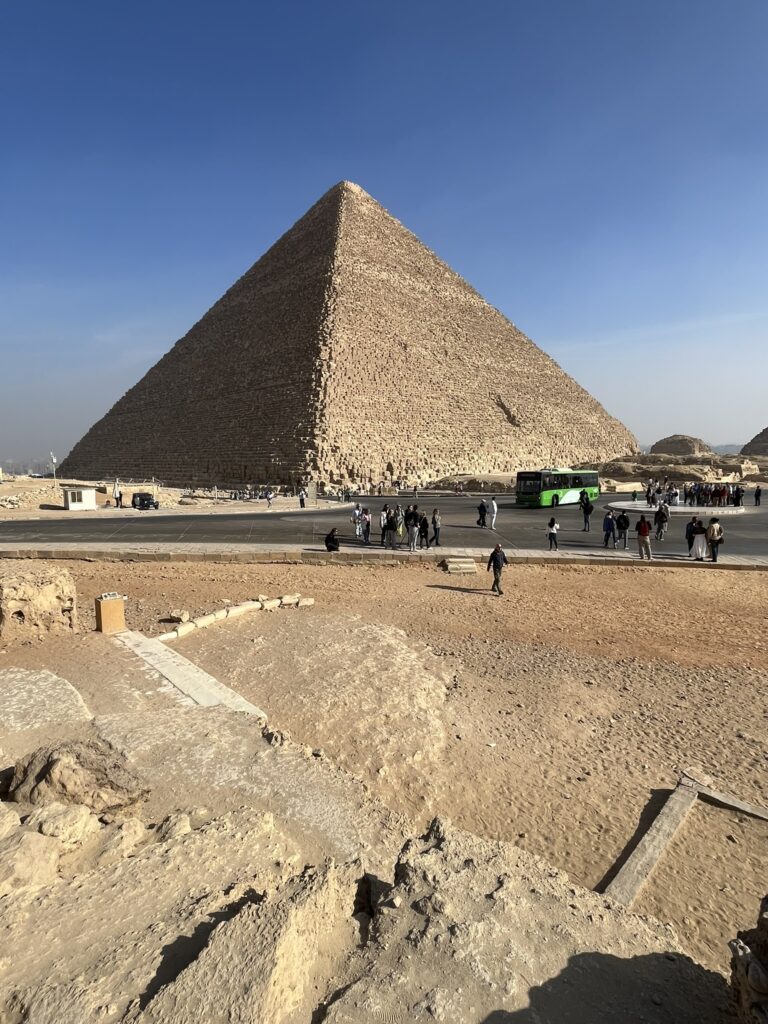
| Giza Pyramids | Midday (busiest) | Opening or late afternoon | Early for cooler temps; late for quieter site |
| Abu Simbel | 8–9 a.m. convoy peak | Noon onward (if independent) | Cruise passengers have no choice on convoy timing |
| Valley of the Kings | 8–10 a.m. tour buses | 11 a.m.–noon | Avoid midday in summer heat |
| Karnak Temple | Morning tour peak | Early morning or late afternoon | The scale gives natural breathing room |
| Luxor Temple | Harsh afternoon sun | Dusk and evening | Night lighting transforms the atmosphere completely |
| Egyptian Museum (Tahrir) | Before 10 a.m. | After 10 a.m. | Morning tour groups clear quickly; quieter after 10 |
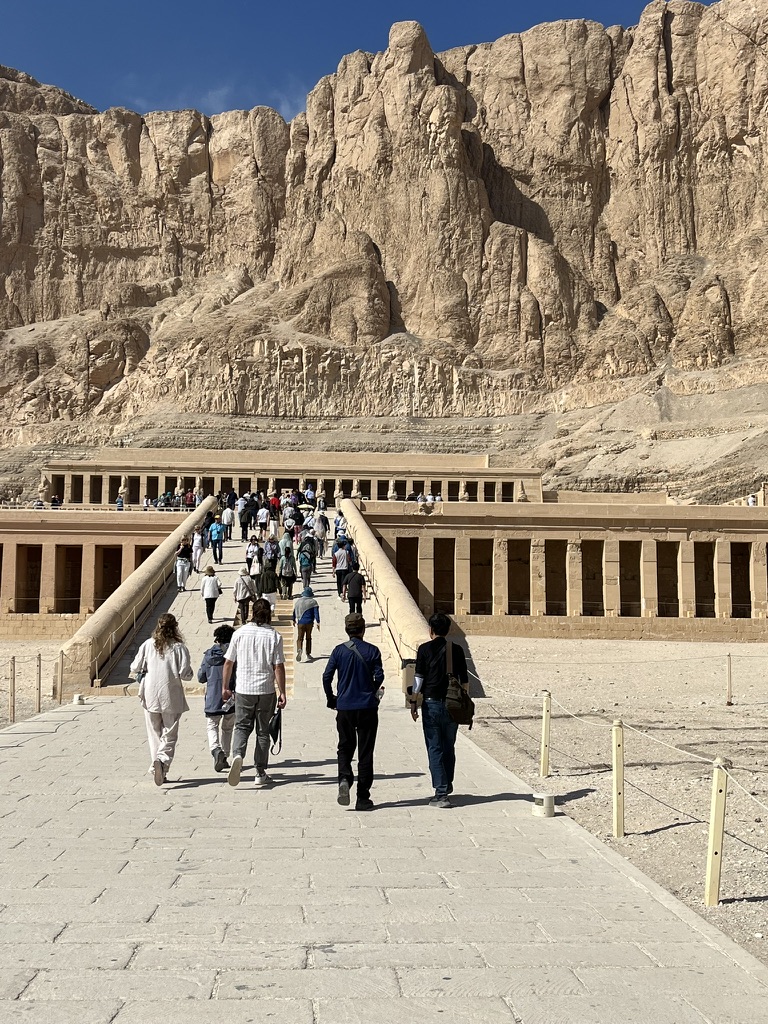
| West Bank hidden gems | Never crowded | Any time | Deir el-Medina, Tombs of Nobles, Medinet Habu are rarely busy |
IX. Money, ATMs, and Cash Strategy
Cash is essential throughout Egypt. Hotels and upscale restaurants accept cards reliably. Everything else — local restaurants, street food, tips, public toilets, smaller shops, taxis — runs on cash. Assuming your card will cover most situations is the most common financial mistake first-time visitors make.
Which ATMs to Use
Stick to two banks: National Bank of Egypt (NBE) and Banque Misr. Their ATMs work consistently with foreign cards, are easy to find throughout Cairo, Luxor, and Aswan, and always dispense cash. Smaller bank ATMs caused repeated problems on our trip — some didn’t dispense at all, some rejected foreign cards without explanation, one required holding an account with that specific bank. After a few failed attempts, we stopped trying anything other than NBE and Banque Misr entirely.
The Small Note Problem
ATMs almost always dispense 200 EGP notes. These are very difficult to break at small shops, street food stalls, and public toilets. Every time you’re at an ATM or receiving change at a larger establishment, actively seek out 5, 10, and 20 EGP notes. Keep a separate pocket for them. Baksheesh (tips), bathroom attendants, and street snacks all require small bills, and fumbling with a 200 EGP note for a 5 EGP purchase creates unnecessary friction throughout the day.
The Best Debit Card
A Charles Schwab debit card refunds all international ATM fees automatically and charges zero foreign transaction fees. It worked at every ATM we tried across three cities. If your home bank charges international fees, the savings over a 12-day trip are meaningful. If switching cards before the trip isn’t practical, prioritise fewer, larger ATM withdrawals to minimise the per-transaction fee.
USD and EUR as Backup
Several cash-only restaurants — particularly smaller local spots — accept USD or EUR when EGP is short, usually at a fair rate close to the official exchange. This isn’t universal, but it’s common enough to make carrying a small amount of USD useful as a genuine backup rather than just an emergency fund.
X. SIM Cards and Connectivity
Buy a physical SIM card at Cairo Airport — in the luggage hall, before you leave the building. Vodafone and Orange both have desks there. A 30GB SIM costs around $10 and will comfortably last a 12-day trip even with heavy Maps and Uber use.
Skip the eSIM unless your phone has no physical SIM slot. Inside the thick stone walls of Luxor’s temples and Aswan’s rock-cut tombs, physical SIM cards maintain signal noticeably better than most eSIMs. The price difference also favours the physical card significantly. If you’re buying remotely before the trip for convenience, confirm your phone’s eSIM signal reliability in enclosed stone environments — if you’re not sure, the physical SIM is the safer call.
XI. The Save-This Cheat Sheet
Screenshot this before you fly. It covers the situations where you’ll most want a quick reference and least want to search for one.
📋 Egypt Transport & Safety Quick Reference
| Situation | The Right Move |
|---|---|
| Cairo Airport Uber pickup | Walk to parking lot Section B5 — arrivals curbside is taxis only |
| Late-night airport arrival | Pre-booked hotel transfer ($15–20) is worth the simplicity |
| Reading licence plates | ٥ = 5, ٧ = 7, ٨ = 8 — save the full chart on your phone |
| Driver messages you in app | Cancel immediately — legitimate drivers don’t negotiate before pickup |
| Uber from Giza fails repeatedly | Walk 50 yards from the entrance, retry — or use a marked taxi ($10–15) |
| Uber to Khan el-Khalili | Set destination to Bab al-Futuh, walk from there |
| Transport in Aswan | No Uber — use InDrive price as baseline to negotiate with taxi |
| Domestic flight booking | Set EgyptAir website currency to EGP before searching |
| EgyptAir flight times | Check manually on EgyptAir.com daily near departure — no email alerts |
| International departure buffer | Allow 4+ hours between domestic Cairo arrival and international flight |
| ATMs to use | National Bank of Egypt (NBE) and Banque Misr only |
| Small change supply | Always keep 5, 10, 20 EGP notes — ATMs dispense 200s that can’t be broken |
| SIM card | Buy physical Vodafone or Orange SIM in luggage hall — ~$10 for 30GB |
| Vendor interactions | “La, Shukran” — say it once, keep walking, no eye contact |
| Crossing Cairo streets | Walk steady, don’t hesitate — drivers route around your current pace |
| Boat “disappeared” at dock | It’s behind another ship — walk through adjacent boat lobbies |
| Valley of the Kings food | Bring a packed lunch — on-site options are expensive and limited |
| Best Valley of the Kings timing | Arrive 11 a.m. — tour group convoys have cleared by then |
📍 Related Guides
- [12-Day Egypt Master Guide] — the complete self-guided blueprint: day-by-day itinerary, Luxor ticket strategy, and destination logistics.
- [3-7-9 Day Itinerary Library] — compressed routes for travelers with less time.
- [Egypt Cultural Guide] — hospitality, food, hidden gems, and what Egypt gives you beyond the monuments.

Hi, I’m Frank J – Egypt Self-Guided Travel. I explore Egypt solo and share tips, stories, and practical advice to help you plan your own adventures safely and enjoyably.