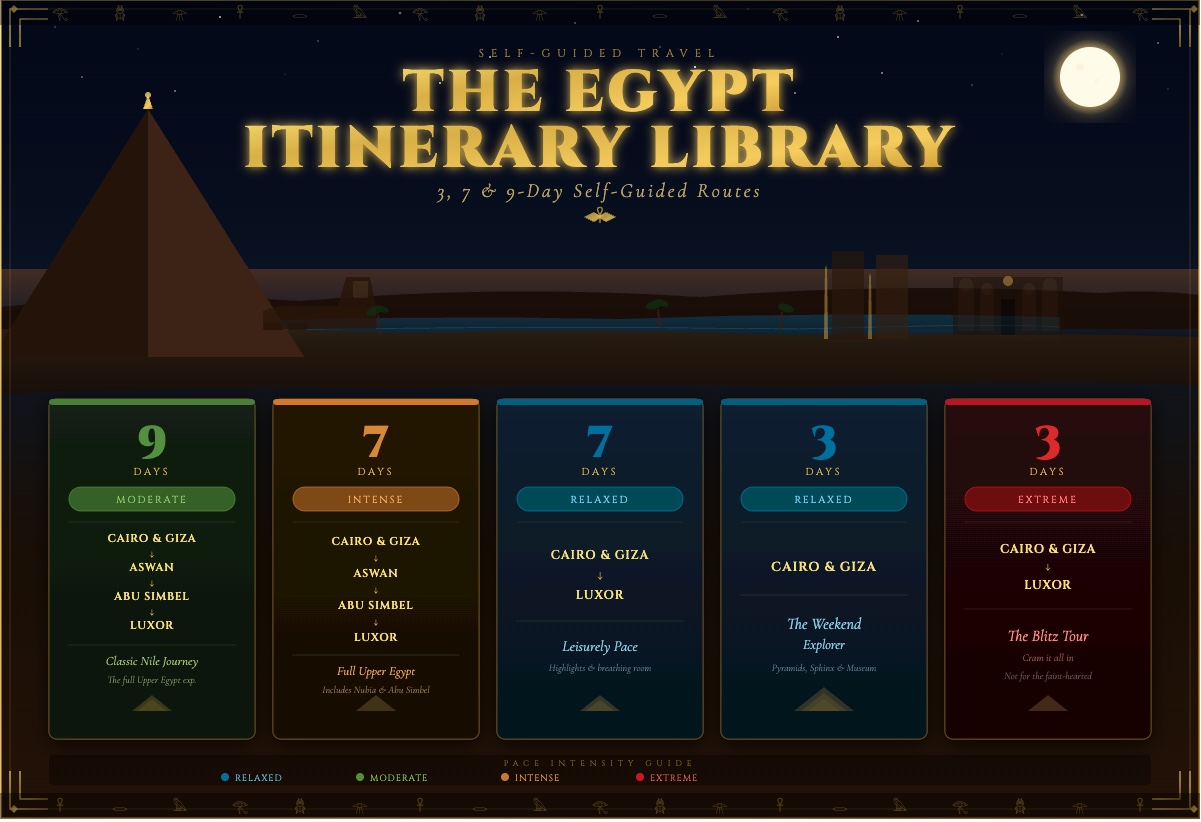
Not everyone has 12 days. If you’re working with less time, you can still experience Egypt — you just need to be more deliberate about what you choose and more honest about what you’re giving up. Below is a practical library of compressed itineraries built for independent travelers, with clear warnings about which routes are manageable and which ones will genuinely test your stamina.
✍️ Read This First
All of these Egypt itinerary options assume you’re already across the fundamentals: Uber navigation in Cairo, the visa-on-arrival process, how to handle persistent vendors, and the EgyptAir currency booking hack. If any of those are unfamiliar, start with the Egypt 12 day Itinerary Guide — it covers the survival skills that make every shorter route here work.
For the raw daily journal and photos of actual travel on the ground, see my Egypt Personal Diary (Parts 1, Part 2 and Part 3).
📋 Table of Contents
I. How Many Days Do You Really Need?
Before picking a route, be honest about two things: your energy levels and your tolerance for early mornings. Egypt’s monuments are extraordinary, but seeing them properly requires physical and logistical effort that surprises most people. Compressed itineraries amplify that effort significantly.
3 days is workable only if you focus on Cairo and Giza (Route A) or you’re willing to treat the trip as a high-intensity logistical exercise with almost no margin for anything going wrong (Route B). It’s not a relaxing introduction to Egypt — it’s a sprint.
7 days gives you a meaningful trip, but you’ll be moving fast throughout. The “See It All” route in particular is not for travelers who need recovery time between major sites. The Cairo and Luxor Focus route is considerably more manageable — and arguably more satisfying.
9 days is the real sweet spot for a compressed itinerary. You get the full classic flow — Cairo, Aswan, the Nile, Luxor — without the total exhaustion that comes from trying to do all of it in seven days. The tradeoff versus 12 days is losing the West Bank’s hidden gems and the deeper exploration of Cairo’s neighbourhoods. That’s a real loss, but an acceptable one.
II. Egypt Itinerary Options Comparison: The Five Routes
| Days | Route | Pace | Cities | Best For |
|---|---|---|---|---|
| 9 Days | The Balanced Trip | Moderate | Cairo, Giza, Aswan, Abu Simbel, Luxor | The “classic” seeker with limited time |
| 7 Days | See It All | Intense | Cairo, Giza, Aswan, Abu Simbel, Luxor | High-energy, high-tolerance travelers |
| 7 Days | Cairo & Luxor Focus | Relaxed | Cairo, Giza, Luxor | Deep-dive history buffs |
| 3 Days | Cairo Highlights | Relaxed | Cairo, Giza | Stopovers and long weekends |
| 3 Days | Absolute Highlights | Extreme | Cairo, Giza, Luxor | Bucket-listers with very limited time |
III. The 9-Day Itinerary: The Balanced Choice
If you want Cairo, Aswan, Abu Simbel, and Luxor but can’t stretch to 12 days, this is the route that keeps the classic flow intact without breaking you. What you give up relative to 12 days: the deeper West Bank sites in Luxor (Deir el-Medina, the Tombs of the Nobles, Medinet Habu) and the extra breathing room in Cairo for Islamic and Coptic neighbourhoods. Everything else — the Nile, Abu Simbel, the Valley of the Kings — stays.
Pace: Moderate to fast. Best for: Travelers who want the full classic route without total exhaustion.
Evening arrival at Cairo International. Hotel transfer or Uber to your accommodation in central Cairo (not Giza — stay in the city for better food, walkability, and transport options). Rest. Don’t attempt sightseeing tonight.
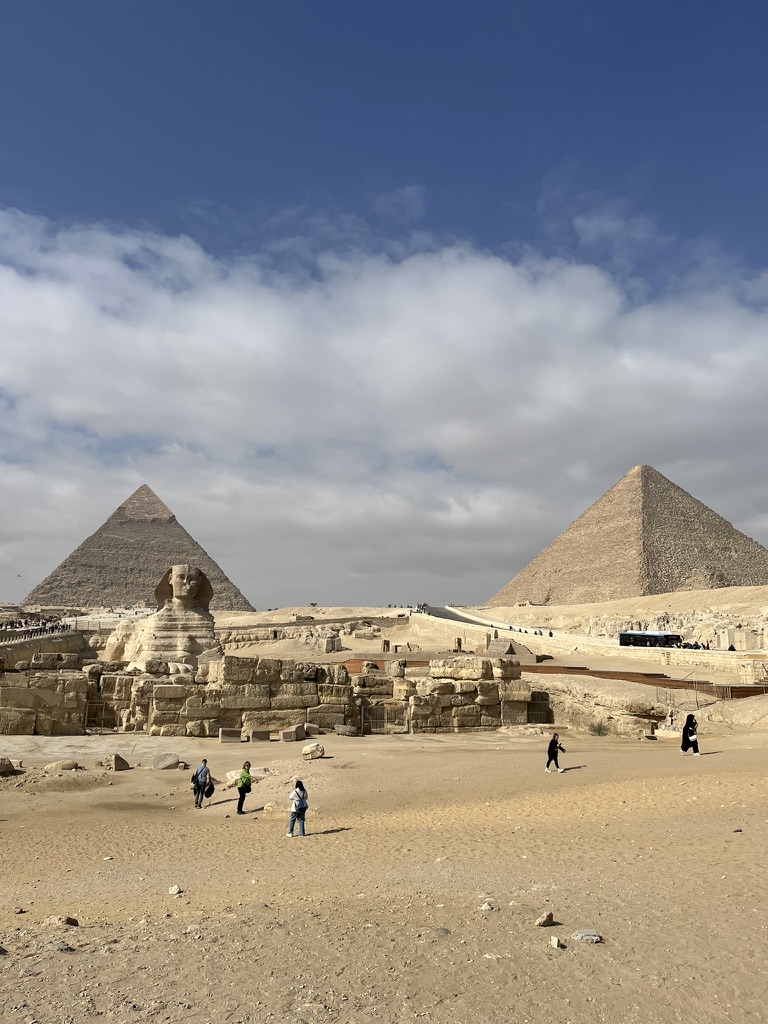
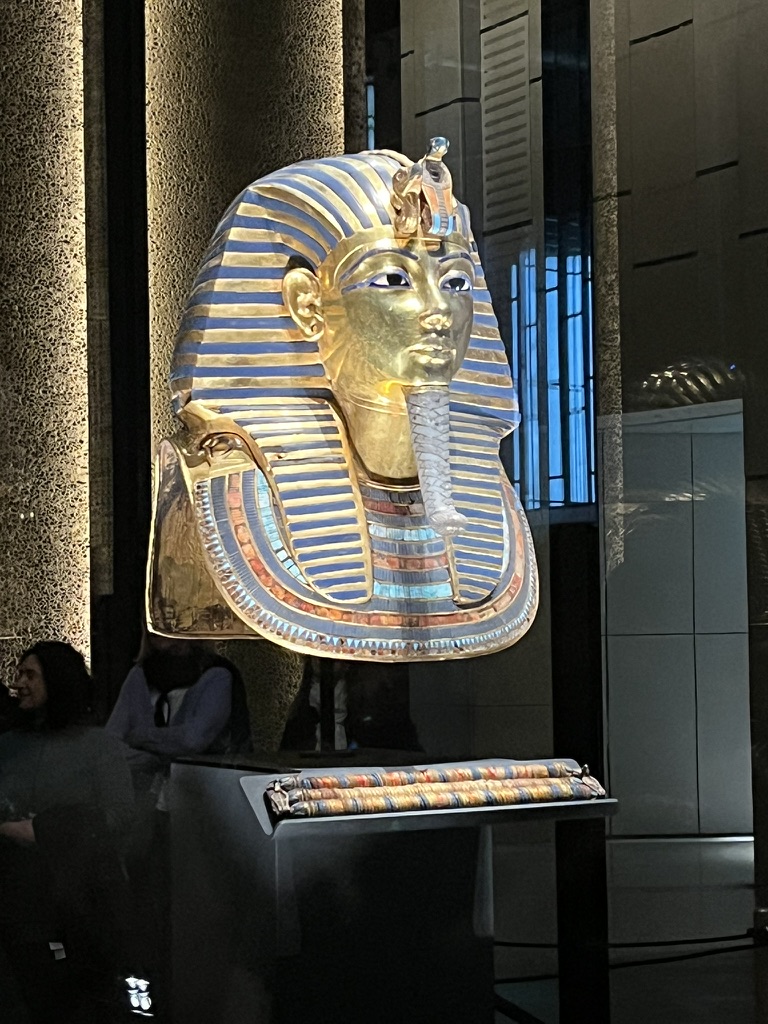
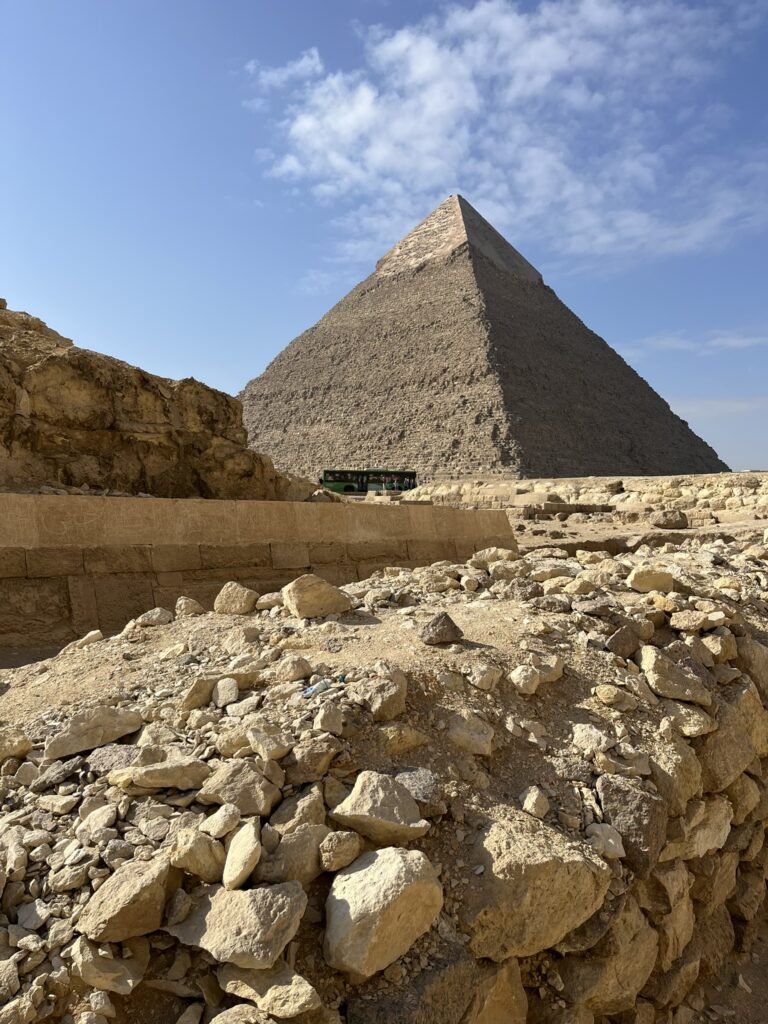
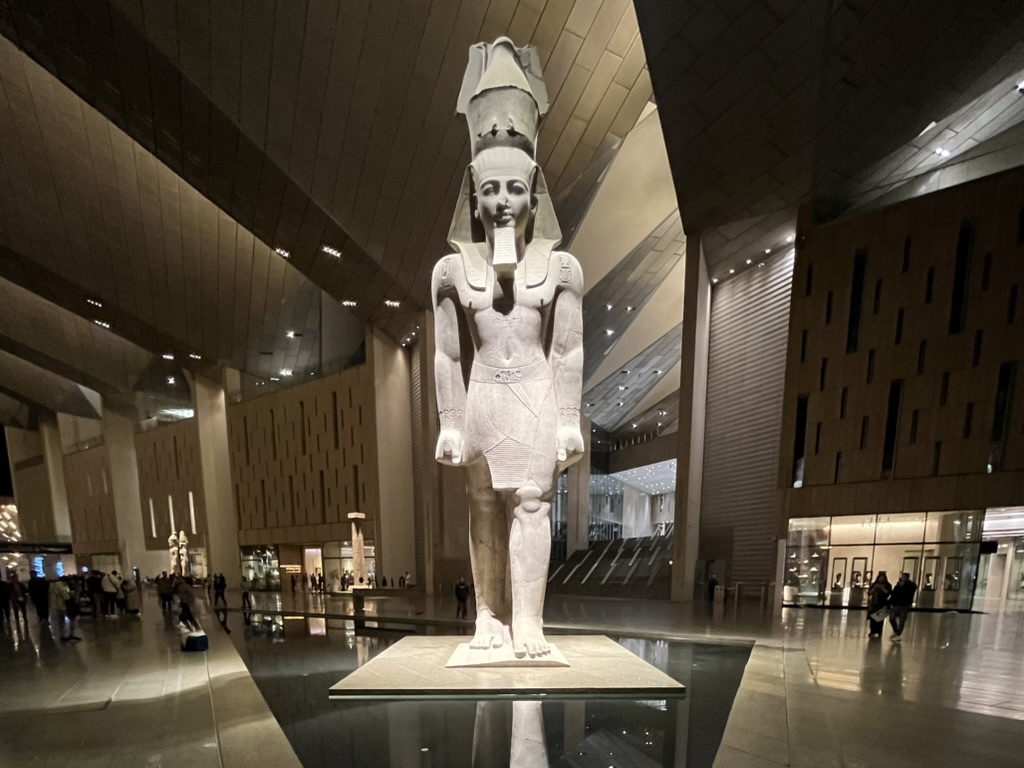
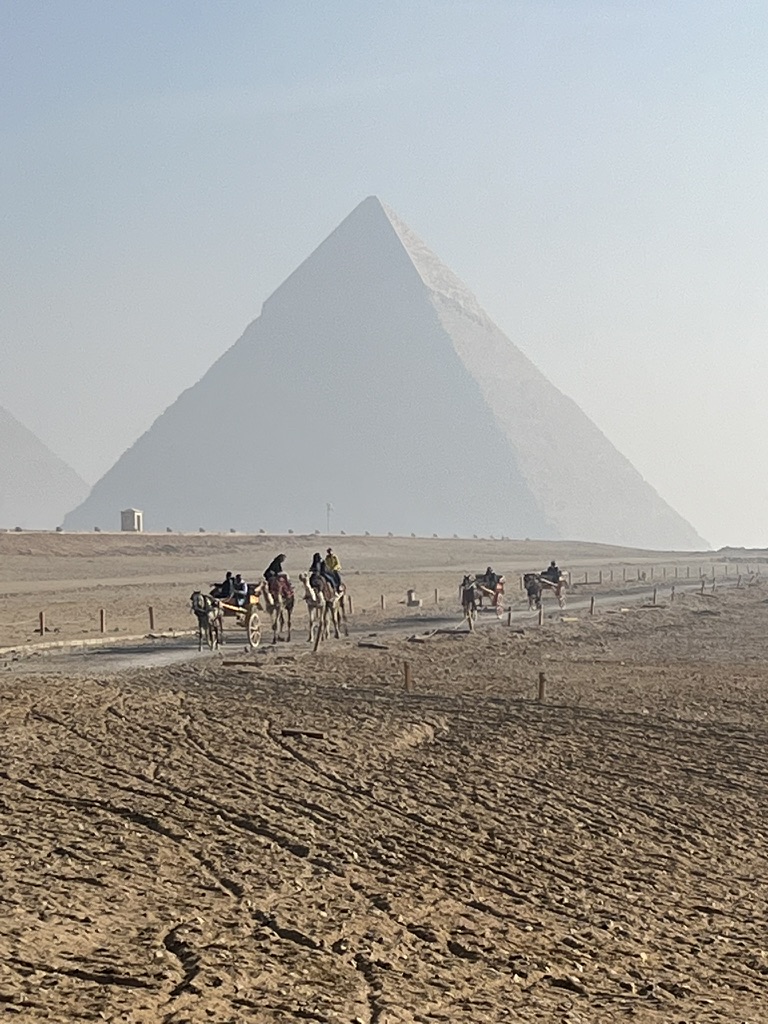
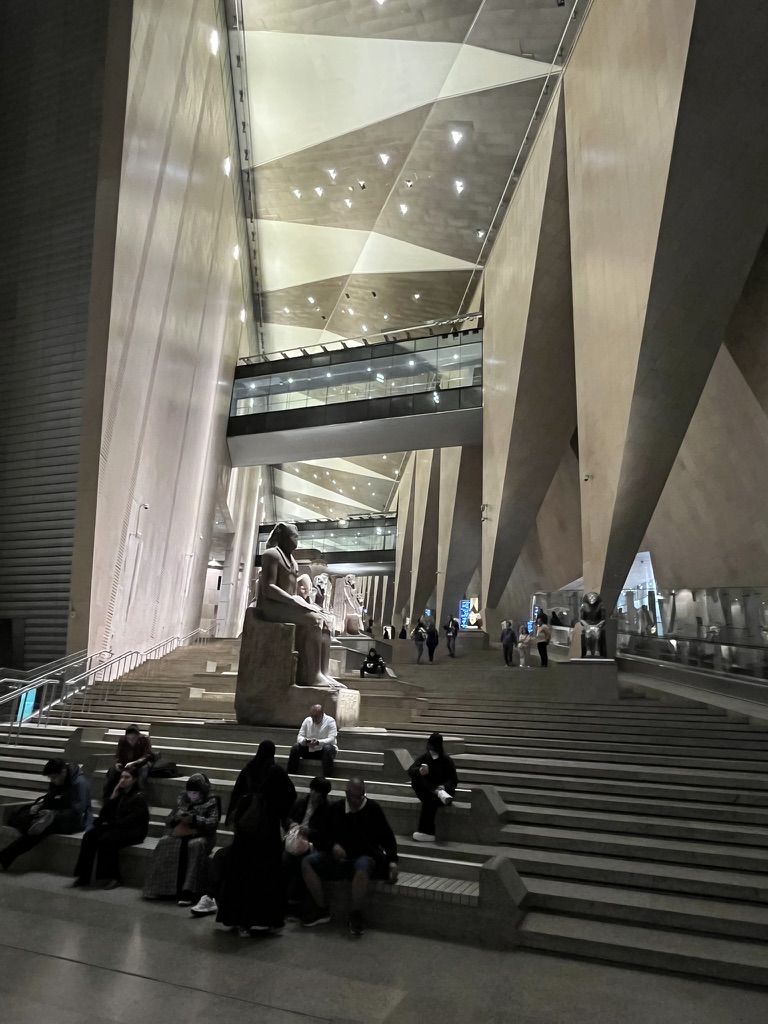
Morning at the Giza Plateau: the three pyramids, the Sphinx, the new shuttle bus system makes navigation straightforward without a guide. Afternoon at the Grand Egyptian Museum (GEM) — the Tutankhamun Galleries alone justify the entry price. Dinner at Zooba or Bittersweet inside the GEM complex rather than the tourist traps near the pyramid gates.
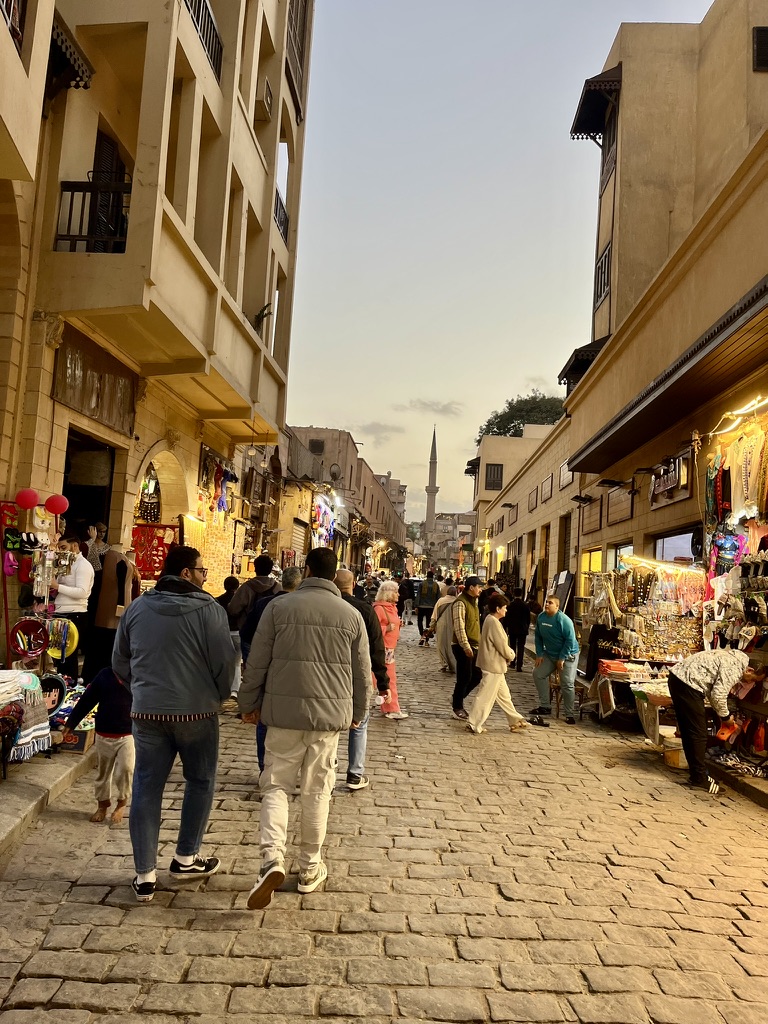
Morning in Islamic Cairo: Al-Azhar Mosque, Bab Zuweila, and a wander along Al-Muizz Street. Evening flight to Aswan. Uber doesn’t operate in Aswan — use InDrive or negotiate with a taxi using the InDrive price as your baseline.
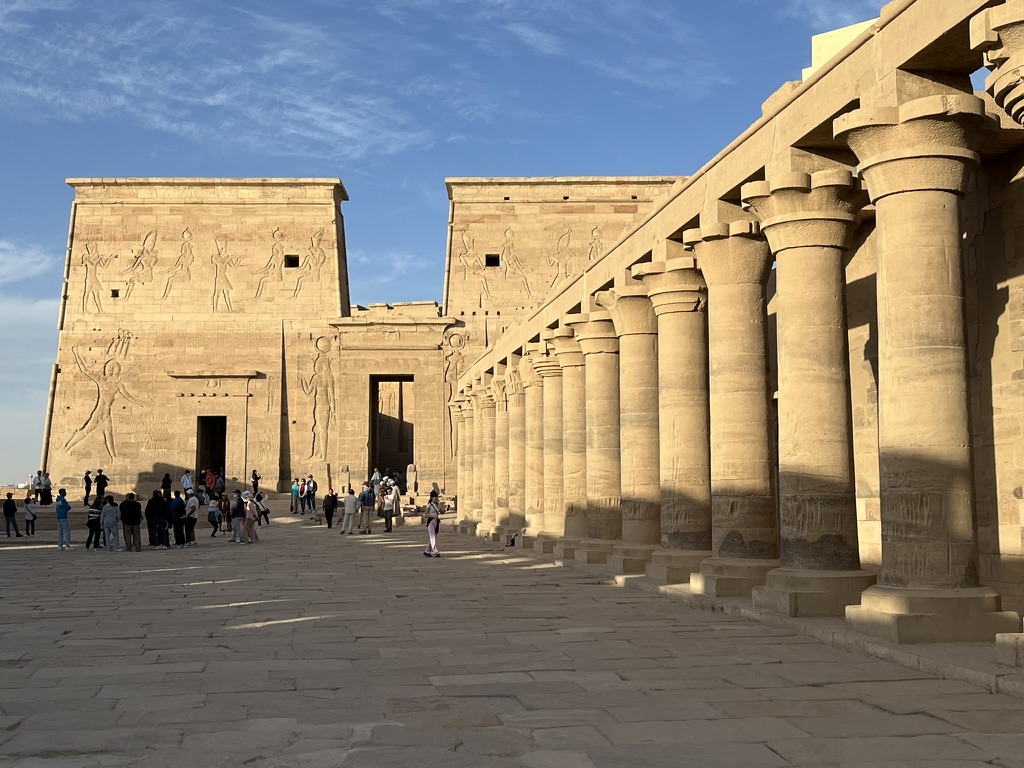
Board the Nile cruise in the morning. A Nubian village visit is an optional excursion most cruise guides offer — take it if you can. The boat ride out to the village passes some of the most beautiful stretches of the Nile you’ll see on the whole trip. Afternoon: Philae Temple, reached by a short boat crossing. Skip the High Dam — it’s a concrete structure with limited visual appeal and the time is better spent at Philae.
Pre-dawn start — the convoy from Aswan typically departs around 4:30 a.m. to reach Abu Simbel before the main crowd wave. The 3.5-hour drive crosses open desert as the sun rises. Abu Simbel is one of the two or three most extraordinary sites in Egypt; skipping it to avoid the early alarm is a decision most travelers regret. Return to the boat by early afternoon as it sets sail north.
Kom Ombo Temple at dusk — the dual-god temple dedicated to Sobek and Horus, set directly above the Nile bank. The attached crocodile museum is a strange and genuinely interesting detour. Edfu Temple the following morning: one of the best-preserved temples in Egypt, its reliefs almost three-dimensional in their depth. In the afternoon, watch the boat navigate the Esna Lock — a working dam structure that lowers the vessel between two levels of the Nile. Worth watching from the sun deck.
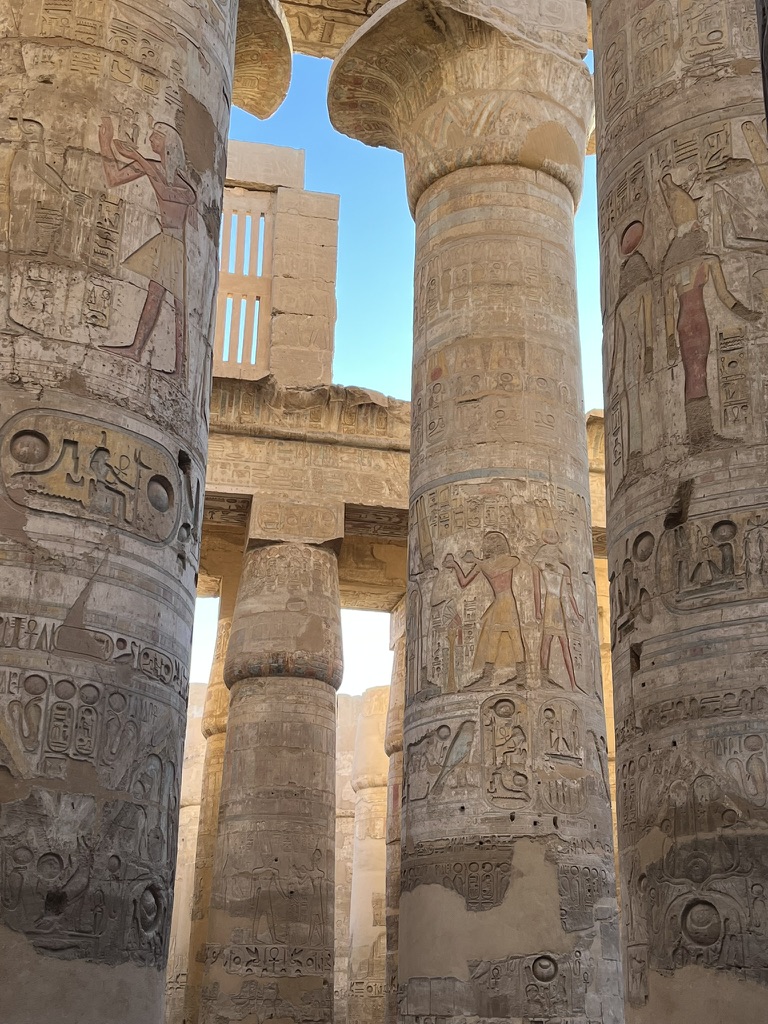
The cruise docks in Luxor. Karnak Temple in the afternoon — over 200 acres, more than 130 massive columns, some still showing original colours. Luxor Temple at dusk, when the evening lighting transforms the stone and the Paris obelisk connection becomes one of the better guide stories of the trip. If the cruise group is visiting both, join them — the timing works well and saves you arranging transport independently on your first afternoon.
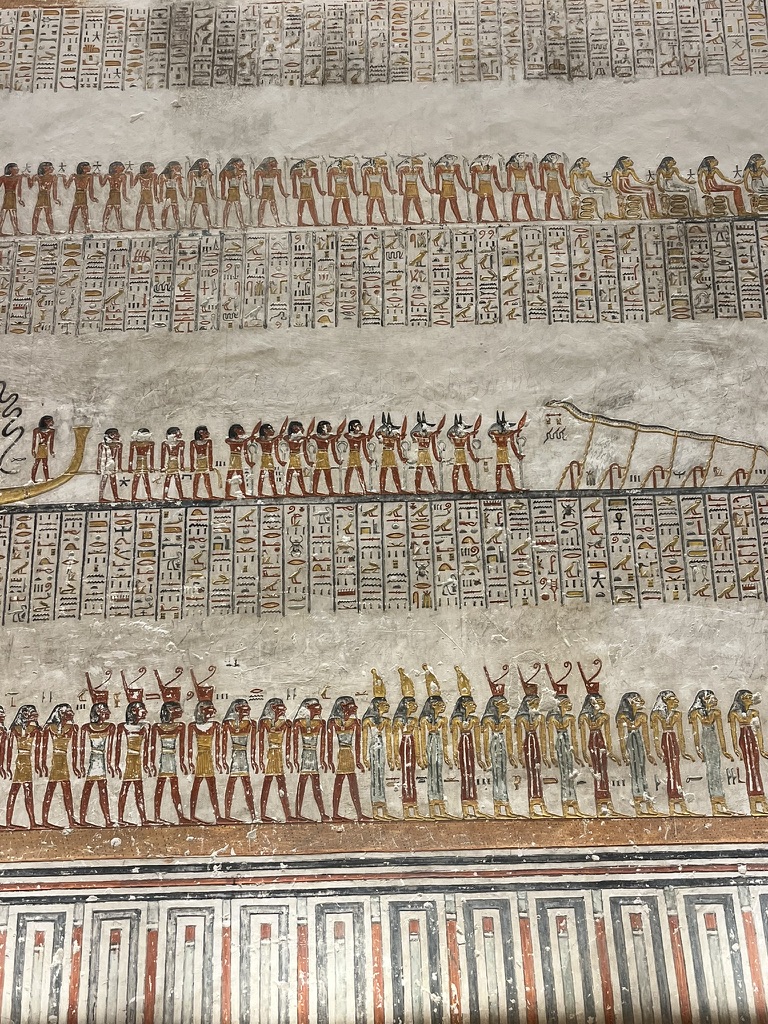
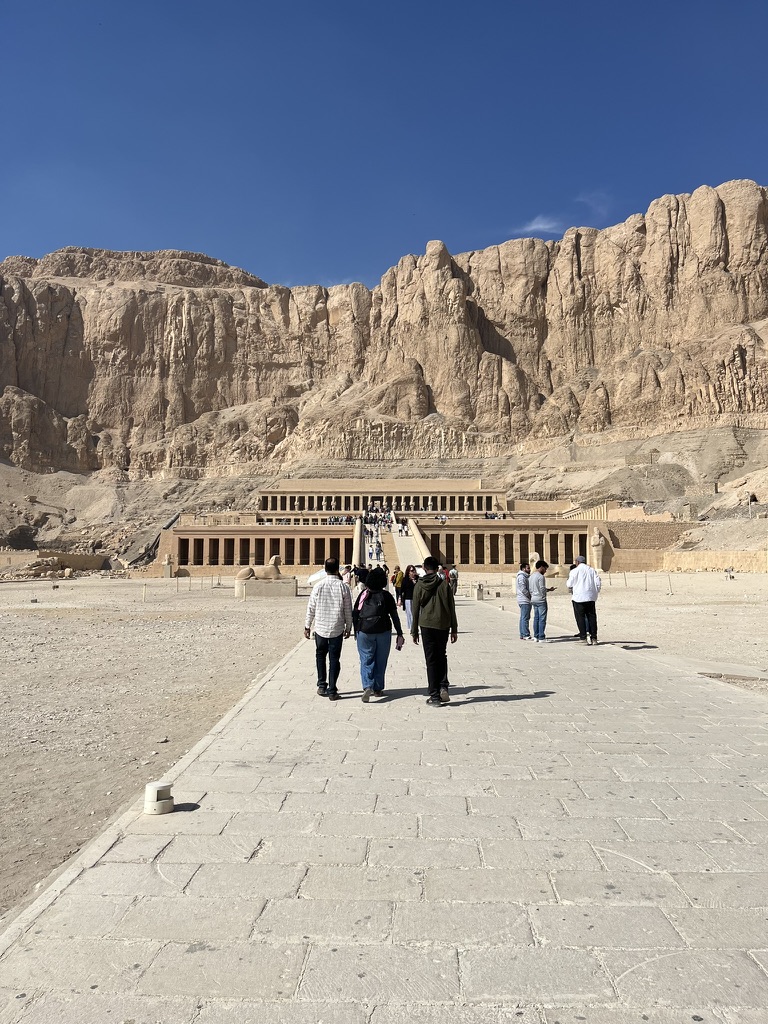
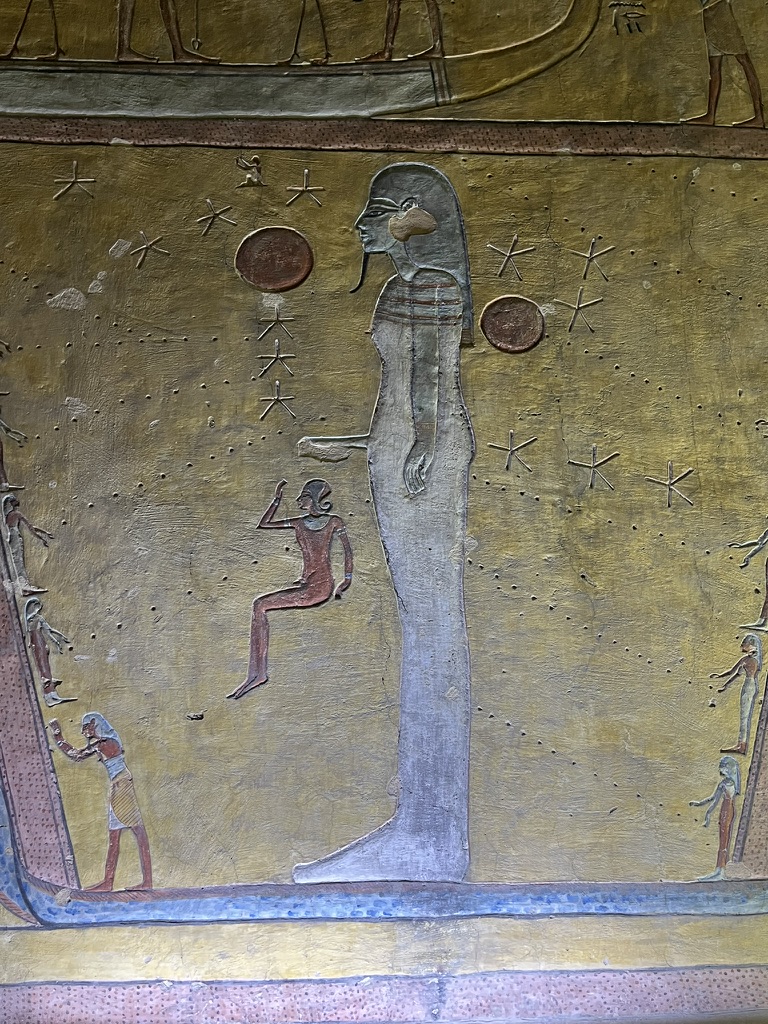
Cross to the West Bank. Start around 11 a.m. to let the morning tour groups clear — the Valley of the Kings at midday, with fewer people, is a noticeably different experience from the 8 a.m. convoy. Buy the standard three-tomb ticket, and add KV9 (Ramesses V and VI) separately — it costs extra but is almost always empty, and the decoration is among the finest in the valley. Hatshepsut’s mortuary temple afterward: three terraced levels carved into a natural cliff amphitheatre, one of Egypt’s most striking monuments. Sunset felucca ride on the Nile to close the day — negotiate around $10 for an hour.
Morning flight from Luxor to Cairo. Allow at least four hours between your domestic arrival and international departure — EgyptAir is generally reliable, but Egypt’s “buffer factor” applies to airports too. If your airline allows it, flying internationally directly from Luxor (LXR) skips Cairo entirely and simplifies the day considerably.
💡 The EgyptAir Booking Hack
When booking domestic flights on the EgyptAir website, change the currency to EGP (Egyptian Pounds) before searching. The site defaults to a higher international rate in USD or EUR. Switching to EGP before selecting your flight regularly saves a meaningful amount — sometimes the equivalent of a night’s hotel.
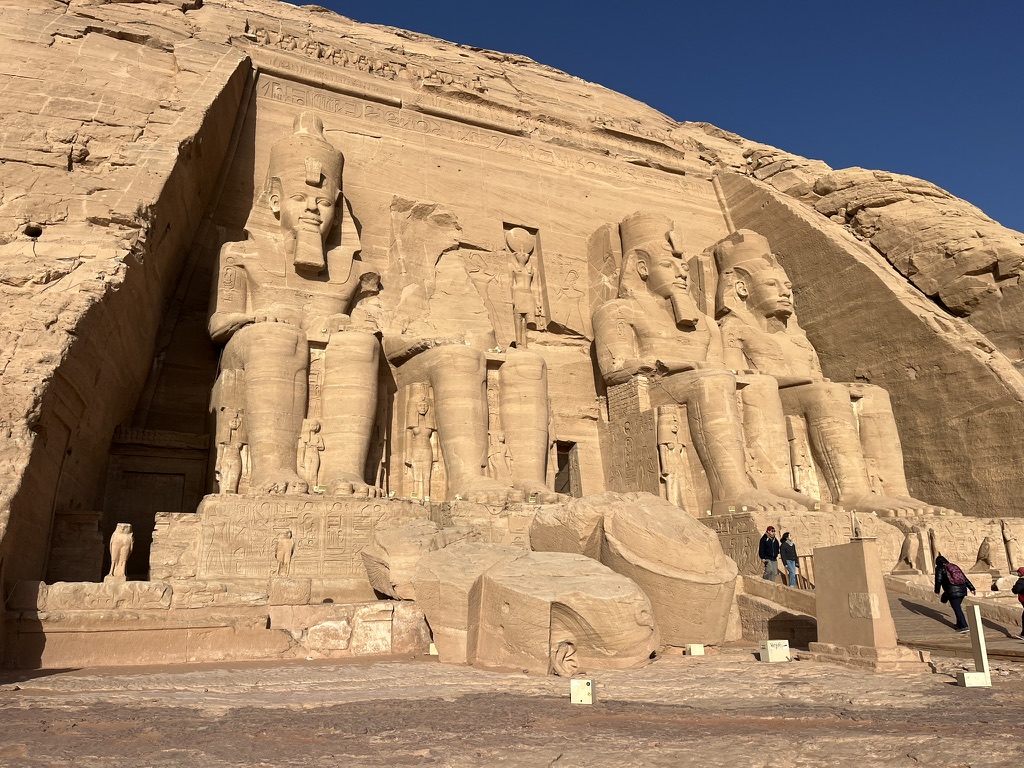
The colossal seated statues of Ramses II guard the entrance to the Great Temple at Abu Simbel.
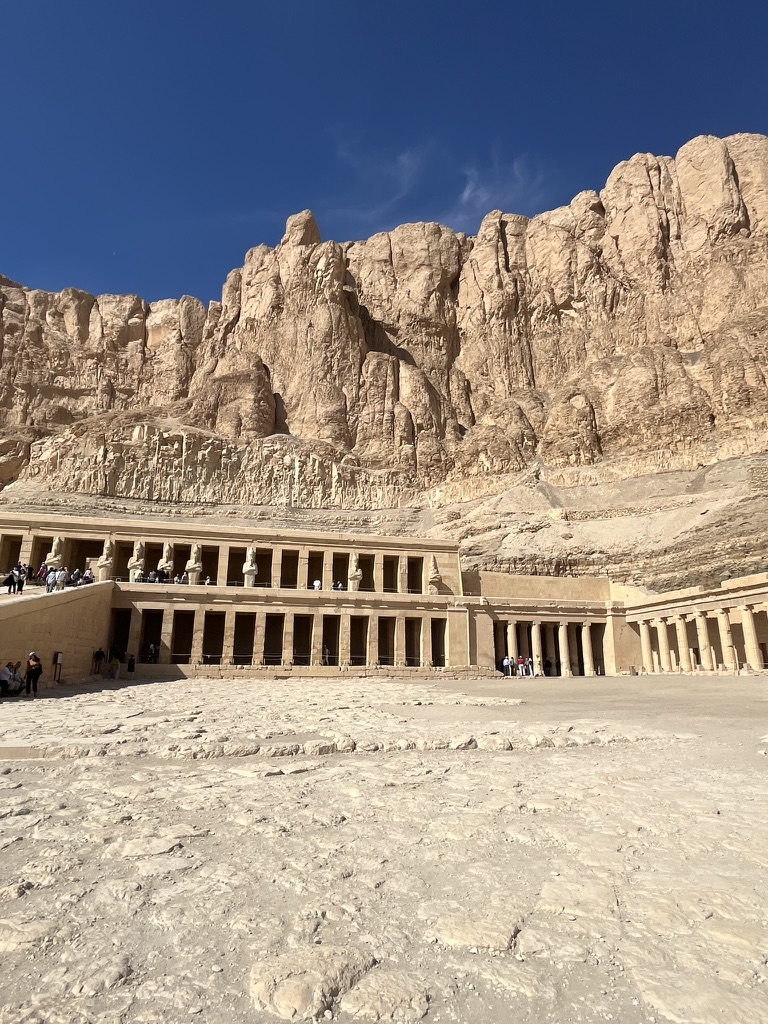
The terraced Mortuary Temple of Hatshepsut rises against the golden cliffs of Deir el-Bahari.
IV. The 7-Day Itineraries: Two Ways to Spend a Week
Seven days forces a hard choice: do you want to cover the full geographic sweep of Egypt and move fast throughout, or do you want to focus on two cities and actually absorb what you’re seeing? Both are valid. They produce very different experiences.
| Factor | Route A: See It All | Route B: Cairo & Luxor Focus |
|---|---|---|
| Pace | Extremely fast and intense | Relaxed and immersive |
| Sites covered | Cairo, Aswan, Abu Simbel, Cruise, Luxor | Cairo, Pyramids, Luxor East and West Banks |
| Flights | Two domestic flights + Nile cruise | One return domestic flight |
| Risk level | High — one delayed flight unravels everything | Low — generous buffer throughout |
| Who it’s for | High-energy, organised checklist travelers | Deep-dive history buffs |
Route A: “See It All”
Pace: Extremely Fast · Risk: High · Not recommended for most travelers⚠️ Read Before Booking This Route
This itinerary has almost no margin for error. A single delayed domestic flight, a longer-than-expected queue at Abu Simbel, or a late boat departure can compress the remaining days into something unpleasant. If you are a highly organised, high-energy traveler with experience navigating airport chaos, it works. If you’re not — Route B will leave you with better memories.
Late arrival. Check in, sleep immediately. No sightseeing.
Early start at the Giza Plateau, afternoon at the Grand Egyptian Museum. Late evening flight to Aswan — book the last departure of the day to maximise time at the GEM. Arrive in Aswan, check into a hotel or board the cruise ship.
Board the cruise if you haven’t already. Nubian village in the morning (optional, worth taking if offered). Philae Temple in the afternoon. This is the only genuinely relaxed day on this route — use it.
Pre-dawn departure for Abu Simbel — convoy typically leaves around 4:30 a.m. Return to the boat by early afternoon as it sails north. Kom Ombo Temple at dusk. The day is long but the two sites are completely different in character, which helps.
Edfu Temple in the early morning before the boat continues north. Arrive Luxor mid-afternoon. Karnak Temple and Luxor Temple in the late afternoon and early evening — possible to do both if you move efficiently and the boat docks on schedule.
Full day on the West Bank. Hatshepsut’s mortuary temple in the morning, Valley of the Kings at midday. Buy the KV9 add-on — the separate ticket keeps that tomb significantly quieter. This will be a long, physically demanding day.
Early morning flight from Luxor to Cairo. International departure from Cairo — allow a minimum of four hours between domestic arrival and international departure. Better option: fly internationally directly from Luxor (LXR) if your airline allows it, cutting out the Cairo connection entirely.
Route B: Cairo & Luxor Focus
Pace: Relaxed · Risk: Low · Highly RecommendedBy dropping Aswan and the Nile cruise, you buy something more valuable on a 7-day trip: time. Time to actually absorb what you’re standing in front of rather than photographing it on the way to the next thing. Luxor’s West Bank alone — the Valley of the Kings, the artisan tombs at Deir el-Medina, the Tombs of the Nobles, Medinet Habu — rewards an entire day of unhurried exploration that Route A simply can’t accommodate.
Arrive Day 1 evening. Day 2: Giza Plateau in the morning, Grand Egyptian Museum in the afternoon. The new shuttle bus system at Giza makes navigation easy without a guide. At the GEM, the Tutankhamun Galleries and the Khufu Ships Museum are the highlights — budget at least four hours for the full complex.
A half day in Cairo before the evening flight south. Choose one neighbourhood rather than trying to rush both: Islamic Cairo (Al-Azhar Mosque, Bab Zuweila, the minaret climb, the wander along Al-Muizz Street) or Coptic Cairo (the Hanging Church, Abu Serga, St. Barbara’s, the narrow alley of old books). Both are worth a half day. Neither can be done well in an hour.
Karnak Temple in the morning — arrive early for the best light among the columns, and give yourself at least two hours inside. Luxor Temple at dusk, when the evening lighting does its best work. The Paris obelisk at the entrance, the layered Roman additions inside, the scale of the place at night: this is one of the most atmospheric temple visits in Egypt. Sunset felucca ride on the Nile to close the day — negotiate around $10 for an hour with the cousin-pair operators along the Corniche.
Arrange a driver through your hotel — around $20 covers drop-off and pick-up at both sites. Start around 11 a.m., after the morning tour group convoys have cycled through. Valley of the Kings: buy the standard three-tomb ticket, add KV9 separately. KV9 is almost always uncrowded, the decoration spans multiple chambers with Book of Gates imagery, and the absence of other visitors makes it genuinely immersive. Hatshepsut’s mortuary temple afterward: three terraced levels carved into a natural cliff face, one of the most architecturally striking monuments in the country.
Same driver, same relaxed pace. Near the Colossi of Memnon, buy tickets for all three sites at the Antiquities Inspectorate Ticket Office — tickets are not sold at the individual entrances. First: Deir el-Medina, the walled village where the royal tomb builders actually lived, their own tombs filled with some of the most vivid paintings in Egypt — scenes of harvests, music, and family life rather than gods and conquest. Second: Tombs of the Nobles — choose the Tomb of Nakht and the Tomb of Menna, both richly painted and usually uncrowded. Third: Medinet Habu, the mortuary temple of Ramesses III, less famous than Karnak but with some of the best-preserved original colour anywhere in Egypt.
Morning flight from Luxor to Cairo, then international departure. Allow four hours minimum between domestic arrival and international departure. Flying internationally directly from Luxor (LXR) — if your airline allows — eliminates this connection entirely and simplifies Day 7 considerably.
V. The Fork in the Road: Cruise vs. Land Travel
For the 7-day and 9-day routes that include Aswan, the biggest single decision is how to get between Aswan and Luxor. On a compressed itinerary, time is the most valuable thing you have — and the two options spend it very differently.
| Factor | Nile Cruise (3 nights) | Land Travel (car or train) |
|---|---|---|
| Pace | Slow and scenic — your hotel moves with you | Fast and functional — you control the clock |
| Time cost | High — committed to the boat’s schedule | Low — Aswan to Luxor by car takes around 4 hours including temple stops |
| Temple access | Kom Ombo and Edfu built into the sailing | Both reachable in a morning by private car |
| The Nile experience | ✅ Central to the trip | ❌ Seen from a car window |
| Best for | 9-day travelers who want a break from Cairo’s intensity | 7-day “See It All” travelers who can’t afford 3 days on a boat |
The practical verdict for short trips: if you have 7 days or fewer, skip the cruise. A private car or the train between Aswan and Luxor takes around four hours and gives you full control over timing at every temple stop. Spending three days on a boat when you only have seven total is a significant commitment that leaves Luxor seriously compressed.
If you have 9 days, the cruise earns its place. It’s not just transportation — it’s a genuine experience of the Nile that the land route can’t replicate, and after the intensity of Cairo and Abu Simbel, the slower pace on the water is welcome rather than frustrating.
VI. The 3-Day Itineraries: Stopovers and Long Weekends
Three days in Egypt requires ruthless prioritisation. There’s no room for spontaneity, no buffer if something goes wrong, and no capacity for both cities unless you’re prepared to treat the whole thing as a logistical exercise. Choose your route based on what you’d genuinely regret missing most.
Route A: Cairo Highlights Only
Pace: Relaxed · Risk: Low · Recommended for most 3-day visitorsCairo is a world unto itself. Three days here — no domestic flights, no rushing between cities — gives you time to actually taste the street food, get briefly lost in Islamic Cairo, and understand why people who “just do Cairo” often describe it as the highlight of their Egypt trip. No cruise, no Luxor, no early alarms.
Evening arrival. Settle in, walk your hotel neighbourhood, pick up a local SIM card at the airport if you haven’t already (Vodafone or Orange, around $10 for 30GB). Do not attempt sightseeing. Cairo at night on Day 1 is for recovering from the flight, not for monuments.
Morning at the Giza Plateau — arrive early, use the free shuttle buses, and don’t feel pressured by the locals offering photo services or camel rides. The pyramids are extraordinary enough without any of that. Afternoon at the Grand Egyptian Museum: Tutankhamun’s golden mask, the sarcophagus, the Golden Throne, and the Khufu solar boats in the separate museum building. Have lunch at Zooba or dinner at Bittersweet inside the GEM complex — both significantly better than anything near the pyramid gates.
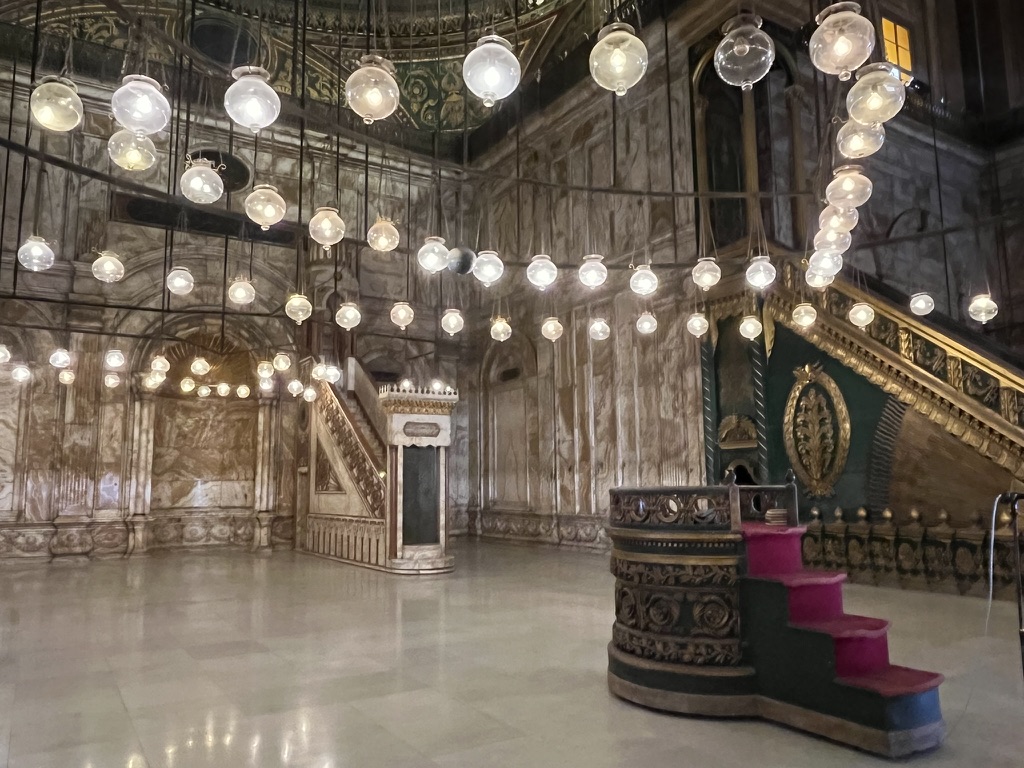
One full day for Cairo’s historical neighbourhoods. The Muhammad Ali Mosque at the Citadel gives panoramic views across the whole city — on a clear morning you can see the pyramids on the horizon. Then choose one: Coptic Cairo (the Hanging Church, Abu Serga, the alley of old books, the quiet pedestrian lanes) or Islamic Cairo (Al-Azhar Mosque, Bab Zuweila and the minaret climb, the wander along Al-Muizz Street). Both are genuinely good. Neither should be rushed. Depart in the evening.
💡 The Bab Zuweila Climb
If you choose Islamic Cairo on Day 3, don’t miss Bab Zuweila — one of only three remaining gates from Cairo’s original medieval city walls. The minaret staircase is narrow, dark in the middle, and opens onto a balcony with one of the best views in the city. On our visit, we found the door open with no one around to tell us whether climbing was allowed. We went anyway. The view from the top — Islamic Cairo stretching in every direction, the mosque courtyard below — was worth every cautious step.
Route B: Absolute Highlights
Pace: Extreme · Risk: High · For experienced, well-organised travelers onlyThis route skips the city of Cairo almost entirely to focus on Egypt’s two most iconic ancient sites: the Giza Pyramids and the Valley of the Kings. It works — but it requires every transfer to be booked well in advance and leaves no room for anything running late.
⚠️ Do Not Attempt a Nile Cruise on This Route
A standard Nile cruise requires a minimum of three nights to sail between Aswan and Luxor. If you book a cruise on a 3-day itinerary, you will spend your entire trip on a boat and miss both the Pyramids and the Valley of the Kings. This route is strictly land and air — no cruises.
Check into a hotel in Giza rather than central Cairo — being close to the Plateau saves time and reduces the Uber complexity on Day 2 morning. Rest immediately. You will need the energy.
Morning at the Giza Plateau — prioritise the Great Pyramid and the Sphinx, and at least one smaller pyramid. Afternoon at the Grand Egyptian Museum. Late evening flight to Luxor (9 or 10 p.m. departure). By sleeping in Luxor, you arrive on the West Bank the following morning without a transit day. Book both the GEM entry and the Luxor flight well in advance — neither should be left to chance on a 3-day trip.
Arrange a private driver through your hotel the night before — around $20–30 covers both sites with waiting time. Valley of the Kings first: buy the standard three-tomb ticket and add KV9 (Ramesses V and VI) separately. KV9 is almost always uncrowded and its ceiling decoration — the most elaborate in the valley — justifies the extra cost. Hatshepsut’s mortuary temple afterward: carved into a natural cliff face, three terraced levels, architecturally unlike anything else in Egypt. Colossi of Memnon on the drive back — a five-minute stop for two enormous seated statues that are the last remnants of what was once the largest mortuary temple in Egypt.
💡 The Luxor Exit Strategy
If your airline flies internationally from Luxor (LXR), use it. Flying home directly from Luxor eliminates the need to return to Cairo and gives you more time on the West Bank on Day 3. If you must return to Cairo for your international departure, ensure at least a 5-hour gap between your domestic arrival and international departure — not 3, not 4. Egypt’s airports have their own pace, and buffer time here is not optional.
VII. Short-Trip FAQ
Is it worth flying to Aswan just for Abu Simbel?
Yes — but only if the logistics genuinely work for your itinerary. Abu Simbel is a 3.5-hour drive from Aswan each way, and the convoy typically departs around 4:30 a.m. That makes it your longest and most demanding day regardless of which route you’re on. If you genuinely hate 3 a.m. alarm calls or your energy is already running low, dropping Aswan and staying with Route B (Cairo and Luxor) is a defensible choice. Abu Simbel is extraordinary. So is not being exhausted for Luxor.
What if my domestic flight is delayed?
Build the buffer in before departure rather than hoping for the best on the day. Always allow at least four hours between a domestic arrival in Cairo and your international departure — EgyptAir is generally reliable, but Egypt’s “buffer factor” applies at airports as readily as it applies everywhere else. Use Uber or a pre-booked private transfer rather than public transport for airport connections on time-sensitive days. Buses have no mechanism for accounting for your international departure time.
Can I see the Pyramids on a 6-hour layover?
Technically possible, but not recommended unless you have a high tolerance for stress. The drive from Cairo Airport to Giza takes 45–60 minutes each way depending on traffic. That leaves perhaps two to three hours at the site before you need to head back, clear immigration, and board. Any traffic delay — common in Cairo — compresses that window further. If you have an 8-hour or longer layover, it becomes more viable. For a 6-hour layover, the Egyptian Museum near Tahrir Square is a more realistic and less stressful option — 20 minutes from the airport by Uber.
Should I hire a guide for a short trip?
For Route B (Absolute Highlights, 3 days), yes — strongly recommended. A private driver and guide handles the transport logistics, explains the sites, and prevents the kind of time-wasting confusion that has an outsized impact when you only have three days. For the 3-Day Cairo Highlights route, you can do it entirely solo using Uber. The GEM has excellent English labelling throughout, and Islamic and Coptic Cairo are navigable without a guide. For 7-day and 9-day routes, a guide for the Valley of the Kings specifically adds genuine value — the hieroglyphs and tomb paintings have layers that are difficult to appreciate without context.
VIII. The Final Verdict: Which Route Should You Book?
Choose the 9-Day Balanced if you want the real Egypt experience — Cairo, the Nile, Abu Simbel, and Luxor — without needing a recovery holiday afterward. This is the right call for most travelers who can’t stretch to 12 days.
Choose the 7-Day Cairo and Luxor Focus if depth matters more to you than geographic breadth. Dropping Aswan and the cruise buys you the West Bank hidden gems — Deir el-Medina, the Tombs of the Nobles, Medinet Habu — that most 7-day itineraries sacrifice entirely. These sites are genuinely extraordinary and genuinely uncrowded. The trade-off of skipping the Nile is real, but for history-focused travelers it’s often the right one.
Choose the 7-Day See It All only if you are highly organised, physically energetic, and have experience managing tight travel logistics. One delayed flight changes everything. Go in with that understanding.
Choose the 3-Day Cairo Highlights if you’re on a layover or long weekend. Cairo deserves three days by itself, and trying to add Luxor to that window turns a good trip into a stressful one.
Choose the 3-Day Absolute Highlights if the Pyramids and the Valley of the Kings are genuine bucket-list items and you have no flexibility on time. Book everything well in advance, build in airport buffers, and go in knowing this is a logistical exercise as much as a holiday.
📍 Related Guides
- [Egypt Cultural Guide] — hospitality, food, hidden gems, and what Egypt gives you beyond the monuments.
- [Egypt Transport & Safety Survival Guide] — Uber logistics, the Giza scam breakdown, ATMs, flights, and the full cheat sheet.
- [Cairo Attractions Guide] — hospitality, food, hidden gems, and what Egypt gives you beyond the monuments.
- [Cairo Transport & Travel Guide] — Uber logistics, the Giza scam breakdown, ATMs, flights, and the full cheat sheet.
- [Grand Egyptian Museum Guide] — guide for the Grand Egyptian Museum (GEM).
If any of these routes leave you wishing for more time, see the [12-Day Egypt Master Guide] for the complete self-guided blueprint — day-by-day logistics, the full ticket strategy for Luxor, the Uber survival guide for Giza, and everything else that makes the longer trip work.

Hi, I’m Frank J – Egypt Self-Guided Travel. I explore Egypt solo and share tips, stories, and practical advice to help you plan your own adventures safely and enjoyably.