💡 Read the Full 12-Day Egypt Diary Series:
Looking for the exact logistics, hotel links, and Uber tips? Head over to my [12-Day Master Planning Guide].
We had been dreaming about Egypt for years. Not the whirlwind version—two days in Cairo, a quick pyramid photo, done—but something slower and deeper. When we finally booked the flights, we promised ourselves we’d have a
Cairo Pyramids travel experience and actually feel the country, not just check it off a list. Here’s what happened.
📋 In This Post
How We Planned 12 Days in Egypt
Unlike the typical whirlwind tour, our Egypt itinerary was built around depth and discovery. Twelve days in total: two and a half in Cairo, four nights on a Nile cruise from Aswan to Luxor, three nights in Luxor, and a final day back in Cairo before flying home.
We arrived on Day 0—a night arrival to settle in—and dedicated Day 1 to Cairo itself rather than rushing straight to the pyramids. The Citadel and Muhammad Ali Mosque came first, then Coptic Cairo, and a quick wander through Khan el-Khalili in the evening. Day 2 was entirely for Giza and the Grand Egyptian Museum. Day 3, our last morning in Cairo, we explored Islamic Cairo’s hidden corners before a late afternoon flight to Aswan.
The biggest planning debate was whether to travel overland from Aswan to Luxor independently or join a Nile cruise. Our instinct is always to go solo—full control, no group schedule, freedom to linger. But the Nile changed everything.
So we compromised: four days on a cruise ship, then we’d break free in Luxor for three full days on our own terms.
On Day 11 we flew back to Cairo, checked into a different neighbourhood to see the city from a fresh angle, and spent Day 12 at the Egyptian Museum downtown before wandering the streets one last time. The following morning, we caught our Turkish Airlines flight home via Istanbul.
Day 0 — Arrival: First Impressions of Cairo at Midnight
Our journey started with a Turkish Airlines flight through Istanbul. Stepping off the plane in Cairo, I felt the mix of anticipation and nerves that comes with a destination you’ve read too much about—countless warnings about scams, aggressive touts, and the chaos of navigating Egypt without a tour group. My instinct for self-guided travel nudged me forward anyway.
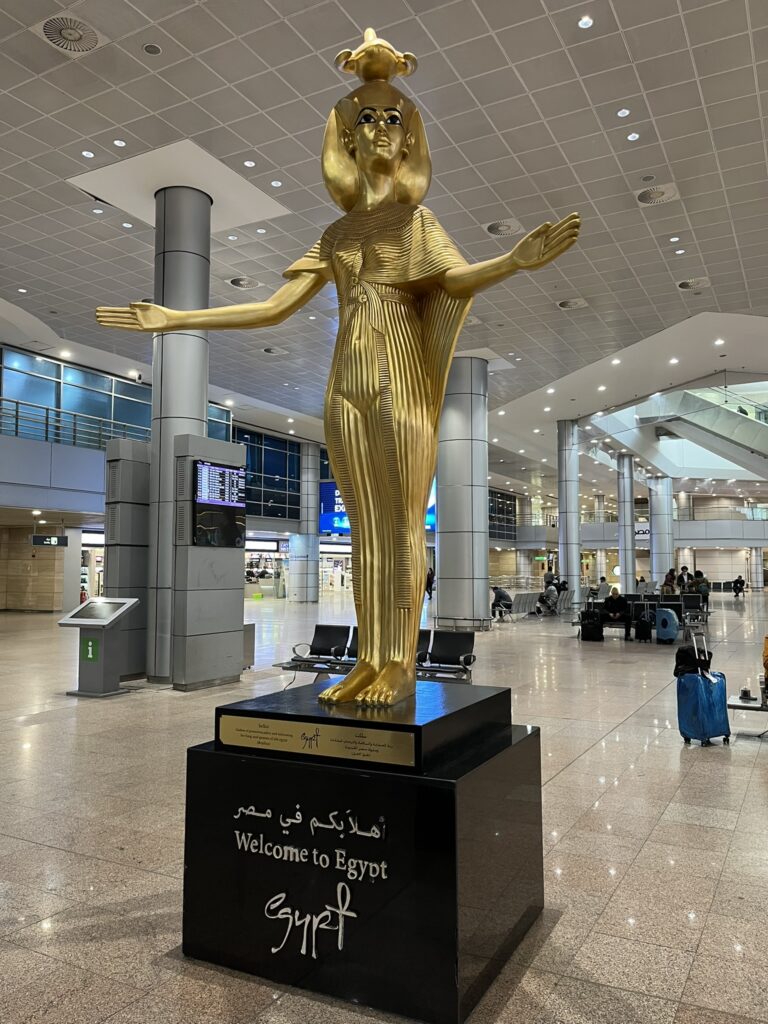
The visa on arrival was simpler than anything I’d read online. Clear signs pointed to the bank counters beside immigration. The clerk barely glanced at my passport—about twenty seconds—then handed me the sticker. Through immigration in minutes. One of the fastest, most effortless entries I’ve ever experienced. While waiting for luggage, I picked up a Vodafone SIM card with 30GB of data and decided to exchange money the next morning.
We’d arranged an airport pickup through our hotel on Trip.com for $15. The driver was momentarily invisible when we stepped outside and a twinge of anxiety crept in—a WhatsApp photo sent to the hotel fixed it in seconds. He appeared, holding my photo on his phone. Worth knowing: only taxis can stop at the curbside, so private drivers park just beyond.
My first view of Cairo was warm and inviting, a stark contrast to the cold we’d left in New York. Even past midnight, traffic hummed through the streets. The driver returned $15 after the hotel collected the main fee—a small act of honesty that set a quiet, welcoming tone for everything that followed.
The hotel room had the highest ceiling I’ve ever seen. A small arrangement of welcome fruit sat on the table. Through the window, Cairo hummed softly. We sank into the bed, cautiously optimistic about the days ahead.
Day 1 — Cairo: Citadels, Coptic Churches, and an Evening Bazaar
Morning: Breakfast with a View, Then the Citadel
The call to prayer woke me around 5 a.m. I went back to sleep and woke again after nine. The hotel’s free rooftop breakfast quickly became one of my favorite things about Cairo—soft jazz, cool air, a spread of fresh bread, falafel, and eggs, and below us the streets of Cairo just coming alive under a clear blue sky.
An Uber to the Saladin Citadel cost a few dollars and took about twenty minutes. The driver tried to take us all the way inside where tour buses park, but the guard politely stopped him at the gate. He apologised. We told him it was no problem—happy to walk.
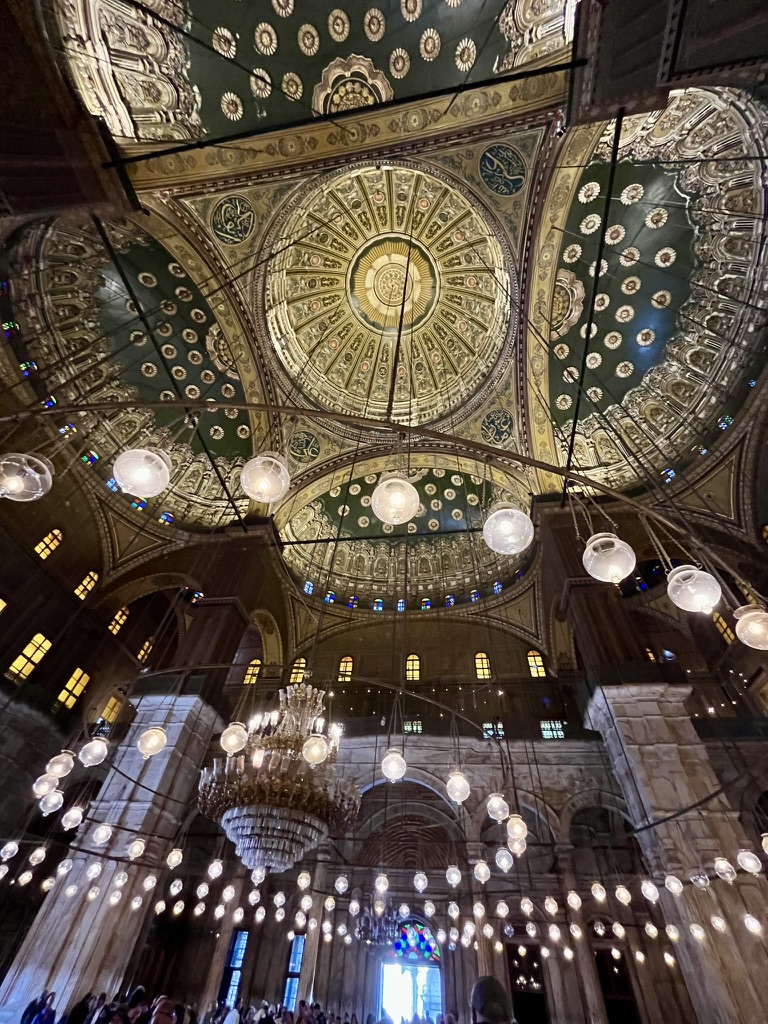
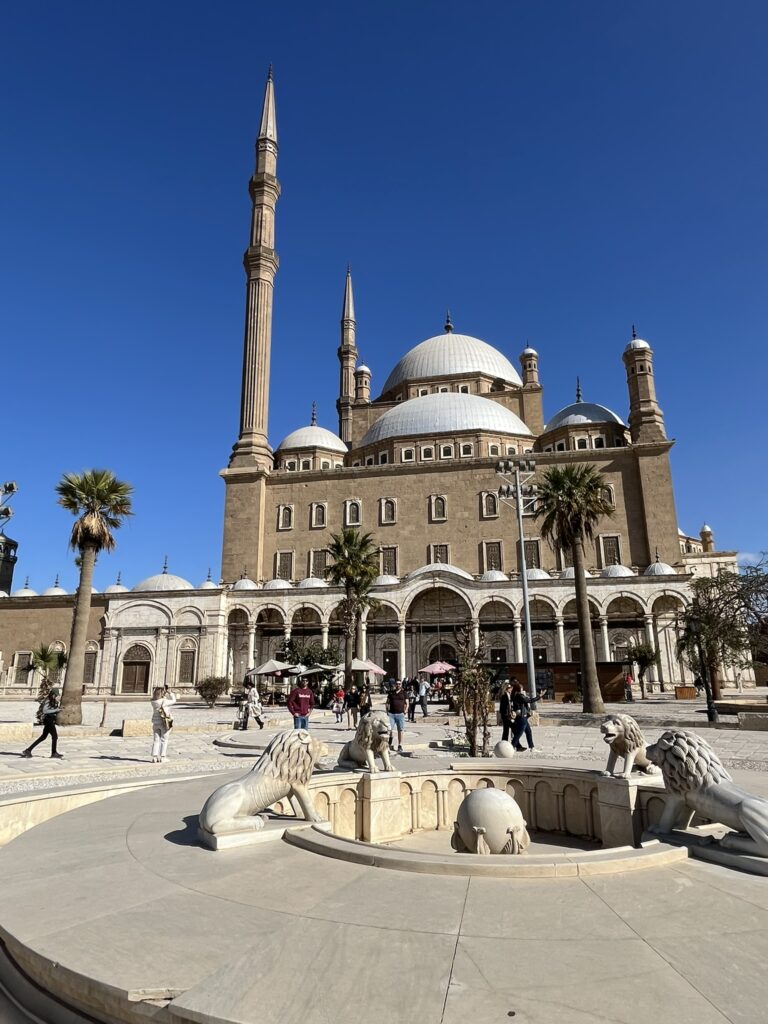
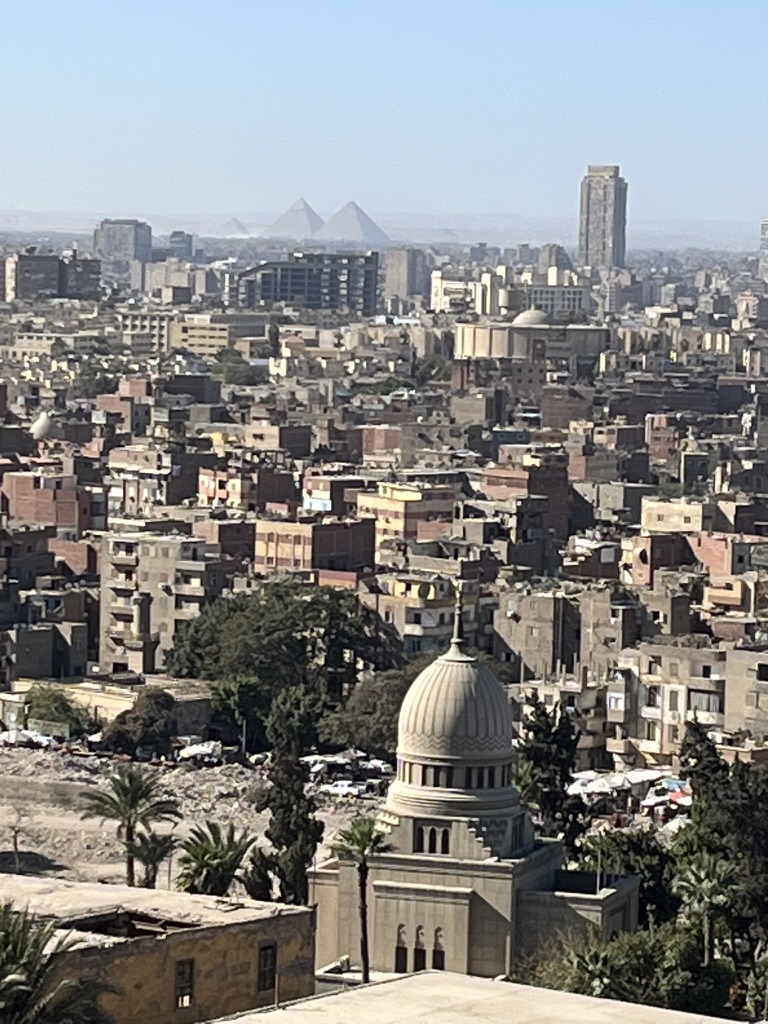
The Muhammad Ali Mosque—also known as the Alabaster Mosque—stopped me in my tracks. Built in the 19th century by Muhammad Ali Pasha, founder of modern Egypt, it commands the Citadel skyline. Inside, the soaring domes and ornate chandeliers created an atmosphere that felt almost otherworldly. We wandered through the adjacent military and police museums, then climbed to the ramparts for a panoramic view of Cairo. On the horizon, just barely visible through the haze, were the pyramids.
Afternoon: Coptic Cairo and the Metro
Coptic Cairo is one of the oldest Christian neighbourhoods in the world, and entering it felt like passing through a different era entirely. Security is serious—soldiers guard the perimeter, vehicles aren’t allowed—so you walk through pedestrian-only alleys where small churches appear unexpectedly between residential buildings. One lane was lined on both sides with old books: fragile, collectible Christian and Jewish texts stacked so high that only two people could pass at a time. The smell of aged paper mixed with incense from nearby churches.
We visited three churches:
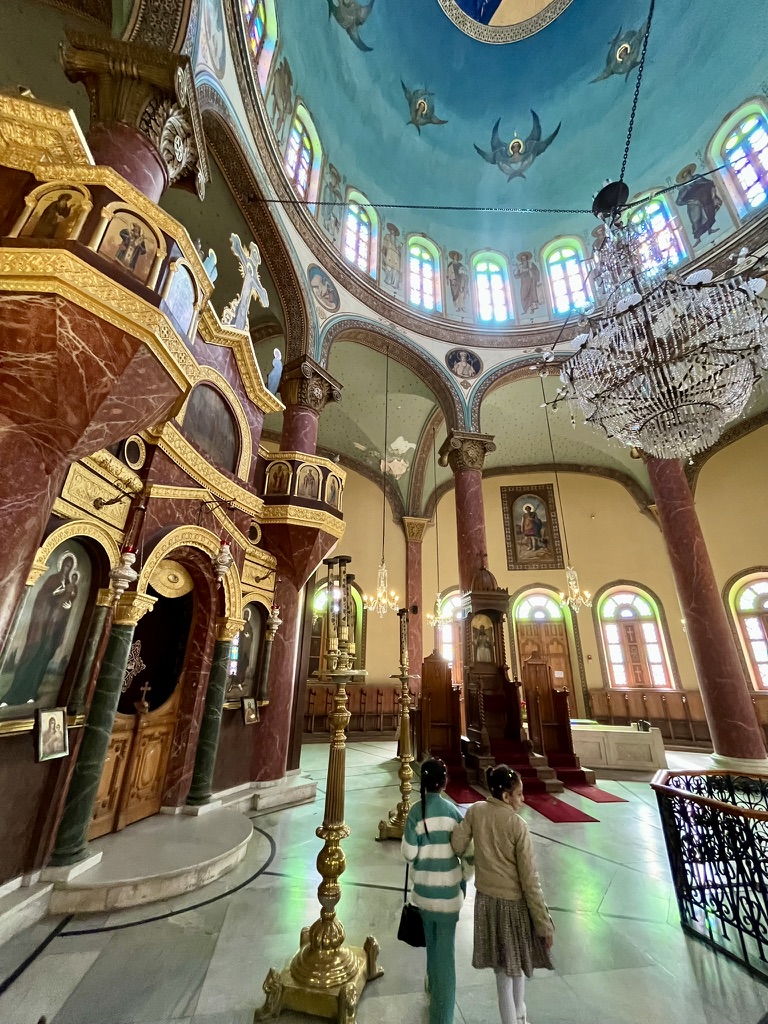
- St. Barbara’s — the intricate iconostasis and vibrant wall paintings made it feel like stepping into a jewel-box of history.
- Church of St. Sergius (Abu Serga) — quieter and simpler, but to reach the spot where Jesus, Mary, and Joseph are believed to have sheltered during the flight into Egypt, we climbed down a narrow staircase and squeezed through a tight passageway. The humble space made the history feel suddenly real.
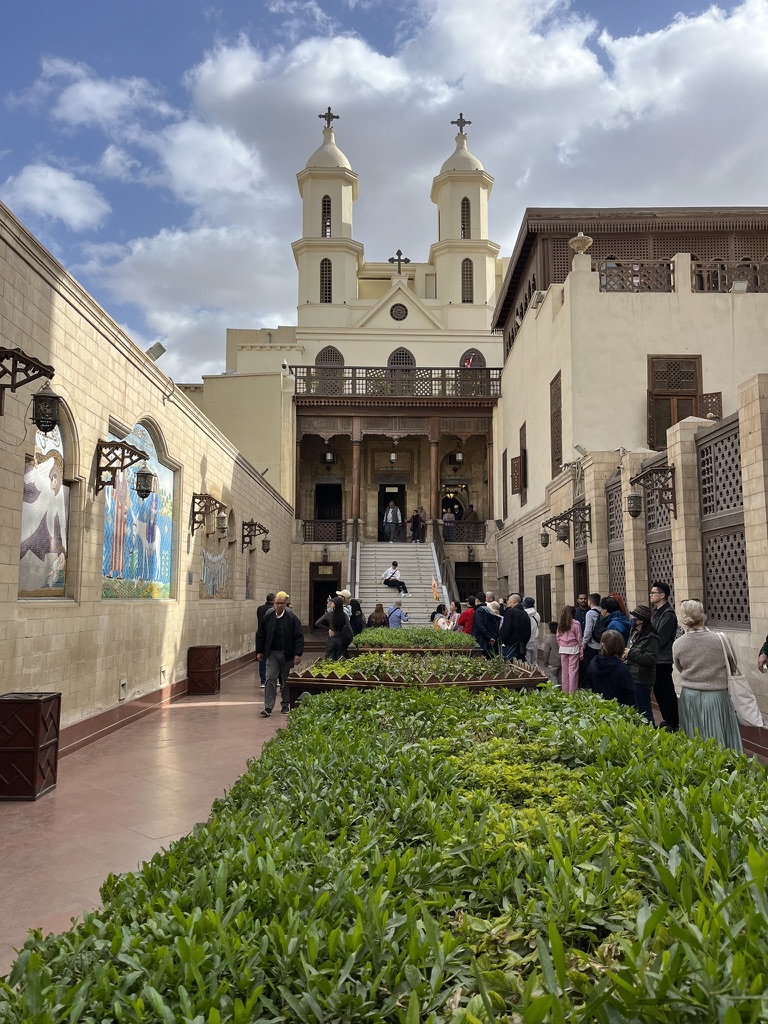
- The Hanging Church (Al-Muallaqa) — I had wondered about the name until I stepped inside and looked down: the church is built atop the gatehouse of an old Roman fortress, literally hanging above the street below.
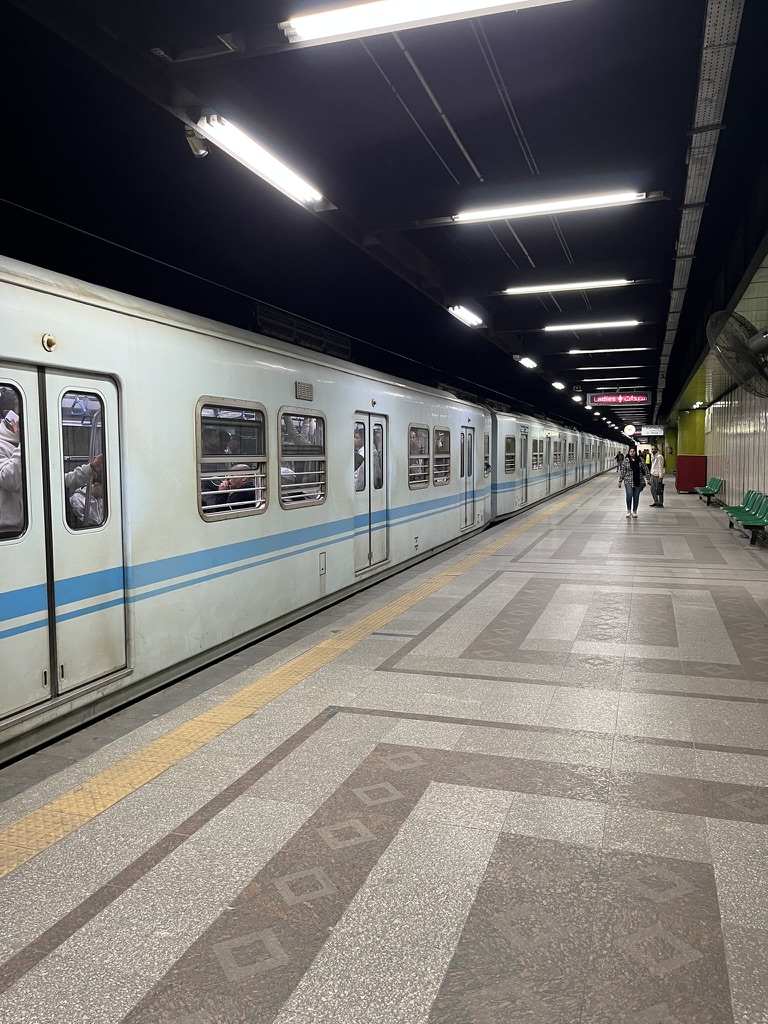
After a lunch of koshari and shawarma nearby, we spotted Cairo’s only Metro line next door. Several locals immediately volunteered to walk us through buying tickets and pointed out which platform we needed. The subway was clean, efficient, and quietly fascinating. Two small children peeked at me from across the car and smiled shyly—a simple, authentic slice of daily life.
Evening: Khan el-Khalili and the Illuminated Mosques
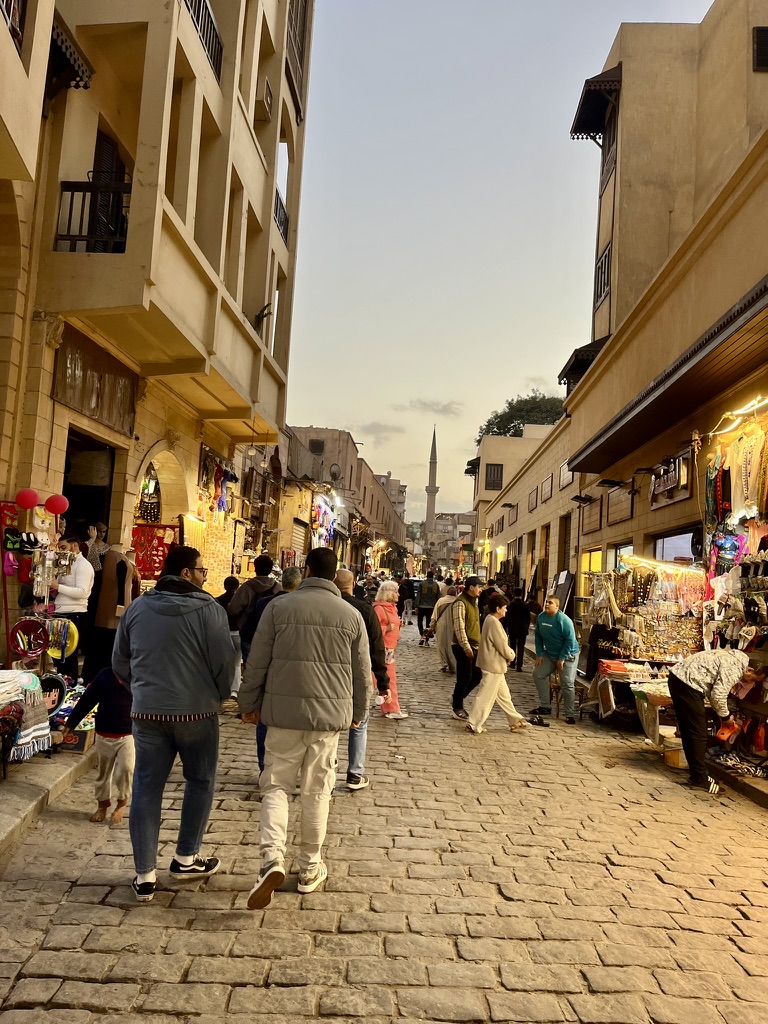
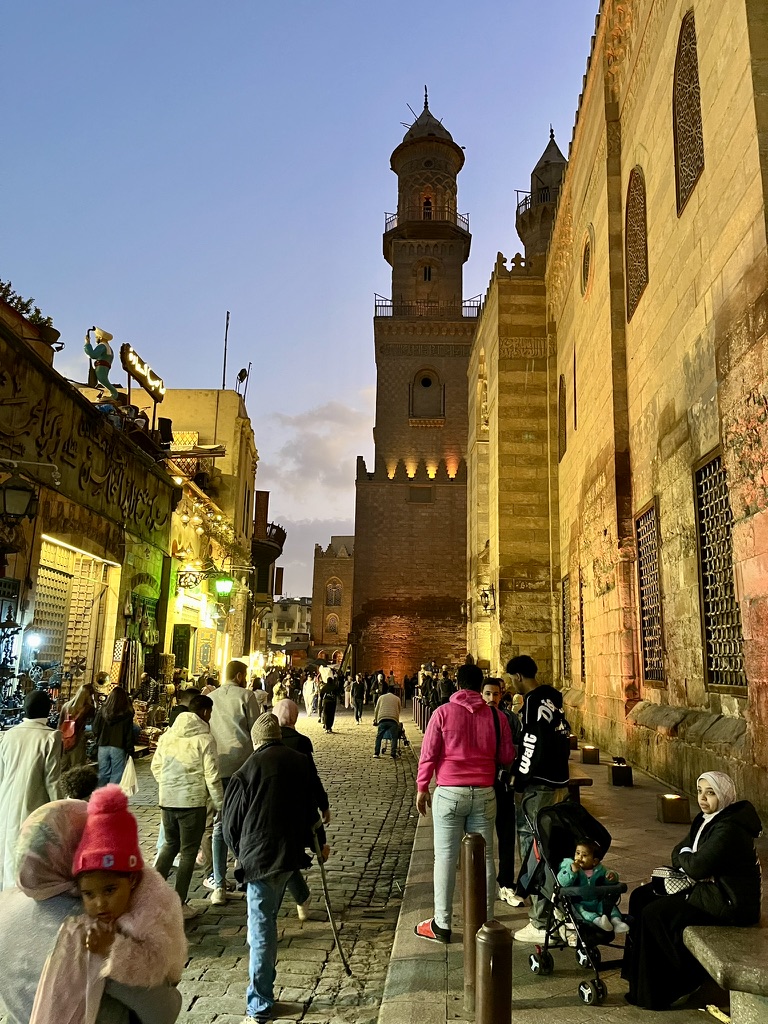
In the evening we took an Uber toward Khan el-Khalili, though the crowds forced the driver to stop short. He suggested exploring around Bab al-Futuh, and I’m glad he did. The old city gates were softly illuminated, mosque minarets glowed against a darkening sky, and the streets smelled of spices and evening bread.
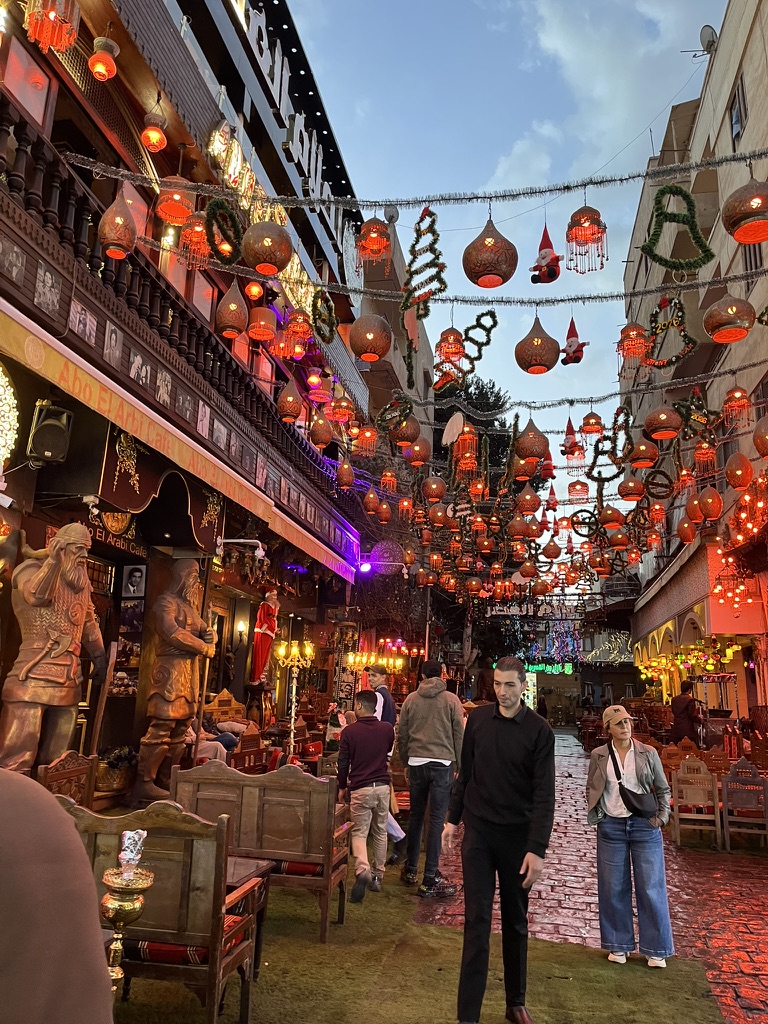
Khan el-Khalili itself was exactly what I expected: chaotic, colourful, and relentlessly commercial. Beautiful to look at, overwhelming to navigate. We didn’t buy much—but we walked until our feet were sore and the alley sounds faded behind us.
Day 2 — The Cairo Pyramids Travel Experience: 4,500 Years in One Day
The Pyramids: Larger Than Your Imagination, Stranger Than You Expect
We rose early, around 7:30 a.m., and called an Uber to Giza—about $4 for a 30-minute ride. Leaving downtown Cairo, the car slipped alongside the Nile for a stretch. Outside the window, everyday life unfolded quietly: locals walking, bargaining, commuting. A calm transition before the monuments ahead.
As we entered Giza, the landscape shifted. The city thinned, the desert appeared, the road opened up. A man in a black robe sped past on a motorcycle, kicking up dust. A young man dashed across four lanes of traffic without slowing; our driver swerved and muttered a quiet curse. Then came a checkpoint where soldiers scanned the underside of our car with a metal detector before waving us through.
The first surprise was how organised everything was. Before the trip I’d read countless accounts of chaos and aggressive vendors. Instead, free shuttle buses ran frequently across the vast plateau, connecting each pyramid and viewpoint. The whole experience felt calm and orderly.
And then: the pyramids.
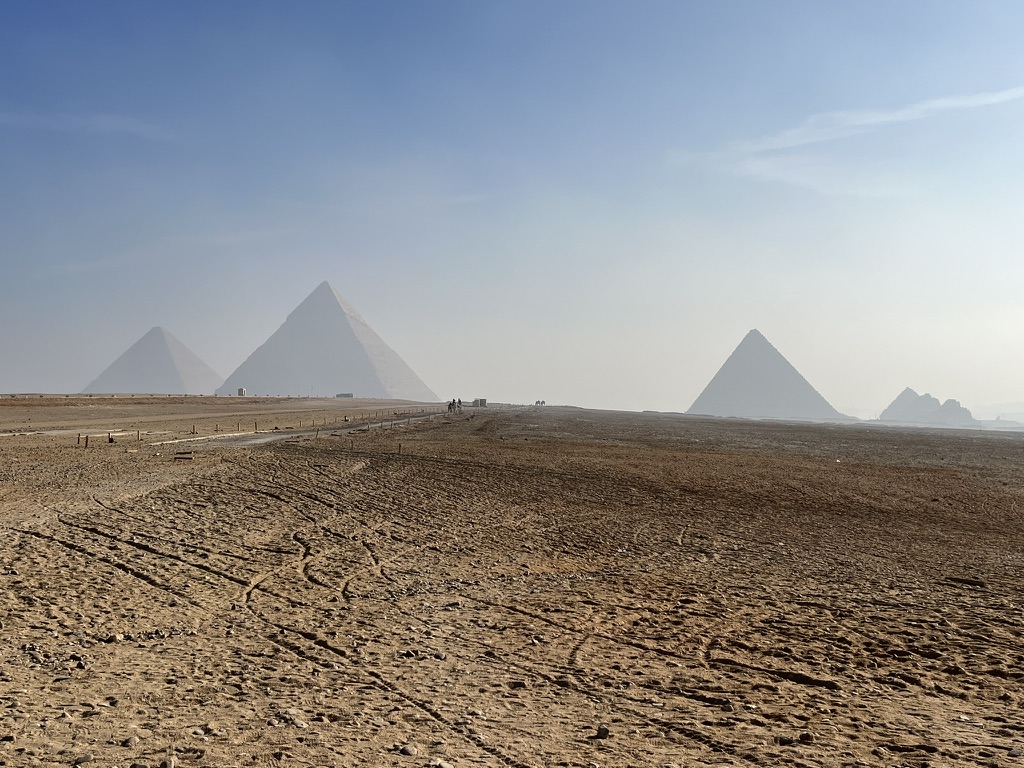
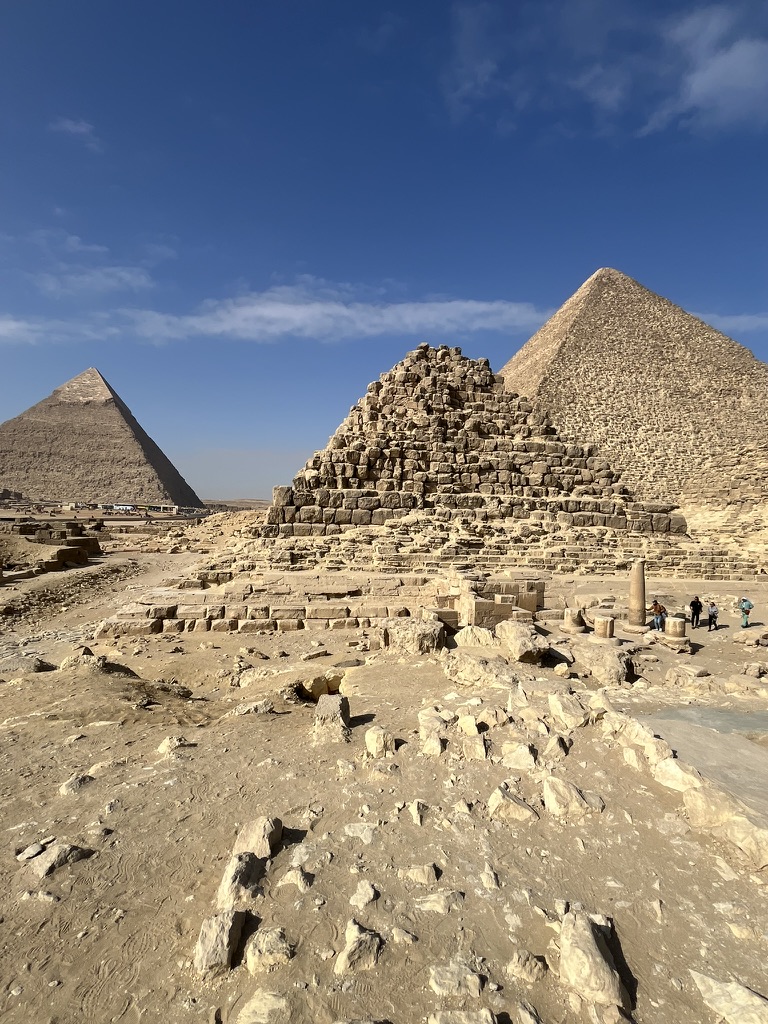
I’ve seen enough photographs that I thought I knew what to expect. I didn’t. Standing at the base of the Great Pyramid of Khufu—138 metres high, 230 metres at the base, 2.3 million stone blocks averaging 2.6 tons each—the scale rewired something in my brain.
The pyramid of Khafre appeared slightly taller because of its elevated base and the strip of original smooth limestone casing still clinging to its summit—a reminder that these pyramids once gleamed white across the desert. Menkaure, the third and smallest, stood less than half the height of Khufu’s, but somehow felt more intimate, more contemplative.
At each pyramid, a few locals offered to take photos or suggest poses. We politely declined, and as long as we didn’t hesitate, no one pushed. Even as tour groups multiplied through the morning, it was always possible to wander just slightly off the main path and find a quieter corner—an unexpected angle where the pyramids stood nearly alone against the desert sky.
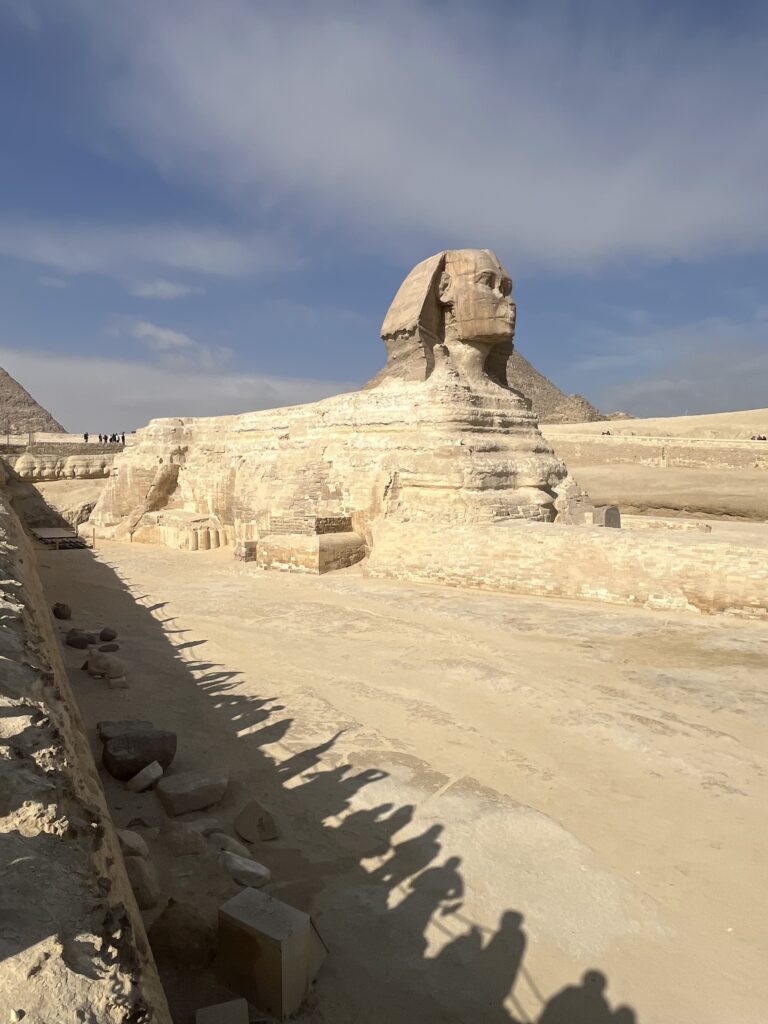
We exited through the Sphinx Gate, the busiest section of the plateau. Nothing prepared me for the moment I stood face-to-face with the Sphinx, the pyramid of Khafre rising behind it. I’d carried this image in my mind for years. Seeing it in person felt strangely unreal—like stepping into a photograph that had lived inside my imagination for so long.
⚠️ Scam Alert: The Uber App-Messaging Scam at Giza
Just outside the Giza exit, we were hit with our first real scam attempt. A driver began messaging us inside the Uber app—something that had never happened before on this trip. As we would soon learn, Uber messages from drivers in Egypt are almost always a red flag.
See Egypt Transport & Safety Survival Guide for the complete Egypt transport and safety tips.
This driver proposed charging ten times the regulated fare, then made several “alternative offers.” We declined everything and canceled. The second driver was perfectly fine.
After the GEM visit, exiting Giza for the second time was even harder. Driver after driver messaged to renegotiate or demanded cash. One pressured us to walk to a different gate, then demanded a higher price the moment we got in. We got out immediately.
Eventually we found a marked taxi about 50 yards from the entrance—he asked $15 to downtown, we negotiated to $12, and the ride was calm and honest.
💡 Two rules that saved us
(1) If a driver messages you to renegotiate—cancel immediately. Uber doesn’t work that way.
(2) Only get into cars you can positively identify. Don’t let a few bad actors spoil the GEM—just be ready to stand your ground and walk away.
The Grand Egyptian Museum: Ancient History Through a Modern Lens
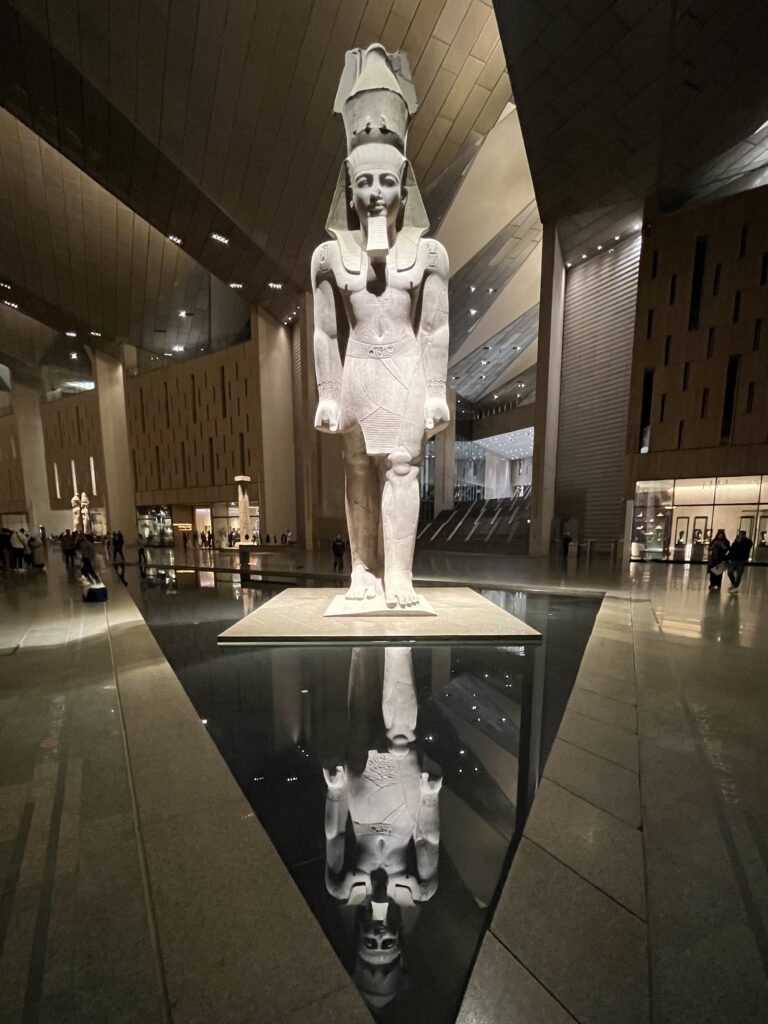
After the pyramids, we headed to the Grand Egyptian Museum. The contrast was deliberate and striking: from ancient stone and desert dust to a shining structure of glass and steel. The triangular sloping façade subtly echoes the geometry of the pyramids visible in the distance.
We were hungry, so we sat at Zooba near the entrance first—Egyptian street food, refined just enough for the museum setting. Chicken and beef sandwiches, excellent flavours. The waiter asked if we’d mind sharing a large table with two strangers; we said yes without hesitation. Our tablemates ordered massive sampler platters. I couldn’t help wondering whether they had come for the exhibitions or the food.
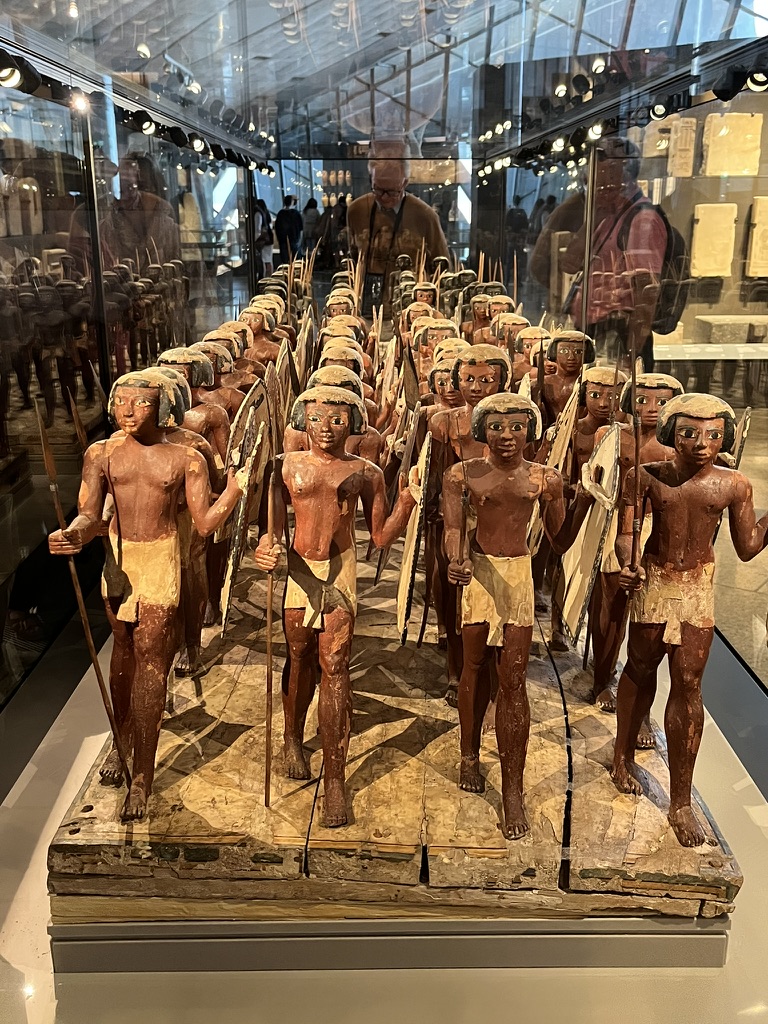
From the atrium, a grand staircase rises past artifacts that feel like previews: temple fragments, statues of Hatshepsut, unmistakable representations of Akhenaten. We climbed instead of taking the escalator, which meant slowing down and actually looking. The twelve exhibition halls radiate outward from there. We didn’t follow a strict route—just wandered, letting curiosity lead.
The undeniable centrepiece is the Tutankhamun Galleries—two full halls containing most of the collection moved from the old Egyptian Museum downtown. The golden mask sits inside a glass case, closely guarded. Security urges visitors to keep moving. You get only a few seconds—but even that brief moment is powerful and strange, like being granted a glimpse of something that shouldn’t exist.
Not far away, we found the Golden Throne, depicting Tutankhamun’s wife Ankhesenamun gently touching his shoulder. Before the trip, I’d heard an Egyptologist describe this as showing rare tenderness and affection in royal art. Standing there, I understood exactly what he meant.
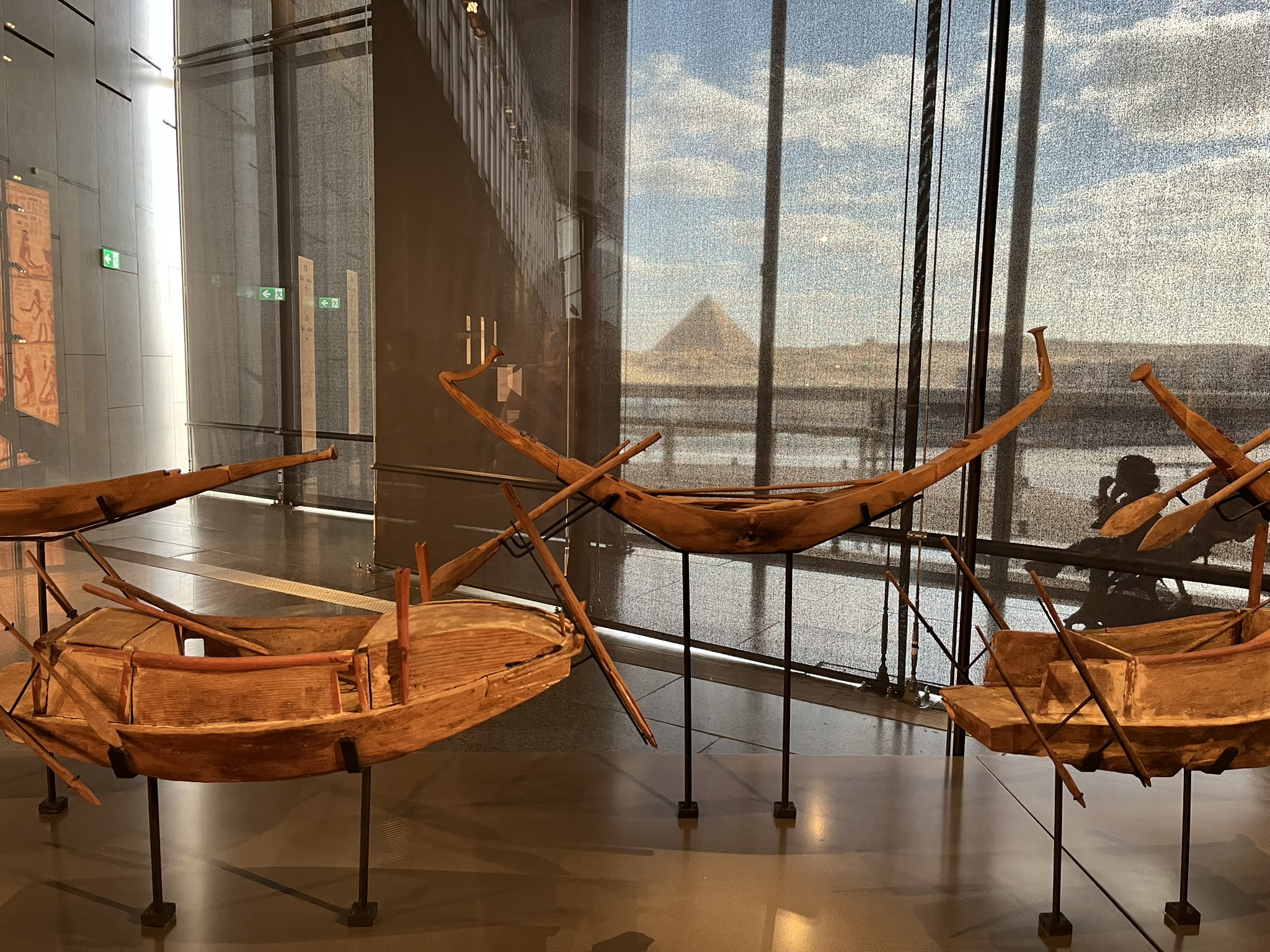
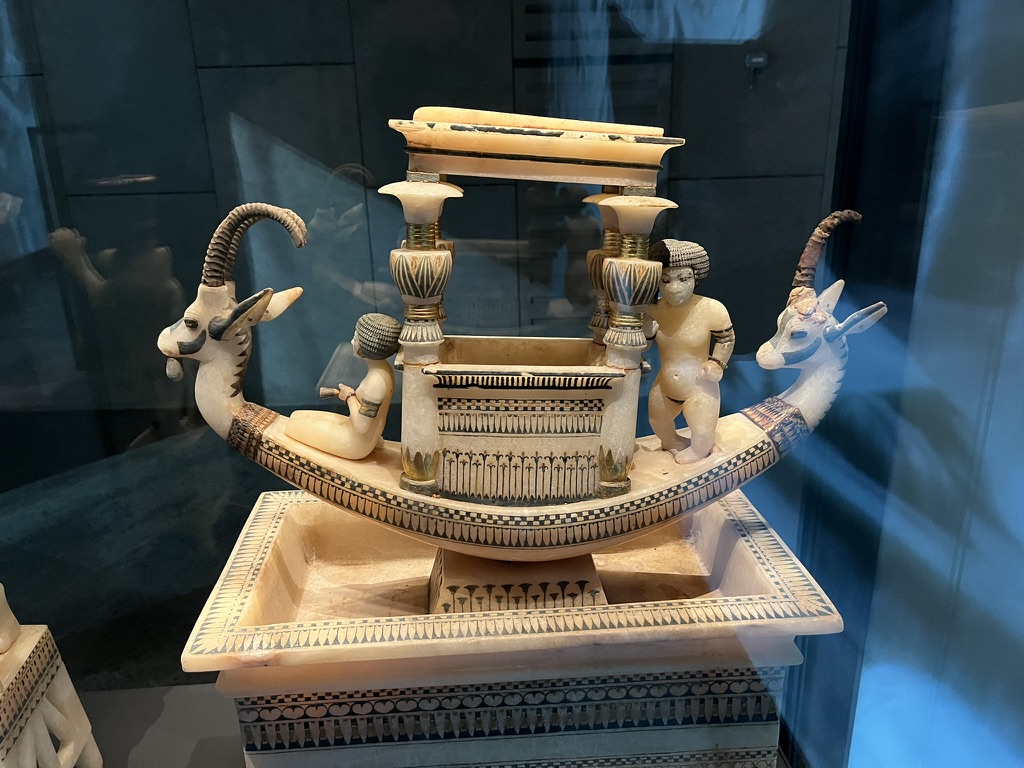
By the time we finished the galleries it was past 7 p.m. We walked to the separate Khufu Ships Museum, included with the GEM ticket. The solar boats were buried beside the Great Pyramid to carry Khufu alongside the sun god Ra—across the sky by day, through the underworld by night. The first boat is astonishingly preserved after 4,500 years, every wooden plank intact.
The pyramids gave me mystery. The GEM gave me context. Together, they told a story that neither could tell alone.
Day 3 — Islamic Cairo: Getting Wonderfully Lost Before the Flight South
Our third morning in Cairo began with an afternoon flight to Aswan looming—which meant a few precious hours to go somewhere less scripted. After breakfast, we took an Uber toward Bab Zuweila, a medieval gate we’d discovered during a late-night YouTube deep dive into Cairo’s hidden corners.
The driver dropped us on a crowded, noisy street that felt unmistakably local. Food stalls sizzling. Clothing stands spilling onto the pavement. Narrow lanes packed with cars, carts, and motorcycles. Everyone around us was Egyptian. Rising above the chaos, we spotted towering minarets and a massive stone structure that had to be part of an ancient city wall—but we couldn’t figure out from the street how to get up.
The Wonderful Mistake: Mosque of Sultan al-Mu’ayyad
We noticed a mosque about 20 metres from the tower and assumed that was it. As we approached, a man appeared—dressed in plain clothes but moving with the quiet authority of someone who belonged there. Without asking what we were looking for, he seemed to sense we were visitors.
“Come, come,” he said warmly, gesturing where to leave our shoes.
He greeted the doorman, reached into his pocket, and unlocked a beautifully decorated metal door to the left of the entrance. The gate swung open to reveal a small, intimate chamber—richly carved, unexpectedly elegant. The dome above formed a perfect circle, punctuated by twelve decorated windows. He began explaining the history as if we’d asked, and it felt like we had stumbled into a space few visitors ever see.
He then led us through the courtyard, showed us where worshippers gather and the water fountains where they wash before stepping onto the carpet. Only then did I realise: we weren’t at Bab Zuweila at all. We had wandered into the Mosque of Sultan al-Mu’ayyad by mistake.
Bab Zuweila: Climbing into the City’s History
After saying goodbye, we found the actual entrance to Bab Zuweila—this time with a proper ticket counter and no one else around. We climbed to the rooftop into warm sunlight and a deep blue sky.
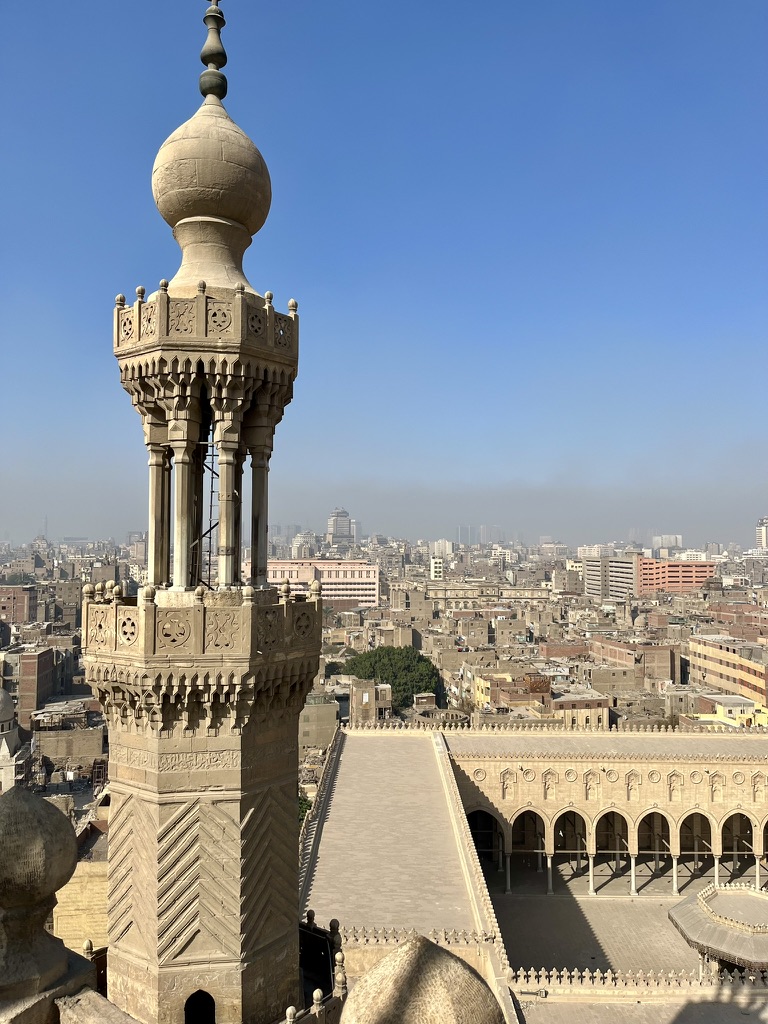
One of the minarets had an open door. No one was around to tell us whether climbing was allowed, so we cautiously started up the spiral staircase. The steps grew narrower. The light dimmed until it was pitch dark. We hesitated—then natural light appeared through a small opening. A few more steps and we pushed through onto the minaret balcony.
Below us lay the mosque we’d just visited. Beyond it stretched Islamic Cairo: a dense patchwork of unfinished rooftops, narrow streets, and minarets rising in every direction. Raw, real, and deeply alive.
Back inside, the staircase continued upward. We climbed again—darkness, then light—until it ended at a metal spiral clinging to the exterior, requiring us to climb up and step down to the very top platform. My wife stayed put. I made the climb alone. The view from the top was even more breathtaking—then vertigo hit, and I didn’t linger.
💡 What Is Bab Zuweila?
A well-dressed Egyptian man we met at the top explained it best: Bab Zuweila is one of only three remaining gates from Cairo’s original medieval city walls, built in 1092 AD. It suddenly made sense why it had looked like a city gate from the street. He invited us to join him and his friends for a walking tour of Islamic Cairo—we would have loved to, but we had a flight to catch.
Al-Azhar Mosque and a Hidden Lunch
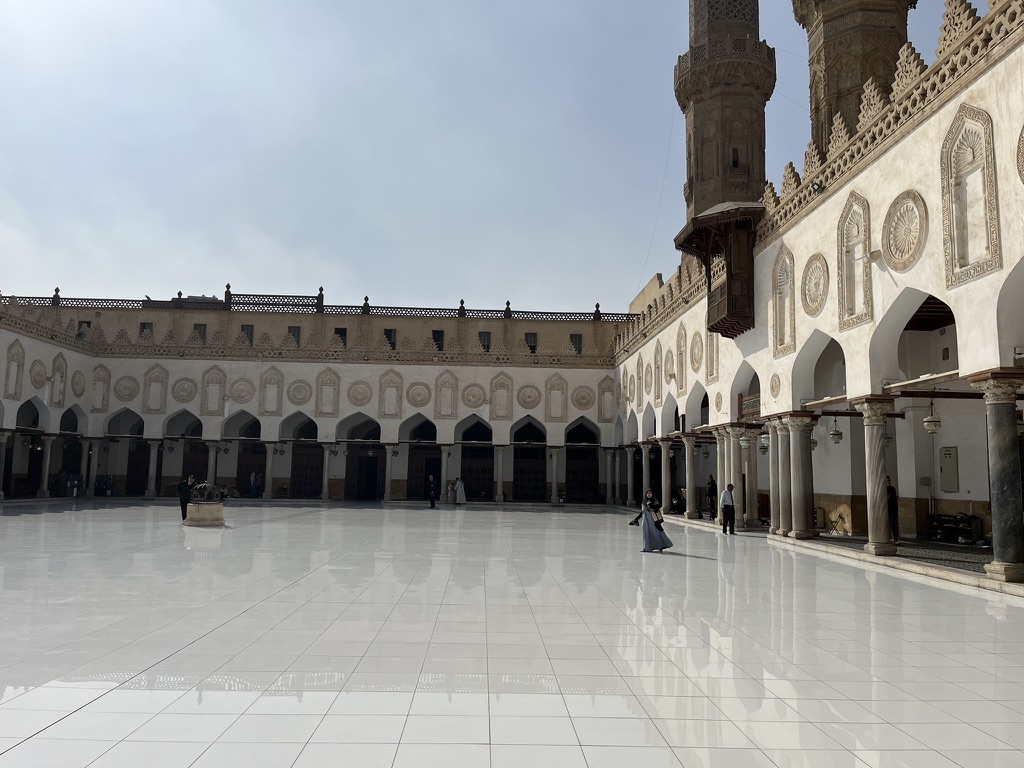
Following a small lane along Al-Muizz Street, we arrived at Al-Azhar Mosque. The white marble courtyard drew us immediately. We left our shoes outside and wandered quietly until a woman approached and asked us to sit to the side—prayer was about to begin.
From the open prayer hall doors, we watched as worshippers knelt in unison, some inside, some in the courtyard. Everyone who wasn’t praying sat quietly. The sound of prayer—rhythmic, soothing, completely unfamiliar—filled the space with a calm that was hard to explain.
After leaving the mosque, hunger set in. Following Google Maps down a narrow alley, we found nothing. Giving up, we stumbled into a large courtyard where a restaurant stood with no online presence, no signage. A middle-aged man approached us—the owner. Friendly, unassuming, he convinced us to try it.
Upstairs, a large space with ten-plus tables, each decorated with colourful traditional Egyptian fabrics. We were the only guests. The owner went downstairs to cook, then came back to chat. From the second floor, we could see the entire courtyard below. Two children played on the roof of a building in the distance. Pigeons circled lazily under a blue sky. The food took thirty minutes and wasn’t the most flavourful meal of the trip—but it was thoughtfully made, clearly local, and the owner’s warmth made it feel exactly right.
Al-Azhar Park and Goodbye to Cairo
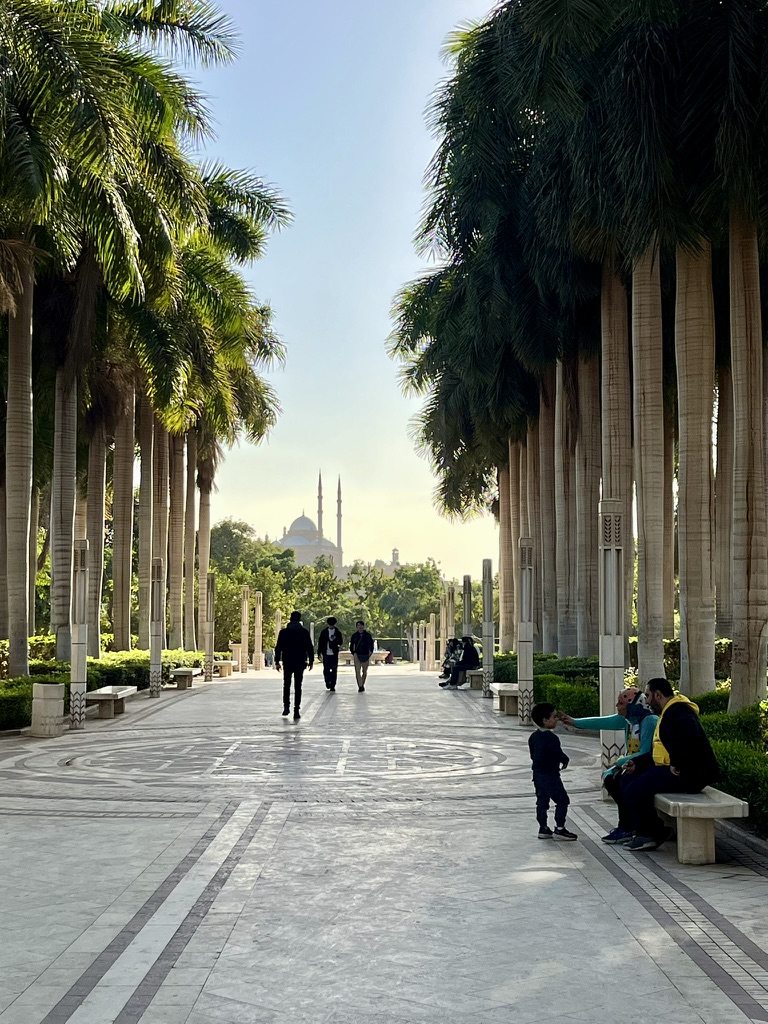
With a little time remaining, we went to Al-Azhar Park—a green oasis perched above the city. It was a weekday and nearly empty. A few couples were taking wedding photos. From the hilltop, Cairo stretched out in every direction; we could even spot the Muhammad Ali Mosque from two days earlier.
Then it was time to go. We returned to the hotel, gathered our bags, and navigated flight delays with patience. By the time we landed in Aswan, it was well into the evening.
Cairo was behind us now—but its layers, surprises, and quiet, unscripted moments would stay with me. Looking back, this Cairo pyramids travel experience was more layered, calmer, and more emotionally powerful than we expected. The magnificent mosque we found by accident. The minaret climb no one told us was allowed. The prayer we watched from a courtyard floor. The restaurant with no sign.
As we touched down in Aswan and warm night air came through the window, the next chapter was already waiting.
📍 Coming Up
Aswan, Abu Simbel, and four days on the Nile — including the debate that nearly made us skip the cruise entirely, what Abu Simbel actually feels like at sunrise, and why Luxor deserves far more time than any tour group gives it.

Hi, I’m Frank J – Egypt Self-Guided Travel. I explore Egypt solo and share tips, stories, and practical advice to help you plan your own adventures safely and enjoyably.