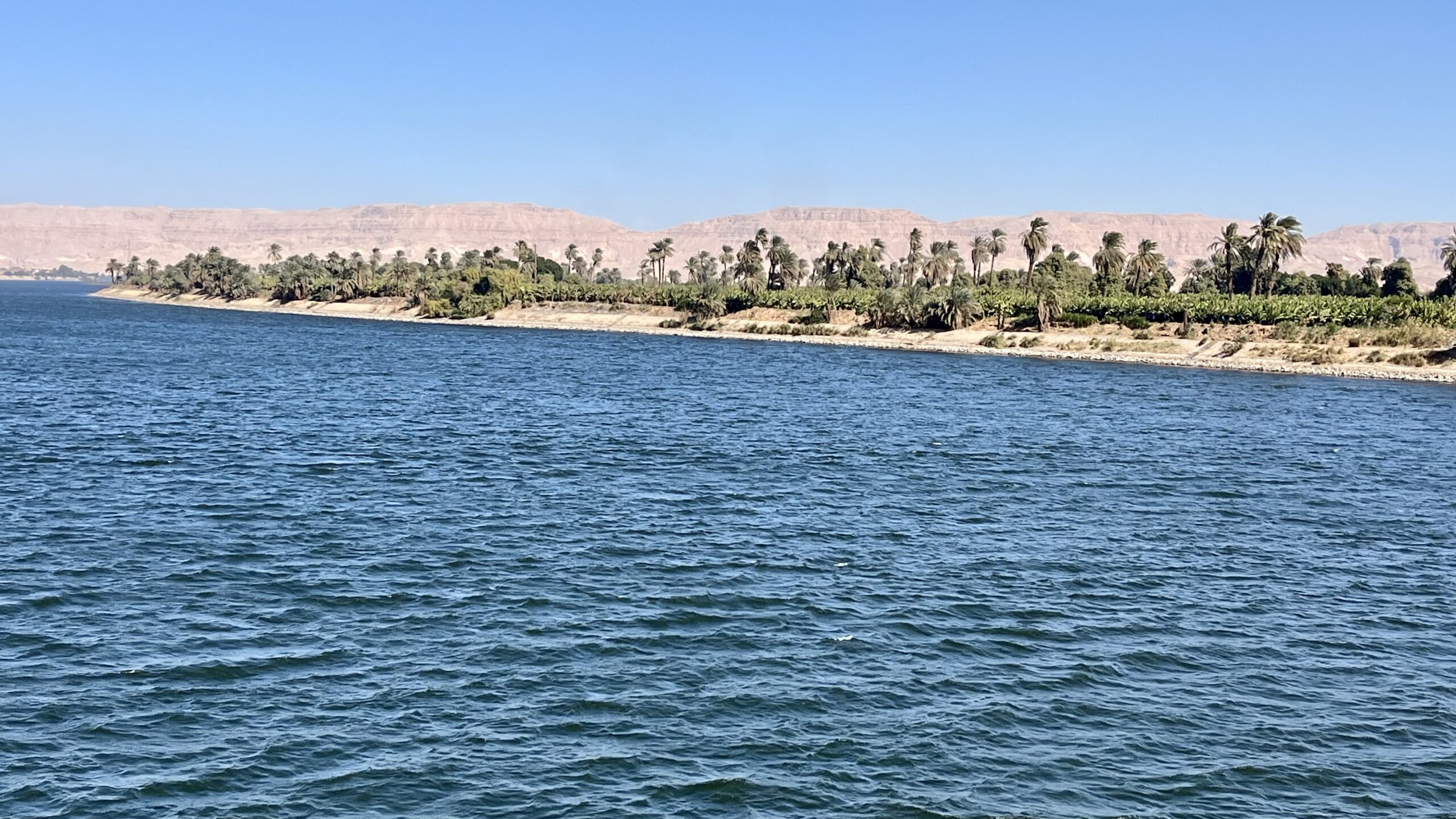
We didn’t want to do a Nile cruise. We were self-guided travelers who had deliberately avoided group tours for the entire trip, and the idea of a fixed itinerary with a guide and a schedule felt like everything we’d been trying to escape. Then we did the arithmetic on going Aswan to Luxor by road versus by river, thought about the temples we’d see from the water, and the decision made itself. We used the cruise primarily as transportation. What we got was one of the highlights of the entire Egypt trip — and a completely different picture of what a Nile cruise actually is from what the brochures suggest.
✍️ How to Use This Guide
Nile cruise Aswan to Luxor trips are often sold as luxury experiences — but the reality is more nuanced. This guide covers the Nile cruise from Aswan to Luxor: how to book it, what the experience is actually like, Kom Ombo Temple, Edfu Temple, the Esna Lock, cabin life, food, tipping, and how to use a cruise as transport rather than as a guided tour. It draws on a 4-day / 3-night cruise taken as part of a 12-day self-guided Egypt trip.
For Aswan itself — Philae Temple, the Nubian Village, Abu Simbel, and getting to Aswan from Cairo — see the companion guide: Aswan & Abu Simbel: The Explorer’s Guide (2026).
📋 Table of Contents
I. Nile Cruise Aswan to Luxor: What It’s Actually Like
The Nile cruise from Aswan to Luxor is not what most travel brochures make it look like. It is not a luxury liner experience. It is not a floating resort with cocktail bars and white-glove service. It is a riverboat — typically holding 20 to 40 passengers — that travels the 200 km between Aswan and Luxor over four days, stopping at Kom Ombo and Edfu temples along the way, navigating the Esna Lock, and docking in Luxor. The cabins are functional, the food is buffet, the schedule is fixed, and the experience of being on the Nile is extraordinary.
The gap between expectation and reality runs in both directions. First-time cruisers sometimes expect luxury and find a comfortable but modest boat. They also sometimes expect a mere transport connection and find themselves watching the Nile pass from a sun deck with an overwhelming sense that this, specifically, is what they came to Egypt for. However, the reality of a Nile Cruise Aswan to Luxor is simpler and more rewarding than most brochures suggest.
II. How to Book: The Group Tour Price Paradox
Here is the uncomfortable economics of the Nile cruise, which most travel sites do not state plainly: booking a cabin independently is significantly more expensive than joining a tour group, and the experience on the boat is largely the same regardless of how you booked.
Tour groups receive cabin rates that are roughly half the price of booking directly online. If you search for Nile cruise cabins as an independent traveller, the prices are steep and the availability is limited. If you join a tour package — even a minimal one with a guide you don’t intend to follow everywhere — you access the group rate. For self-guided travellers who resist the idea of group travel, this is the central paradox: the most cost-effective way to do the cruise your way is to book it through a group.
💡 The TripAdvisor Package Move
We booked through a TripAdvisor package, fully aware that most tour operators assign whatever boat is available that day rather than a specific vessel. We went in prioritising reviews over the name of the boat or the price tier — review quality proved a far more reliable signal of actual experience than the cruise branding. If a package doesn’t list the specific boat in advance, look at the operator’s reviews across multiple cruises, not just one. The boat matters less than the guide and the management.
III. Direction, Length & Timing
Choosing the correct direction is one of the important decisions when planning a Nile Cruise Aswan to Luxor.
The Nile flows north. Aswan is upstream (south); Luxor is downstream (north). The cruise from Aswan to Luxor is therefore a downstream cruise — travelling with the current — and takes four days and three nights. The upstream cruise, from Luxor to Aswan, runs against the current and takes five days. The downstream direction is faster, more efficient, and the more commonly recommended option.
The standard itinerary: depart Aswan early afternoon on Day 1. Stop at Kom Ombo Temple that evening. Overnight sailing. Wake to dock at Edfu on Day 2. Navigate the Esna Lock that afternoon. Arrive Luxor on Day 3 (or Day 4 depending on the specific schedule).
| Decision | Recommendation | Why |
|---|---|---|
| Direction | Aswan → Luxor (downstream) | Faster, more efficient, goes with the current. Fly Cairo → Aswan first. |
| Length | 4 days / 3 nights | Standard downstream length. Upstream takes an extra day. |
| Booking method | Tour package for the price | Group rates are ~half the independent cabin price. Use the cruise your way once aboard. |
| What to expect | Functional comfort, not luxury | Cabins are good, buffet food is adequate, views are extraordinary. |
IV. Life on the Boat: The Cabin, the Decks & the View
The cabin on our boat was a pleasant surprise: two beds, a sitting area, and — most importantly — a wide window directly facing the Nile. That window became the centre of our time on board. Watching the scenery pass from it — palm trees giving way to desert cliffs, small villages on the banks, felucca sailboats overtaken by the current, Egyptian farmers working fields that have been worked for 5,000 years — is the primary reason to be on this boat. The window is not incidental. It is the point.
The boat has multiple levels. On the first evening, we found the best spot: the upper sun deck on the third level, entirely open to the air. From there you watch everything: the river widening and narrowing, the landscape shifting between green agricultural strips and bare desert, the occasional flash of a heron on a sandbank. Friendly Egyptians on the banks wave. You wave back. The pace is the Nile’s pace, not yours, and that is exactly what it should be.
💡 The Second-Floor Alternative
When the sun deck is too hot or too windy — which it will be at midday in summer — the second floor has a quieter indoor lounge area, often with a piano and a drink spot, with views from the windows. Use it for the cooler parts of the day; use the sun deck for dawn, dusk, and the Esna Lock passage, which needs the open-air perspective to be fully appreciated.
Sleeping on a moving Nile cruise boat is one of the gentler experiences available in travel: the slight vibration of the engine, the sound of water against the hull, the knowledge that the river is working while you rest. We set alarms for Edfu because the temple stop required an early departure from the boat while it was still dark. The alarm was the only part we regented; everything else was effortless.
V. Kom Ombo Temple: The Dual-God Temple at Dusk
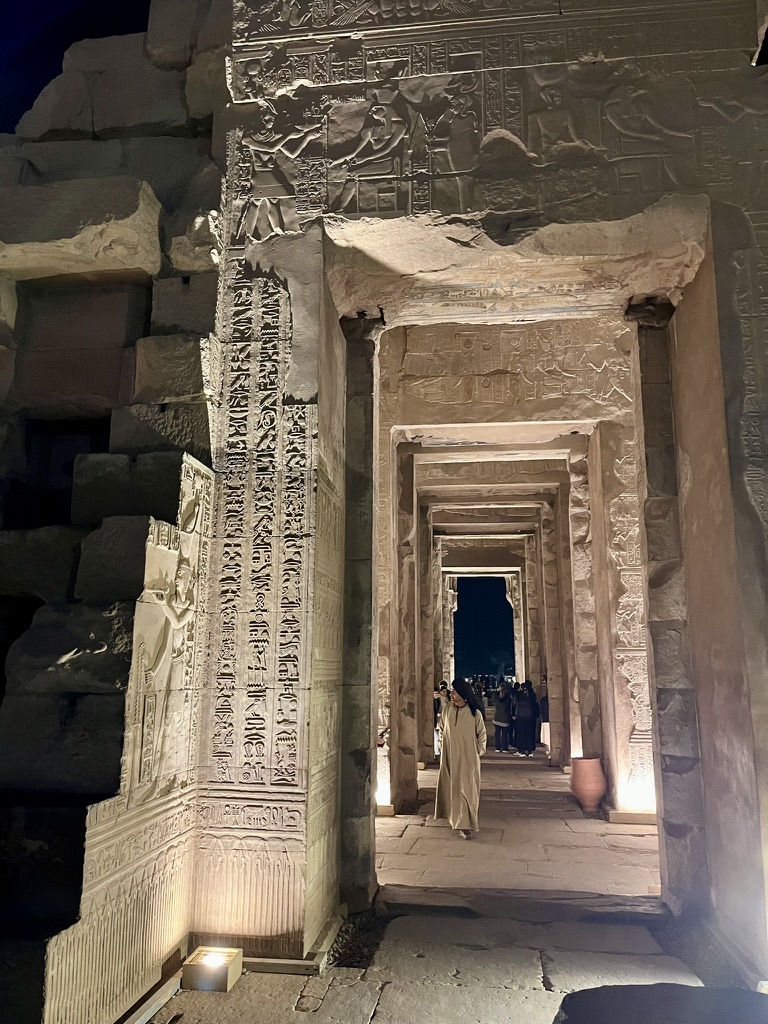
The first temple stop on the downstream cruise is Kom Ombo, reached at dusk on Day 1. The boat docks, the group disembarks, safety cards are collected at the gate, and you walk into one of the most structurally unusual temples in Egypt.
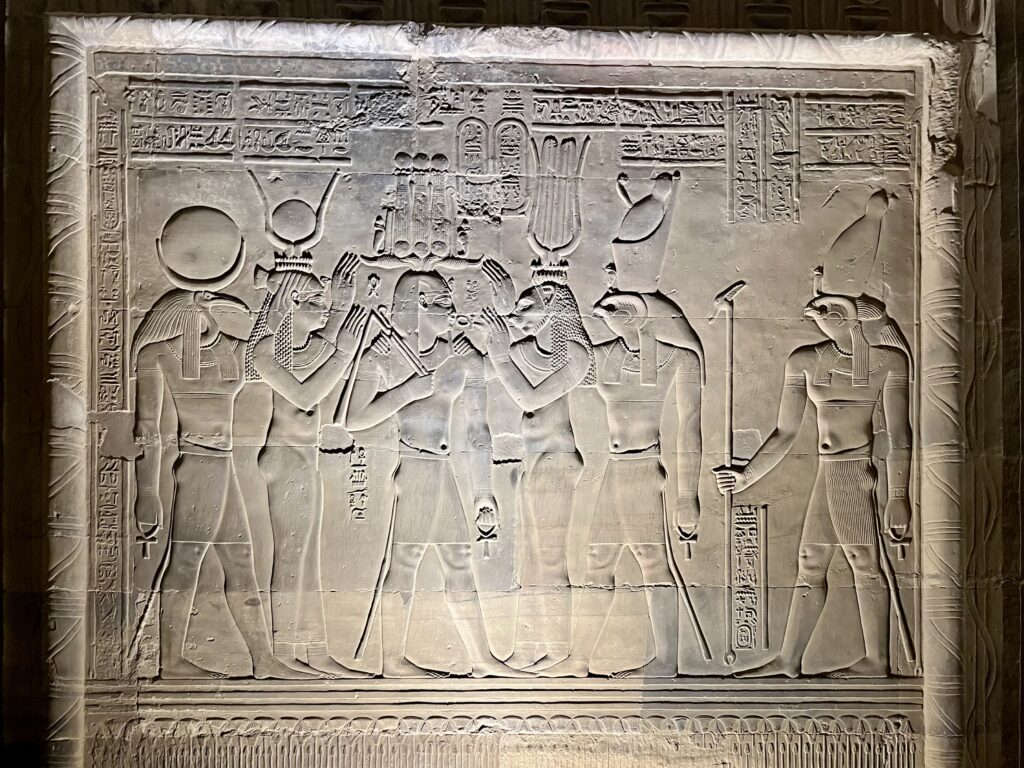
Kom Ombo is dedicated to two gods simultaneously — Sobek, the crocodile god, and Horus, the falcon god — and its entire floor plan is doubled as a result: two sanctuaries, two hypostyle halls, two sets of everything, running in parallel down the central axis of the building. The temple was built during the Ptolemaic period and the Greek influence on its proportions and decorative style is visible alongside the traditional Egyptian iconography.
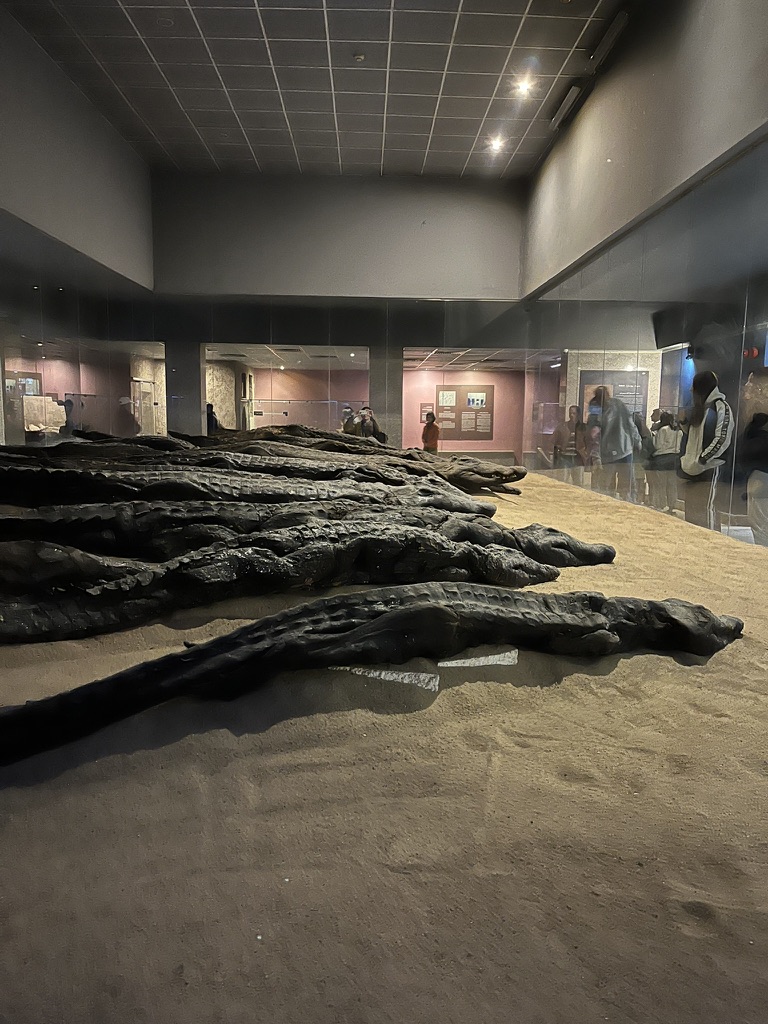
Adjacent to the main temple is a small crocodile museum — mummified crocodiles, the ancient cult objects of Sobek, and the history of crocodile worship in Upper Egypt. It is a short detour and entirely worth making. The mummified specimens are well-preserved and stranger than you’d expect.
VI. Edfu Temple: The Best-Preserved Temple in Egypt
The Edfu stop requires a very early start. The boat docks while it is still dark, and the group disembarks into the cool pre-dawn air while the sound of horse hooves echoes off the stone — hundreds of horse carts waiting to take visitors to the temple, which sits some distance from the docking point. We took a van instead, trying to beat the crowd, and arrived at the temple entrance in the half-light before sunrise.
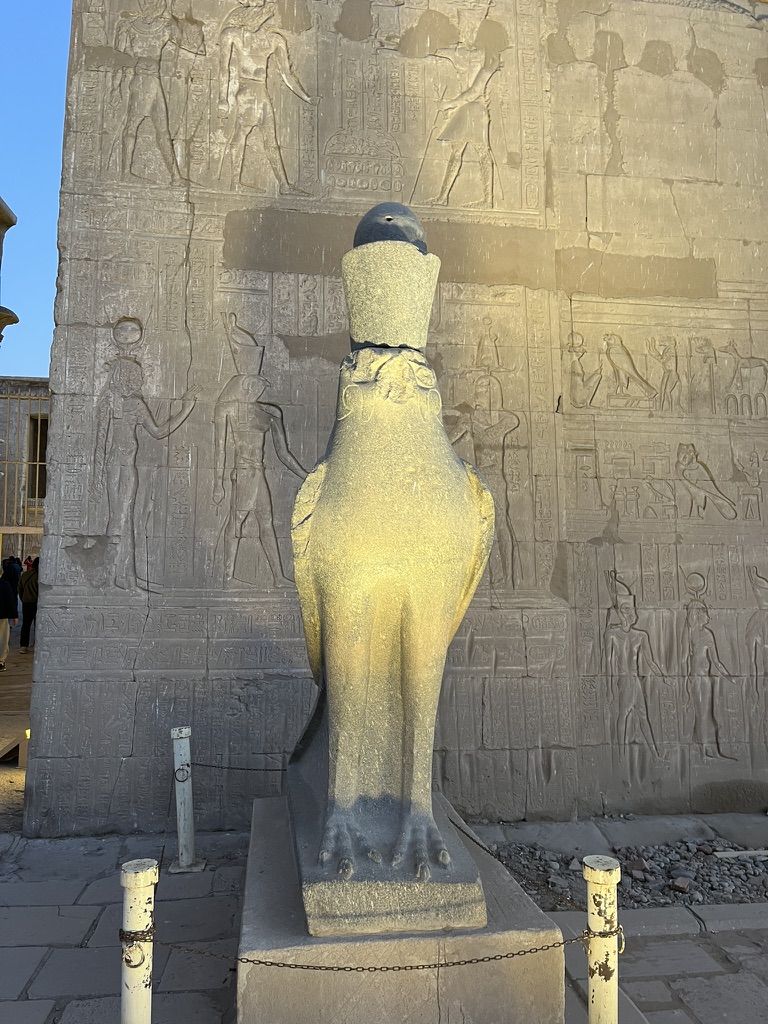
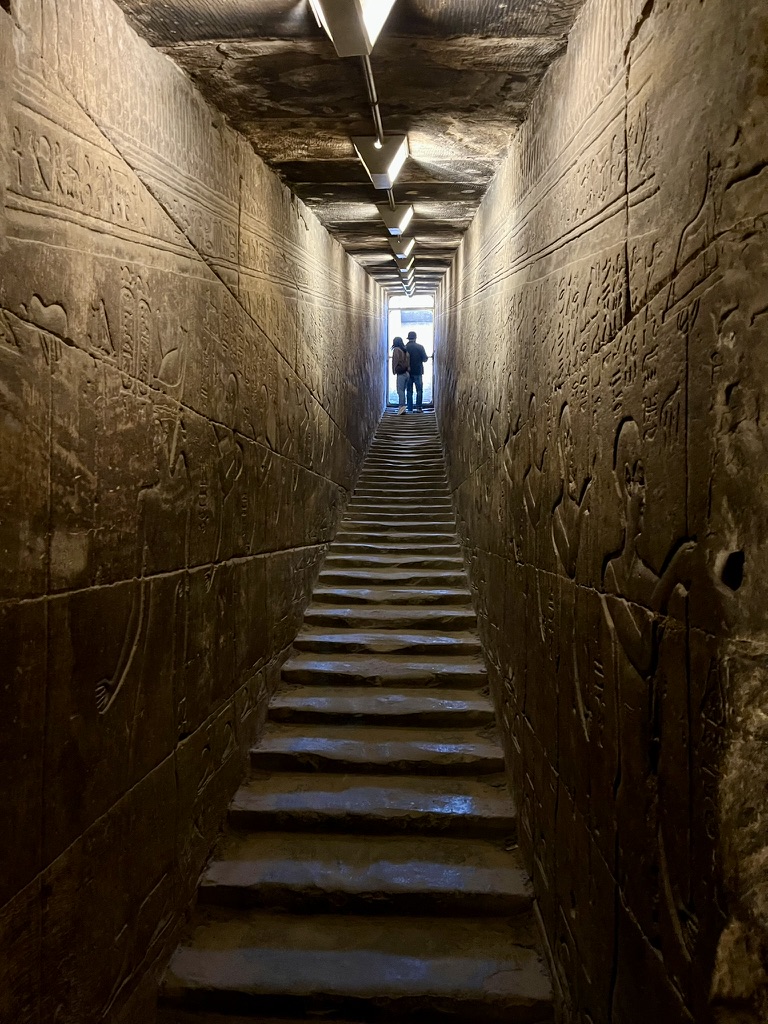
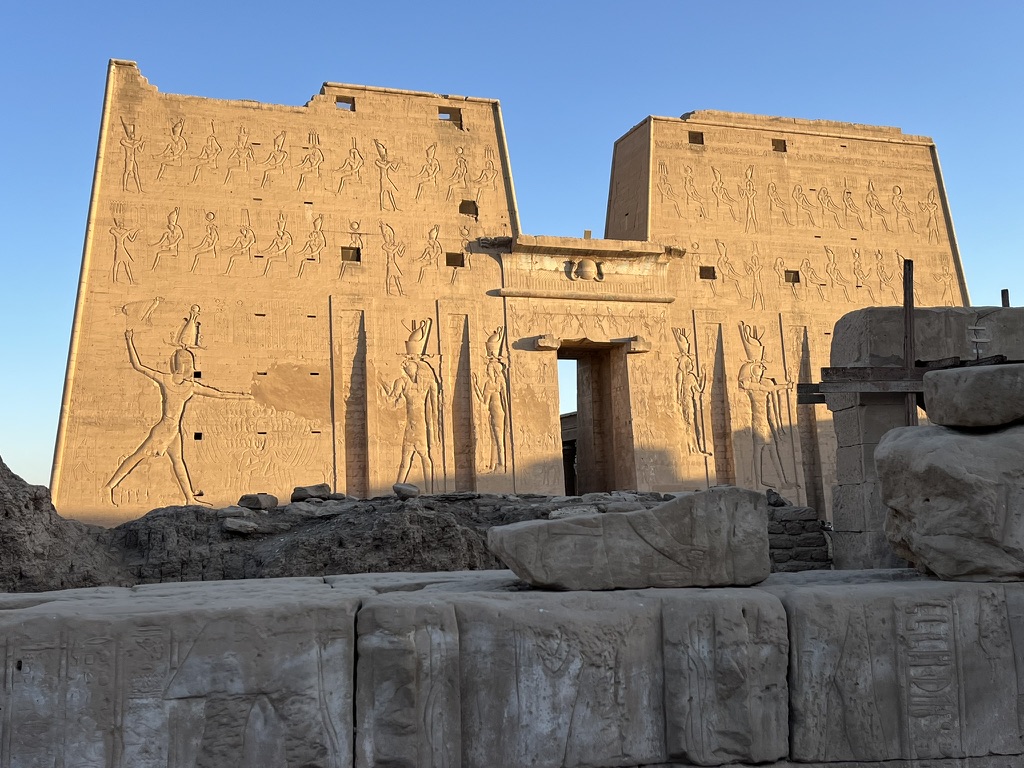
Edfu Temple is the most completely preserved ancient Egyptian temple in existence. It was buried under centuries of Nile silt and desert sand until the 19th century — a burial that protected it from the weathering that damaged every temple built above ground. The result is that the reliefs are deep, intricate, and astonishingly sharp: carvings that in other temples have been worn to faint outlines here leap from the stone as if finished last year.
| Feature | Detail |
|---|---|
| Dedication | Horus the falcon god. One of the largest Ptolemaic temples in Egypt. |
| Preservation | The most complete ancient Egyptian temple in existence. Buried for centuries, protecting the reliefs. |
| Don’t Miss | The battle scene on the main pylon (Horus vs. the chaos hippo); the inner sanctuary with its original granite shrine; the reliefs inside the covered hypostyle hall |
| Getting There | Horse carts or vans from the boat dock. Van is faster and avoids the horse cart queue. Agree price before boarding. |
| Timing | Early morning departure from the boat — while dark. Inside the temple by sunrise. Aim to finish before the main tour bus wave arrives from Aswan by road. |
VII. The Esna Lock: An Unexpected Highlight
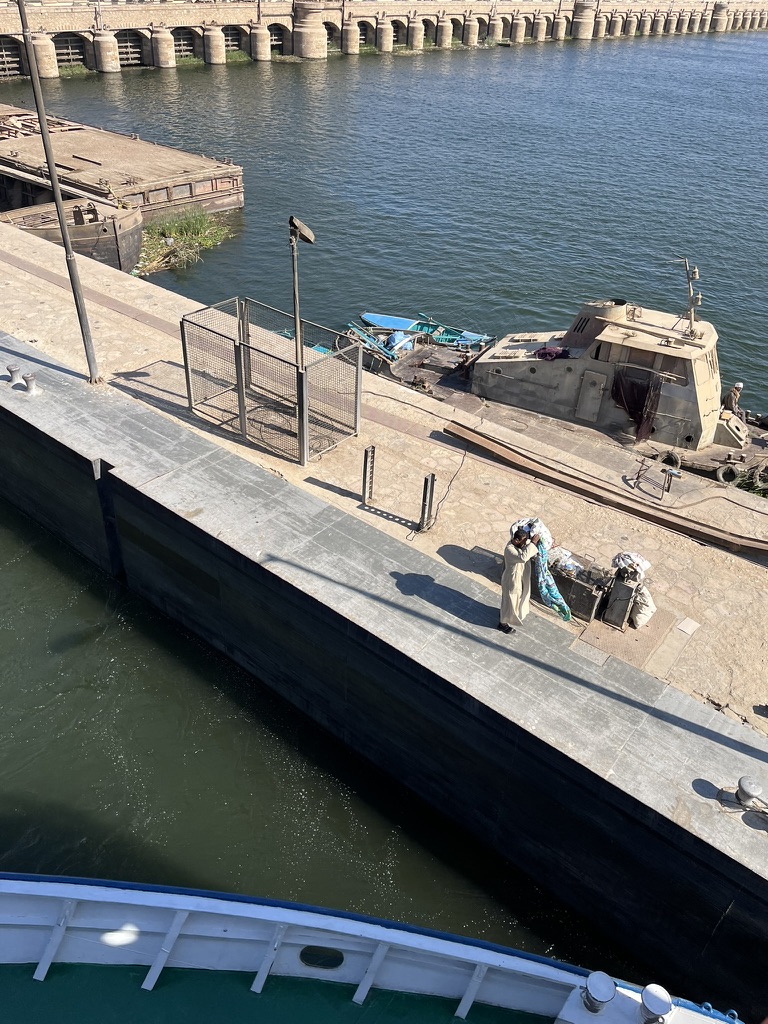
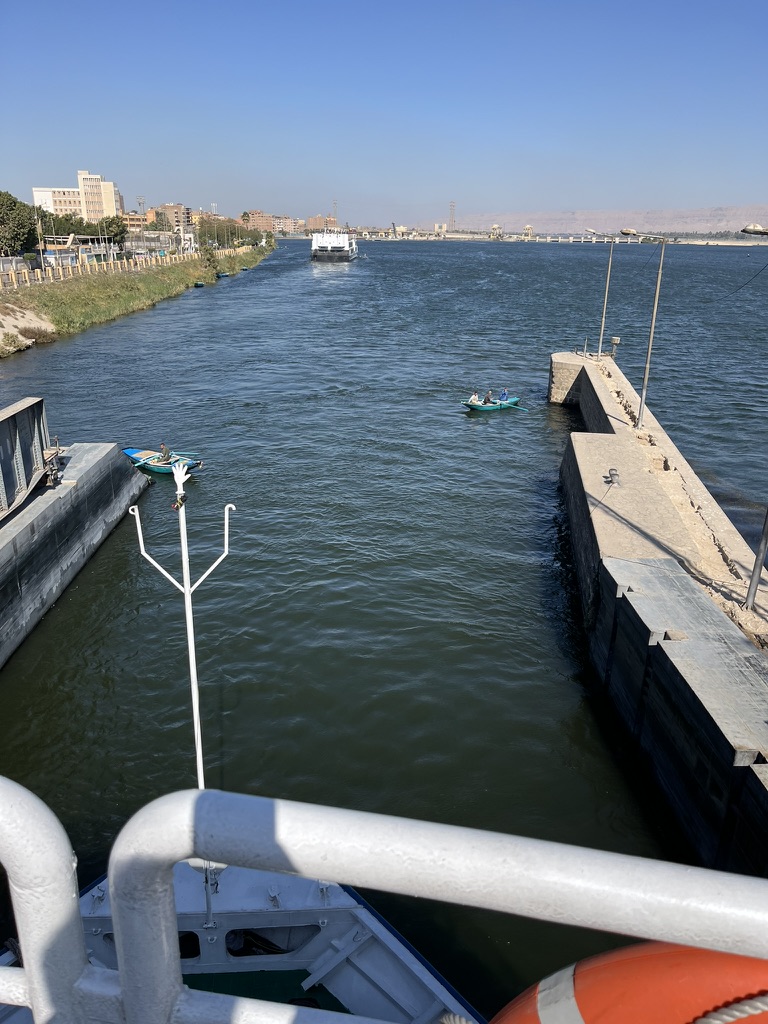
Between Edfu and Luxor, the Nile passes through the Esna Lock — a hydraulic lock system that manages the 10-metre difference in water level between the upper and lower sections of the river. Every cruise boat navigating from Aswan to Luxor passes through it. It sounds like infrastructure. It is, in fact, one of the most memorable experiences on the cruise.
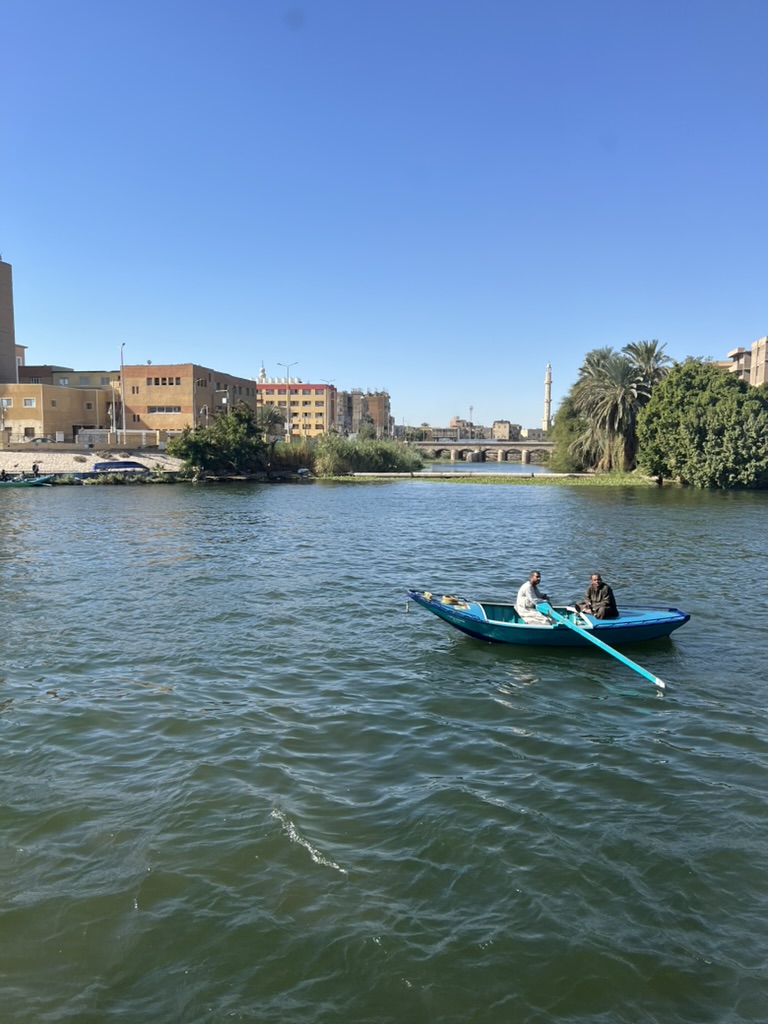
We became aware of the lock’s approach in an unusual way: small boats began pulling up alongside ours while we were still moving, their occupants calling out, holding up blankets and scarves and souvenirs for sale. The floating market. Then the boat shifted position — moving from the centre of the river toward the lock entrance — and we went up to the sun deck to watch.
The lock chamber is just wide enough to accommodate the boat. The water level was 10 metres higher on the upstream side; our boat needed to descend to the lower level to continue toward Luxor. We entered the chamber second in the queue — no waiting. The massive lock gates closed behind us. The water began to drop. The stone walls of the chamber rose around us on both sides as the river surface fell.
Outside, the floating vendors continued their pitch, lobbing packaged goods up to the deck and receiving payment thrown back down, an improvised commerce conducted entirely vertically across a falling water level.
The one practical note: vendors at the lock are persistent. They will throw goods onto the deck without being asked and expect payment. The standard advice is firm eye contact avoidance — if you don’t look interested, the goods don’t land near you. Once something is on the deck, the implied negotiation has begun. It is easier not to start it.
VIII. Food & Drink on the Cruise
The food on a standard Nile cruise is buffet. It will not be the culinary highlight of your Egypt trip. It is however adequate, reliable, and included — which matters when you’re moving between temples on a fixed schedule and the alternative is whatever is available at a site cafeteria. The buffet typically covers a Western-style breakfast (omelettes, bread, juice), a lunch spread mixing Egyptian and international dishes, and a dinner that follows the same pattern.
Nothing on the buffet will be as good as a meal in a proper Luxor or Aswan restaurant. The mango juice at Kom Ombo’s cafeteria will be better than anything served on the boat. Adjust expectations accordingly — the food is fuel and company, not destination dining.
💡 The Shisha Moment at Kom Ombo
After the mango juice, our guide offered a fruit shisha — water pipe, fruit-based, no tobacco. Neither of us are smokers. We tried it anyway. The sound of the water bubbling, the fruit flavour, the setting of a Nile temple cafeteria after dark — it was a genuinely good cultural moment, completely unlike anything you’d plan for. Say yes to the shisha if offered. You’re not going to develop a habit from one evening at Kom Ombo.
IX. How to Use a Cruise as a Self-Guided Traveller
The assumption most self-guided travellers make about a Nile cruise — that joining one means surrendering independence for four days — is not accurate. We used the cruise primarily as transport, and the degree to which you follow the group schedule is largely your choice.
The temple stops (Kom Ombo, Edfu) are the fixed points. The cruise boat docks, everyone gets off, you visit the temple on the group’s schedule, and you return. There is no meaningful alternative to this — the temple is the reason the boat stopped, and missing it to prove independence is pointless. These stops are genuinely good temples and worth seeing with the group.
Everything else — how much time you spend in the cabin versus on the sun deck, whether you join the optional guide commentary or wander independently, whether you participate in evening entertainment — is entirely your decision. Our guide was good company and his historical knowledge was excellent; we followed him for the temple visits and parted ways for everything else. Used strategically, a Nile Cruise Aswan to Luxor can fit seamlessly into a fully self-guided Egypt itinerary.
💡 The Early Luxor Transfer
When the cruise arrives in Luxor, you are not obligated to stay with the group for the Luxor temple visits. We requested an early transfer from the boat to our hotel and then spent the next day at the Valley of the Kings at 11 a.m. — well after the tour group convoy had dispersed. This is the self-guided advantage: use the cruise for the Nile section, then peel off in Luxor and do the temples on your own schedule. The group that stayed on the boat did Luxor Temple and Karnak as part of the package that afternoon; we did them at our preferred time the following day, with thinner crowds.
X. Arriving in Luxor
The cruise arrives in Luxor somewhere between Day 3 and Day 4 depending on the specific schedule. Due to new docking regulations, cruise boats now moor several kilometres from the city centre — you cannot see Luxor Temple from the dock. Transfer to your hotel is either arranged by the cruise operator or requires a taxi from the mooring point.
On our cruise, we arrived earlier than expected — between 3 and 4 p.m. — and the guide pivoted immediately: why not visit Karnak and Luxor Temple now, since the boat was docked anyway and we could stay onboard overnight rather than moving to a hotel? We joined the group for those visits and, retrospectively, they were a good bonus — though doing the temples with a guide and a tour group in the late afternoon is a different experience from going self-guided.
XI. Practical Details: Cost, Tipping & the Docking Confusion
What Does It Cost?
Prices vary considerably by boat quality and tour operator. The key insight is that joining a tour group package gives you access to group rates that are roughly half what you’d pay booking a cabin independently. Review quality matters far more than the price tier — more expensive cruises booked online do not necessarily deliver a better experience. Look at recent reviews of the specific operator rather than the cabin class.
Tipping on the Cruise
Tipping is expected and clearly structured on most Nile cruises. Our guide communicated this directly and without ambiguity:
| Recipient | Expected Amount | Notes |
|---|---|---|
| Boat staff (crew, cleaning, service) | ~$10 per person per day | Usually pooled and distributed by the head of staff at the end of the cruise |
| Guide | ~$10 per person per day | Given directly to the guide. On a 3-night cruise, this is $30 per person total. |
This was communicated clearly and is widely accepted as the norm on Aswan–Luxor cruises. Budget approximately $60–70 per person for tipping across the full cruise and you’ll be in the right range without any awkwardness.
The Docking Confusion (Don’t Panic)
Nile cruise boats frequently dock side-by-side — two, three, or even four boats moored against each other, with yours on the far side from the dock. This means that returning to your boat requires walking through the lobby or deck of one or more other vessels. This is standard practice, universally accepted, and entirely unremarkable to everyone involved.
⚠️ If Your Boat “Disappears”
If you return to the dock and your boat is not where you left it, do not panic. It has not left without you. It has almost certainly been shifted to the far side of one or two newly arrived boats. Walk through the adjacent boat lobbies — the staff will wave you through — until you reach yours. This happens regularly. It is a routine part of life at a busy Nile cruise dock and is resolved in under five minutes every time.
XII. Nile Cruise Aswan to Luxor – Quick Reference Cheat Sheet
📋 Nile Cruise — Quick Reference — Screenshot This
| Item | The Pro Move |
|---|---|
| Direction | Fly Cairo → Aswan. Cruise Aswan → Luxor (downstream). Faster, more efficient. |
| Length | 4 days / 3 nights standard downstream. Upstream adds a day. |
| Booking | Use a tour package for the group rate (~half the independent cabin price). Reviews matter more than price tier. |
| Boat name | Most operators don’t list the boat name in advance. This is normal. Focus on operator reviews. |
| Cabin | Request a window facing the Nile. The view from the cabin is the primary experience. |
| Best spot on the boat | Upper sun deck (3rd level). Open air. Full 360° river view. Use it for dawn, dusk, and the Esna Lock. |
| Kom Ombo | Dusk visit. Dual-god temple — Sobek and Horus. See the crocodile museum. Order the mango juice. |
| Edfu | Best-preserved temple in Egypt. Early morning. Take a van to beat the horse carts. Don’t miss the battle pylon. |
| Esna Lock | Go to the sun deck. Watch the water drop. Avoid eye contact with the floating vendors unless you want to negotiate. |
| Food | Buffet — adequate, not memorable. The mango juice at Kom Ombo cafeteria beats anything on the boat. |
| Tipping — staff | ~$10 per person per day. Pooled by head of staff. |
| Tipping — guide | ~$10 per person per day. Pay directly. Budget ~$60–70 per person total for a 3-night cruise. |
| Self-guided approach | Follow the guide for temple stops. Do everything else independently. Request early Luxor transfer to go solo from Day 1 in Luxor. |
| Docking confusion | Your boat is behind the other boats. Walk through their lobbies. Normal practice. Not an emergency. |
| Arriving Luxor | New regulations dock the boat several km from the city centre. Arrange hotel transfer via cruise operator or taxi. |
| Solo booking alternative | Walk the Aswan docking area and check boats directly. Risk: no guarantee. Reward: potentially better price. |
XIII. Frequently Asked Questions
Is the Nile Cruise worth it for self-guided travellers who don’t want group tours?
Yes — if you approach it as transport with excellent scenery rather than as a group tour with a boat. The fixed elements are the temple stops (Kom Ombo and Edfu), which are worth seeing regardless. Everything else — how you spend time on the boat, whether you follow the guide’s commentary, how you use the Luxor arrival — is up to you.
The economics strongly favour booking through a group package even if you intend to be independent once on board. The river experience itself — four days on the Nile, watching the landscape change, sleeping to the sound of water — is something that cannot be replicated by road and that most people who do it count among the best experiences of an Egypt trip.
Should I book downstream (Aswan to Luxor) or upstream (Luxor to Aswan)?
Downstream, from Aswan to Luxor, without question. The downstream cruise travels with the Nile’s current and takes four days. The upstream cruise travels against the current and takes five days — an extra day for no material benefit to the itinerary. The downstream direction also aligns with the most logical Egypt itinerary: fly Cairo to Aswan (the furthest point south), cruise north to Luxor, then return to Cairo. Flying into Aswan and out from Luxor is also the most efficient use of domestic flights.
Are more expensive Nile cruise boats significantly better?
Not necessarily. The most important variable on a Nile cruise is the guide, not the boat. A knowledgeable, engaging Egyptologist with a PhD and a genuine love of the history (our guide had all three) transforms the temple visits regardless of whether the buffet is slightly better.
Boat quality matters at the extremes — very cheap boats have genuinely inferior cabins and food — but within the mid-range, reviews of the operator and guide are more predictive of experience quality than the price tier. Spend your research time on recent reviews, not on comparing amenity lists.
What is the Esna Lock and do I need to do anything special to see it?
The Esna Lock is a hydraulic lock on the Nile between Edfu and Luxor that lowers boats 10 metres from the upper to the lower river level. Every Aswan–Luxor cruise passes through it. To see it properly, be on the upper sun deck when the boat approaches — your guide or the boat staff will typically announce it.
The passage takes about 10 minutes and is one of the most unexpectedly entertaining experiences on the cruise: the lock chamber, the walls rising around you as the water drops, and the floating vendors continuing their sales pitch throughout. No special preparation needed — just be on deck rather than in the cabin.
Which is better — Kom Ombo or Edfu?
Different experiences rather than a hierarchy. Kom Ombo is visited at dusk, gives you the mythological drama of the dual-god temple and the extraordinary mango juice, and is the more atmospheric visit. Edfu is visited at dawn, is the most completely preserved temple in Egypt, and has deeper and more intricate reliefs than any comparable temple. If forced to choose, Edfu is the more significant site historically and architecturally. But the sequencing — Kom Ombo in the evening, Edfu in the early morning, the Esna Lock in between — means you don’t need to choose. Both are included in every Aswan–Luxor cruise itinerary.
Can I skip the group temple visits and just enjoy the boat?
Technically yes, but it would be a significant missed opportunity. Kom Ombo and Edfu are the reason the cruise exists — they are two of the most interesting temples in Egypt and are only conveniently accessible by river. The group visits are typically 1.5–2 hours each and require no more commitment than walking off the boat when it docks. The rest of the cruise time — the majority of 72 hours — is entirely unstructured. Use the structured temple stops. They are genuinely good. Use the rest of the time exactly as you choose.
📍 Related Guides in This Series
- Aswan & Abu Simbel: The Explorer’s Guide (2026) — the companion guide. Philae Temple, the Nubian Village, swimming in the Nile, the 4:30 a.m. Abu Simbel convoy, the Great and Small Temples, inDrive, EgyptAir hacks, and what to skip in Aswan.
- Luxor: Valley of the Kings & Beyond — The Complete Self-Guided Guide (2026) — where the cruise ends. Karnak, Luxor Temple, Hatshepsut, the Valley of the Kings, and the city itself.
- Luxor’s West Bank Hidden Treasures: Deir el-Medina, the Nobles & Medinet Habu (2026) — the second Luxor day. The artisan village and the off-the-beaten-path West Bank sites that most visitors never reach.
- Part 2 of the My Egypt Diary — the full narrative of my trip in Nile Cruise as well in Aswan and Abu Simbel, including the shisha at Kom Ombo, sleeping on the river, the Esna Lock floating market, and arriving in Luxor by water. Also available are Part 1 and Part 3 of my Egypt Diary for other parts of Egypt.
- Egypt Itinerary – A Self-Guided Master Travel Guide — how Aswan and Abu Simbel fit into the full trip structure from Cairo to Luxor.

Hi, I’m Frank J – Egypt Self-Guided Travel. I explore Egypt solo and share tips, stories, and practical advice to help you plan your own adventures safely and enjoyably.