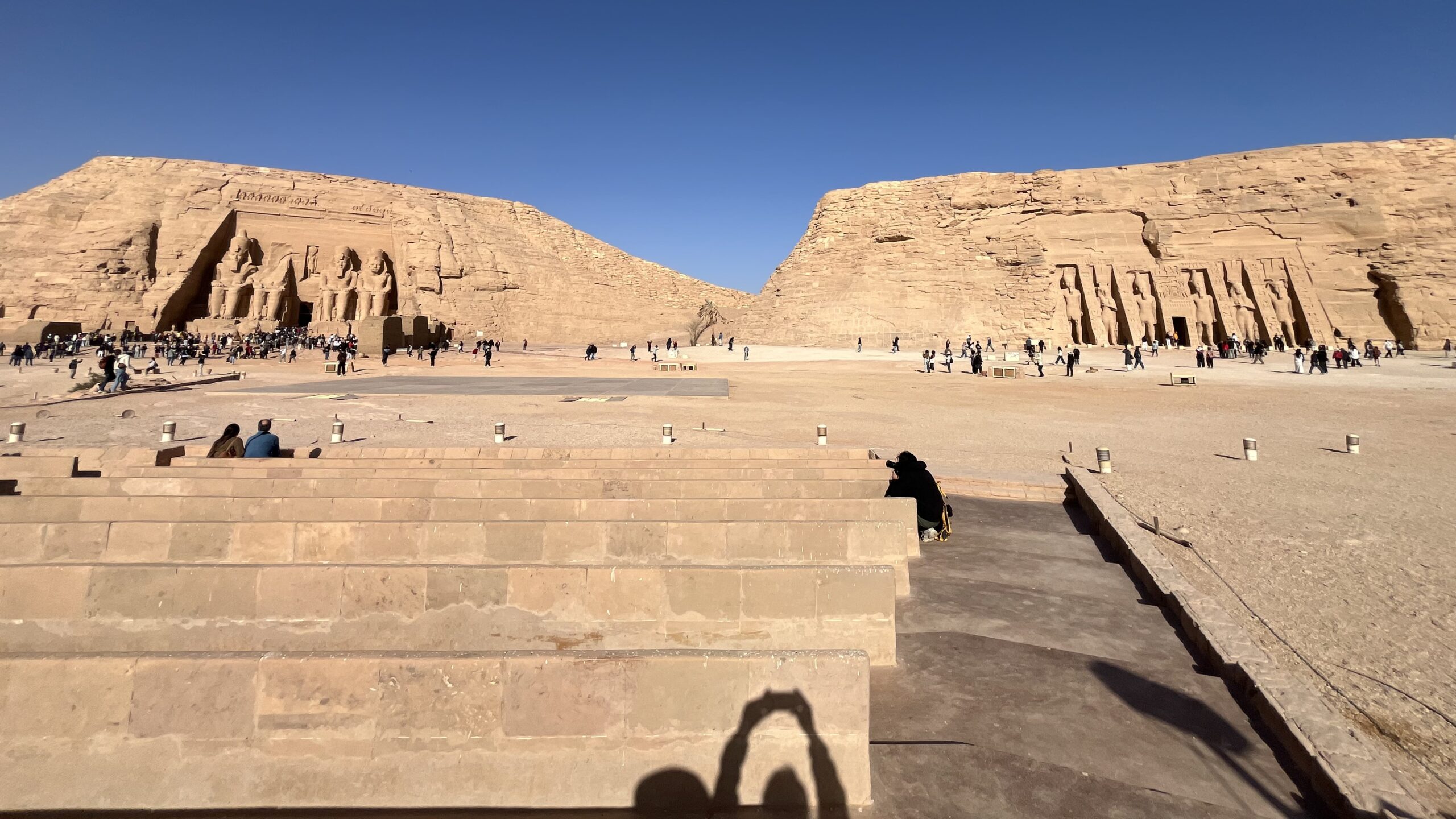
We flew into Aswan after dark, navigated an airport with no Uber, and checked into a modest hotel that worked perfectly for one night. By 8 a.m. the next morning we were on a Nile cruise boat meeting a tour group from four continents. By 4:30 a.m. the morning after that we were on a bus driving through the Egyptian desert in the dark toward one of the most astonishing structures human beings have ever made. Aswan and Abu Simbel are the southern anchor of any Egypt trip — quieter than Cairo, softer than Luxor, and in the case of Abu Simbel, genuinely unlike anything else on earth.
✍️ How to Use the Aswan Abu Simbel Travel Guide
This Aswan Abu Simbel travel guide covers Aswan and Abu Simbel: Philae Temple, the Nubian Village, swimming in the Nile, the Abu Simbel convoy, the Great Temple and the Small Temple, practical transport from Cairo, the inDrive situation, the EgyptAir booking hacks, and everything to prioritize (and skip) during your time in Upper Egypt. It draws on a self-guided trip that used a Nile cruise as transport rather than as a tour.
For the cruise itself — Kom Ombo, Edfu, the Esna Lock, and what life on the Nile actually looks like — see the companion guide: The Nile Cruise: What It’s Actually Like (2026).
📋 Table of Contents
I. Aswan at a Glance
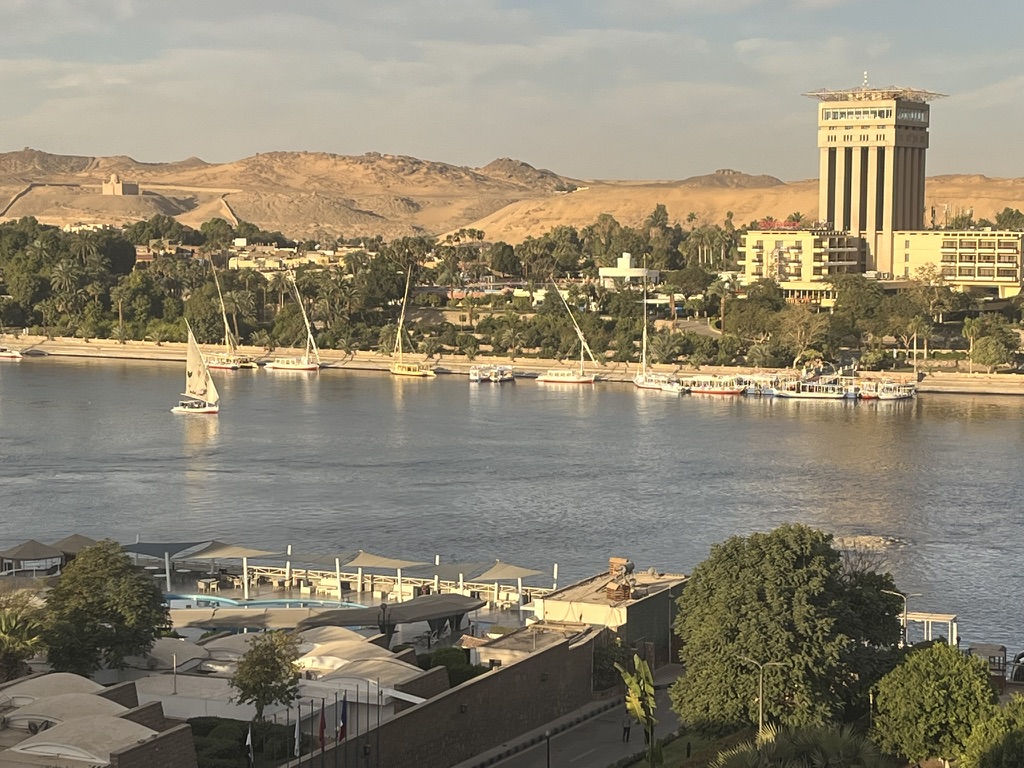
Aswan sits at the first cataract of the Nile, closer to Sudan than to Cairo, and it has a different character from every other city in Egypt. The pace is slower, the light softer, the Nile wider. Elephantine Island sits in the middle of the river. The desert cliffs of the West Bank are dotted with ancient tombs. The Nubian culture — its colours, architecture, and warmth — is more present here than anywhere else in Egypt.
Most visitors spend two nights in Aswan, which is the right amount. One day covers Philae and the Nubian Village; another morning covers Abu Simbel (a 3.5-hour drive each way). The afternoon of the Abu Simbel day is when the Nile cruise departs. That structure — arrive, explore, Abu Simbel, cast off — is the natural rhythm of an Aswan stay.
Aswan rewards slow exploration, and this Aswan Abu Simbel travel guide is structured around that rhythm.
| Site | Time Needed | Best Time | Notes |
|---|---|---|---|
| Nubian Village | 2–3 hours | Morning | Boat across the Nile. Best arranged through your cruise guide or hotel. |
| Philae Temple | 1.5–2 hours | Afternoon — afternoon light on the sandstone is beautiful | Short boat crossing included. UNESCO relocated stone by stone. |
| Abu Simbel | 2 hours at the site + 7 hours total travel | Depart 4:30 a.m. — see Section VI for the full convoy explanation | 3.5 hours each way by bus. Almost near the Sudanese border. |
| High Dam | Skip it | — | Mostly concrete. Not worth the time. Admire it from a distance if passing. |
| Elephantine Island | Half-day | Any time | More rewarding than the High Dam. Nubian Museum is also excellent. |
II. Getting to Aswan: Flights, inDrive & the Airport Taxi
Fly From Cairo — Not the Train
Fly to Aswan. The flights from Cairo take about an hour and a half and, when booked correctly, cost roughly the same as the sleeper train — which is the only train option available to foreigners. The train is slower, harder to book, and the booking process for foreigners is genuinely confusing. The only reason to take it is if you want the experience of an Egyptian overnight train specifically. Otherwise, fly.
⚠️ The EgyptAir Currency Hack — Do This Before You Book
When booking on the EgyptAir website, the default currency is often USD or EUR — and the price is noticeably higher than the local EGP rate. Before confirming any booking, switch the site currency to EGP (Egyptian Pounds). The price drop is significant and the ticket is the same flight. Google Flights can help you identify the correct fare before going to EgyptAir’s site to purchase. This applies to Cairo–Aswan, Cairo–Luxor, and any domestic EgyptAir route.
⚠️ The EgyptAir Schedule Warning
EgyptAir changed our flight times twice without sending any notification. Do not assume your confirmed flight time is final. Check the EgyptAir website manually every few days as your departure approaches — and daily in the final 48 hours, especially if you have a tight connection or an early departure with an Abu Simbel day on the other end.
Aswan Airport: No Uber. Here’s What to Do.
Uber does not operate in Aswan. The app you want is inDrive — a ride-hailing service where you name your price and drivers accept or counter. The catch: inDrive drivers cannot enter the airport pickup zone, which means if you request a ride you’ll be asked to walk outside to meet the car.
We tried inDrive at the airport and decided against it. Instead, we took a regular taxi, showed the driver the inDrive price on screen, and negotiated from there. The inDrive price is your baseline — expect to pay 20–50% more with a taxi to get out of the airport without the walk. This is a fair trade for the simplicity of a metered starting point and no parking-lot hunt in the dark.
💡 The inDrive Negotiation Move
Open inDrive before you reach the taxi queue. Note the price the app offers for your destination. When a taxi driver quotes you a price, show them the inDrive screen. This grounds the negotiation in a real number rather than a tourist estimate and typically produces a fair fare within one exchange. You’ll pay a bit more than the inDrive price — but you’ll avoid the walk, and the driver knows you know the market rate.
III. What to Skip and What to Prioritize
Skip the High Dam
The Aswan High Dam is an engineering landmark of the 20th century and a transformative moment in Egypt’s modern history — it created Lake Nasser, provided hydroelectric power, and ended the annual Nile floods. It is also, in person, mostly concrete. Our guide shrugged when it came up on the itinerary: not particularly exciting as a visitor experience. A glance at photos confirmed it. We skipped it and had no regrets. If you’re driving past, admire it from a distance. Don’t build a half-day around it.
The time you save goes to Elephantine Island — the large island in the middle of the Nile in front of Aswan city, with Nubian villages, ancient ruins, a good museum, and the particular pleasure of arriving somewhere by small boat and finding a living neighbourhood that tourists rarely reach on a short visit.
IV. The Nubian Village & Swimming in the Nile
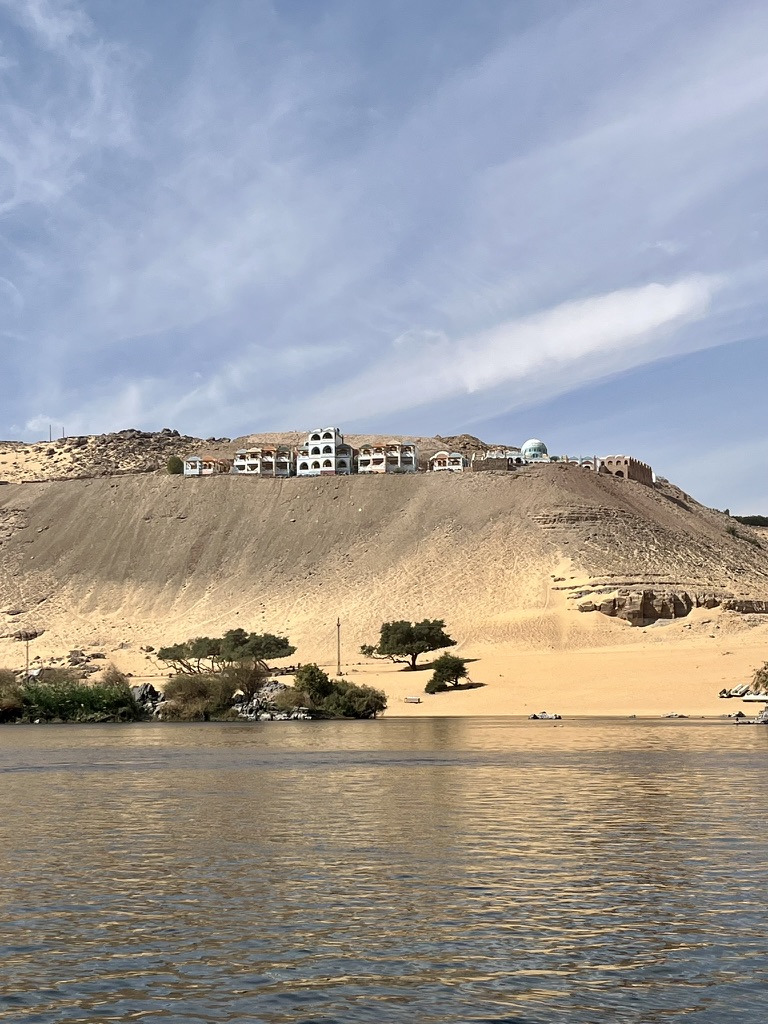
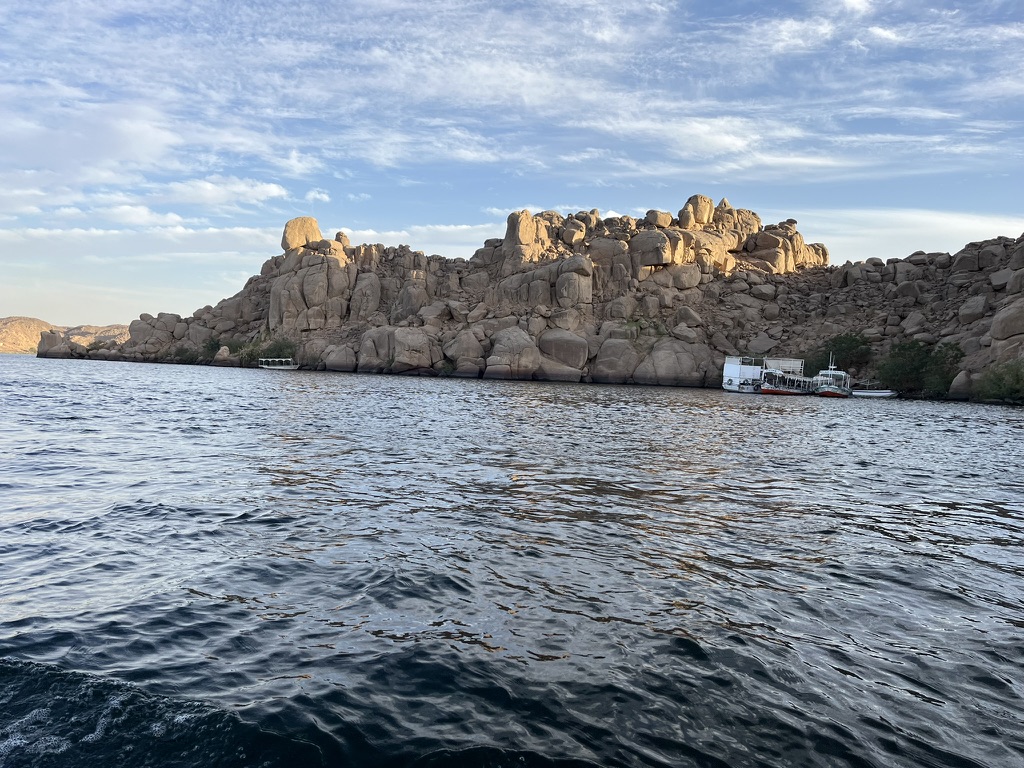
The Nubian Village excursion is optional — not on the standard cruise itinerary — but if your guide offers it, say yes immediately. It requires a boat trip along one of the most beautiful stretches of the Nile: passing ancient tombs carved into the desert cliffs, open beach on the west bank, and the widening of the river that happens just north of the first cataract. The scenery from the water is genuinely different from anything visible on foot.
On the way, our guide gave the group the green light to swim. We jumped in. The Nile in Aswan runs cold and fast, and the combination of that cold, the desert cliffs on both banks, and the absurdity of actually swimming in the Nile produced one of those travel moments that is impossible to adequately describe and impossible to forget. You can say “I swam in the Nile” for the rest of your life. That alone is worth it.
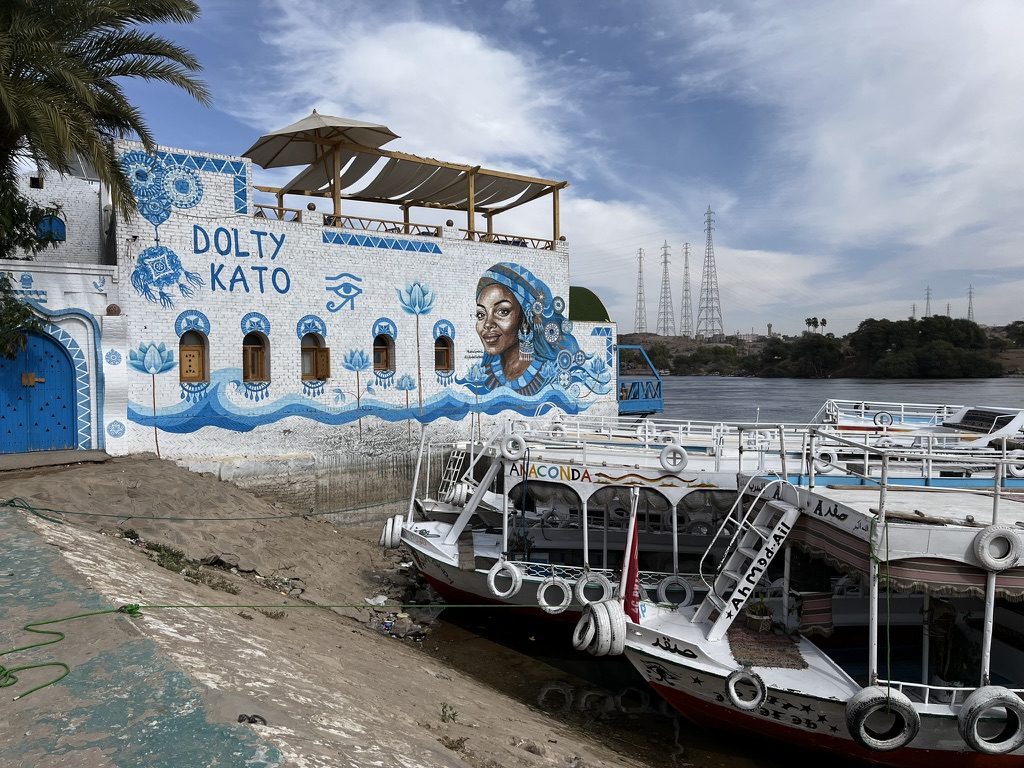
The village itself sits at the highest point of the local terrain, with views down over the Nile and Aswan’s east bank that read as both beautiful and unexpected. The colours of Nubian architecture — vivid blues, yellows, pinks — against the pale desert and the blue-green Nile are immediately striking. The whole excursion runs about 2–3 hours from departure to return.
V. Philae Temple: The Floating Island
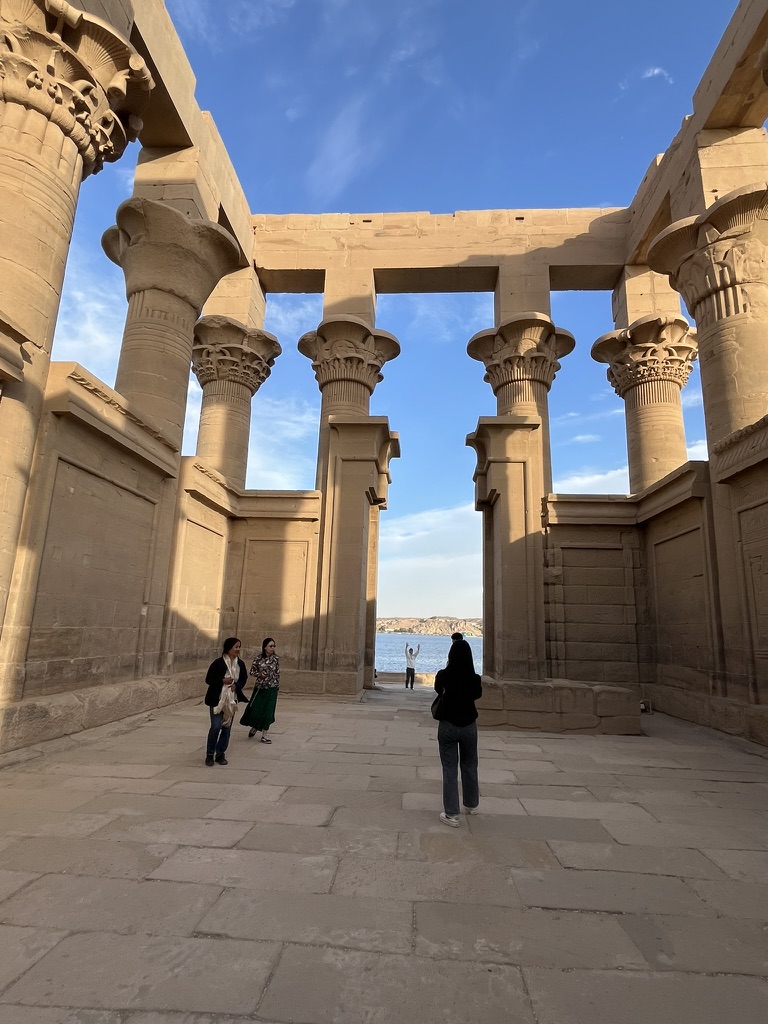
Reaching Philae Temple requires a short boat crossing from a dock near the Aswan dam — about 10 minutes across shimmering water, with the temple growing from the island ahead of you as you approach. The crossing is part of the experience. Philae sits on Agilkia Island, surrounded by calm, reflective Nile waters, and the temple appears to float — its red sandstone walls reflected in the water, the whole complex seeming to belong to the river as much as to the land.
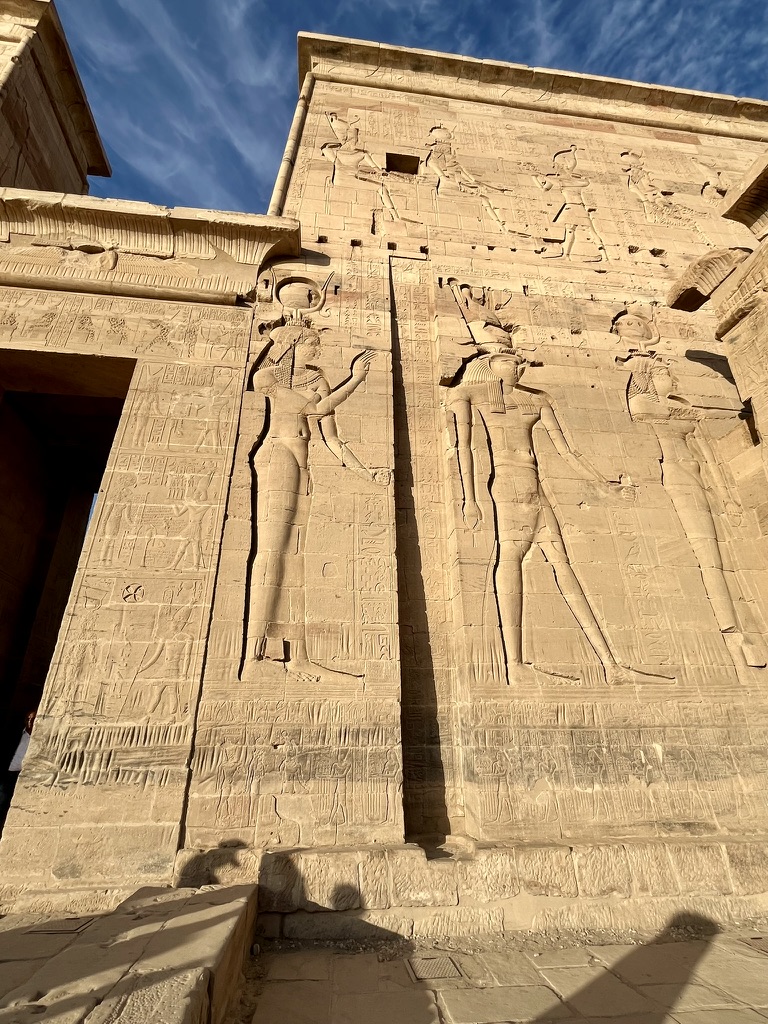
What you’re looking at is not where Philae originally stood. The temple was on a different island, and when the Aswan High Dam raised the water levels of Lake Nasser, UNESCO orchestrated one of the most ambitious rescue operations in archaeological history: dismantling the entire temple complex, stone by stone, and reassembling it on the higher ground of Agilkia Island. It was completed in 1980. The precision of the reconstruction is extraordinary — the temple aligns exactly as intended, the columns stand as they stood, the reliefs read as they always did.
Philae is dedicated primarily to the goddess Isis, and the carvings across its pylons, colonnades, and sanctuaries celebrate her mythology with extraordinary detail. The temple complex spans multiple levels, and the scale — while smaller than Karnak — feels appropriate to an island. Walk all the way around the exterior as well as through the interior; the best reliefs are sometimes on the outer walls facing the water, where the light is different.
💡 The Solo Crossing vs. The Group
Arranging the Philae boat crossing independently requires negotiating with boatmen at the dock — manageable but time-consuming. On a cruise, it is seamless: the guide handles the boats, the crossing is immediate, and you step off into the temple without the pre-visit friction. If you’re visiting Aswan without a cruise, build in extra time at the dock and negotiate the crossing price before boarding. Go in a group of at least two — solo rates are higher.
VI. Abu Simbel Logistics: What Every Aswan Abu Simbel Travel Guide Should Tell You
Abu Simbel is 280 km south of Aswan, close to the Sudanese border, accessible only by a desert highway across a flat, largely empty landscape. The logistics of getting there are more complicated than most travel guides acknowledge. This Aswan Abu Simbel travel guide helps you to understand them before you arrive to save significant confusion on the morning itself.
Why the 4:30 a.m. Departure
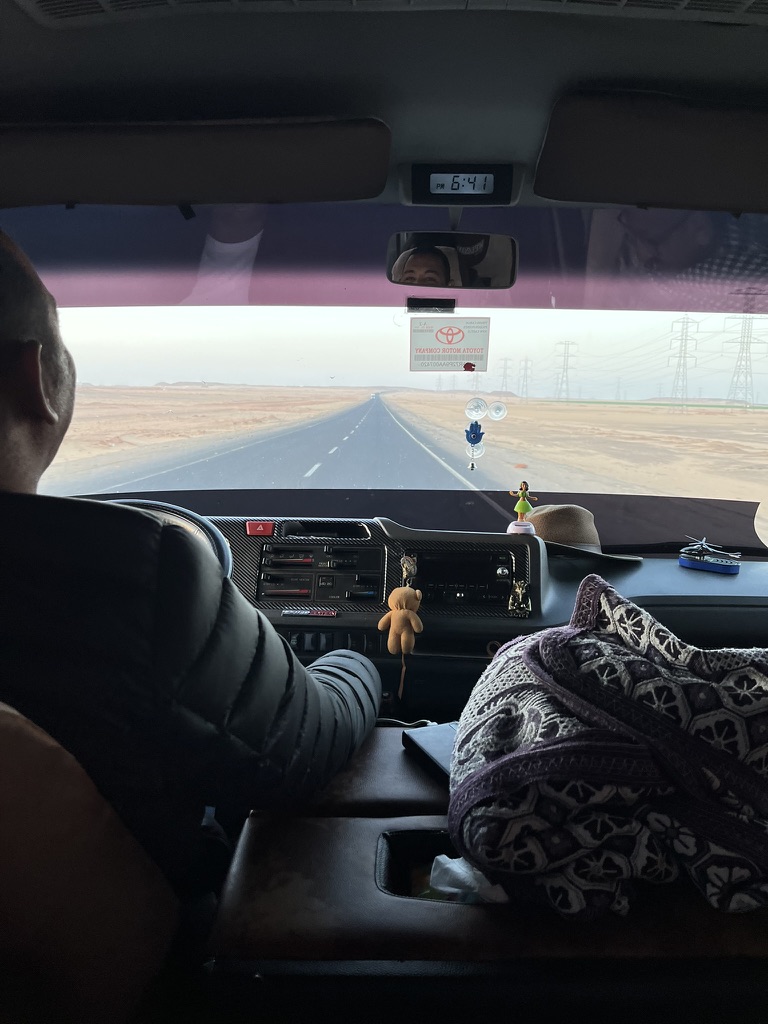
If you’re going on a Nile cruise, the boat departs Aswan in the early afternoon — around 1 or 2 p.m. Abu Simbel requires a 3.5-hour drive each way. That means a 4:30 a.m. departure to allow time at the site and return before the boat leaves. There is no way around this. The alarm goes off painfully early.
Our guide appeared in the cruise lobby in slippers, remarkably relaxed about the whole situation, and announced that a local guide would meet us at Abu Simbel instead of joining the bus. (Apparently the agency had an arrangement to give local guides the Abu Simbel work.) We climbed onto the bus in the dark.
The Convoy System for Foreigners
Shortly after leaving Aswan, our bus hit a line of hundreds of vehicles — stopped, waiting. The road to Abu Simbel is open to Egyptians around the clock, but foreigners are not permitted through until approximately 5 a.m., when a security convoy departs. Every foreign-registered vehicle makes the drive in this convoy, which surges forward together when the gate opens.
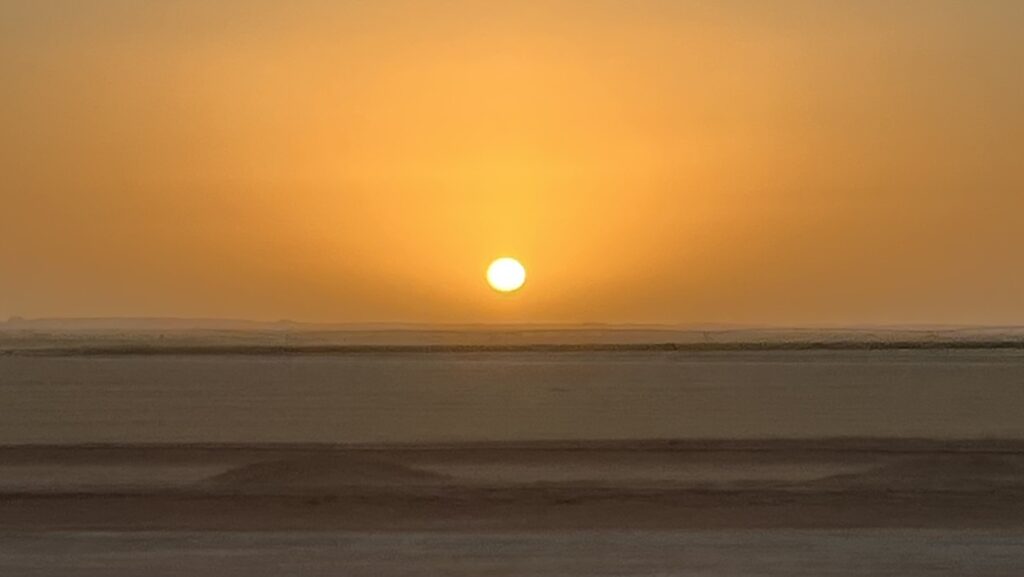
Our driver had a connection — a friend with a vehicle already positioned in the line who held space for us, allowing us to cut in ahead. The convoy swept across the desert as the sun came up behind it, the empty landscape turning from darkness to pale gold to brilliant ochre as the light spread across the sand. The sunrise over the desert during that drive is, in itself, worth the alarm clock.
💡 Going Solo to Abu Simbel
If you’re not on a cruise, you have two options: join a day tour from Aswan (the most common approach, departs around 4–5 a.m.), or fly. EgyptAir operates a short flight from Aswan to Abu Simbel, which eliminates the convoy entirely and allows a later, quieter visit when the morning tour buses have gone. The flight costs more but delivers you to the site around noon — the quietest time of day. If you have the flexibility and the budget, the flight is worth considering for the experience of Abu Simbel without the crowd spike of the morning convoy arrival.
⚠️ No Food at Abu Simbel Worth Mentioning
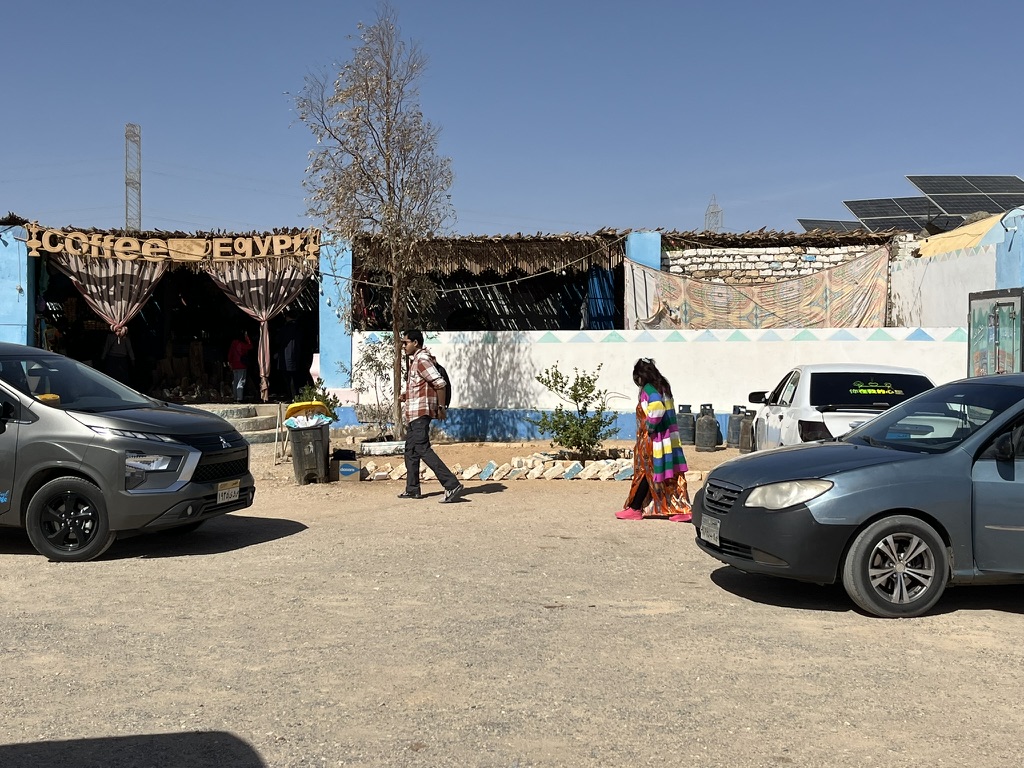
There is a small café at the site. After 3.5 hours in a bus starting before dawn, you will want a real meal. Eat on the cruise boat before departure, or bring food for the bus. The site itself takes about two hours; the drive back adds another 3.5. Pack something for the road.
VII. The Great Temple of Abu Simbel
The approach to Abu Simbel is designed, whether intentionally or by the accident of geography, to be exactly as dramatic as it turns out to be. You drive along the shore of Lake Nasser. On the right, water. On the left, a rocky hillside that looks unassuming and silent. The road curves gently around the cliff.
Then, in a single step forward, everything changes.
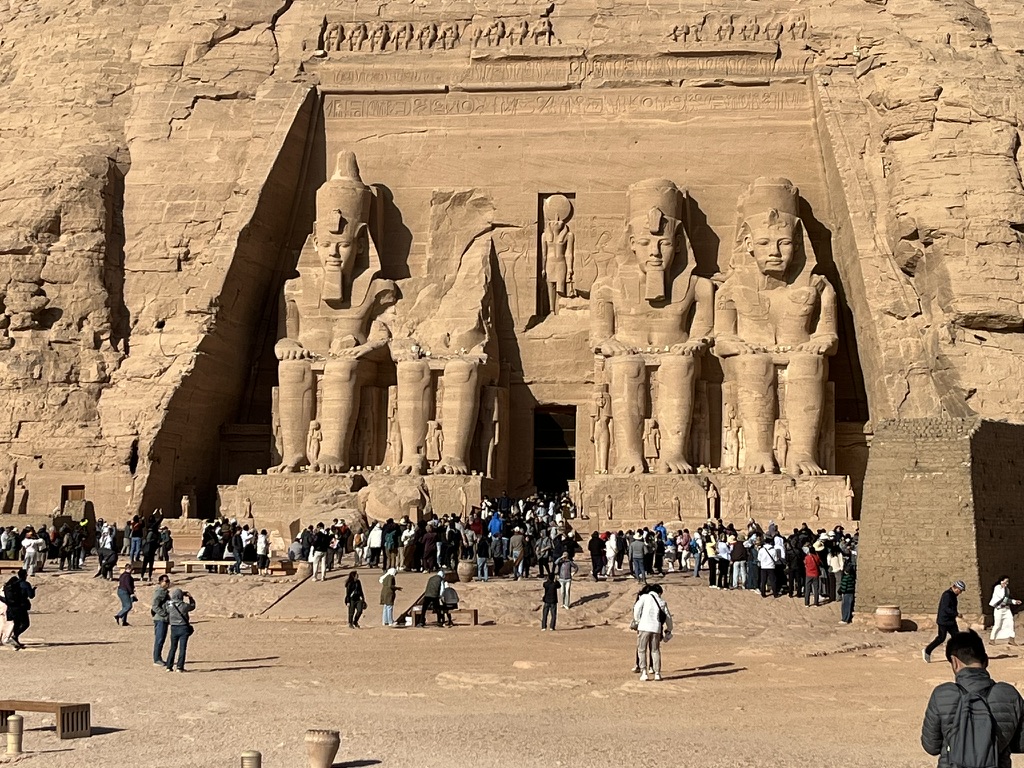
The cliff opens up and four colossal figures of Ramesses II emerge from the rock face — perfectly still, impossibly large, their faces calm and eternal. They have been sitting here for more than 3,000 years, gazing out across the desert, and they will continue sitting here long after every person standing beneath them is gone. The scale is actively disorienting. What was a wall of stone moments before now feels like a living presence.
The four seated colossi on the façade represent Ramesses II at different ages — from a young man of 18 to an old man of 80 — carved from left to right across the front face of the cliff. Each figure towers over 20 metres high. One was damaged in an ancient earthquake and was left unrepaired; the fallen upper section still sits at the base of the statue, exactly where it landed.
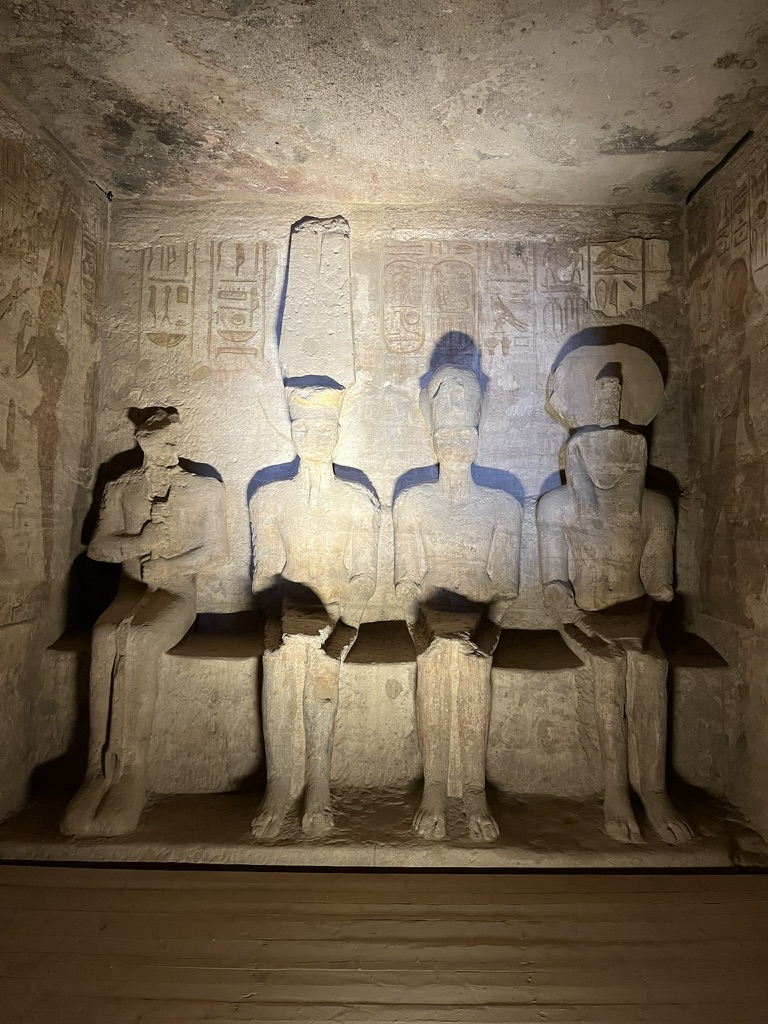
Inside, four statues in the inner sanctuary are dedicated to the gods Ra-Horakhty, Amun, and Ptah — alongside Ramesses II himself, who inserted himself into the divine company with characteristic subtlety. Twice a year — on 22 February and 22 October — sunlight penetrates the entire length of the inner corridor and illuminates three of the four statues. The fourth — Ptah, god of the underworld — remains in darkness. The ancient Egyptians calculated this alignment with precision that remains unexplained by modern analysis of their known instruments. It aligns with dates believed to correspond to Ramesses’ birthday and coronation day.
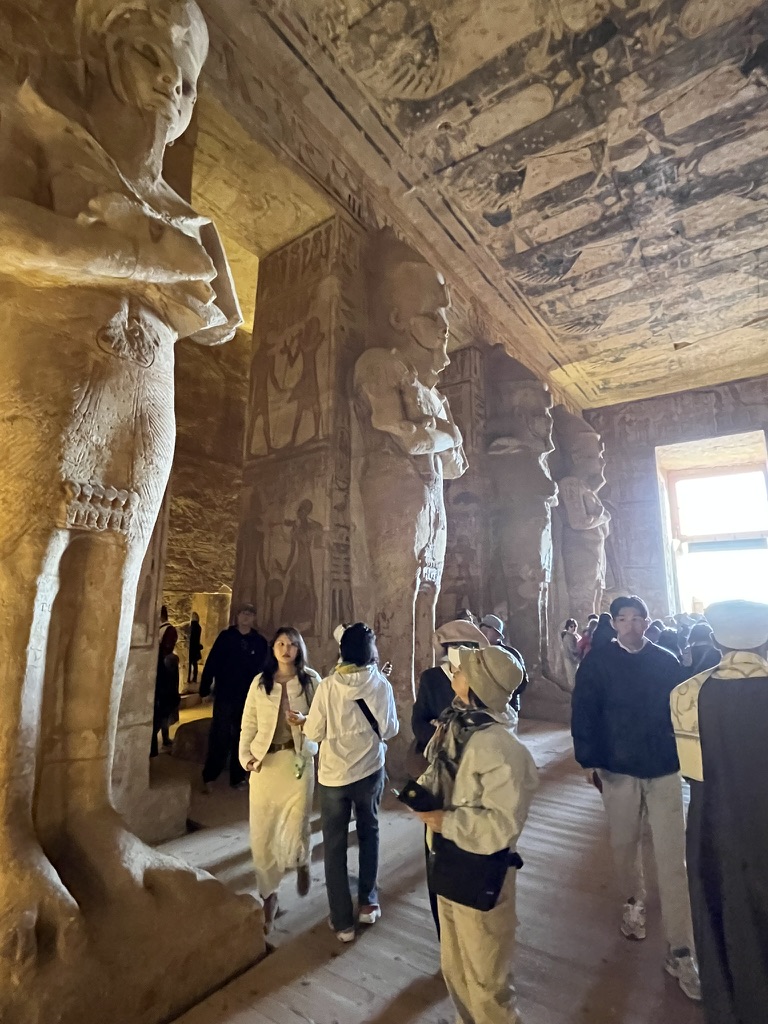
VIII. The Small Temple of Abu Simbel
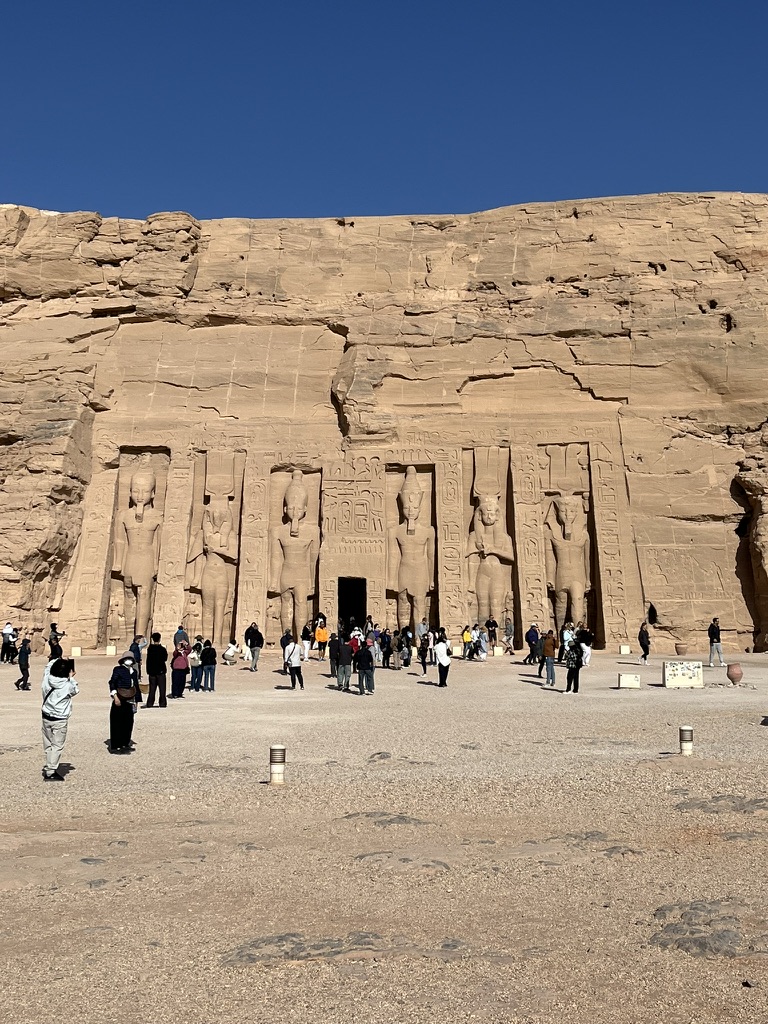
Beside the Great Temple stands the Small Temple of Abu Simbel, dedicated to the goddess Hathor and to Queen Nefertari, Ramesses II’s most favoured wife. It is smaller, quieter, and in some ways more affecting than its larger neighbour — partly because of its scale, which allows closer inspection of the façade carvings, and partly because of the unusual equality it embodies.
In ancient Egyptian temple conventions, queens were depicted at a smaller scale than pharaohs — a visual grammar of power and hierarchy. At the Small Temple of Abu Simbel, Nefertari’s statues on the façade are carved at exactly the same height as Ramesses’. This was unprecedented. It signals her exceptional status in a visual language that the ancient Egyptians would have read immediately. The façade features six standing statues — four of Ramesses and two of Nefertari — flanking the temple entrance.
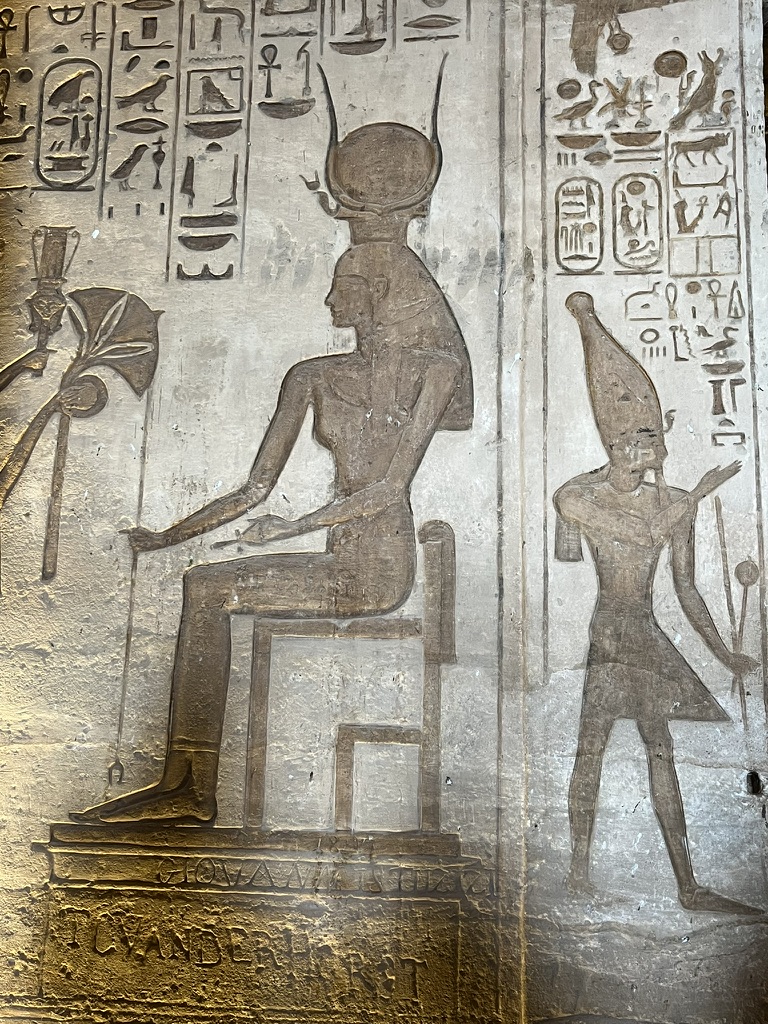
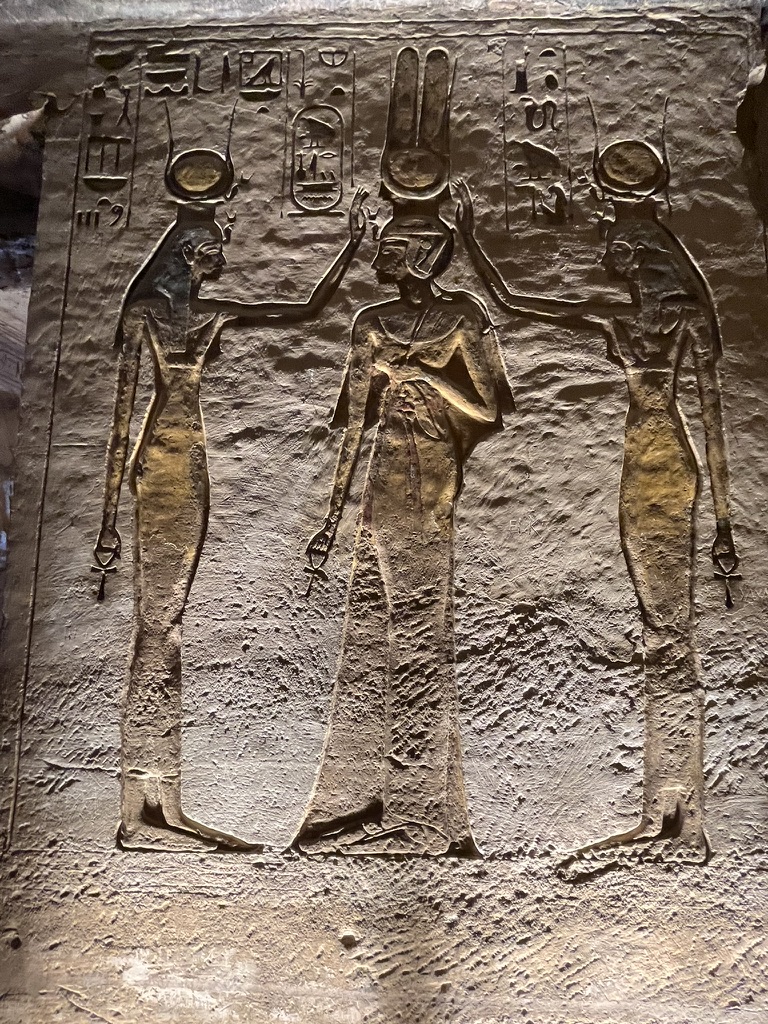
Visit the Small Temple after the Great Temple, not before. The scale contrast — the overwhelming presence of the colossi first, then the more intimate proportions of Nefertari’s temple — works better in that sequence. The interior reliefs of the Small Temple, celebrating the queen and the goddess together, reward slower looking than most visitors give them. Spend at least 20 minutes inside.
IX. Getting Here From Cairo: The EgyptAir Hacks
Most visitors fly Cairo to Aswan at the start of the Nile leg of their Egypt trip. The flight takes about 90 minutes and is the correct choice over the train for every reason except the experience of riding an Egyptian sleeper train. If you want the train as a travel experience, take it. If you want to arrive rested and on time, fly.
Two EgyptAir practices are worth knowing before you book:
The currency hack: EgyptAir’s website defaults to USD or EUR pricing for international visitors, which is significantly higher than the local EGP rate for the same flight. Before completing any booking, switch the currency on the site to EGP. The price difference is real and the ticket is identical. Google Flights often shows the EGP-equivalent price first, which is useful for knowing what you should be paying before you go to EgyptAir’s site to purchase.
The schedule warning: EgyptAir changed our flight times twice during our trip — neither time with any notification by email or message. Do not assume your confirmed departure time is your actual departure time. Check the EgyptAir website directly, manually, every few days as your departure approaches, and daily in the final 48 hours. This is especially important if the flight connects to an Abu Simbel day or a cruise departure with a fixed schedule.
X. Money, Safety & Practical Essentials
Cash in Aswan
Cash is more important in Aswan than in Cairo. The city is smaller, the tourist infrastructure is thinner, and the proportion of transactions that require physical notes is higher. Withdraw what you need before you leave Cairo or at the Aswan airport ATM — the most reliable ATMs in Egypt are from the National Bank of Egypt (NBE) and Banque Misr. Smaller bank ATMs in Aswan can be inconsistent with foreign cards. Carry 5, 10, and 20 EGP notes specifically — paying 200 EGP for a 30 EGP taxi creates avoidable friction.
Safety in Aswan
Aswan is among the most relaxed cities in Egypt for self-guided travel. The sales pressure that characterises parts of Cairo is gentler here — the city is smaller and more accustomed to independent travellers moving at their own pace. We walked Aswan at night without a second thought. The standard Egypt rule applies: calm confidence, “La, Shukran” for unsolicited offers, and no hesitation when crossing streets.
What to Eat and Drink
The mango juice at Kom Ombo’s temple cafeteria was — and this is not an exaggeration — the best single drink of the entire Egypt trip. Pricier by Egyptian standards, made from real fruit, pure and vibrant. Wherever you are in Upper Egypt, order fresh juice whenever you see it: mango, sugarcane, guava, orange. The year-round sun and the produce it generates along the Nile Valley make Egyptian fresh juice categorically better than what most of the world calls fresh juice.
| Item | What to Know |
|---|---|
| Cash | More essential than in Cairo. Withdraw from NBE or Banque Misr ATMs. Carry small notes. |
| inDrive | Aswan’s ride-hailing app. Use the price as a taxi negotiation baseline. Drivers can’t enter the airport. |
| Fresh Juice | Order everywhere. Mango and sugarcane are exceptional. Kom Ombo’s mango juice is a benchmark. |
| High Dam | Skip. Spend the time on Elephantine Island or the Nubian Village instead. |
| Abu Simbel Food | Eat a full meal before departing. The site café is minimal. The drive is 3.5 hours each way. |
| Language | Aswan is more Nubian than Arab in cultural character. Nubian is the local language; Arabic and basic English are widely spoken at tourist sites. |
XI. Tickets & Opening Hours (2026)
| Site | Standard | Student (ISIC) | Notes |
|---|---|---|---|
| Philae Temple | 220 EGP | 110 EGP | Boat crossing fee is separate — negotiated at the dock or included in tour packages |
| Abu Simbel (both temples) | 360 EGP | 180 EGP | Covers both the Great Temple and the Small Temple |
| Nubian Village excursion | Varies | — | Usually extra to cruise packages. Arrange through guide or hotel. |
| Elephantine Island | Free access (ferry cost) | — | The Aswan Museum on the island has a separate entry fee |
| Site | Opening Hours | Notes |
|---|---|---|
| Philae Temple | 7:00 AM – 4:00 PM (winter) / 7:00 AM – 5:00 PM (summer) | Last boat crossing about 1 hour before closing |
| Abu Simbel | 5:00 AM – 6:00 PM | Opens early to accommodate the convoy. Quietest after noon when morning tours depart. |
XII. Aswan & Abu Simbel Quick-Reference Cheat Sheet
📋 Aswan & Abu Simbel — Quick Reference — Screenshot This
| Item | The Pro Move |
|---|---|
| Flight booking | Set EgyptAir website to EGP before booking. Significant price drop, same flight. |
| Flight times | Check EgyptAir.com manually every few days — they change without notifying you. |
| No Uber in Aswan | Use inDrive price as your taxi baseline. Expect 20–50% more at the airport. |
| Airport taxi move | Open inDrive, note the fare, show it to the taxi driver. One exchange. Done. |
| High Dam | Skip it. Mostly concrete. Elephantine Island or Nubian Village instead. |
| Nubian Village | Optional excursion through your cruise guide. Say yes. Swim in the Nile. |
| Philae boat crossing | Negotiate at the dock if going solo. On a cruise — seamless, guide handles it. |
| Abu Simbel departure | 4:30 a.m. from the cruise boat. Painful. Non-negotiable if the boat leaves at 1 p.m. |
| Abu Simbel convoy | Foreigners travel in a convoy departing ~5 a.m. Your driver knows the system. |
| Abu Simbel food | Eat before you go. The site café is minimal. 3.5-hour drive each way. |
| Great Temple approach | Don’t look at photos. Let the cliff reveal them. The first view is the whole point. |
| Great Temple inside | Four statues: Ra-Horakhty, Amun, Ptah, and Ramesses himself. Solar alignment: 22 Feb & 22 Oct. |
| Small Temple | Visit after the Great Temple. Nefertari’s statues are same height as Ramesses’ — unprecedented. |
| Quietest time at Abu Simbel | After noon, when morning convoy tours are leaving. Fly in if you can. |
| Cash in Aswan | More important than Cairo. NBE and Banque Misr ATMs only. Carry small notes. |
| Fresh juice | Mango at Kom Ombo. Sugarcane everywhere. Order at every opportunity. |
| ATMs | National Bank of Egypt (NBE) and Banque Misr. Smaller banks may reject foreign cards. |
XIII. Frequently Asked Questions
Is Abu Simbel worth the 4:30 a.m. start and the 7-hour round trip?
Yes, without reservation. Abu Simbel is one of a small number of sites in the world that delivers more than photographs suggest rather than less. The scale of the colossi, the quality of the interior decoration, and the engineering story of both the original construction and the 1960s UNESCO relocation combine to make it genuinely unlike anywhere else. The early departure and the long drive are the price of admission. You pay them once and remember the site for the rest of your life. If you have the option to fly from Aswan to Abu Simbel instead, it is worth the extra cost for the quieter, unhurried experience of arriving when the morning crowds have gone.
Can I visit Abu Simbel independently without a tour group?
Yes. The convoy system applies to all foreign vehicles, but you don’t need to be part of a tour group to join it — any privately hired car or minibus travelling from Aswan will join the convoy at the gate. Arrange a private driver from Aswan the night before, confirm a 4–4:30 a.m. departure, and you’ll be in the convoy regardless. This gives you more time at the site and a flexible return schedule if you don’t have a cruise departure to catch. Alternatively, EgyptAir flies from Aswan to Abu Simbel, which bypasses the convoy entirely and delivers you to the site around noon when the morning tour groups are leaving — the quietest time of day.
Is the High Dam worth visiting?
Not as a dedicated visit. The Aswan High Dam is historically significant — it created Lake Nasser, ended the annual Nile floods, and generates a substantial portion of Egypt’s electricity — but the visitor experience is primarily a view of a large concrete structure. If you’re passing by on the way to or from Philae, a brief stop is fine. Building a half-day around it means not spending that time on Elephantine Island or the Nubian Village, both of which are far more rewarding as experiences. Our guide shrugged when it came up. He was right.
How do I get around Aswan without Uber?
InDrive is the primary app in Aswan — a ride-hailing service where you propose a price and drivers accept or counter-offer. The catch is that inDrive drivers cannot enter the airport pickup zone, so you’ll need to walk outside to meet them. The practical solution: open inDrive to get a price reference, then negotiate with a regular taxi at the airport using that number as your baseline. Expect to pay 20–50% above the inDrive price for a taxi that meets you at the door. For everything within Aswan city — the Corniche, restaurants, the ferry to Elephantine Island — taxis are plentiful and inexpensive once you’ve established a reference price.
What is the solar alignment at Abu Simbel and when does it happen?
Twice a year — on 22 February and 22 October — the rising sun aligns precisely with the axis of the Great Temple’s inner corridor and illuminates three of the four statues in the innermost sanctuary. The fourth statue, Ptah — the god of the underworld — remains in permanent darkness regardless of the date. The dates are believed to correspond to Ramesses II’s birthday and coronation day, though this interpretation is debated. What is not debated is that the alignment is precise and intentional, and that the ancient Egyptians achieved it without instruments we can identify in their known toolkit. Both dates draw large crowds; if you visit on either date, arrive very early.
Should I book Cairo–Aswan flights in EGP or USD?
Always EGP. When booking on EgyptAir’s website, the default currency for international visitors is often USD or EUR, and the price is significantly higher than the EGP local rate for the exact same flight. Switch the currency selector on the site to EGP before completing any booking. Google Flights typically displays the EGP-equivalent price, which is useful for confirming what you should be paying before you go to EgyptAir’s site. The saving across a two-person booking on a Cairo–Aswan–Luxor itinerary is meaningful.
📍 Related Guides in This Series
- The Nile Cruise: What It’s Actually Like (2026) — the companion guide. Kom Ombo Temple, Edfu Temple, the Esna Lock, cabin life on the Nile, what the food is really like, and whether the cruise is worth it for self-guided travellers who resist group tours.
- Part 2 of the My Egypt Diary — the full narrative of my trip in Aswan and Abu Simbel, including the baby crocodile souvenir, the 4:30 a.m. convoy through the desert, and that first moment when the cliff opens and Abu Simbel appears. Also available are Part 1 and Part 3 of my Egypt Diary for other parts of Egypt.
- Egypt Itinerary – A Self-Guided Master Travel Guide — how Aswan and Abu Simbel fit into the full trip structure from Cairo to Luxor.
- Visual Guide To Monumental Egyptian Gods (Part 1): Abu Simbel — Ra-Horakhty, the solar alignment, Hathor’s temple, Nefertari, and what Ramesses was really saying with all of it.
- Visual Guide To Enchanting Egyptian Gods (Part 2): Philae — Isis, Osiris, the resurrection myth, Trajan’s Kiosk, and the last hieroglyph ever carved in ancient Egypt.

Hi, I’m Frank J – Egypt Self-Guided Travel. I explore Egypt solo and share tips, stories, and practical advice to help you plan your own adventures safely and enjoyably.