Cairo does not reveal itself on a schedule. It reveals itself gradually — when you wander off a Google Maps route and step into a courtyard that isn’t in any travel blog, when a man with a key unlocks a door to a centuries-old chamber and invites you inside, when the call to prayer fills an ancient mosque courtyard and everything pauses. The most remarkable moments of our four days in Cairo were not the ones we’d planned.
✍️ How to Use This Cairo Attractions Guide
This Cairo attractions guide covers every major cultural and historic attraction in Cairo — from the Saladin Citadel to the original Egyptian Museum in Tahrir — along with the honest, on-the-ground experience of visiting them self-guided. It includes suggested day itineraries, cultural etiquette, and what to eat near each site.
For transport, Uber, safety, ATMs, and practical logistics, see: Cairo: Getting Around, Staying Safe & Practical Essentials (2026). For the Grand Egyptian Museum specifically, see: The Grand Egyptian Museum (GEM) (2026).
📋 Table of Contents
I. Cairo’s Cultural Sites at a Glance
| Site | Time Needed | Character |
|---|---|---|
| Saladin Citadel + Muhammad Ali Mosque | Half-day | Hilltop fortress with panoramic city views and Cairo’s most dramatic mosque interior |
| Bab Zuweila + Sultan al-Mu’ayyad Mosque | 1.5–2 hours | Medieval city gate with rooftop minaret climb; best view over Islamic Cairo |
| Al-Azhar Mosque | 45–60 minutes | One of the world’s oldest universities; serene marble courtyard |
| Khan el-Khalili | 1.5–2 hours | 14th-century bazaar. Best at dusk. Approach via Bab al-Futuh. |
| Coptic Cairo | 2–3 hours | Ancient Christian neighbourhood with extraordinary churches. Cars not permitted inside. |
| Egyptian Museum (Tahrir) | Half-day | Original home of Egypt’s antiquities. Still extraordinary despite the GEM’s opening. |
| Al-Azhar Park | 1–2 hours | Elevated green park with sweeping views over Islamic Cairo |
| Nile Corniche / Zamalek | 1–2 hours | Evening walk along the river; quiet streets and independent cafes on the island |
💡 Planning Note
Three full days is a comfortable minimum for Cairo’s cultural sites, not counting the Pyramids or GEM (which warrant a separate full day). Day 1: Islamic Cairo and the Citadel. Day 2: Coptic Cairo and the Egyptian Museum. Day 3: Pyramids and GEM. This order builds well — the Islamic heritage makes a strong first impression, Coptic Cairo provides a quieter contrast on day two, and the Pyramids serve as a finale.
II. Islamic Heritage — The Citadel, Bab Zuweila & Al-Azhar
The Saladin Citadel & Muhammad Ali Mosque
The Saladin Citadel sits on a hill above Cairo and has commanded the skyline since the 12th century. From the ramparts you can see the entire city — and on a clear day, the Pyramids appear on the western horizon, a reminder of just how deep Cairo’s layers of history go. The sight of ancient stone monuments visible from a medieval Islamic fortress, with a living city of 20 million people between them, is one of the most striking things in Cairo.
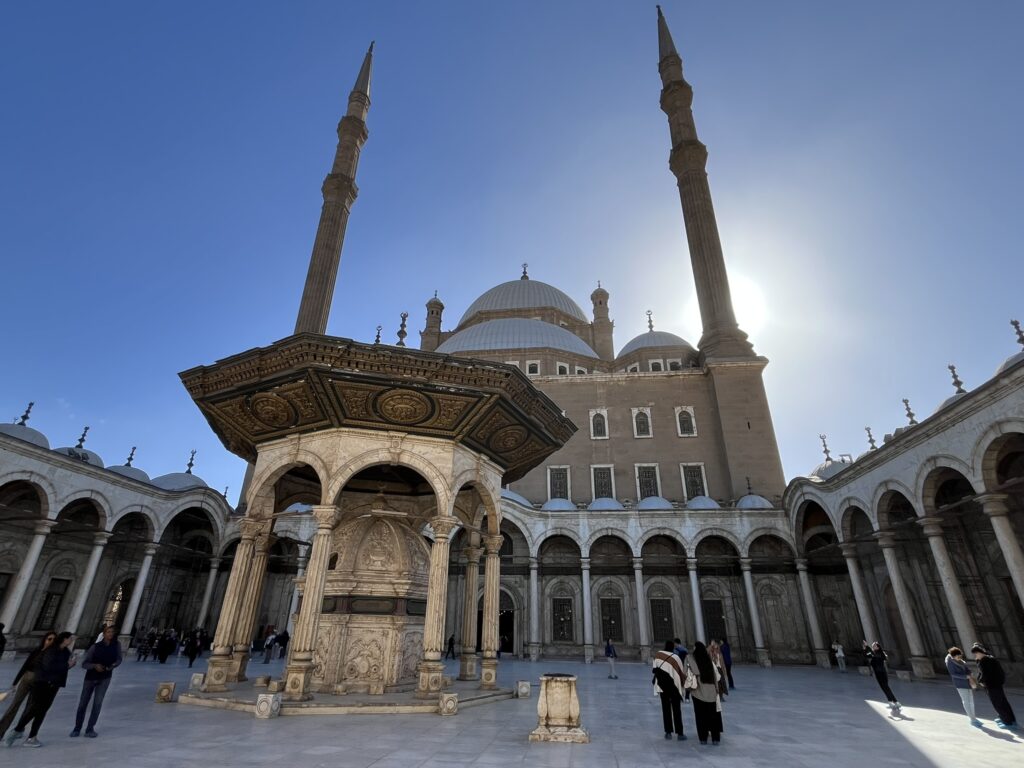
The centerpiece is the Muhammad Ali Mosque, also called the Alabaster Mosque, built in the 19th century by Muhammad Ali Pasha — the founder of modern Egypt. It dominates the Citadel from every angle, and dominates the Cairo skyline from the city below. Inside: soaring Ottoman-style domes, massive ornate chandeliers, and circular patterns of light cast across polished marble floors. Even at 10 in the morning with a handful of tour groups already filtering through, the mosque stopped us mid-step. The scale and authority of it don’t come through in photographs.
| Detail | Information |
|---|---|
| Getting There | Uber to the Citadel gates. Note: Ubers may be stopped before the inner complex — walk the final 200m. The driver may attempt to reach the interior bus parking; if stopped by a guard, simply walk from the gate. |
| Best Time | Morning (9–11 a.m.) for light and fewer tour groups |
| Time Needed | 2–3 hours for the mosque, panoramic walk, and a museum |
| Dress Code | Shoulders and knees covered. Shoe covers provided at the mosque entrance. |
| Don’t Miss | Northern rampart view. The military and police museums within the complex are worth a brief stop. |
Bab Zuweila & The Mosque of Sultan al-Mu’ayyad
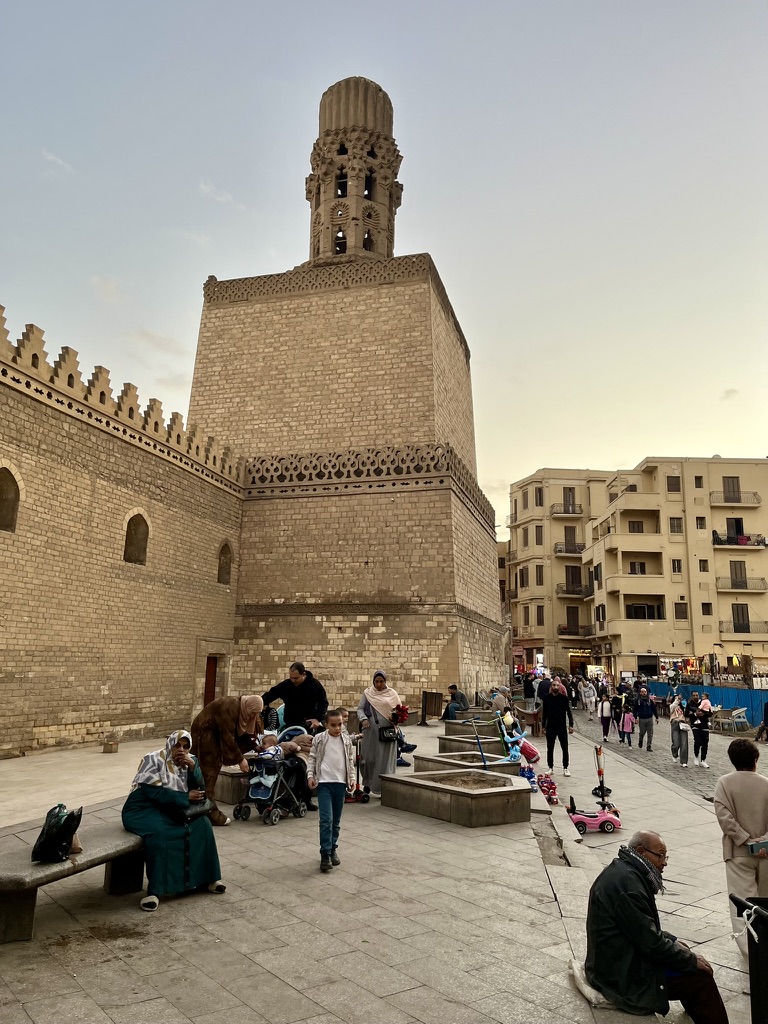
Of all the sites in Cairo, Bab Zuweila was the biggest surprise of the trip — and we found it almost entirely by accident.
Bab Zuweila is one of only three surviving gates from the original medieval city walls of Cairo. A massive stone archway straddling a street still busy with food stalls, motorcycle deliveries, and local foot traffic, rising above the everyday chaos of Islamic Cairo. On our visit, we got lost trying to find the entrance and walked into the adjacent Mosque of Sultan al-Mu’ayyad instead.
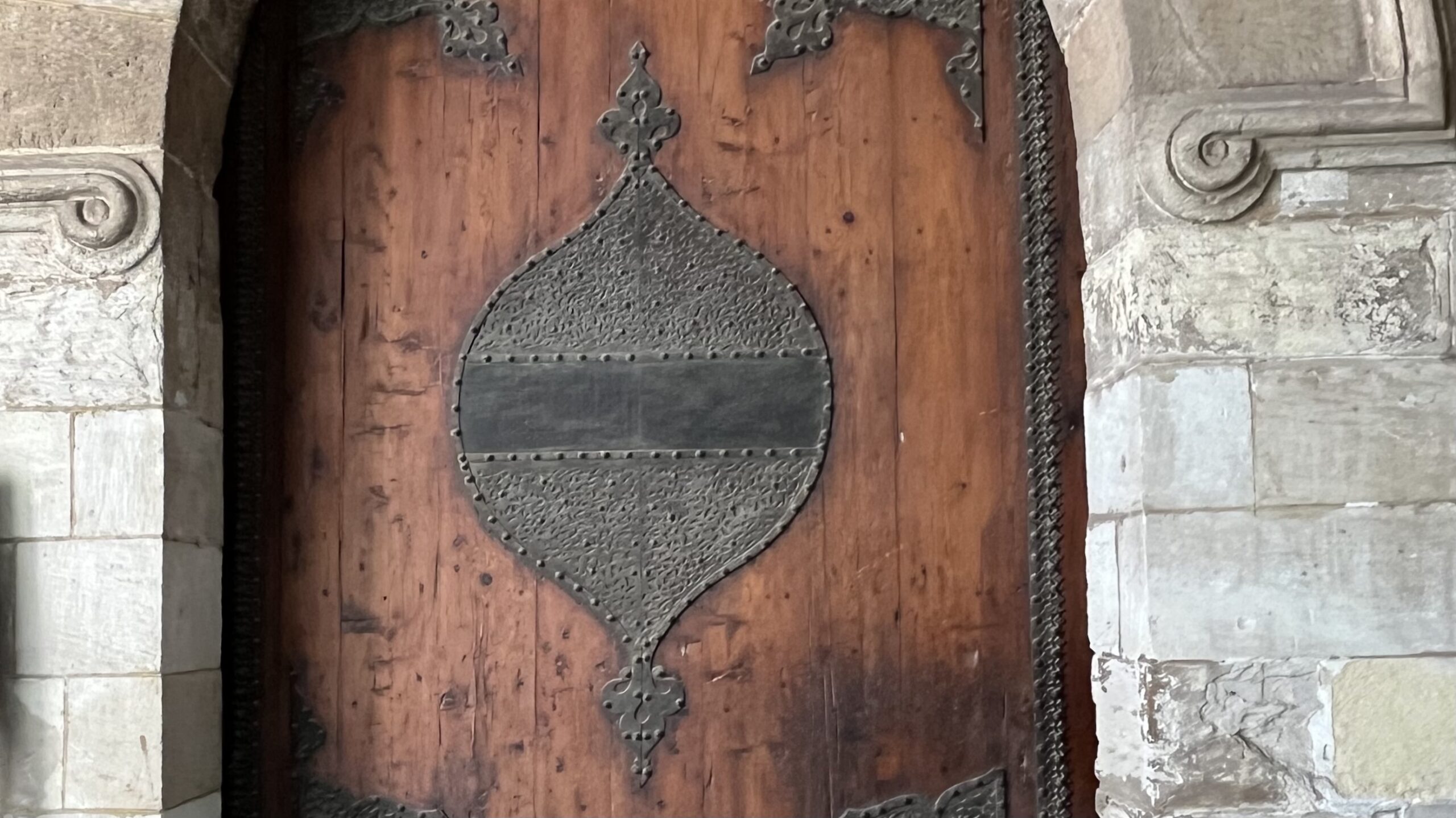
An imam-like figure in plain clothes appeared, gestured warmly, and — without us asking — unlocked a small decorated metal door to reveal an intimate private chamber with twelve intricately decorated windows under a perfect dome. He explained its history as we stood there, slightly stunned at having been given access to something this quiet and this remarkable. When we left, the doorman mentioned a small tip was customary. After an invitation like that, we were delighted to give one.
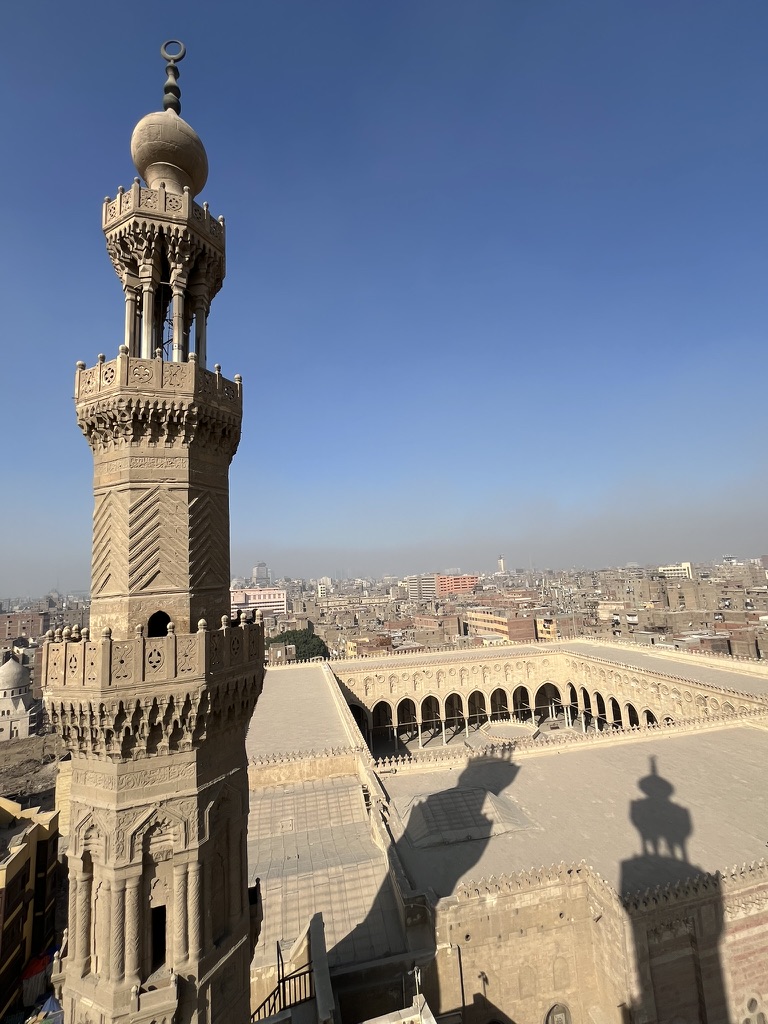
After saying goodbye, we found the actual Bab Zuweila entrance — a proper ticket counter, no crowds, no queues. We climbed to the rooftop, and then up into the minaret itself: a dark spiral staircase, a low door, and then out onto a balcony with a view over Islamic Cairo that no postcard prepares you for. Narrow streets, unfinished rooftops, minarets in every direction. Raw, real, and deeply alive. One more flight of steps, via an exterior metal spiral staircase clinging to the outside of the minaret, leads to the very top. It requires some nerve. The view is worth it. Don’t stay long if you’re prone to vertigo.
| Detail | Information |
|---|---|
| Location | Southern end of Al-Muizz Street, Islamic Cairo. Uber or walk from Al-Azhar Mosque. |
| Ticket | Small entrance fee at the counter. Covers rooftop and minaret climb. |
| Time Needed | 1–1.5 hours |
| Best Time | Morning or late afternoon — avoid midday heat for the climb |
| Don’t Miss | The Sultan al-Mu’ayyad Mosque courtyard immediately adjacent (free to enter, tip appropriate) |
| View | Minaret top balcony for the best panorama of Islamic Cairo |
Al-Azhar Mosque & University
A short walk along Al-Muizz Street from Bab Zuweila brings you to Al-Azhar Mosque, founded in 970 CE and one of the most important mosques in the Islamic world. Al-Azhar University, established within the mosque complex, is also one of the oldest continuously functioning universities in human history. This combination — of religious institution, centre of scholarship, and living place of worship — gives the mosque an atmosphere unlike any purely tourist site.
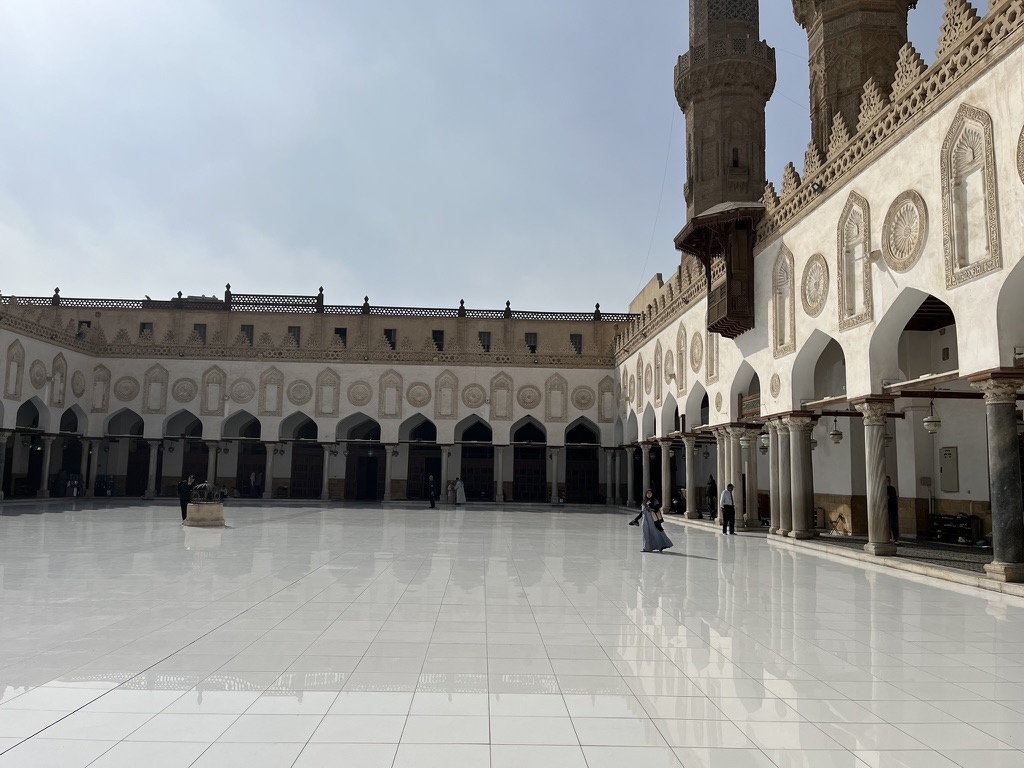
Leave your shoes outside and step into the white marble courtyard. The atmosphere is immediately serene — a rare stillness in the otherwise constant motion of Cairo. On our visit, we wandered quietly for a few minutes before a woman approached and politely asked us to sit to the side. Prayer was about to begin.
We sat near the open prayer hall doors and watched as worshippers knelt in unison — some inside, some in the courtyard. The sound of prayer, rhythmic and unhurried, filled the entire space. We didn’t understand a word. It didn’t matter. It was one of the most quietly affecting experiences of the whole trip.
| Detail | Information |
|---|---|
| Location | Al-Muizz Street, Islamic Cairo — walkable from Bab Zuweila |
| Opening | Open daily except during prayer times |
| Dress Code | Abayas available for women at the entrance. Men: covered shoulders and legs. |
| Entry | Free for the main mosque. Small fee for upper areas and university sections. |
| Time Needed | 45–60 minutes |
| Etiquette | Be seated quietly during prayer. Do not photograph worshippers without consent. |
III. Khan el-Khalili: The Grand Bazaar
Khan el-Khalili has been Cairo’s main market since the 14th century. It is overwhelming, chaotic, beautiful, and exhausting — sometimes all within the same five-minute stretch of alley. The moment you enter, merchants call out greetings, invite you toward their displays, ask where you’re from. Handcrafted jewelery, brass lamps, colorful textiles, papyrus prints, spice mountains, and perfume bottles line every surface. The energy is relentless.
After a while, the sales pitches blur together, your pace quickens, you navigate by following the crowd. The bazaar can become overwhelming if you approach it without a strategy. With one, it’s one of the best evening experiences in Cairo.
The Strategy That Works
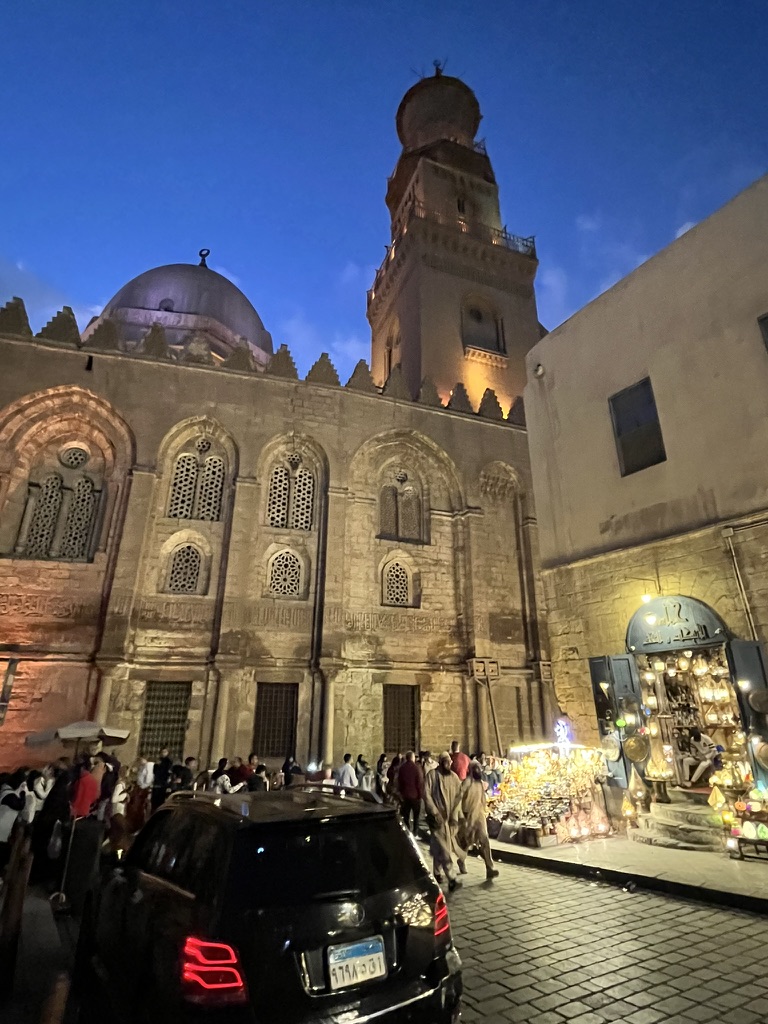
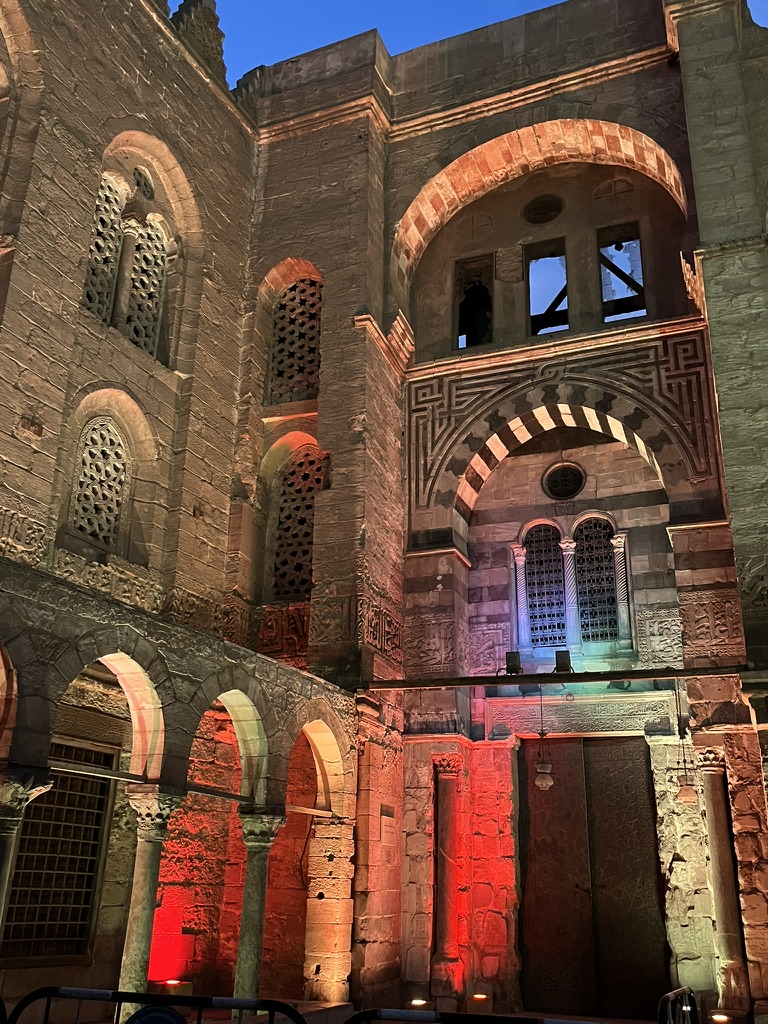
Don’t go straight to the market. Set your Uber to Bab al-Futuh — the northern medieval gate, about a 15-minute walk north of Khan el-Khalili — and walk south from there. You get 10–15 minutes of beautifully lit historic streets first: old city gates softly illuminated, mosque minarets glowing against the darkening sky, locals pausing to leave their shoes outside for evening prayer.
The walk feels earned. By the time you reach the bazaar, you’re already in the right state of mind for what it is — rather than arriving already overwhelmed by a direct Uber drop-off into the chaos.
💡 Best Time: Dusk, Not Midday
The bazaar lights up in warm tones as evening arrives, the crowds are active but not claustrophobic, and the walk from Bab al-Futuh is one of Cairo’s finest evening experiences. Visiting at midday is a significantly worse version of the same place. If you can only go once, go at dusk.
| Detail | Information |
|---|---|
| Best Approach | Uber to Bab al-Futuh; walk south ~15 minutes into the market |
| Best Time | Dusk and early evening (around 6–8 p.m.). The lighting and atmosphere are exceptional. |
| What to Buy | Handcrafted brass, silver jewellery, perfume oils, spices, cotton textiles, papyrus prints |
| Bargaining | Expected everywhere. Start at 40–50% of the first price offered and work toward the middle. |
| What to Avoid | Driving directly to the market by Uber — traffic is consistently gridlocked and the approach ruins the experience |
| Food & Tea | El Fishawy Coffeehouse inside the bazaar has been continuously open since the 18th century. Worth a stop for tea and the atmosphere. |
IV. Coptic Cairo: Ancient Christian Heritage
Coptic Cairo is one of the oldest continuously inhabited Christian neighborhoods in the world, and it is the most surprising neighborhood in a city full of surprises. The streets are pedestrian-only, protected by military checkpoints at the vehicle barriers — your Uber stops at the perimeter and you walk in through the checkpoint (this is straightforward; show no nervousness and you’re through in seconds).
Once inside, the city recedes. Narrow alleys wind between ancient churches, small chapels, tiny markets, and residential buildings that seem to have been built in every era simultaneously.
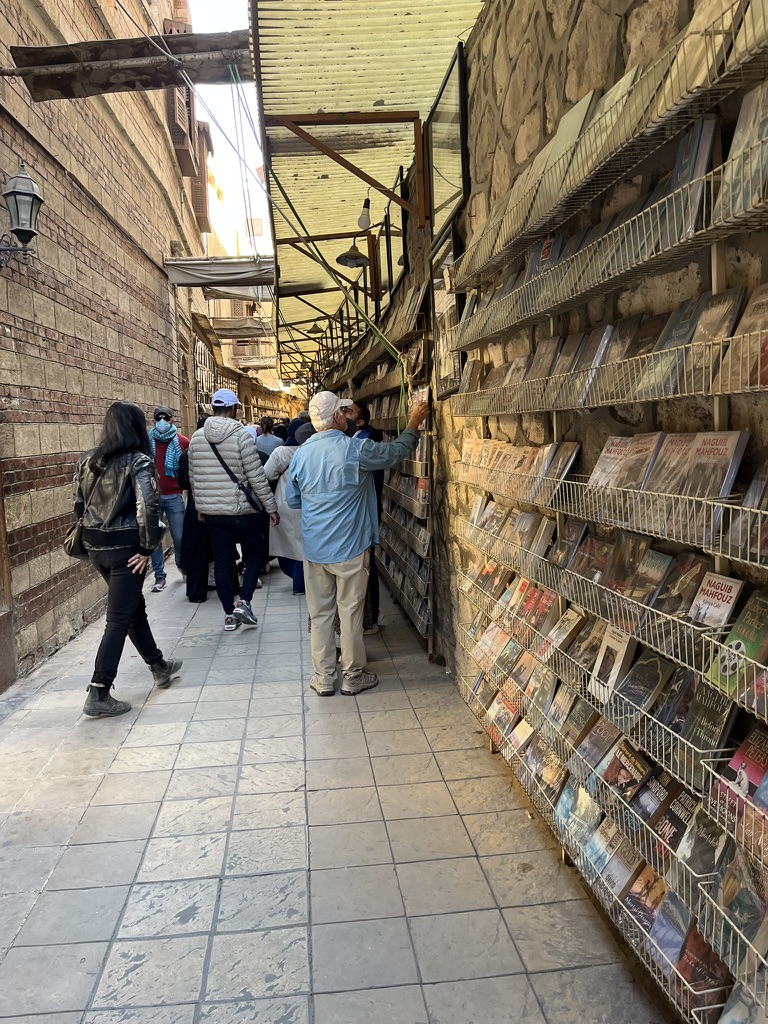
One alley stopped us completely: a long, narrow corridor lined on both sides with piles of second-hand books. Old, fragile, collectible Christian and Jewish texts stacked so high that only two people could squeeze through at a time. The faint smell of aged paper mingling with incense from a nearby church. We stood there for a while. Some experiences in Cairo are hard to categorize and this was one of them.
💡 Getting There
The Metro is the best option for Coptic Cairo — the stop is close to the neighbourhood entrance and you bypass all traffic entirely. Line 1, Coptic Cairo station. Alternatively, Uber to the perimeter (the military checkpoint area near the southern entrance). The Metro ride back toward the hotel afterward is one of the better uses of the Cairo metro system.
St. Barbara’s Church
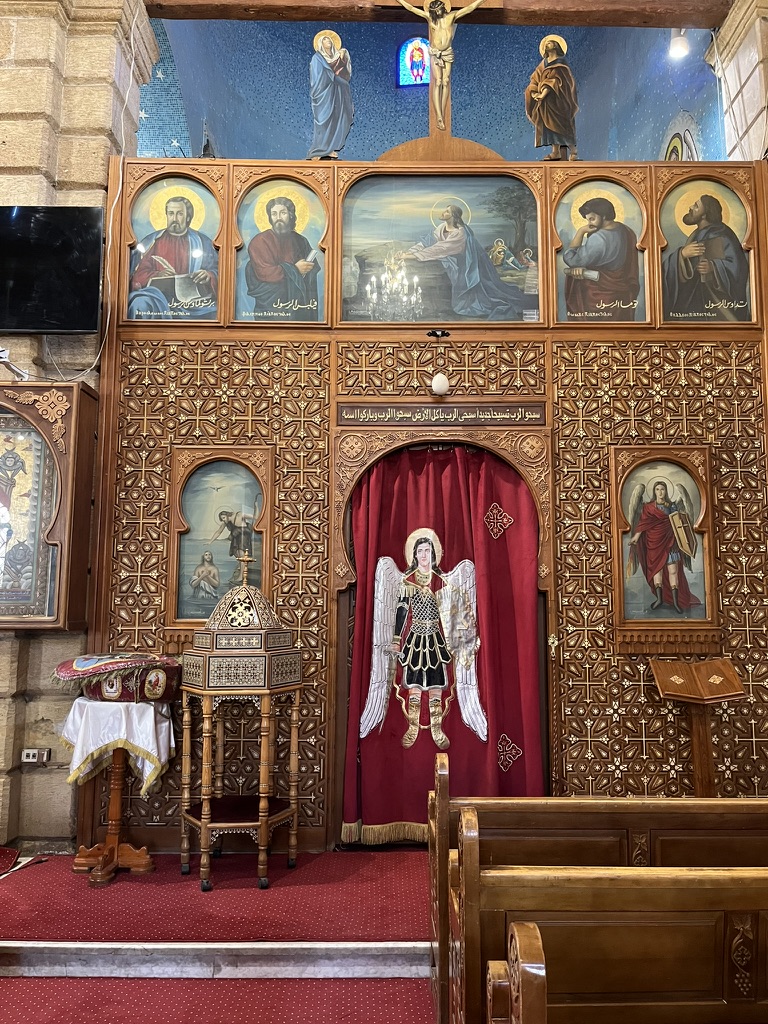
Our first stop in Coptic Cairo, and immediately the standout. The intricate iconostasis, vibrant wall paintings, and delicate woodwork make it feel like stepping into a jewel box. Every corner tells a story. We lingered far longer than planned, absorbing the artistry and an extraordinary quiet — a deep, physical contrast to everything outside its walls. Any single element of the decoration would be the centerpiece of a museum elsewhere. Here it is simply one layer of a building that has accumulated beauty over centuries.
Church of St. Sergius (Abu Serga)
Simpler and less ornate than St. Barbara’s, but its significance is entirely different. Abu Serga is believed to stand on the site where the Holy Family — Jesus, Mary, and Joseph — rested during their flight into Egypt. To reach that space, you descend a narrow staircase and squeeze through a tight passageway into a small, humble crypt. Standing there, in a space this modest and this ancient, is unexpectedly moving. The simplicity is exactly the point.
The Hanging Church (Al-Muallaqa)
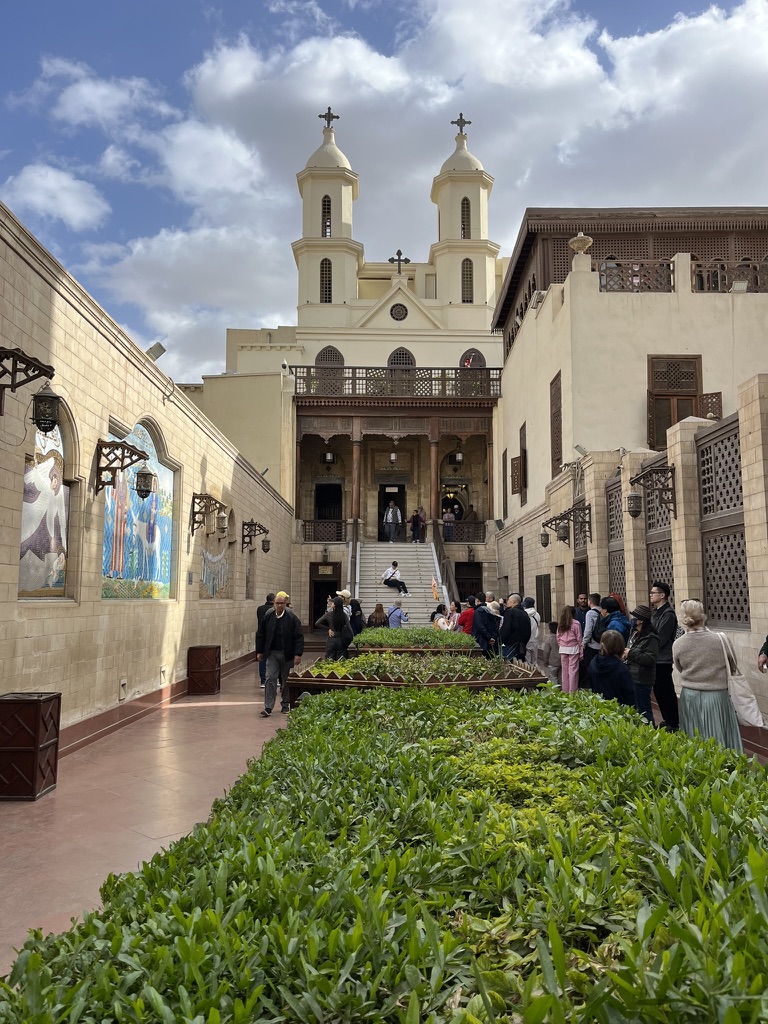
The most famous church in Coptic Cairo, and the one that requires a moment to understand. From the outside, it looks like any other old church. Step inside and look around — and then it clicks. The church is built atop the gatehouse of an ancient Roman fortress, literally suspended above the street below. That’s why it “hangs.” Its wooden nave, intricately carved icons, and layered history make it the most photographed church in Egypt for very good reason.
| Detail | Information |
|---|---|
| Getting There | Metro Line 1, Coptic Cairo station. Or Uber to the southern perimeter entrance. |
| Entry | Free for the neighbourhood. Small fees for individual churches. |
| Security | Military checkpoint at vehicle barriers. Walk through freely — standard process for visitors. |
| Best Time | Mid-morning on a weekday. Avoids large tour groups. |
| Time Needed | 2–3 hours for the main three churches plus wandering |
| Dress Code | Modest dress required. Shoulders and knees covered for all three churches. |
V. The Egyptian Museum (Tahrir Square)
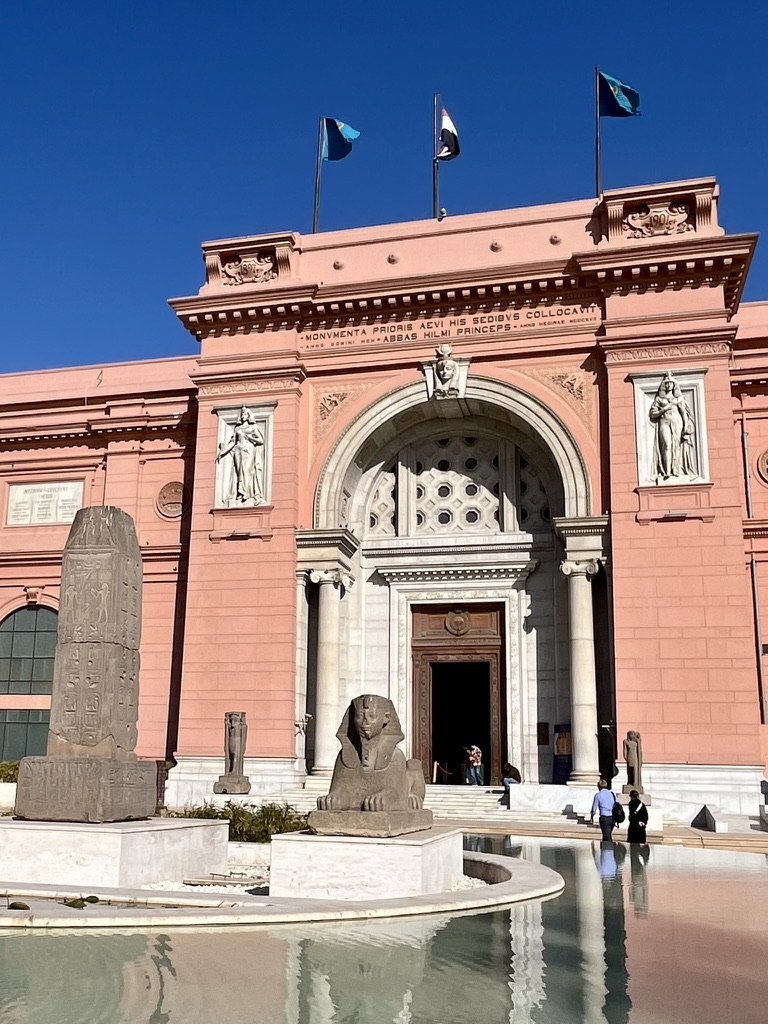
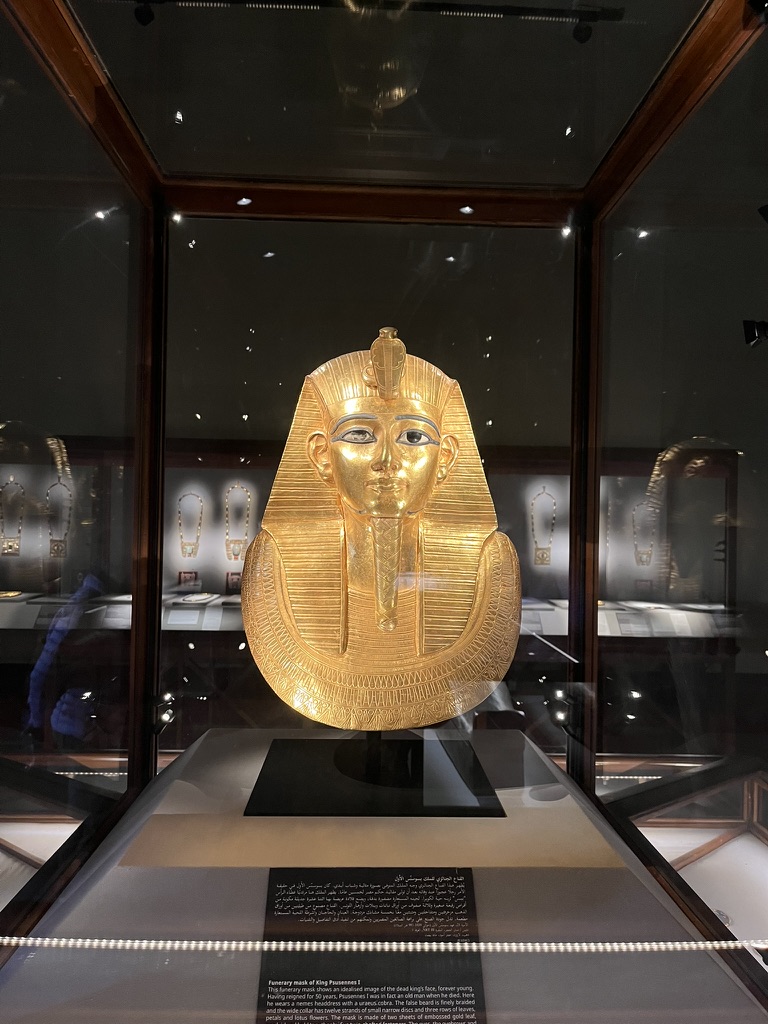
The Egyptian Museum in Tahrir Square has stood since 1901. With Tutankhamun’s treasures now moved to the Grand Egyptian Museum in Giza, it has lost some marquee status — but dismissing it would be a serious mistake. What remains is extraordinary, and the building itself is part of the experience in a way that the GEM, for all its architectural magnificence, cannot replicate.
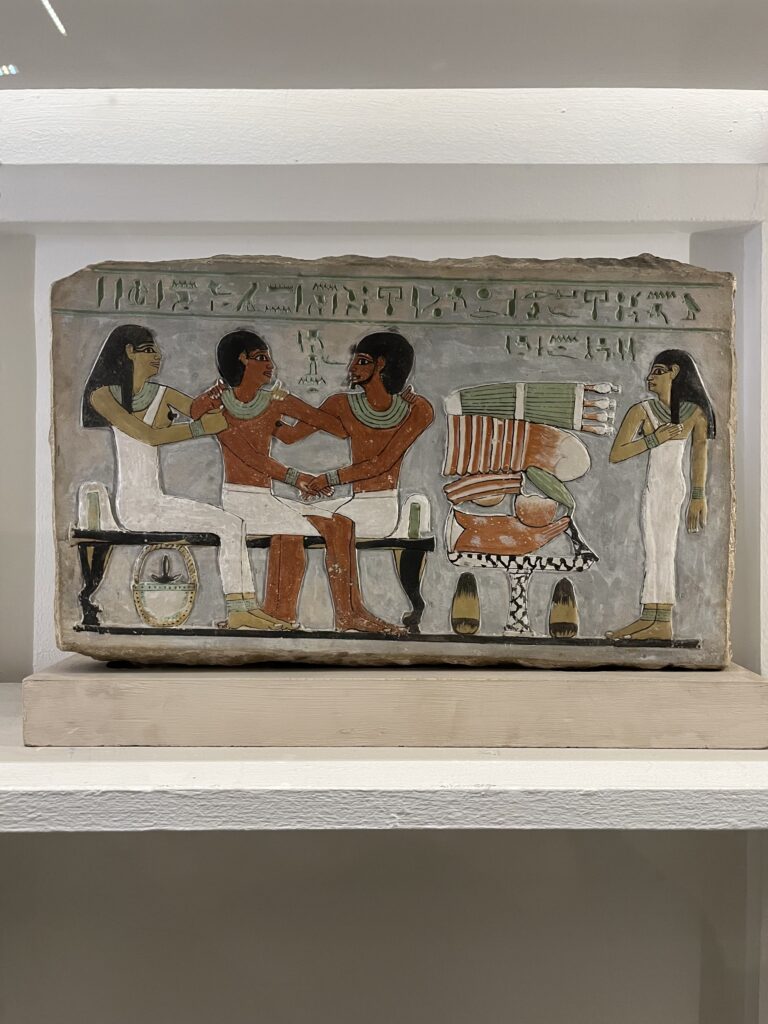
Some rooms feel less like a curated exhibition and more like a private archive overflowing with history. You walk into an apparently ordinary gallery and find priceless artifacts — statues, reliefs, sarcophagi — simply lined up and stacked, almost apologetically, because there is not enough space to give each one the room it deserves. Any single piece would be the highlight of a museum elsewhere. Here, they’re just making room for something even more important.
An elderly gentleman outside gave us advice we passed on to every other traveller we met afterward: go in after 10 a.m. to miss the morning tour groups, and you don’t need a guide — everything is clearly labelled in English. He was right on both counts.
| Detail | Information |
|---|---|
| Address | Tahrir Square, Downtown Cairo — central location, easy Uber or Metro |
| Best Entry Time | After 10:00 a.m. — morning tour groups clear significantly by then |
| Time Needed | 2.5–3 hours (ground floor: statues and reliefs; upper floor: mummies and sarcophagi) |
| Language | Clear English descriptions throughout — a guide is not required |
| Photography | Permitted in most areas. Extra fee for camera. No flash. |
| Highlights | Old Kingdom statues, the Narmer Palette, the Akhenaten collection, Royal Mummies Room |
VI. Cairo Attractions Guide – Parks, Views & The Nile
Al-Azhar Park
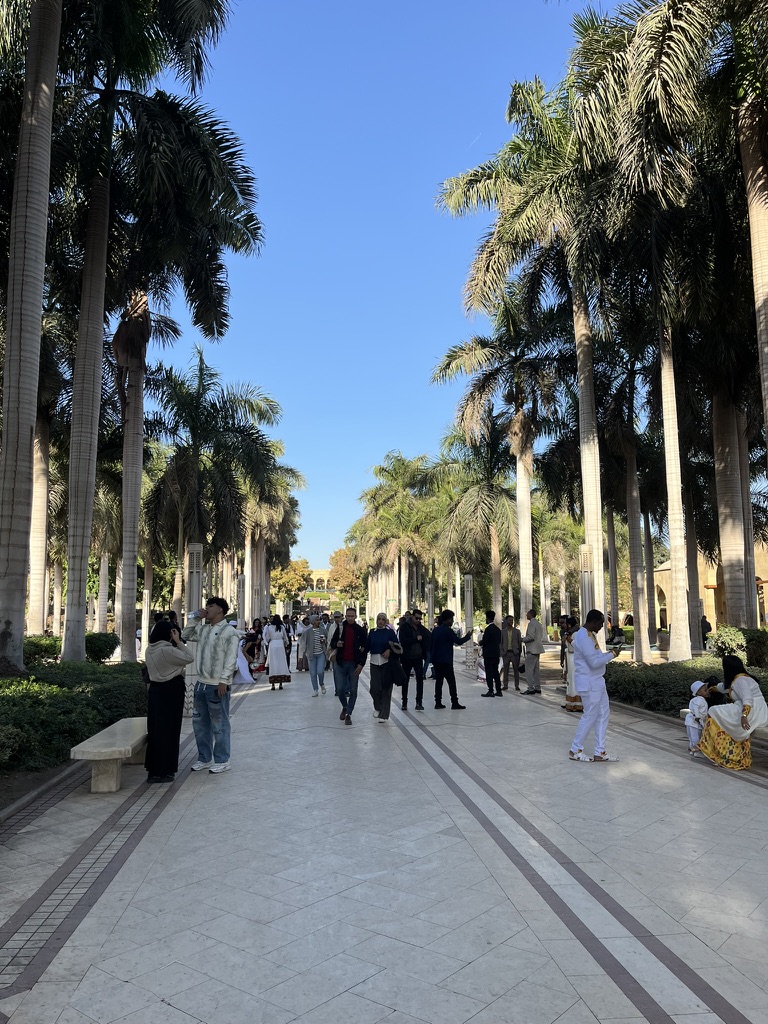
Al-Azhar Park is Cairo’s best elevated viewpoint outside of the Citadel, and it is dramatically underused by visitors. Perched on a hill above Islamic Cairo — built on what was for centuries a garbage dump — the park was transformed in the early 2000s into a beautifully landscaped public garden. Palm trees line the pathways; fountains trickle near the highest point; a restaurant at the top looks out over the entire city.
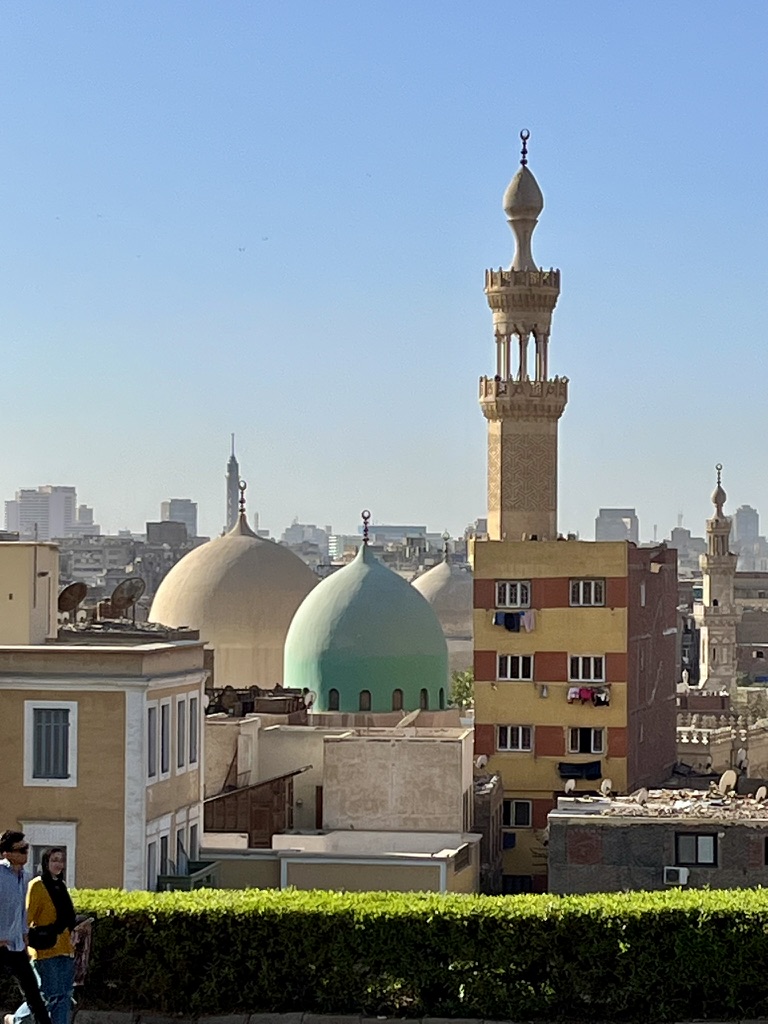
From the hilltop, the Muhammad Ali Mosque is clearly visible in the distance — a satisfying sight if you visited the Citadel earlier in the day. On our visit, it was a weekday morning and the park was nearly empty. A few couples were taking wedding photographs. The contrast with the crowds of Islamic Cairo, ten minutes’ walk away, was dramatic.
The Nile Corniche & Zamalek
The Nile in Cairo doesn’t feel like it does in Luxor or Aswan — fewer feluccas, more embassies — but the Corniche is worth an evening walk regardless. After dinner in the downtown area, walk toward the river. The Corniche runs along the eastern bank, and several good cafes with river views cluster near the Kasr El Nil Bridge area. Sit with a coffee or a fresh juice as the city hums around you. The reflections on the water at dusk are quietly wonderful.
The island of Zamalek, sitting in the middle of the Nile within Cairo, has a distinct character: tree-lined streets, embassies, independent cafes, bookshops, and a calmer pace than downtown. Worth an hour of wandering if you have a free afternoon. It feels like a different city, which is part of Cairo’s enduring strangeness — multiple cities layered inside one.
💡 Pairing Suggestion
Al-Azhar Park pairs naturally at the end of a Bab Zuweila and Al-Azhar Mosque morning. Walk or Uber there after Al-Azhar (five minutes), spend an hour in the park for the views, then Uber to Bab al-Futuh for the evening walk into Khan el-Khalili. It makes for a complete and unhurried Islamic Cairo day.
VII. Suggested Self-Guided Itineraries
Day 1 — Islamic Cairo & the Citadel
Uber to the Saladin Citadel. Begin at the Muhammad Ali Mosque — arrive before tour groups build up. Allow 30–40 minutes inside.
Walk the Citadel ramparts. Find the northern viewpoint and look for the Pyramids on the western horizon. Military and police museums for those interested — both are brief.
Uber or taxi to Islamic Cairo. Walk Al-Muizz Street south toward Bab Zuweila. Let yourself wander the lanes alongside the main street — this is where the best accidental discoveries happen.
Explore the Mosque of Sultan al-Mu’ayyad (adjacent to Bab Zuweila — enter through the mosque courtyard). Then find the Bab Zuweila ticket counter and climb the minaret. Allow 1–1.5 hours for both.
Lunch at a local restaurant along Al-Muizz Street or in the side lanes. Avoid the main tourist-facing spots; go one street back for significantly better food at half the price.
Walk north to Al-Azhar Mosque. Leave shoes outside and spend 45 minutes in the courtyard. If prayer begins while you’re there, sit to the side and stay.
Al-Azhar Park. Walk to the hilltop restaurant for views over Islamic Cairo. Rest your feet.
Uber to Bab al-Futuh. Walk south through the illuminated historic streets as dusk falls — city gates lit up, minarets glowing — into Khan el-Khalili.
Browse the bazaar. Stop at El Fishawy Coffeehouse for tea. Allow 90 minutes and then leave — the sensory intensity is best in a focused burst.
Day 2: The Pyramids and GEM
Uber to the Pyramids. Start the day early as soon as the Pyramid site is open to beat the crowd
Take a uber from the Sphinx exit of the Pyramids to Grand Egyptian Museum (GEM). Have lunch in one of the GEM cafeterias before visit, and dinner there also afterwards
Day 3 — Coptic Cairo & The Egyptian Museum
Metro to Coptic Cairo station (Line 1). Enter through the pedestrian checkpoint — straightforward and quick. The neighbourhood itself begins immediately.
St. Barbara’s Church first. Take your time — the iconostasis alone is worth 20 minutes. This is the most visually remarkable of the three churches.
Church of St. Sergius (Abu Serga). Descend to the crypt. The narrow passageway is part of the experience — the humility of the space is the point.
The Hanging Church. Understand why it hangs. Look down through the floor grating if available.
Lunch near the Coptic neighbourhood perimeter. Or metro back toward Tahrir for more options — the ride takes 10 minutes.
Egyptian Museum, Tahrir Square. Enter after 10 a.m. crowd has long cleared. Ground floor for statues; upper floor for mummies. Follow English signage — no guide needed.
Walk or Uber to the Nile Corniche. Evening walk along the river. Find a riverfront cafe for fresh juice at sunset.
VIII. Cultural Etiquette
At Mosques
- Remove shoes before entering. Shoe racks are at the entrance.
- Shoulders and knees must be covered. Abayas are often available for women at the entrance.
- Non-Muslims may not be permitted inside all mosques during prayer — follow doormen’s guidance politely and without argument.
- During prayer, remain quiet and sit to the side. Do not photograph worshippers.
- A small tip (10–20 EGP) to an imam or site custodian who shows you around a space is appropriate and appreciated.
At Coptic Churches
- Dress modestly. These are active places of worship, not tourist exhibitions.
- Speak quietly. Services and private prayer happen throughout the day.
- Photography is usually permitted in public areas — check before photographing interiors during services.
- Small entrance fees are common. Pay them — they maintain the buildings.
General Interaction
Egyptians are warm, curious, and genuinely hospitable. People will ask where you’re from, offer directions, or simply start a conversation. Engage with this — some of the best moments of a Cairo visit arrive in spontaneous exchanges that you neither planned nor expected. Simply be aware that genuine friendliness sometimes transitions into a sales approach. A calm “La, Shukran” (No, thank you) is all you need. It works every time, and it works without confrontation.
IX. Eating Near Cairo’s Attractions
The best food in Cairo is always one block off the main tourist path. Restaurants positioned directly at the entrance of a major site are usually serviceable at best. A short walk into the side lanes finds significantly better food at noticeably lower prices. Google Maps reviews are reasonably reliable; a 4.0+ locally-reviewed restaurant is usually a sound choice.
| Near | Best Eating Strategy |
|---|---|
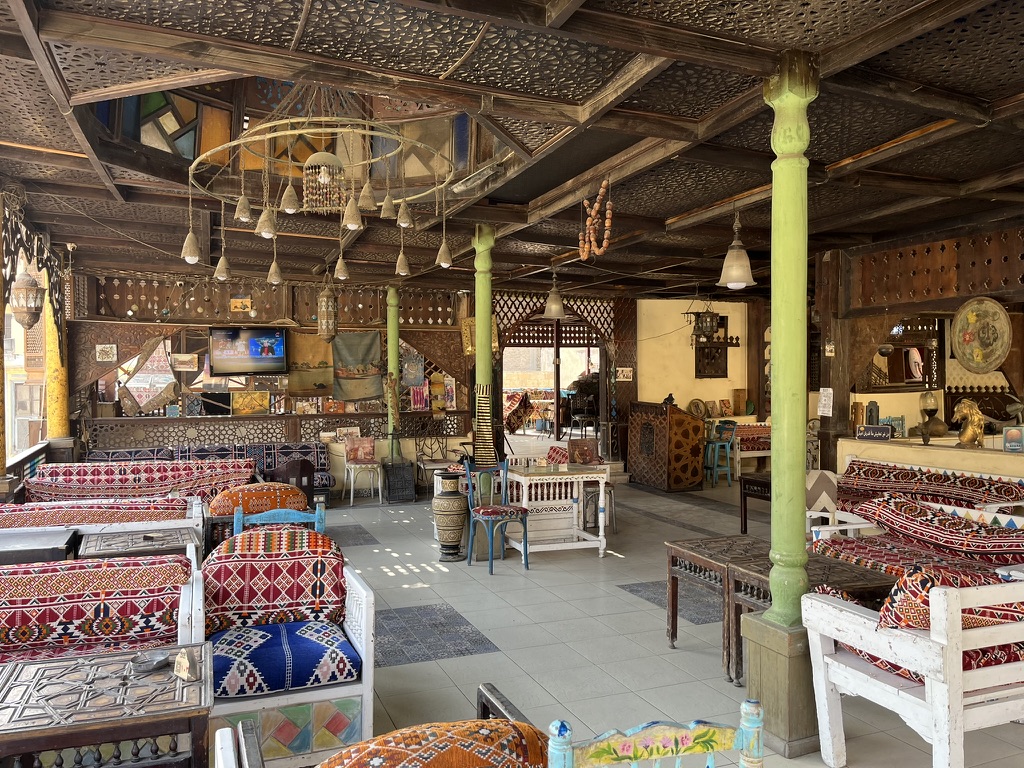
| Islamic Cairo / Khan el-Khalili | Wander into the side alleys east of the main bazaar for local restaurants. One courtyard restaurant we discovered entirely by accident — no online presence, no English signage, an owner who came out to greet us from the street — was one of the best meals of the whole trip. |
| Coptic Cairo | Small eateries just outside the pedestrian perimeter. Koshary and shawarma shops are reliable. The tourist-facing spots near the main entrance are ordinary — walk to the side streets. |
| Citadel | Few good options immediately outside. Uber to Zamalek or downtown after the visit for better choices. |
| Egyptian Museum (Tahrir) | The surrounding Tahrir area has numerous options. Ask the hotel for a nearby recommendation rather than trusting proximity to the museum entrance. |
| Fresh juice (everywhere) | Street carts near most major attractions. Mango, sugarcane, guava. The quality is unlike anywhere else. Trust the freshness — it’s genuinely exceptional throughout Egypt. |
X. Frequently Asked Questions
Do I need a guide to visit Cairo’s cultural sites?
No. Nearly all major sites have clear English descriptions and signage. Google Maps is accurate for navigation. A guide adds historical depth — particularly at ancient temples and less-labelled sites — but is not required for logistics or finding your way around. The Egyptian Museum’s signage is particularly comprehensive. The elderly gentleman outside advised us we wouldn’t need a guide, and he was entirely right.
Is Islamic Cairo safe to walk around?
Yes. We walked Islamic Cairo day and evening, including getting intentionally lost in the back lanes around Al-Muizz Street. The area is busy, lively, and genuinely welcoming. The only persistent nuance is commission-based sales approaches near tourist sites — a calm “La, Shukran” handles these entirely and without confrontation.
Can non-Muslims visit mosques in Cairo?
Yes, during non-prayer hours. Al-Azhar and the Muhammad Ali Mosque both welcome non-Muslim visitors. You’ll be asked to cover up and remove shoes. During prayer times, non-Muslim visitors are often asked to sit quietly to the side rather than enter — follow that guidance respectfully. Some smaller mosques in the Islamic Cairo lanes are Muslim-only; doormen will indicate this without issue.
What is the best order for visiting Cairo’s sites over three days?
Day 1: Saladin Citadel, then Bab Zuweila, Al-Azhar Mosque, Al-Azhar Park, and Khan el-Khalili at dusk — approached via Bab al-Futuh on foot. Day 2: Pyramids and Grand Egyptian Museum. Day 3: Coptic Cairo in the morning (metro), Egyptian Museum in the afternoon. This sequence builds well: Islamic heritage makes the strongest first impression, followed by the highlights of the Pyramids and GEM, and the Coptic Cairo provides a quieter contrast and serve as the finale.
Is the original Egyptian Museum (Tahrir) still worth visiting now that the GEM is open?
Yes — and the two complement rather than duplicate each other. The GEM offers Egypt’s greatest objects in ideal modern conditions with comprehensive curation. The Tahrir museum offers something the GEM cannot replicate: the atmosphere of a 19th-century institution that has been quietly holding Egypt’s history since 1901. The “Indiana Jones” texture of rooms overflowing with extraordinary artifacts is genuinely worth experiencing. Visit both if you have time; the GEM if you must choose one.
Is Coptic Cairo worth visiting even if you’re not Christian?
Absolutely. Coptic Cairo is historically fascinating regardless of religious background — it predates Islam in Egypt by centuries, contains architecture of extraordinary beauty, and has an atmosphere found nowhere else in the city. St. Barbara’s Church alone is worth the trip.
The neighborhood’s layered history — Roman fortifications, Coptic churches, centuries of coexistence with the surrounding Islamic city — makes it one of the most interesting places in Cairo.
📍 Related Guides in This Series
- The Grand Egyptian Museum (GEM): The Complete Self-Guided Visitor’s Guide (2026) — tickets, layout, every major gallery, Tutankhamun, the Khufu Ships Museum, dining, and the Giza transport breakdown.
- Cairo: Getting Around, Staying Safe & Practical Essentials (2026) — Uber, the metro, crossing streets, ATMs, SIM cards, tipping, and every practical detail for navigating Cairo independently.
- 12-Day Egypt Itinerary: The Self-Guided Master Guide — how Cairo, Aswan, Luxor, and Abu Simbel fit together into a complete trip.
- The Egypt Itinerary Library: 3, 7, and 9-Day Self-Guided Routes – how Cairo and Giza fit into a short trip.

Hi, I’m Frank J – Egypt Self-Guided Travel. I explore Egypt solo and share tips, stories, and practical advice to help you plan your own adventures safely and enjoyably.