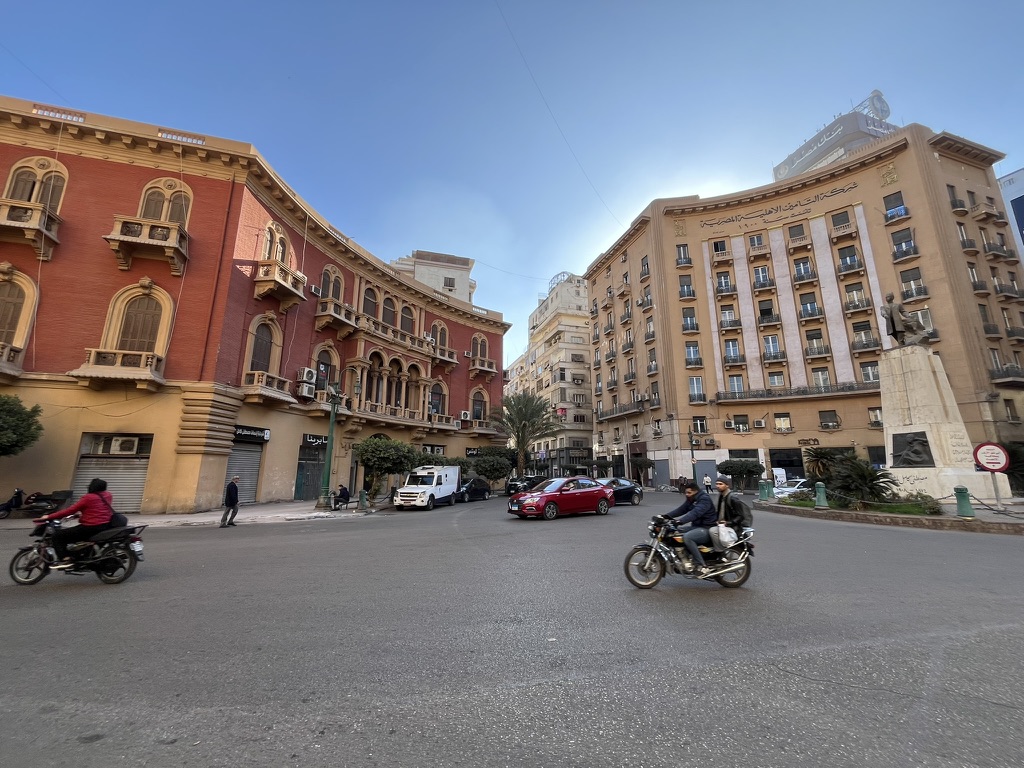
We arrived in Cairo with more apprehension than excitement. The warnings we’d read — scams everywhere, impossible traffic, chaos at every turn — had accumulated into a low-grade anxiety that lasted exactly until our second day. By the end of four days navigating the city entirely self-guided, the anxiety had been replaced by something close to affection. Cairo rewards the visitor who stops trying to control it and starts paying attention to how it actually works.
✍️ How to Use This Guide
This Cairo travel guide covers everything practical about navigating Cairo as a self-guided traveller: airport arrival, SIM cards, ATMs, Uber, the metro, crossing streets, safety, money, tipping, and where to stay. It draws on four days of self-guided exploration — including one very instructive 3 a.m. departure.
For Cairo’s cultural and historic sites, see the companion guide: Cairo: Cultural Attractions & Hidden Gems (2026). For the Grand Egyptian Museum, see: The Grand Egyptian Museum (GEM) Guide (2026).
📋 Table of Contents
I. Quick Reference: Cairo at a Glance
| Category | Key Information |
|---|---|
| Currency | Egyptian Pound (EGP). Cash is essential — always carry small bills (5, 10, 20 EGP). |
| Best ATMs | National Bank of Egypt (NBE) and Banque Misr. Avoid small or unknown bank ATMs. |
| SIM Card | Buy a physical Vodafone or Orange SIM at Cairo Airport (luggage hall). ~$10 for 30GB. |
| Uber | Works brilliantly in central Cairo. Use it for nearly everything. Special rules near Giza — see Section IV. |
| Metro | One line. Clean, cheap, and a genuine local experience. Best for Coptic Cairo. |
| Language | Basic English widely spoken at hotels, tourist sites, and transport hubs. Learn: “La, Shukran” (No, thank you). |
| Safety | High for tourists. Most “scams” are commission-based sales, not physical threats. |
| Best Base | Downtown Cairo (near Tahrir Square). Do not stay in Giza — see Section VII. |
| Credit Cards | Hotels and upscale restaurants: yes. Local restaurants: assume cash-only unless you ask. |
| Emergency | Police: 122 | Ambulance: 123 | Tourist Police: 126 |
II. Arriving in Cairo
Visa on Arrival vs. E-Visa
Most visitors choose between a visa on arrival ($25) or an e-visa applied for in advance. Based on personal experience, the visa on arrival is fast, simple, and worry-free. Authorised bank counters are positioned right next to immigration — the clerk barely glances at your passport for about 20 seconds, hands you a sticker, and a quick presentation to the immigration officer puts you through. One of the fastest entry processes we’ve encountered anywhere.
💡 Visa Note
Some travellers report friction with e-visas. Unless you have a specific reason to pre-apply, the on-arrival option is perfectly smooth in practice and arguably faster than pre-applying and then having the sticker verified separately at immigration.
Getting a SIM Card at the Airport
Pick up a physical SIM card immediately after clearing immigration, in the luggage collection hall. Vodafone and Orange both have counters there. A Vodafone SIM with 30GB of data costs around $10 and will last a two-week trip comfortably. We compared airport SIM pricing with eSIM options before travelling and found airport SIMs significantly cheaper, with better signal reliability and far more data. If your phone has a physical SIM slot, the airport counter wins every time.
⚠️ eSIM Users
If your phone only supports eSIM, purchase a plan in advance from a reputable provider. The airport counters only sell physical SIMs.
Currency and ATMs on Arrival
Do not exchange money at the airport counters — the rates are poor. Use ATMs once you’re in the city. The two most reliable networks are the National Bank of Egypt (NBE) and Banque Misr, found everywhere in Cairo and consistently reliable with foreign cards. Smaller bank ATMs caused repeated problems on our trip: some reject foreign cards, some require a local account, some appear to be working but simply don’t dispense cash. After a few failed attempts, we stopped trying them entirely. Stick to NBE and Banque Misr.
💡 Card Recommendation
A Charles Schwab debit card has zero ATM fees and automatically refunds all ATM surcharges worldwide. If you’re a US-based traveller with one, bring it. If you don’t, standard debit card fees are manageable but add up meaningfully over two weeks.
Getting from the Airport to Your Hotel
Three practical options, in order of recommendation:
Option A — Hotel Private Transfer
Most Convenient OptionCost: approximately $15–20. Many hotels on booking platforms offer this. The driver waits after baggage claim with a sign. If you arrive late at night, this is the most stress-free option — simply WhatsApp your hotel if the driver is hard to find and they’ll sort it within minutes. Our driver appeared holding a photo of us on his phone.
Option B — Uber
Most Cost Effective OptionUber works well from the airport, with one critical rule: Uber cannot pick up at the arrivals curb. That space is strictly for taxis. Follow this sequence: exit arrivals → find the outdoor elevators → go down to the parking lot → request your ride from there. Once you know the parking lot rule, Uber works perfectly.
⚠️ Critical Airport Rule
Do not stand at the arrivals curb waiting for an Uber. You’ll be surrounded by taxi touts. Walk to the parking lot first, then open the app. If you wait at the curb, you’re in the taxi zone and drivers will not come to you.
Option C — Official Airport Taxi
Fallback OptionFixed-rate taxis from the official counter inside arrivals. Slightly more expensive than Uber, no negotiation required, fully regulated. A sound fallback if Uber is giving trouble on arrival night.
III. Getting Around Cairo
Uber — Your Primary Transport
Uber is the single most useful app in Cairo. Reliable, affordable — most rides run $2–5 — and it eliminates the constant energy drain of negotiating taxi prices. We used it constantly across four days and rarely had issues in central Cairo. The exception is Giza, which has its own section below.
Reading Egyptian Licence Plates
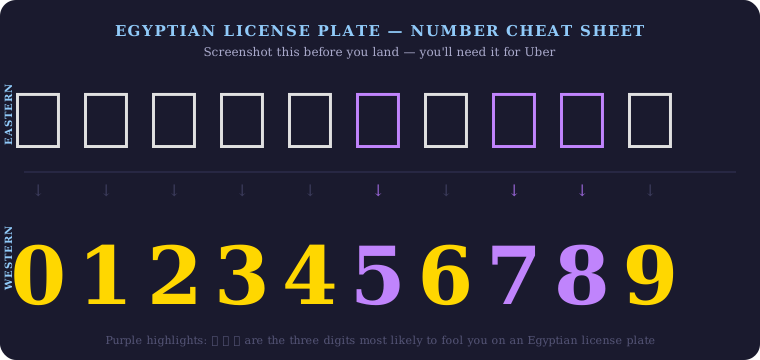
Egyptian licence plates use Eastern Arabic numerals, which look different from the Western 0–9 system shown in your Uber app. Three numbers cause consistent confusion:
| Western | Eastern Arabic | Looks Like |
|---|---|---|
| 5 | ٥ | Resembles a backwards “o” or a small circle with a tail |
| 7 | ٧ | Resembles a “V” shape |
| 8 | ٨ | Resembles a backwards “7” |
💡 Action Item
Screenshot the numeral table above and save it to your phone’s camera roll before your trip. In the chaos of a busy GEM or Pyramid exit, being able to read the plate on the car in your app against the actual car in front of you is the difference between confident identification and standing in a crowd of identical vehicles..
The Cairo Metro
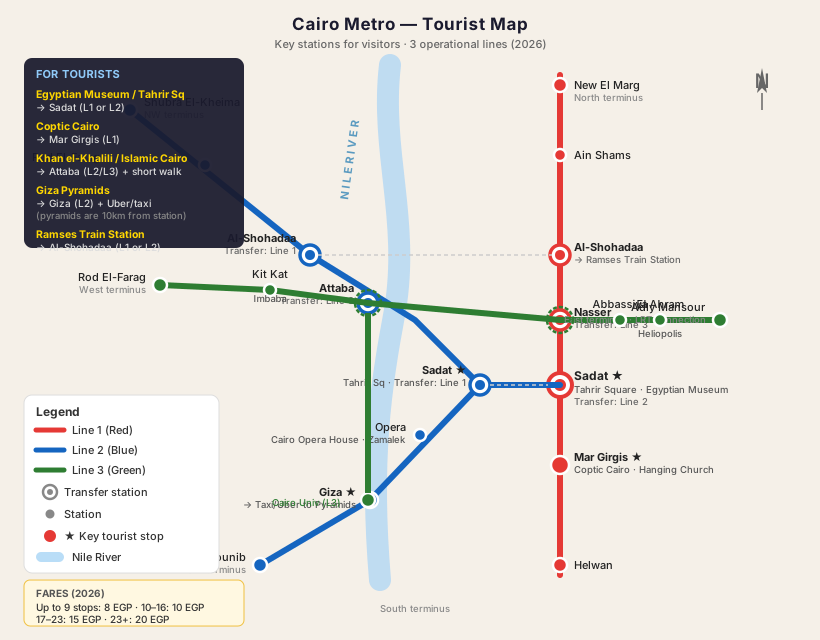
Cairo has several metro lines. It’s clean, cheap, efficient, and a genuinely interesting slice of local life — worth riding at least once not just for transport but for the experience. It is particularly useful for getting to or from Coptic Cairo, where the metro stop is close to the neighbourhood entrance and you bypass all the traffic entirely.
On our first attempt, several locals immediately and spontaneously guided us through buying a ticket and pointed us to the right platform. No one was asked. The experience set the tone for our whole understanding of Cairo: the city is more helpful than its reputation suggests.
| Detail | Information |
|---|---|
| Coverage | One line running roughly north-south through central Cairo |
| Ticket Price | A few EGP per ride — extremely affordable |
| Hours | Approximately 5:30 a.m. to midnight |
| Women’s Cars | Dedicated women-only cars available on most trains (clearly marked) |
| Best Use | Coptic Cairo; avoiding traffic between Tahrir and the southern neighbourhoods |
Crossing the Street
This deserves its own section. Cairo traffic does not operate like North American or European traffic. Pedestrian crossing signals exist but are largely decorative. Cars do not stop for people standing at the curb.
The technique, learned within 24 hours and never forgotten: walk steadily and predictably. Don’t run, don’t hesitate, don’t freeze. Cars will flow around you if you maintain a consistent pace — drivers can predict where you’ll be and adjust. What creates danger is hesitation: a pedestrian who stops and starts is unpredictable, and unpredictability is the actual problem. If you’re stuck, shadow a local. By day three, crossing a six-lane road felt entirely routine. A Luxor cyclist later passed us and said, without breaking pace: “Wow, you walk like an Egyptian.” That was our unofficial graduation.
⚠️ First Day Warning
On your first day, don’t cross alone if you can help it. Wait near locals and move with them. Within 24 hours the rhythm becomes clear and you’ll adapt quickly. Don’t fight it — flow with it.
Taxis
White-and-black taxis are widely available throughout Cairo. Unlike Uber, fares must be negotiated before you get in — always agree on a price and currency before the door closes. Using the Uber estimate for the same route as a baseline works well; most drivers will accept something close to it. Taxis are most useful near the Pyramids and GEM when Uber is unavailable or producing fraudulent drivers, and in areas where the app has few cars. Beyond those specific situations, Uber is consistently more convenient.
IV. The Giza Uber Trap: A Complete Breakdown
Uber is excellent in central Cairo. Giza is a different situation entirely, and understanding this before you visit the Pyramids or Grand Egyptian Museum will save you significant stress. The area around the Giza exits is the only place in Egypt where we consistently encountered transport fraud.
How the Scam Works
The in-app message opener. A driver accepts your ride and immediately sends a message inside the Uber app. The message might be friendly (“Good morning! Where are you going?”) or direct (“Road is closed, need extra cash”). Either is the opening move of a price renegotiation. The driver is testing whether you’ll engage. The correct response: don’t reply. Cancel the ride immediately and request a new one. Report the driver for “requesting payment outside the app.”
The “walk to me” redirect. Some drivers ask you to walk 50–100 metres from the official GEM or Sphinx Gate exit to meet them. This is almost always an attempt to get you away from the immediate area before beginning the negotiation. Stay at the official pickup point. A legitimate driver will come to your pin.
The in-car demand. This happened to us personally. We got into a car, the driver drove a short distance, then turned and demanded a higher price in cash. The script that works: “I only pay the price shown in the app. If that’s a problem, please stop here.” Say it once, calmly, without arguing. Most drivers back down immediately. If the car keeps moving, repeat it. We got out, cancelled, and found a taxi. The experience was unpleasant for about four minutes and then completely over.
⚠️ The Working Strategy for Giza Exits
Walk about 50 metres from the GEM or Sphinx Gate entrance before opening the Uber app — this changes which drivers can see your request. If three cancellations in a row produce fraudulent drivers, switch to a marked white taxi with official signage. Agree on price and currency before getting in. The going rate from Giza to central Cairo is $10–15 — more than Uber but far less than what fraudulent drivers demand. Carry this amount in cash before visiting Giza so you always have the taxi fallback available.
V. Safety and Scams
The Real Safety Picture
We walked Cairo for four days, including at night, without a guide or private driver. We never once felt physically threatened. Egypt has a strong tourist infrastructure, visible police and military presence at major sites, and a culture of genuine hospitality toward visitors. The warnings you read online almost always describe aggressive sales tactics, not physical danger — and understanding the difference is the most important preparation you can do before arriving.
The “Commission” Culture — What It Actually Is
The most common “scam” in Cairo is not a scam in any meaningful sense. Someone approaches you, seems friendly and helpful, steers you toward a shop or suggests a route that passes through their cousin’s store. They receive a small payment if you buy something. This is how a lot of informal economic activity in tourism-dependent areas works across the entire world. The people doing it are not dangerous, are not going to steal from you, and are simply trying to earn a living. You don’t have to buy anything.
The only required skill: “La, Shukran” (No, thank you). Say it calmly, don’t make eye contact, and keep walking. It works every single time. Getting angry or visibly rattled makes it worse and signals that you can be pressured.
🗣️ Useful Arabic Phrases
“La, Shukran” = No, thank you | “Shukran” = Thank you | “Bikam?” = How much? | “Ghali” = Expensive (useful for bargaining)
Common Approaches to Know
The hotel employee approach. Near tourist sites, someone may say “I work at your hotel” or “I am the chef at your restaurant.” This is a well-known technique to build quick trust before steering toward a shop. A calm “La, Shukran” and keep moving. No confrontation needed.
The souvenir escort. Near the Egyptian Museum in Tahrir, an elderly gentleman gave us genuinely good advice about the best time to enter — then led us to a nearby perfume shop. The shop was legitimate, the prices were actually better than a perfume shop our Luxor guide had taken us to, and we bought several bottles. What started as a commission play led somewhere genuinely useful. Not every approach is predatory. Use judgment rather than blanket suspicion.
The Khan el-Khalili intensity. The bazaar is relentless with calls and invitations. Walk faster, avoid eye contact, and let the crowd carry you through. Allow 90 minutes maximum — the sensory saturation is real and a shorter focused visit is better than hours of exhaustion. Arrive at dusk for the best experience and a natural endpoint when things close down.
Neighbourhood Safety
Both Coptic Cairo and Islamic Cairo are heavily protected. Coptic Cairo has military checkpoints at vehicle barriers — your Uber stops at the perimeter and you walk in. This is intentional and effective. Once inside the pedestrian zone, it is serene and safe. Around mosques in Islamic Cairo, the environment is respectful and calm. Walking at night in the main tourist and downtown areas felt entirely comfortable throughout our visit.
🌙 Late Night
Cairo is an evening city. The streets are active well past midnight, restaurants stay busy, and the area around Khan el-Khalili comes alive after dark. Walking at night in downtown and tourist areas felt completely comfortable. The front desk at our hotel, when asked if Uber at 3 a.m. would be a problem, simply said: “Cairo never sleeps.”
VI. Money and Practical Logistics
Cash is Still King
Even in central Cairo, a huge proportion of daily life runs on cash. Street food, local restaurants, small shops, bathroom attendants, and tips all require it. Carry a mix of denominations, with plenty of 5, 10, and 20 EGP notes. Paying for a 15 EGP item with a 200 EGP note causes genuine difficulty and slows everything down.
💰 Rule of Thumb
Keep a pocket supply of small bills — 5s and 10s — for baksheesh (tips), bathroom attendants, and street food. Larger bills for restaurants and shops. Never let your small bill supply run out entirely; replenish at every ATM visit.
Credit Cards
Hotels, higher-end restaurants, and larger shops accept cards. Many local restaurants are cash-only. Before sitting down at any restaurant, if you’re low on cash, ask: “Do you accept credit cards?” Several will say no, or “only if the machine is working today.” Some accept USD or EUR at a reasonable rate as a backup — a useful option if the nearest ATM is blocks away.
Tipping (Baksheesh)
Tipping is woven into Egyptian daily life and is genuinely expected in more situations than most Western travellers are accustomed to. It is also how many people in the service industry supplement modest wages. Approach it with openness rather than resentment.
| Situation | Appropriate Amount |
|---|---|
| Bathroom attendants | 2–5 EGP |
| Hotel bellhop / porters | 10–20 EGP per bag |
| Restaurant (local) | ~10% of bill, cash preferred |
| Uber drivers | Not mandatory; 10 EGP appreciated for longer rides |
| Spontaneous guide / helpful stranger | 20–50 EGP depending on time given |
| Museum or site attendant who opens a door | 20–50 EGP — was always appropriate and appreciated |
| Nile Cruise staff (if applicable) | ~$10 per day per person for staff and guide |
Restaurant Survival Guide
Cairo’s food scene ranges from street-food classics to international restaurants. The best local food is always one block off the main tourist path. Restaurants positioned immediately at the entrance of a major tourist site are usually adequate at best and overpriced relative to quality. Venture one block away and the difference is significant.
Cairo must-tries worth seeking out:
- Koshary — Cairo’s beloved street dish: rice, lentils, pasta, and a spiced tomato sauce, topped with crispy onions. Order it from a dedicated koshary restaurant, not a general tourist spot. The difference is meaningful.
- Shawarma — grilled meat in flatbread with pickles, tahini, and a sauce you won’t be able to identify but will want on everything.
- Ful medames — slow-cooked fava beans with olive oil and spices, a genuine Egyptian breakfast staple.
- Fresh juice — mango, sugarcane, guava from street carts. The quality is unlike anywhere else we’ve travelled. Order it everywhere, from everyone.
Domestic Flights — The EgyptAir Essentials
If your Egypt trip includes Aswan or Luxor, you’ll book a domestic EgyptAir flight. Two things that matter:
💡 The EgyptAir Currency Hack
When booking on the EgyptAir website, set the currency to EGP (Egyptian Pounds) rather than USD or EUR. Google Flights may show the lower local rate, but the airline site often defaults to a higher “international” price in dollars. Switching to EGP consistently produced noticeably lower prices on our booking.
⚠️ EgyptAir Schedule Warning
EgyptAir changed our flight times twice without sending any email notification. Check the EgyptAir website manually every few days after booking, and daily in the week before your flight. Do not assume your original departure time is still valid.
VII. Where to Stay: Cairo vs. Giza
Stay in central Cairo. This is the most unambiguous advice in this entire Cairo travel guide. A hotel near the Pyramids puts you close to one attraction and far from everything else worth seeing in Egypt’s capital.
| Area | Character | Best For |
|---|---|---|
| Downtown Cairo / Tahrir | Central, energetic, walkable. Easy metro and Uber access. Rooftop hotels with city views. | Best all-round base for a Cairo visit |
| Garden City / Zamalek | Quieter, slightly upscale. Tree-lined streets, embassy district, Nile proximity. | Travellers wanting quieter evenings and easy Nile access |
| Islamic Cairo | The historic quarter — Khan el-Khalili, Al-Azhar, Bab Zuweila. Dense and atmospheric. | Day visits only. Not recommended for sleeping. |
| Coptic Cairo | Ancient Christian neighbourhood. Pedestrian-only inside. Serene. | Half-day visit from downtown |
| Giza | Close to the Pyramids and GEM. Isolated from the rest of Cairo’s life and food scene. | Only if your trip is exclusively Pyramids-focused |
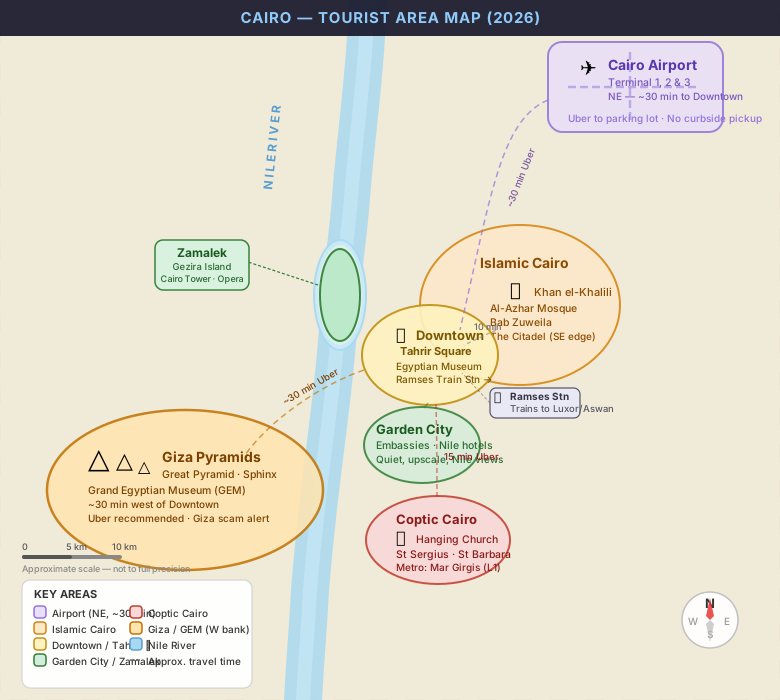
The following map can help you decide the area to stay. Our choice is downtown. The Garden City and the Zamalek area are also good options. But they are nore upscale, and a little bit insulated from the real Cairo.
VIII. Departing Cairo
Early Morning Flights
Cairo Airport handles a large volume of early departure flights — 5 a.m. and 6 a.m. slots are common on routes to Europe and North America. A few things worth knowing:
- Uber is available 24 hours, but allow 5–10 extra minutes in the small hours of the morning — driver response time is slower at 3 a.m. than at 3 p.m.
- Your hotel’s front desk will help even in the middle of the night. Egyptian hospitality genuinely doesn’t have off hours. When we came down to the lobby at 3 a.m. for a 5:40 a.m. flight, a staff member appeared from the kitchen with a small bag: “We’ve prepared breakfast for you to take.” We hadn’t asked. Such a simple gesture, but it has stayed with us since.
- Watch for the same in-app message scam near the airport on departure morning. If a driver messages asking for extra cash before pickup, cancel and rebook immediately. A new driver arrived within three minutes with no messages and no drama.
IX. Cairo Quick-Reference Cheat Sheet
Screenshot this before your trip — it covers every situation where you’ll need an answer fast.
📋 Cairo Practical Cheat Sheet — Screenshot This
| Category | The Pro Move |
|---|---|
| Airport Uber | Walk to the parking lot (elevators from arrivals level). The curb is taxis only. |
| Giza Uber | Cancel immediately if driver messages first. Walk 50m from entrance before requesting. |
| Taxi fallback (Giza) | Marked white taxi — agree price first — $10–15 to downtown Cairo. |
| SIM Card | Buy Vodafone or Orange in the luggage hall. Physical SIM beats eSIM for price and signal. |
| Arabic numerals | ٥ = 5, ٧ = 7, ٨ = 8 — screenshot the table to identify Uber plates. |
| ATM | National Bank of Egypt (NBE) or Banque Misr only. Skip small bank ATMs. |
| Small bills | Always keep 5s and 10s for tips, bathrooms, and street food. |
| Crossing streets | Walk steady and predictable. Don’t hesitate. Shadow a local if stuck. |
| Sales pressure | “La, Shukran” + keep walking. Works every time. Stay calm. |
| Khan el-Khalili | Set Uber to Bab al-Futuh, not the market itself. Walk in from there at dusk. |
| Restaurants | Ask “credit card?” before sitting. One block off tourist path = much better food. |
| EgyptAir booking | Switch website currency to EGP for lower prices. Check flight times manually — no email alerts. |
| Where to stay | Downtown Cairo, not Giza. Better food, walkable, metro access, evening energy. |
| Late night Uber | Cairo never sleeps. Allow 5-minute buffer. Cancel and rebook if driver messages for cash. |
X. Frequently Asked Questions
Is it safe to travel Cairo without a tour guide?
Yes. We walked Cairo for four days, including at night, without a guide or private driver. Signs are in English, Google Maps is accurate, and hotels are enormously helpful. You don’t need a guide to “survive” Cairo. Consider hiring one only if you want deep historical context at a specific site — not as a safety measure. The risks are mostly persistent sales approaches, not physical threats, and learning to say “La, Shukran” handles those entirely.
What is the easiest way to get from Cairo Airport to the city?
Uber is the most reliable option, but you must meet your driver in the parking lot — not at the arrivals curb, which is reserved for taxis. Take the outdoor elevator down from arrivals level to reach the parking lot, then request your ride. For late-night arrivals, a hotel private transfer (~$15) is the most stress-free option. Official fixed-rate taxis from the airport counter are also available and fully regulated if Uber is slow to respond.
Should I stay in Cairo or Giza?
Cairo, without hesitation. The only reason to stay in Giza is if your itinerary consists solely of the Pyramids and GEM and nothing else in Cairo. For any broader visit, central Cairo gives you far better food, walkable streets with genuine evening energy, easy transport access, and the kind of city atmosphere that makes a trip feel like a real experience rather than a series of monument visits.
Do I really need cash in Cairo?
More than you expect. Hotels and nicer restaurants accept cards. Everywhere else — street food, local restaurants, tips, bathroom attendants, small shops — requires cash. Withdraw from NBE or Banque Misr ATMs and avoid smaller bank machines. Carry a mix of denominations, especially small bills (5s and 10s). Running out of small bills is a more common practical problem than running out of cash entirely.
Is the Cairo Metro worth using?
Yes, at least once. It’s clean, cheap, and a genuine local experience. It’s particularly useful for Coptic Cairo — the station is close to the neighbourhood and you bypass the traffic entirely. Locals were immediately and spontaneously helpful when we tried to navigate the ticket system on our first attempt. It’s a small but memorable slice of everyday Cairo life.
How do you avoid the Uber scam near the Pyramids and GEM?
Never pay more than the price shown in the app. If a driver messages you asking for cash or a higher fare before pickup, cancel immediately and request a new ride — don’t engage with the message. Walk about 50 metres from the main exit before opening the Uber app to change which drivers see your request. If three attempts in a row produce fraudulent drivers, switch to a marked white taxi: agree the price ($10–15 to downtown Cairo) and currency before getting in. Always carry this amount in cash before visiting Giza so the taxi fallback is always available.
📍 Related Guides in This Series
- Cairo: Cultural Attractions & Hidden Gems (2026) — the Citadel, Coptic Cairo, Bab Zuweila, Al-Azhar, Khan el-Khalili, and the original Egyptian Museum, with itinerary suggestions and on-the-ground experience.
- The Grand Egyptian Museum (GEM): The Complete Self-Guided Visitor’s Guide (2026) — tickets, layout, every major gallery, the Tutankhamun collection, the Khufu Ships Museum, dining, and the full Giza Uber breakdown.
- 12-Day Egypt Itinerary: The Complete Self-Guided Master Guide — how all of this fits together into a full trip.
- The Egypt Itinerary Library: 3, 7, and 9-Day Self-Guided Routes – shorter period travel in Egypt

Hi, I’m Frank J – Egypt Self-Guided Travel. I explore Egypt solo and share tips, stories, and practical advice to help you plan your own adventures safely and enjoyably.