Every guide covers the pyramids. Far fewer cover what Egypt actually feels like — the hospitality that catches you off guard, the food that changes your expectations, the sites that tour buses miss entirely, and the small social moments that stay with you longer than any monument. This Egypt cultural guide is built from real experience, not a brochure.
✍️ How to Use This Guide
This is the cultural and experiential companion to the [Transport & Safety Survival Guide]. That guide covers logistics and scams. This one covers Egypt as a place to experience — the hospitality, the food, the hidden sites, and how to read the social landscape around you.
The two itinerary guides 12-Day Egypt Master Guide and the 3-7-9 Day Itinerary Library reference both this guide and the transport & safety guide to lay out Egypt travel routes if you have 12 days or less.
📋 Table of Contents
I. Egyptian Hospitality: It’s Genuinely Real
Before the trip, most of what I read about Egypt focused on what to guard against. Almost none of it prepared me for the hospitality.
It starts small. The hotel staff who carried our bags without being asked. The rooftop breakfast manager who had already turned on soft jazz before the first guests arrived. The Uber driver who handed back $15 with both hands because the hotel had collected the fee directly, and he wanted to make sure we understood the accounting. Small, unremarkable acts that accumulated into something that felt like the actual texture of the country.
It continues in unexpected moments. The breakfast chef on the Nile cruise who learned English at twelve years old by serving Western tourists and hasn’t stopped talking with travellers since. The hotel night clerk who, without being asked, packed us a bag of breakfast at 3 a.m. for our predawn flight. The hotel owner in Luxor who told our driver to wait as long as needed while we visited three West Bank sites: “Visit them all. He’ll wait.”
The key is not to confuse hospitality with commercial warmth. Some of what presents as friendliness is indeed the opening move of a sales interaction — the “I’m the chef at your hotel” approach that leads to a cousin’s shop. But that distinction becomes easy to read after a day or two, and it doesn’t dilute the genuine article. Egypt is genuinely hospitable. The proof accumulates across twelve days in ways that no brochure can manufacture.
II. Egypt Cultural Guide – The Mindset Shift
Egypt does not reward the traveller who tries to control it. The traffic doesn’t follow rules you can predict. Restaurants take as long as they take. Plans get disrupted by something more interesting. The country has its own pace, and resisting it — treating every deviation as a problem — is the fastest route to a miserable trip.
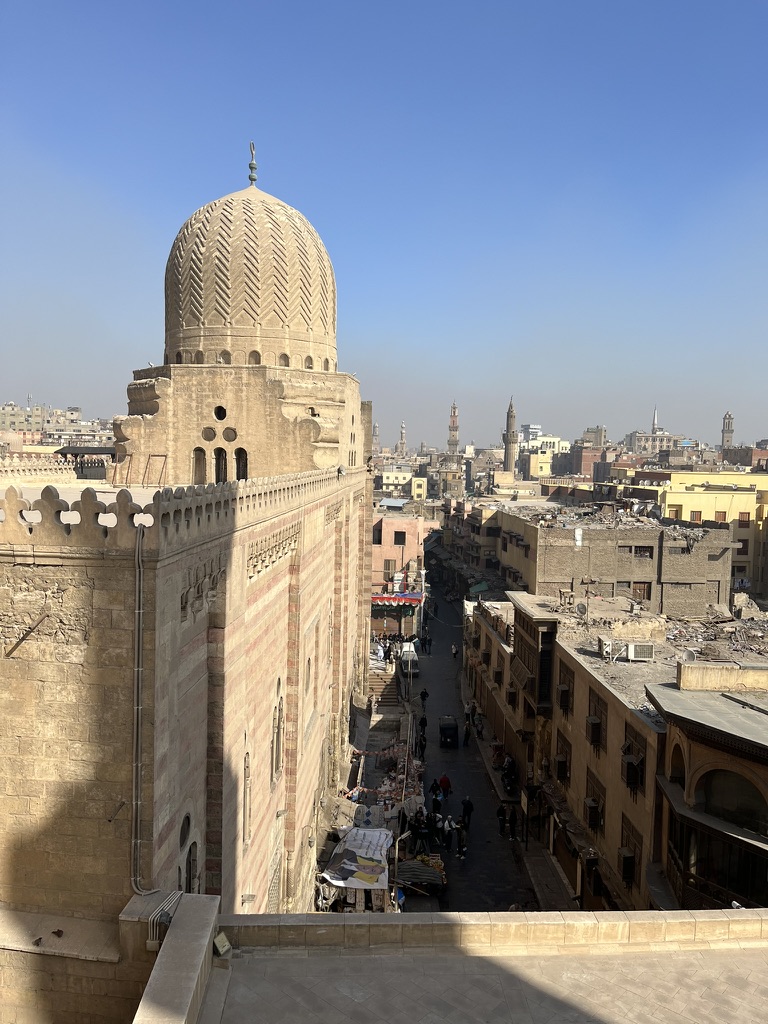
The mindset that works: curiosity over control. The wrong turn that leads somewhere unexpected is not a failure — it’s the trip. The horse cart bill that remained mysteriously unresolved at the end of the evening became one of the funniest stories from two weeks of travel. The mosque we wandered into by mistake, looking for Bab Zuweila, turned out to be more beautiful than our actual destination and gave us access to a private inner chamber that most visitors never see.
This is what self-guided travel in Egypt produces that tours cannot: the space for unscripted things to happen. You can only get there by releasing some of the schedule.
What Egypt Is Not
Egypt is not a relaxing holiday destination. It is an adventure with a high stimulation level. The vendor persistence is real. The traffic is genuinely chaotic. Being offered a camel ride, a perfume oil, a papyrus, and a “special local price” many times per day is simply part of the environment. If your baseline expectation is predictability and quiet, Egypt will frustrate you.
If your expectation is to be challenged, surprised, and to come home with stories you’ll tell for twenty years — Egypt is unparalleled.
III. Mosques, Prayer, and Respectful Visiting
Egypt’s mosques are among the most beautiful spaces in the country, and most are open to respectful non-Muslim visitors outside of prayer times. A few things worth knowing before you go:
Remove shoes before entering. There’s always a place to leave them near the entrance — usually a rack or a designated area. Don’t wait to be asked.
During prayer time, sit quietly to the side. If you’re inside when prayer begins, you won’t be asked to leave — but move away from the prayer area and sit unobtrusively. Watching from the side is acceptable and can be genuinely moving. At Al-Azhar Mosque, we watched worshippers kneel in unison from an open courtyard doorway — the rhythmic sound of prayer filling the space, completely unfamiliar, and yet calming in a way that was hard to explain.
Tips are customary in smaller mosques. In the Mosque of Sultan al-Mu’ayyad, an unofficial caretaker unlocked a private inner chamber and spent fifteen minutes explaining its history. The doorman mentioned quietly that a small tip was customary when we left. After being given access to something that extraordinary, this required no deliberation.
Dress modestly. Shoulders and knees should be covered when entering mosques and religious sites. Many mosques provide coverings at the entrance for visitors who need them, but bringing your own lightweight layer is simpler and more comfortable in the heat.
IV. Food and Drink: What to Eat and Where
The Dishes Worth Seeking Out
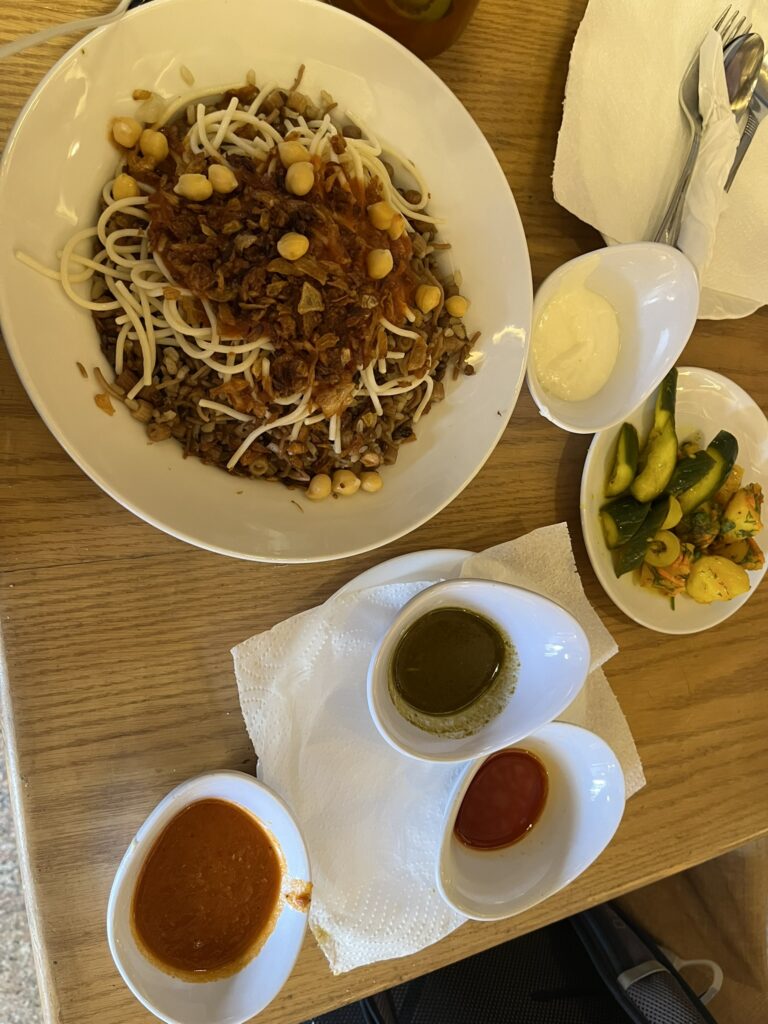
Koshari is Egypt’s national dish and the thing to try first. Rice, lentils, chickpeas, pasta, and a tangy tomato sauce with crispy fried onions on top — it sounds unlikely as a combination and tastes exactly right. It’s the default lunch at local restaurants throughout Cairo and Luxor, and there’s nothing like it elsewhere. Most good versions cost the equivalent of a dollar or two.
Shawarma in Egypt is excellent — the quality of the meat and the freshness of the bread are noticeably better than the versions exported to other countries. Every city has it at every price point.
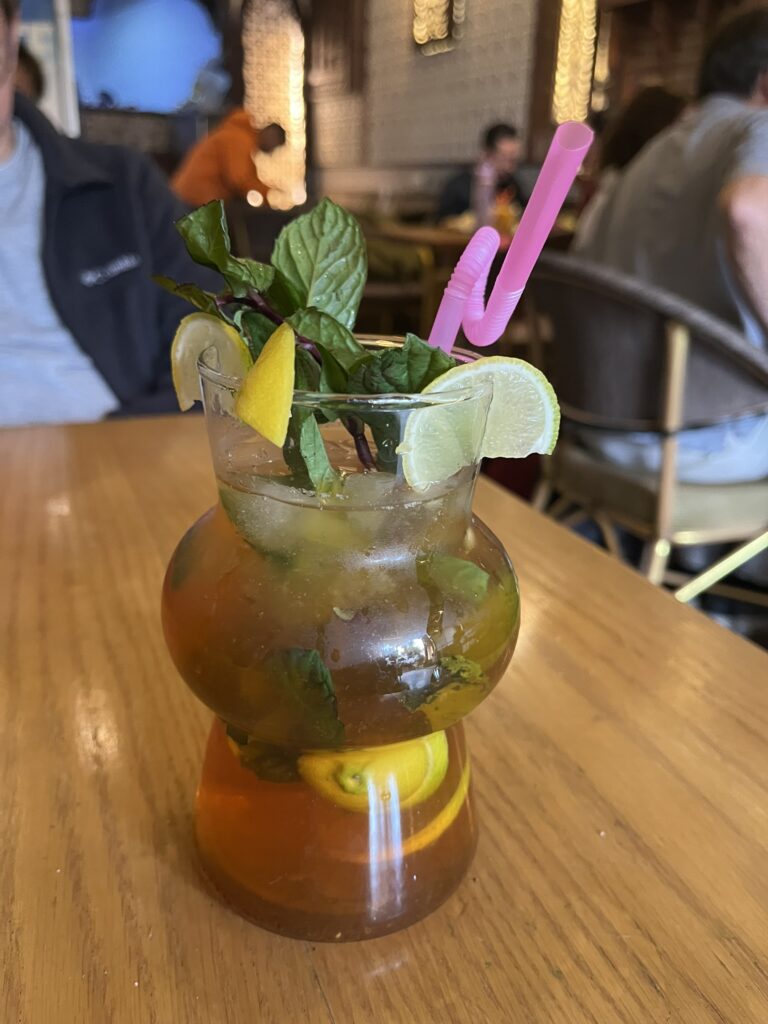
Fresh juice is the great underrated pleasure of an Egyptian trip. Mango juice in season, sugarcane juice pressed to order, guava juice, fresh-squeezed orange — the year-round sun does something to the fruit here that makes everything taste more intensely itself. Try every variant you encounter. The mango juice at the Kom Ombo temple cafeteria — ordered on our guide’s strong recommendation — was genuinely one of the best things we drank on the entire trip.
Where to Eat at Each Major Site
At Giza / GEM: Skip the tourist traps near the pyramid gates entirely. The Grand Egyptian Museum complex has two excellent options — Zooba (Egyptian street food refined for a museum context, excellent chicken and beef sandwiches) and Bittersweet (sit-down café, good pizza, strong coffee). Both have reasonable prices and a clean, air-conditioned environment. We had lunch at Zooba between the pyramid visit and the museum, and dinner at Bittersweet after — both were exactly right after a long day.
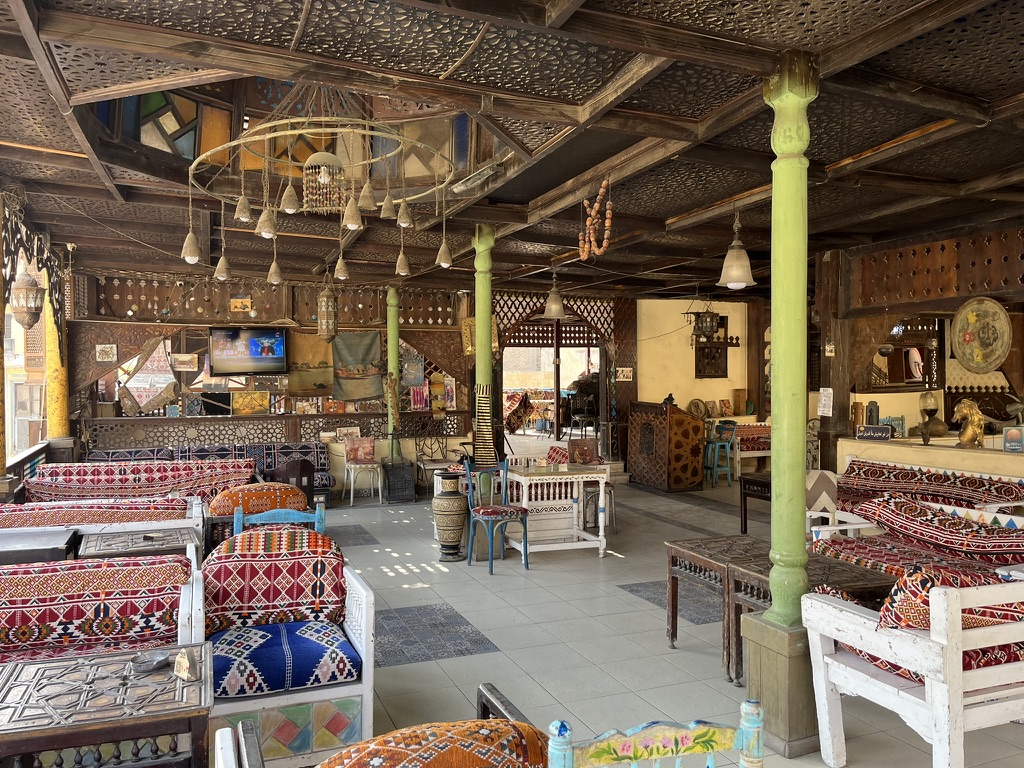
In Cairo neighbourhoods: The best meals we had in Cairo came from restaurants with no obvious tourist presence — found by following Google Maps into a narrow alley that appeared to lead nowhere, then stumbling into a large courtyard with a two-storey restaurant run by a single owner who cooked and then came upstairs to chat. The food took thirty minutes and wasn’t the most complex meal of the trip, but the setting and the warmth made it entirely memorable.
At Valley of the Kings: Bring a packed lunch and water. The on-site cafeteria is expensive and offers little beyond overpriced chips and biscuits. This is the one site in Egypt where advance food preparation genuinely matters.
At Kom Ombo: The temple cafeteria is actually good — specifically for the fresh mango juice, which our guide described as the best in the region. He was right. The shisha (fruit-based, not tobacco) offered there is also worth trying once for the cultural experience, even if it’s not something you’d usually seek out.
The Slow Kitchen
Egyptian restaurants take their time. Food arrives slowly — sometimes meditatively so. This is not poor service; it’s a different relationship with the meal. The quality almost always justifies the wait. Building this expectation in before you sit down converts potential frustration into an actual lunch rather than a logistical problem.
V. Hidden Cairo: Beyond the Obvious
Bab Zuweila over Cairo Tower
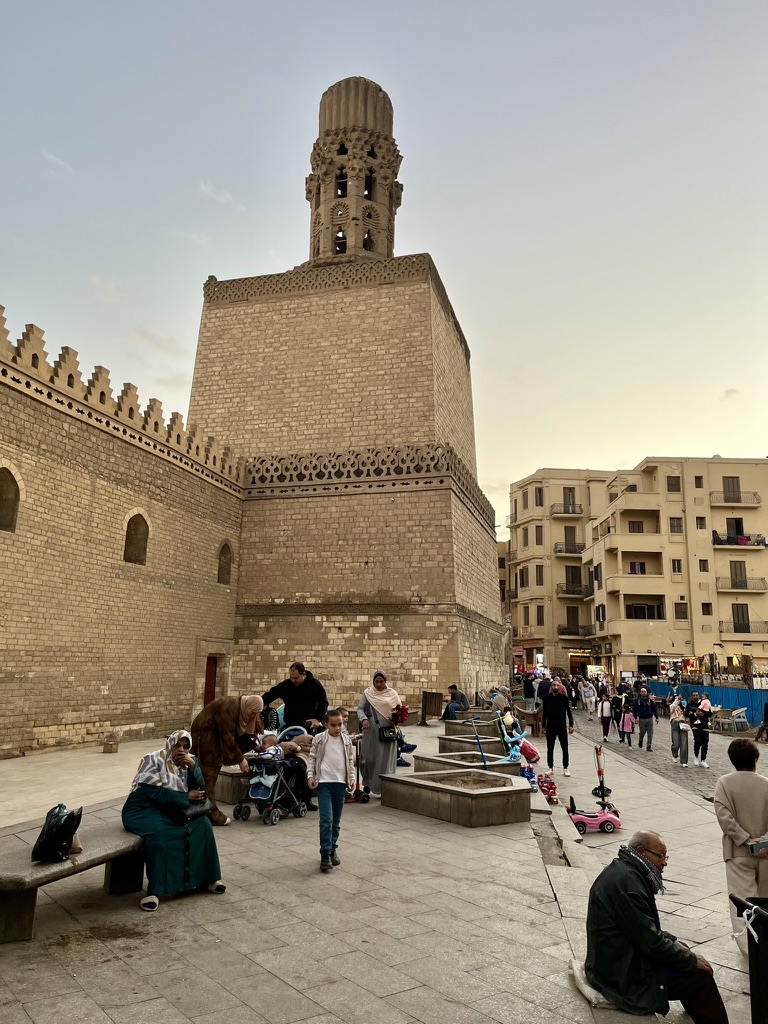
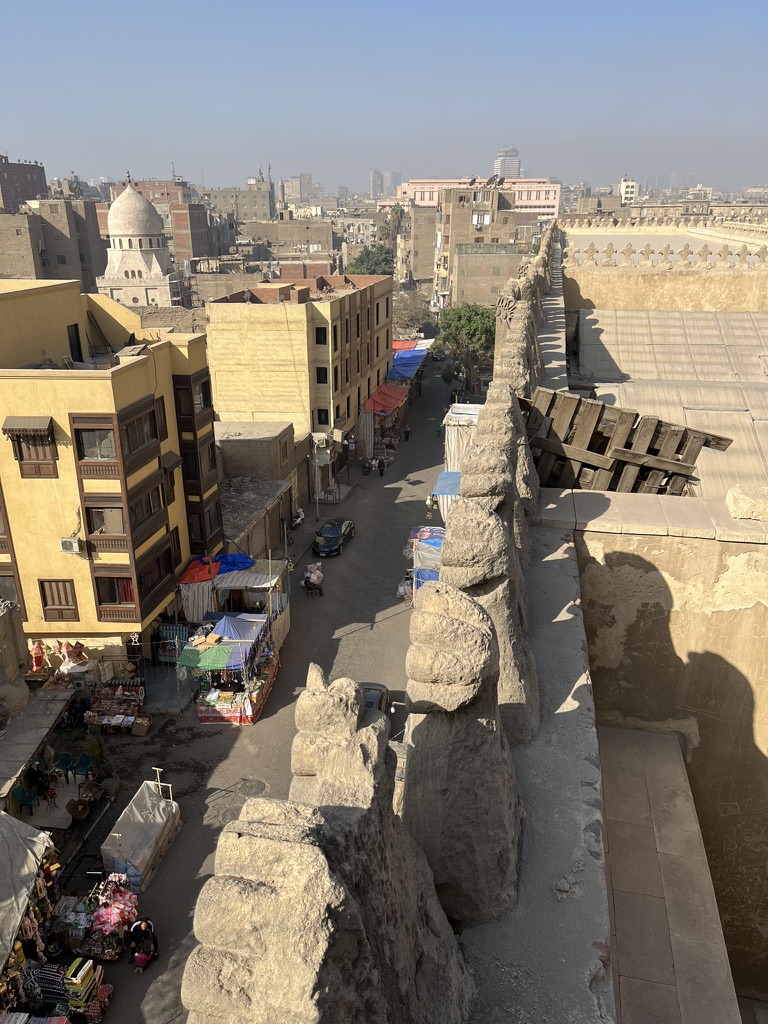
For the best view of Islamic Cairo, climb the minaret at Bab Zuweila — one of only three remaining gates from Cairo’s original medieval city walls, built in 1092 AD. The ticket counter is small and easy to miss (we walked past it twice before finding it, having accidentally spent twenty minutes in the mosque next door instead). The staircase inside the minaret is narrow and gets dark before a small opening lets light back in. From the balcony, Islamic Cairo spreads out in every direction — minarets, unfinished rooftops, narrow lanes, and the mosque courtyard directly below. From the very top platform, the view extends further, with vertiginous exposure that made me descend faster than I climbed.
The Cairo Tower, by comparison, is an elevator ride to an observation deck. Bab Zuweila puts you in the middle of the city’s history, not above it.
Al-Azhar Park
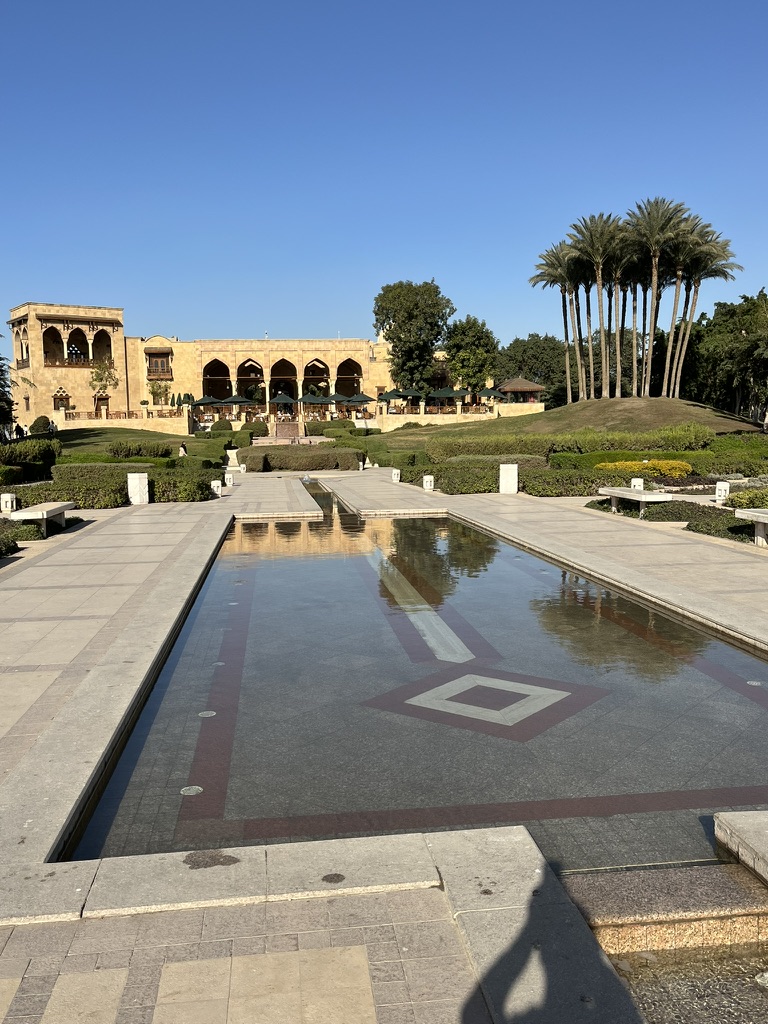
Almost no one mentions Al-Azhar Park in Cairo itineraries, and almost everyone who visits it remembers it. A green oasis on a hill above the city, with palm trees lining the paths and a restaurant at the highest point overlooking everything. On a weekday afternoon, it was nearly empty. We could see the Muhammad Ali Mosque from two days earlier on the horizon. Fountains trickled softly. A few couples were taking wedding photos. It was the most unexpected quiet we found in Cairo.
The Avenue of Sphinxes
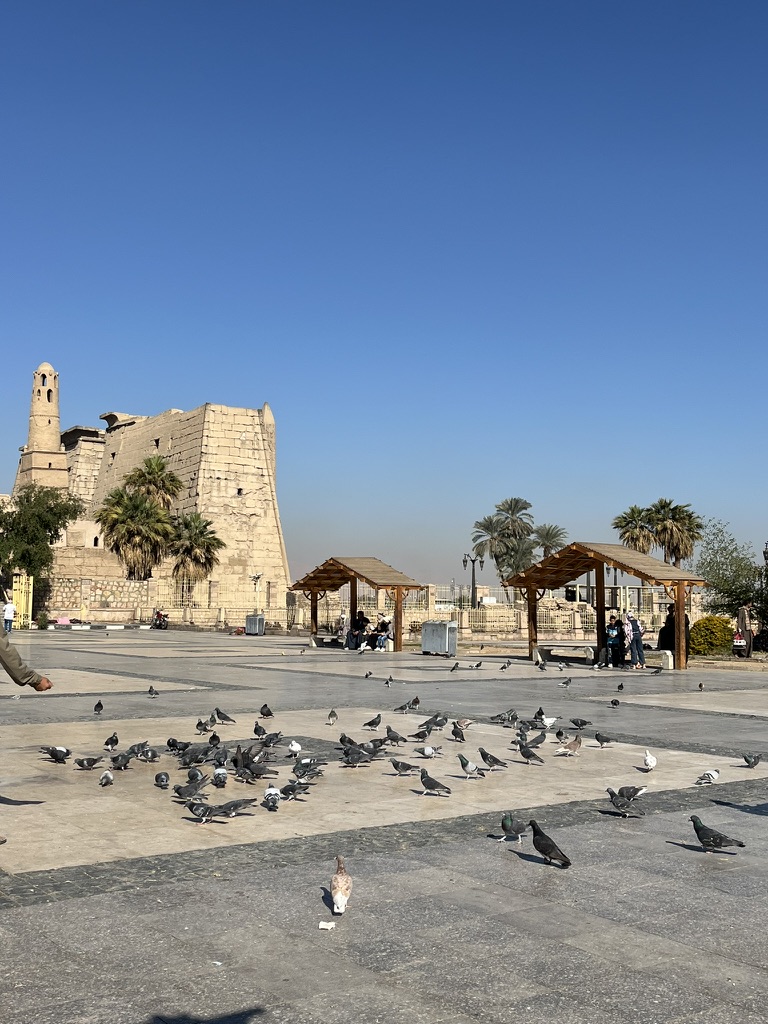
The 2.7km avenue connecting Karnak Temple to Luxor Temple — lined with hundreds of sphinx statues — was recently reopened after decades of archaeological excavation. If your timing and energy allow, walking it rather than driving is an experience the tour groups don’t typically offer. Check current access conditions locally, as sections open in phases.
Wandering Al-Muizz Street Without a Plan
Al-Muizz Street in Islamic Cairo is one of the most historically dense streets in the world — lined with medieval mosques, mausoleums, and merchant buildings spanning a thousand years of architectural history. The best way to experience it is not with a guide and a checklist but on foot without a destination, turning into alleyways that look interesting, letting the city reveal itself. Give yourself at least two hours and no agenda. The things you find by mistake here are consistently better than the things you set out to find.
VI. Hidden Aswan: Skip the Dam, Find the River
The Nubian Village
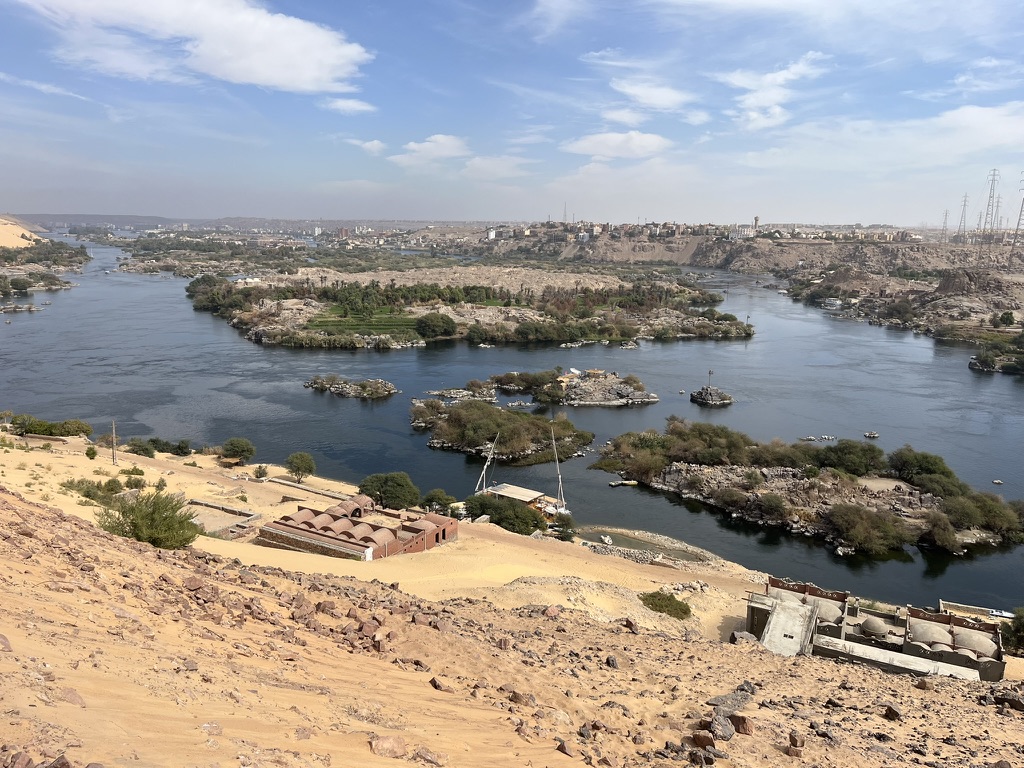
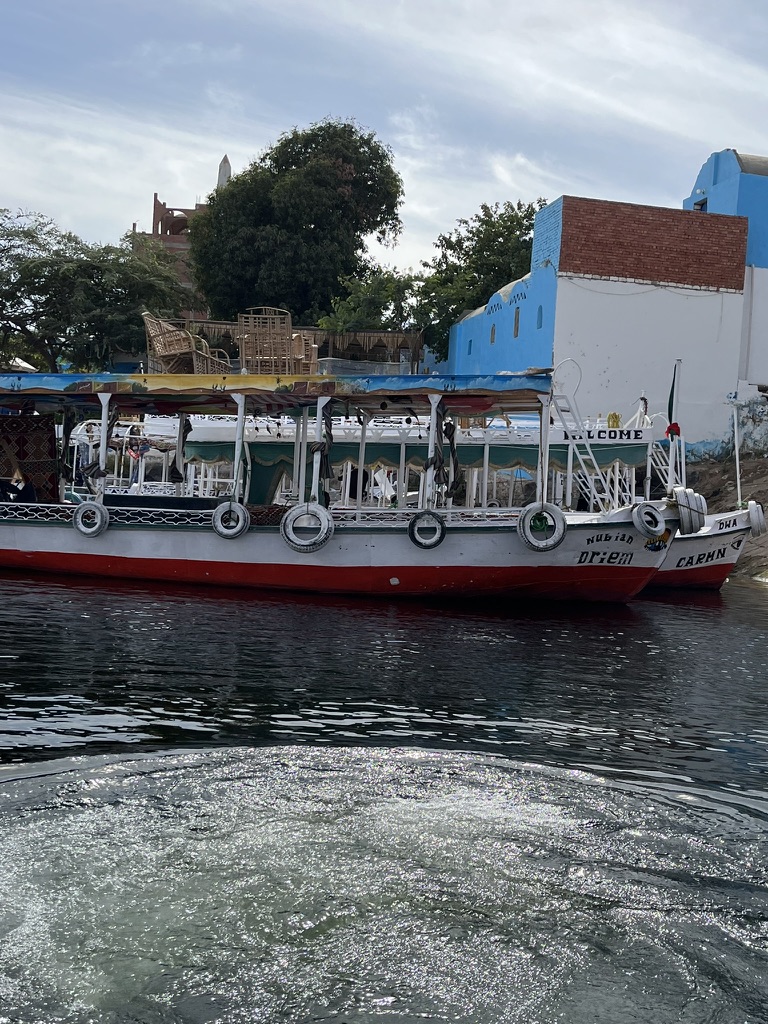
The Nubian village visit available as an optional cruise excursion is, yes, somewhat touristy — but genuinely worth doing. The boat ride out passes some of the most beautiful stretches of Nile you’ll see on the whole trip, with desert tombs carved into cliffs on one side and green banks on the other. The village itself offers colour, warmth, and the particular energy of a community that takes real pride in its culture and history.
Two details from our visit that no promotional material mentions: our guide announced that the Nile was safe to swim in at a beach stop along the way — cold, thrilling, and something to say you’ve done forever after. And the family we visited kept a crocodile. A real one. We held the baby, which was roughly equal parts cute and alarming, and the experience ended with the baby leaving a mark on my shirt that our guide, with years of experience, said he’d never seen before.
Elephantine Island
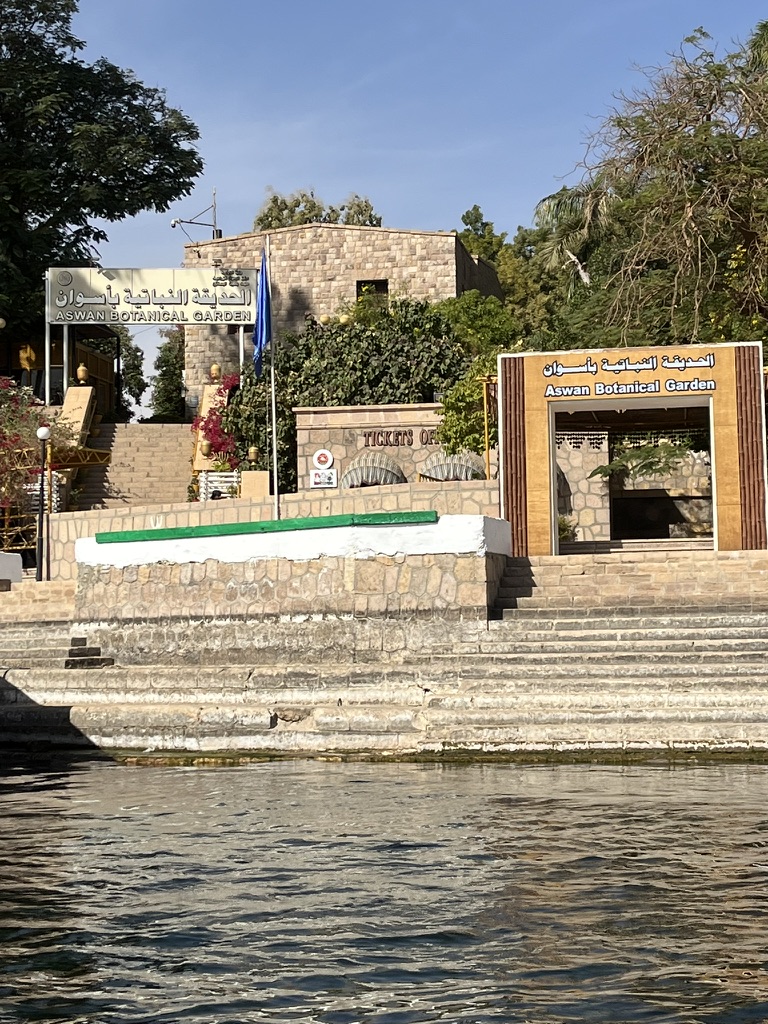
The island in the middle of the Nile at Aswan — reached by a short ferry — contains the ruins of one of ancient Egypt’s earliest settlements, a Nubian museum, and a village that feels genuinely removed from the tourist Aswan on the East Bank. It’s an afternoon rather than a full day, but the perspective of Aswan from the water, the quiet of the island paths, and the contrast with the main city are worth the short crossing.
Skip the High Dam
The Aswan High Dam is an impressive engineering achievement and an almost entirely uninteresting tourist destination. It is a large concrete structure. Our guide shrugged when asked about it: there was nothing to see. A quick look at photos confirmed it. We spent the time at Philae Temple instead. If you have a guide or tour who is pushing the High Dam on the itinerary, politely push back — the time is almost always better spent on the islands and the temples.
VII. Hidden Luxor: The West Bank Beyond the Valley
Everyone goes to the Valley of the Kings. It deserves the reputation. But the West Bank of Luxor contains three other sites that are, in some ways, even more rewarding — and almost always uncrowded.
Deir el-Medina: The Village of the Tomb Builders
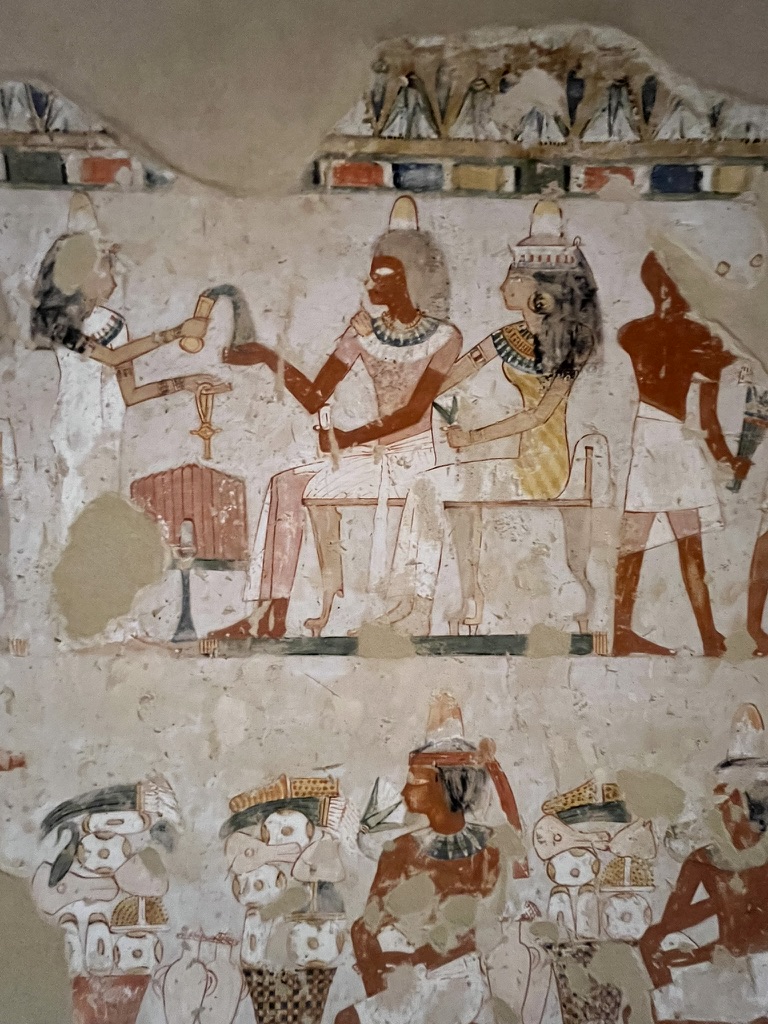
The workers who built the royal tombs in the Valley of the Kings lived here in Deir el-Medina — sealed off from the rest of Luxor to keep the burial site locations secret, spending their lives in a walled settlement between desert cliffs. Their own tombs are inside this village, and they are covered in some of the most vivid paintings in all of Egypt.
Unlike the carved stone reliefs of the royal tombs, these are true paintings — harvest scenes, musicians playing, family meals, vineyards, everyday life rendered with a warmth and humanity that the grand monuments rarely match. The artisans who spent their working lives making other people’s tombs magnificent turned their own final resting places into something deeply personal. Seeing that — the beauty they reserved for themselves — is quietly affecting in a way that Karnak, for all its scale, isn’t.
Tombs of the Nobles
The nobles’ tombs on the hillside above the valley offer a similar perspective — life as it was actually lived, rendered in colour and detail for people who weren’t pharaohs. The Tomb of Nakht holds musicians playing lute, harp, and flute; farming scenes; grapes heavy on the vine. The Tomb of Menna has a scene of its owner drifting peacefully through a marsh on a papyrus skiff — the image of an ideal life pressed into stone 3,000 years ago.
We found both tombs by wandering the hillside ourselves, declining the guide who warned us we’d get lost. We didn’t get lost. We found the tombs with almost no one else around, which made the paintings feel like a discovery rather than a scheduled stop.
Medinet Habu
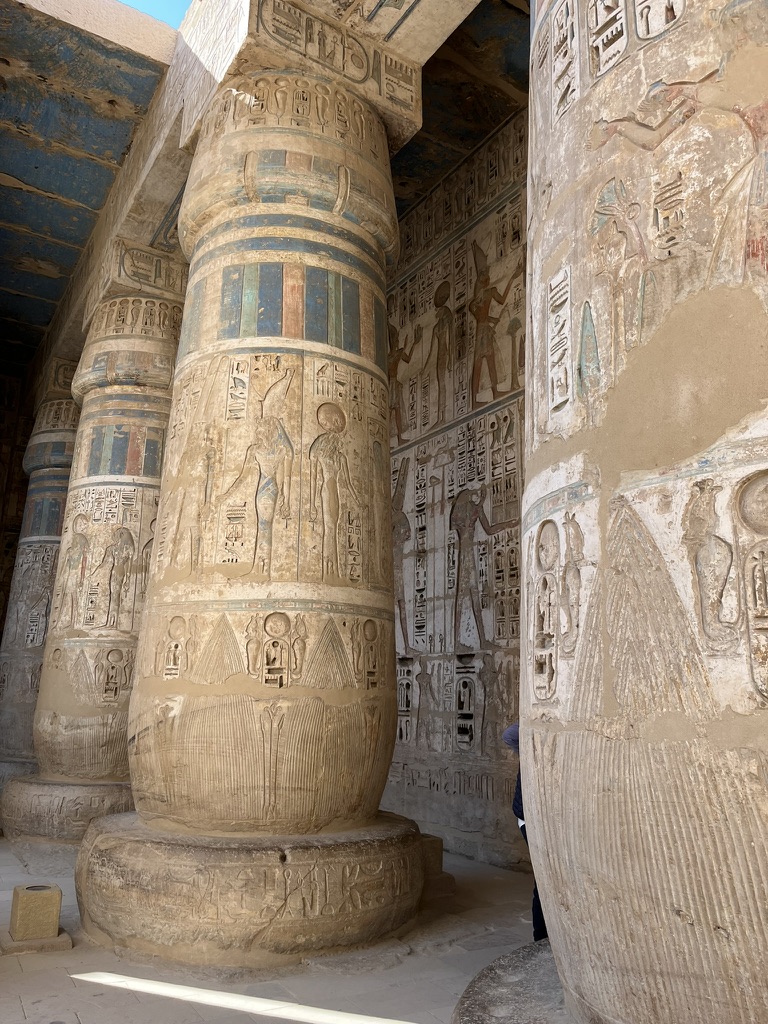
Medinet Habu, The mortuary temple of Ramesses III sees a fraction of the visitors that Karnak does, despite being comparable in scale and significantly better in one specific respect: the interior colours. Some of the best-preserved original pigment anywhere in Egypt is here — blues, reds, and ochres as vivid as if the paint were still drying, in open-air courtyards that have no right to look this good after 3,000 years.
💡 Buying Tickets for the West Bank Hidden Gems
Deir el-Medina, the Tombs of the Nobles, and Medinet Habu do not sell tickets at their own entrances. Buy all three at the Antiquities Inspectorate Ticket Office near the Colossi of Memnon before visiting any of them. The Colossi of Memnon — two enormous seated statues rising from a flat plain — are a five-minute stop in themselves and worth the detour. They’re the only surviving remnants of what was once the largest mortuary temple in Egypt.
Banana Island at Sunset
The name suggests a tourist attraction; the reality is something simpler. Banana Island is less an island and more a stretch of the West Bank covered in banana plantation. It is not much an attraction by itself, but the boat ride getting there made up for it. Inji (our hotel hostess) plucked bananas straight from the trees to hand to them, and the whole thing is pleasantly unserious. What makes it worth the trip is the boat ride there and back: the Nile at dusk, golden light spreading across slow water, the city of Luxor visible on the opposite bank. That hour on the river, going nowhere in particular, was one of the most peaceful moments of the entire trip.
VIII. Sightseeing Smarter: What the Tour Groups Miss
The Grand Egyptian Museum vs. the Old Egyptian Museum
The Grand Egyptian Museum in Giza is the right call for Tutankhamun’s treasures — the golden mask, the sarcophagus, the Golden Throne. The space, the light, the curation: it was built to present these objects at their best, and it does. The old Egyptian Museum on Tahrir Square is a different experience entirely — not worse, just different. Its galleries feel less like a curated exhibition and more like a private archive overflowing with things of incalculable importance. Some rooms have priceless artifacts lined up like an inventory. The building has stood since 1901 and it shows, in the most fascinating way.
Go to GEM for the famous objects. Go to the Tahrir museum for the feeling of what museum-keeping looked like before modern curation — and for the sections that haven’t moved to Giza yet, which are still extraordinary. Arrive after 10 a.m. to let the morning tour groups clear. You don’t need a guide; the English labelling throughout is clear and comprehensive.
KV9 at the Valley of the Kings
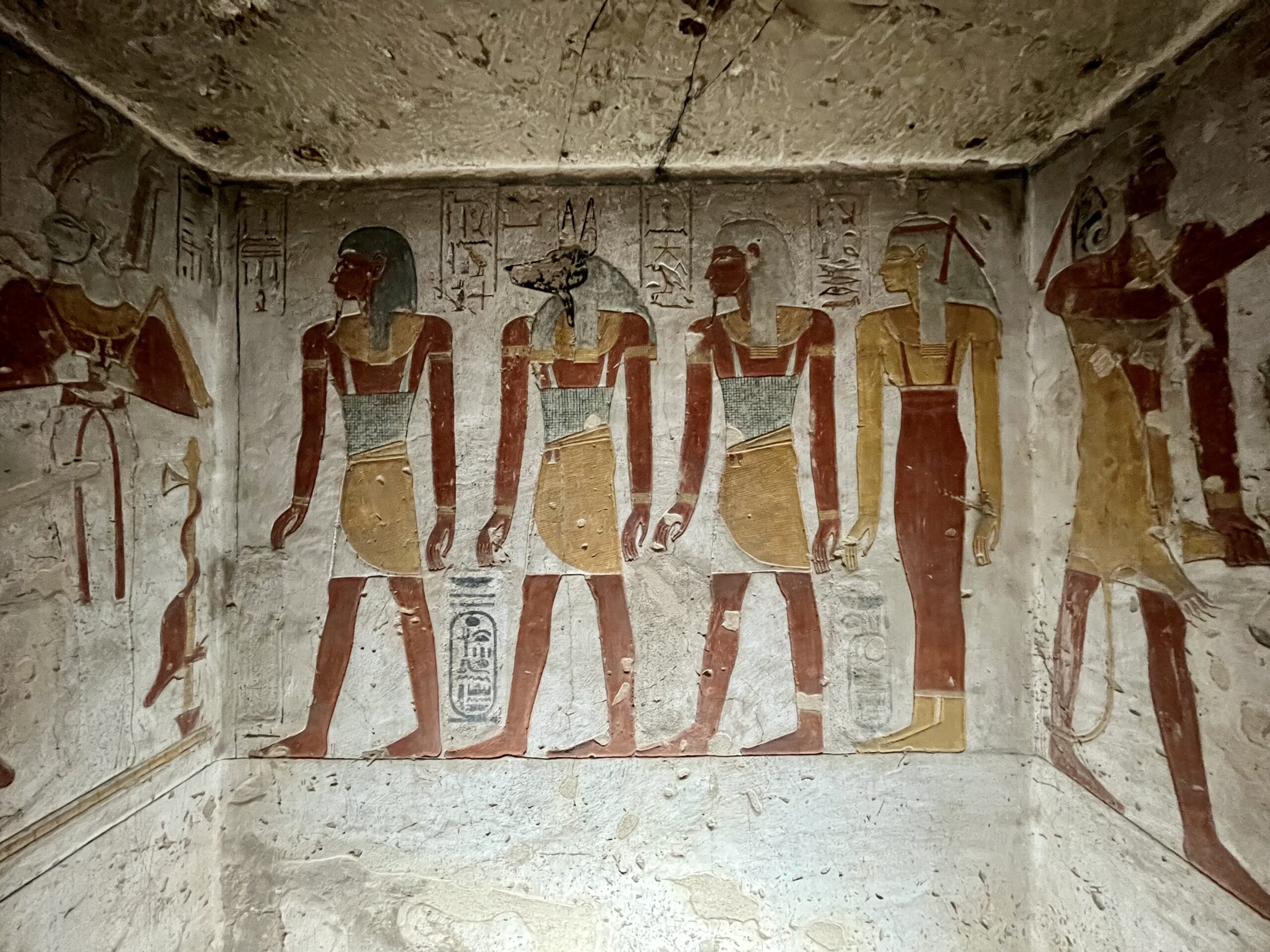
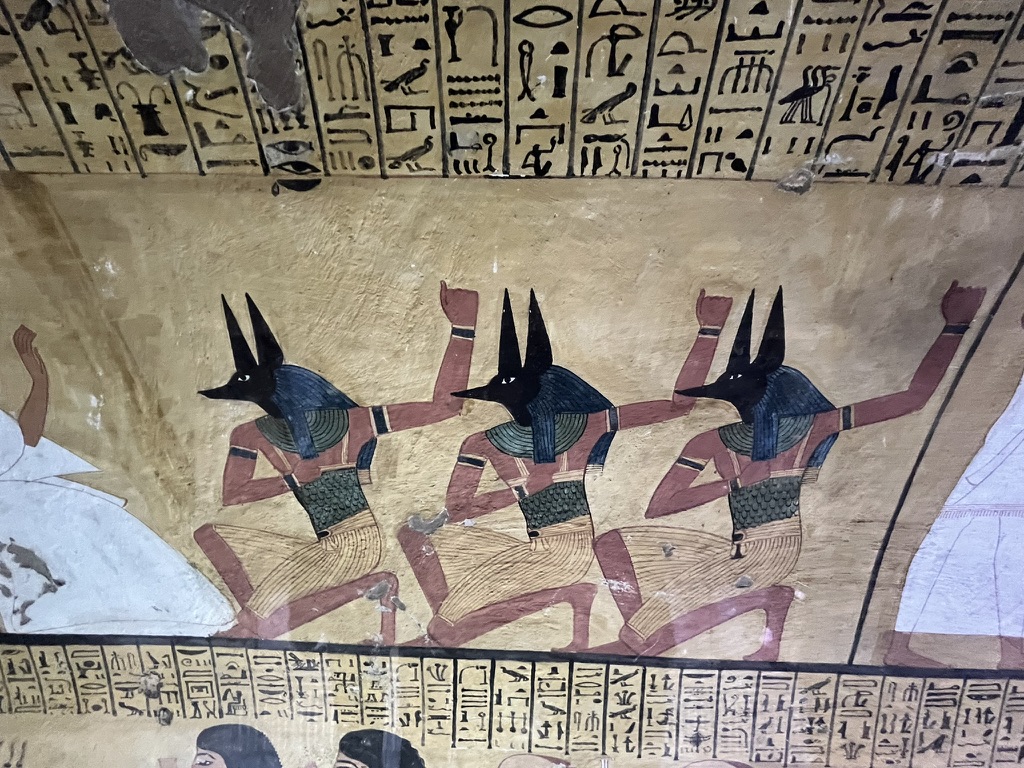
The standard Valley of the Kings ticket covers any three tombs. Most visitors choose from the commonly recommended list and move on. KV9 — the tomb of Ramesses V and VI — requires a separate add-on ticket, which is precisely why it’s almost always uncrowded. Long corridors, multiple chambers, and some of the most elaborate ceiling decoration in the valley — the Book of Gates imagery rendered across an entire ceiling in a space you can often have entirely to yourself. Buy the add-on. It’s the best-value extra ticket in Luxor.
The Giza Plateau Shuttle System
Before our trip, I read many accounts of chaos, aggressive vendors, and overwhelming crowds at Giza. The reality in 2026 is considerably more organised. The free internal shuttle buses run frequently across the plateau, connecting each pyramid and viewpoint. Most visitors are funnelled along the same routes, which means that wandering even slightly off the main path — a few steps to the side, a slightly different angle — produces photographs with almost no one in them. The shuttle system has changed the experience significantly for the better.
The Sphinx Entrance at Giza
The Sphinx entrance is quieter than the main Pyramids Visitor Centre gate, particularly in the early morning when fewer tour buses use it. It also provides a different route through the site — starting near the Sphinx and walking toward the pyramids rather than the reverse. The views are different, the crowds are thinner, and the approach to the Sphinx itself from this direction produces the most iconic photograph of the plateau: the Sphinx in the foreground, Khafre’s pyramid rising behind it.
IX. When to Hire a Guide — and When Not To
The right answer here is more specific than most guides suggest. You don’t need a guide for logistics — Egypt’s infrastructure for independent travelers is genuinely good, signs are in English throughout, and Google Maps is accurate. Hiring a guide out of fear of getting lost is unnecessary and expensive.
Where a guide adds real value is historical depth at temples. The difference between standing in front of a carved wall at Kom Ombo and understanding what you’re looking at — the myth of Horus and Sobek, the engineering of the dual-god temple structure, the meaning of specific symbols — is the difference between impressive stone and a story that actually lands. Our cruise guide’s PhD in Egyptology changed every temple visit. His commentary on the Sobek-Horus myth at Kom Ombo, his running joke about Ramesses II’s apparent narcissism across every site we visited, his explanation of the solar alignment at Abu Simbel — these things made the stone come alive.
The practical recommendation: use a guide for the Nile cruise temple stops (Philae, Kom Ombo, Edfu, Abu Simbel) where a knowledgeable guide changes the experience significantly. Navigate Cairo, Giza, and the GEM independently — these are well-signed and straightforward. For the Valley of the Kings, a guide specifically for that half-day adds context to the tomb paintings that significantly deepens the visit. For the West Bank hidden gems (Deir el-Medina, Tombs of the Nobles, Medinet Habu), the intimacy of finding them yourself, without a group or a script, is part of what makes them special.
💡 The “Middle Path” Approach
You don’t have to choose between a fully guided trip and doing everything alone. The approach that worked best: Uber and self-navigation for Cairo and Luxor city logistics; a group cruise with an Egyptologist guide for the river temples; independent exploration for the Giza Plateau, GEM, and West Bank hidden gems. Each setting got the mode that suited it best.
X. Final Thought: Experience Egypt, Don’t Just Visit It
There’s a version of Egypt that most tour groups get: the pyramids from a bus, the temples on a schedule, the Valley of the Kings in a convoy. It’s a good version. The monuments are extraordinary regardless of how you see them.
But there’s another version available to travelers who slow down, take the wrong turn occasionally, eat in restaurants with no English menu, negotiate a felucca price for thirty seconds, climb a minaret staircase that gets dark in the middle, and sit in a mosque courtyard during prayer because someone asked them to wait quietly and they did.
That version is richer, stranger, and considerably more difficult to plan. It happens in the gaps between the scheduled stops — in the horse cart bill that never quite got resolved, in the baby crocodile incident on the Nile, in the breakfast packed at 3 a.m. by a hotel clerk who did it without being asked.
Bring patience. Bring curiosity. Bring a working Uber app and a pocket full of 10 EGP notes. The rest takes care of itself.
📍 Related Guides
- [12-Day Egypt Master Guide] — the complete self-guided blueprint with day-by-day logistics and the full Luxor ticket strategy.
- [3-7-9 Day Itinerary Library] — compressed routes for travelers working with less time.
- [Transport & Safety Survival Guide] — Uber logistics, the Giza scam breakdown, ATMs, flights, and the full cheat sheet.

Hi, I’m Frank J – Egypt Self-Guided Travel. I explore Egypt solo and share tips, stories, and practical advice to help you plan your own adventures safely and enjoyably.