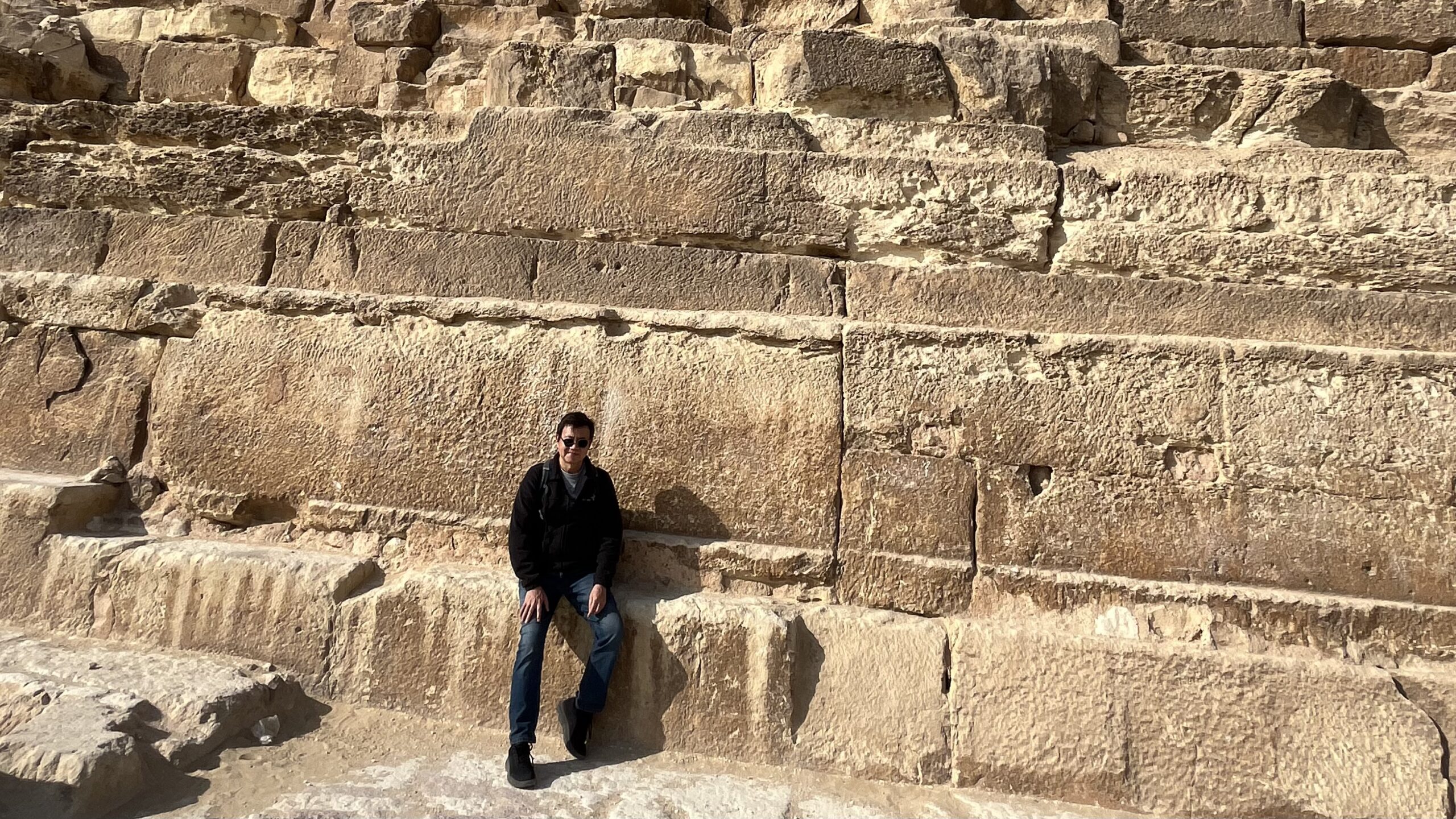
Planning a trip to the land of the Pharaohs can feel overwhelming — every tour brochure either offers a breathless 7-day sprint or a 21-day expedition that most people can’t afford. After doing it self-guided in 2026, I can tell you that 12 days is the real sweet spot. This is the guide I wish I’d had before I landed.
I’ve distilled my personal journey — from the Great Pyramids of Giza to the hidden artisan tombs of the West Bank — into
this 12-day Egypt itinerary covering everything from e-visa logistics and Uber safety to the exact ticket strategy you need for the Valley of the Kings.
✍️ A Note on This Guide
This guide is built from my personal 2026 trip. The advice here comes from what actually happened — what worked, what didn’t, and what I’d do differently. For the raw daily journal and photos of each day on the ground, see my 12-Day Egypt Personal Diary (Parts 1, Part 2 and Part 3).
If you do not have 12 days, check out the itinerary ideas detailed in the Egypt Itinerary Options
📋 Table of Contents
I. Why 12 Days Is the “Magic Number”
Most Egypt itineraries fall into one of two traps: too short to absorb anything, or too long for most people’s budgets and annual leave. After 12 days on the ground, I found this length hits a different gear entirely — enough time to go deep without burning out.
Three things make 12 days work specifically:
The 3-Day Cairo Rule. Cairo rewards patience more than almost any city I’ve visited. The Giza Plateau, the new Grand Egyptian Museum, Islamic Cairo, and Coptic Cairo each deserve a half-day or more. Trying to compress this into two days means rushing past things you’ll wish you’d lingered over. Three days lets the city breathe.
The Luxor Surplus. A standard Nile cruise drops you in Luxor with one group day included. That’s not nearly enough. Two extra days after the cruise — on your own schedule, with your own driver — is what separates a good trip from a great one. The Valley of the Kings at 11 a.m. when the tour buses have cleared, or a quiet morning at Deir el-Medina with almost no one else around: these only happen if you have time left over.
The Egypt Buffer. Flights get delayed. Queues are unpredictable. Temples close unexpectedly for ceremonies. A 10-day itinerary in Egypt is a 10-day itinerary with no margin. Two extra days absorb the beautiful chaos without derailing the whole plan.
II. Pre-Trip Essentials: Know Before You Go
Visas and Entry
For most travelers (USA, UK, EU, Australia), getting into Egypt is significantly easier than the internet makes it sound. The visa on arrival is available at bank kiosks in the arrivals hall, before you reach passport control — $25 USD, single entry. The process takes about 20 seconds at the counter and another minute at immigration. It was one of the fastest entry experiences I’ve ever had.
One important detail: bring new, crisp $20 and $5 bills. Tellers regularly reject notes with small tears or ink marks. The e-visa option exists, but the on-arrival stamp is often faster and saves you from dealing with potential portal issues before the trip.
Once through immigration, the Vodafone and Orange SIM card desks are in the arrivals hall. A physical SIM with 30GB of data costs around $10. Skip the eSIM — inside the thick stone walls of Luxor’s temples, physical SIM cards maintain signal significantly better.
Best Time to Visit
I traveled in February and the conditions were close to perfect — warm enough for long days of walking, cool enough in the evenings to sit outside. The general rule is straightforward: October through April offers the best weather and the highest crowds; May through September brings 40°C+ heat but genuinely empty temples and lower hotel prices. If heat doesn’t bother you and solitude at historic sites does, shoulder season is worth considering seriously.
Budgeting and Cash
Egypt can be as cheap or as expensive as you choose to make it. For a mid-range self-guided trip, $100–$180 per day per person covers comfortable hotels, museum entry, Uber rides, and decent restaurants without stress. Traveling as a couple effectively halves the accommodation cost, which typically runs $50–$100 per night including breakfast.
💡 The Small Note Rule
ATMs in Egypt almost always dispense 200 EGP notes, which are nearly impossible to break at small shops, street stalls, or public toilets. Before you leave each ATM, ask yourself: do I have enough 10 and 20 EGP notes for tips, snacks, and bathroom fees today? Stock up whenever you can. A Charles Schwab debit card is worth having if you can — they refund all international ATM fees, which adds up meaningfully over 12 days.
The EgyptAir Currency Hack
When booking domestic flights on the EgyptAir website — Cairo to Aswan, for instance — change the booking currency to EGP (Egyptian Pounds) before searching. The site often defaults to a higher “international” rate in USD or EUR. Switching to EGP before selecting your flight can save a meaningful amount on every ticket, sometimes the equivalent of a full night’s hotel.
III. The 12-Day Egypt Itinerary Route Overview
Egypt Routes at a Glance
Before the day-by-day breakdown, it helps to see where 12 days sits relative to the alternatives. The key difference isn’t just the extra days — it’s what those days allow you to do that shorter trips simply can’t.
| Days | Itinerary Type | Pace | Cities | Best For |
|---|---|---|---|---|
| 3 Days | Cairo Highlights | Relaxed | Cairo, Giza | Stopovers / city breaks |
| 7 Days | Essential Egypt | Fast | Cairo, Giza, Luxor, Aswan | First-timers on limited time |
| 9 Days | The Balanced Trip | Moderate | + Abu Simbel, Nile Cruise | History + some breathing room |
| 12 Days | Self-Guided Epic | Immersive | Full country loop | Slow, deep-dive travelers |
The Day-by-Day Flow
This is the exact route I followed. It’s structured to minimize backtracking, alternate heavy temple days with slower Nile afternoons, and preserve enough energy for the West Bank sites in Luxor that most itineraries cut.
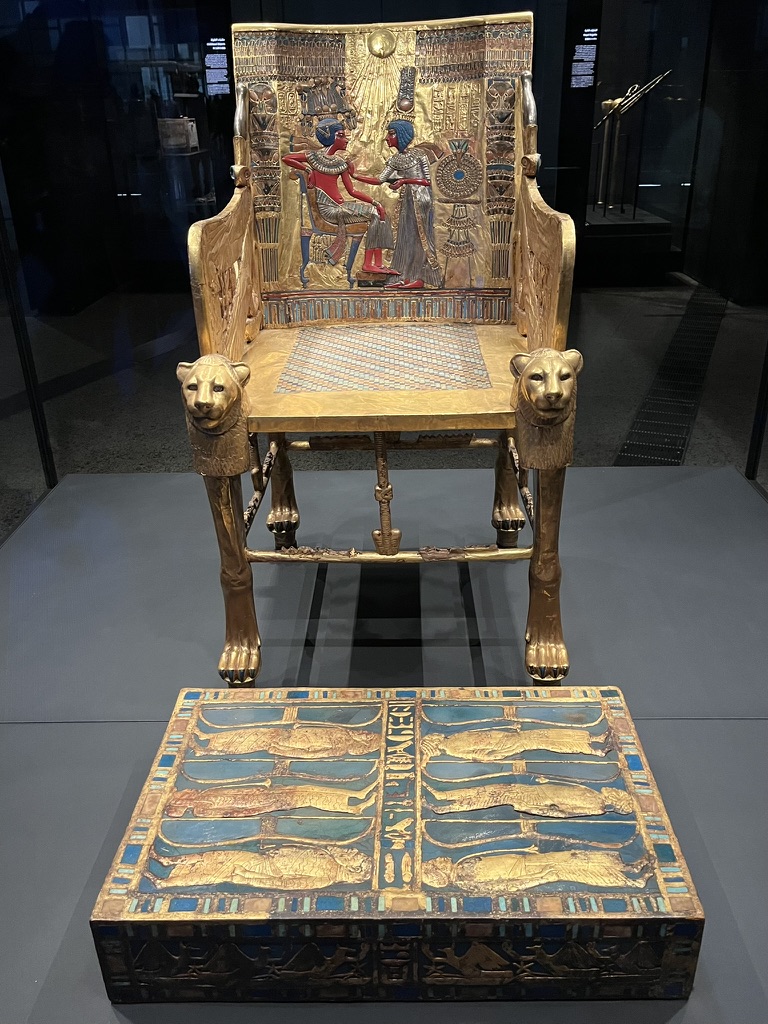
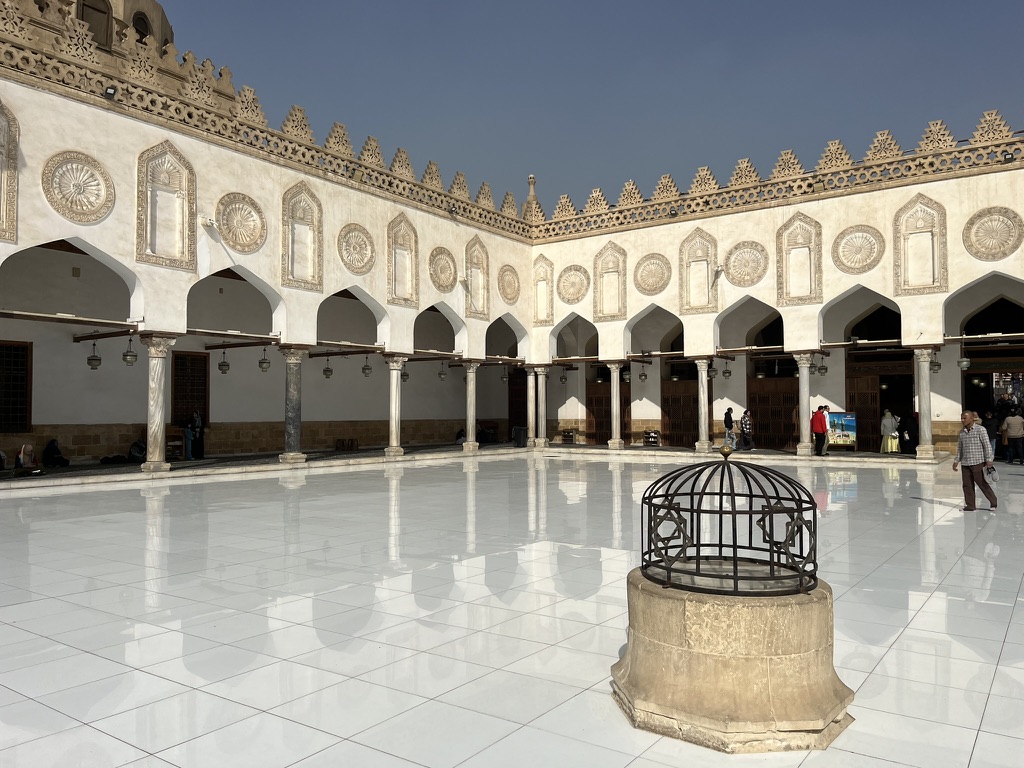
Arrival and immersion. The Giza Plateau and Pyramids, the Grand Egyptian Museum, Coptic Cairo, Islamic Cairo, and Khan el-Khalili. Three days lets you explore each without the stress of a ticking clock.
Evening flight to Aswan. Domestic flights are short and affordable — this is almost always preferable to the overnight sleeper train, which costs similar and is far less comfortable for most foreign travelers.
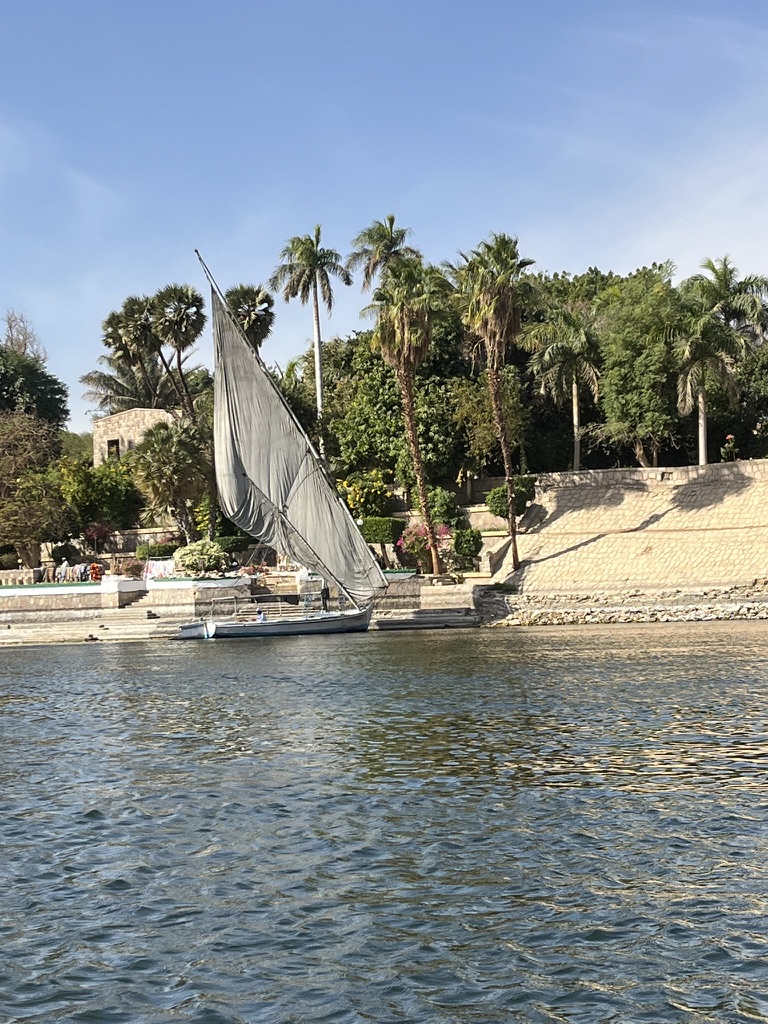
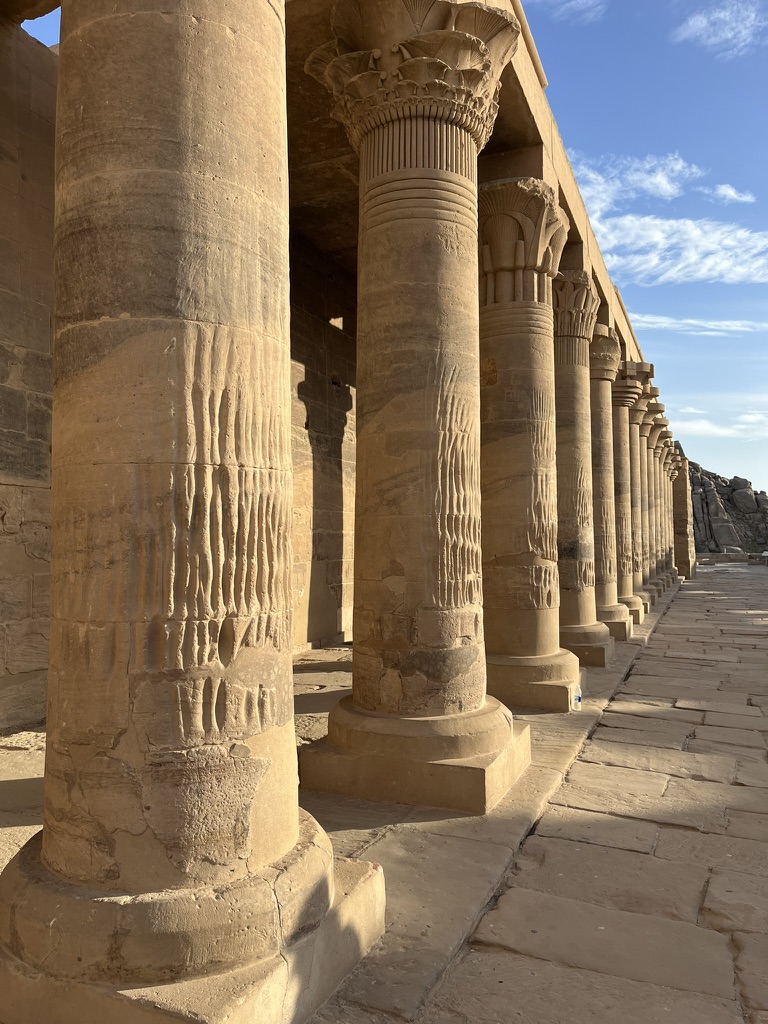
Philae Temple, a Nubian village visit, and — if the cruise timing allows — a felucca on the Nile. Board the cruise ship in the afternoon.
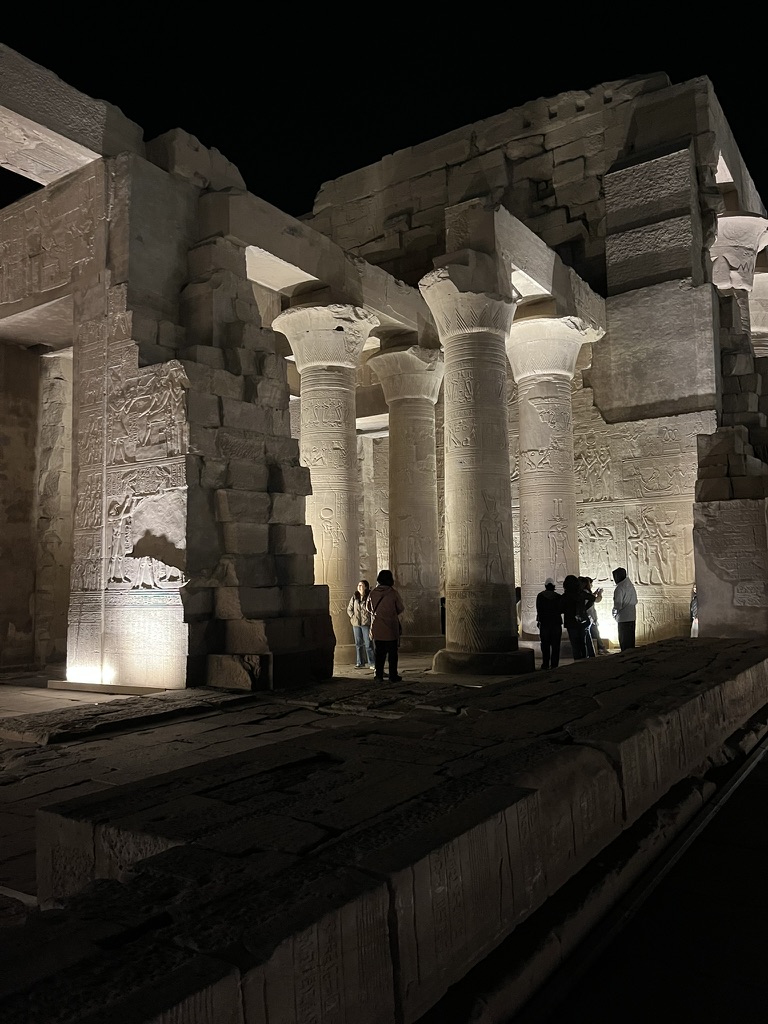
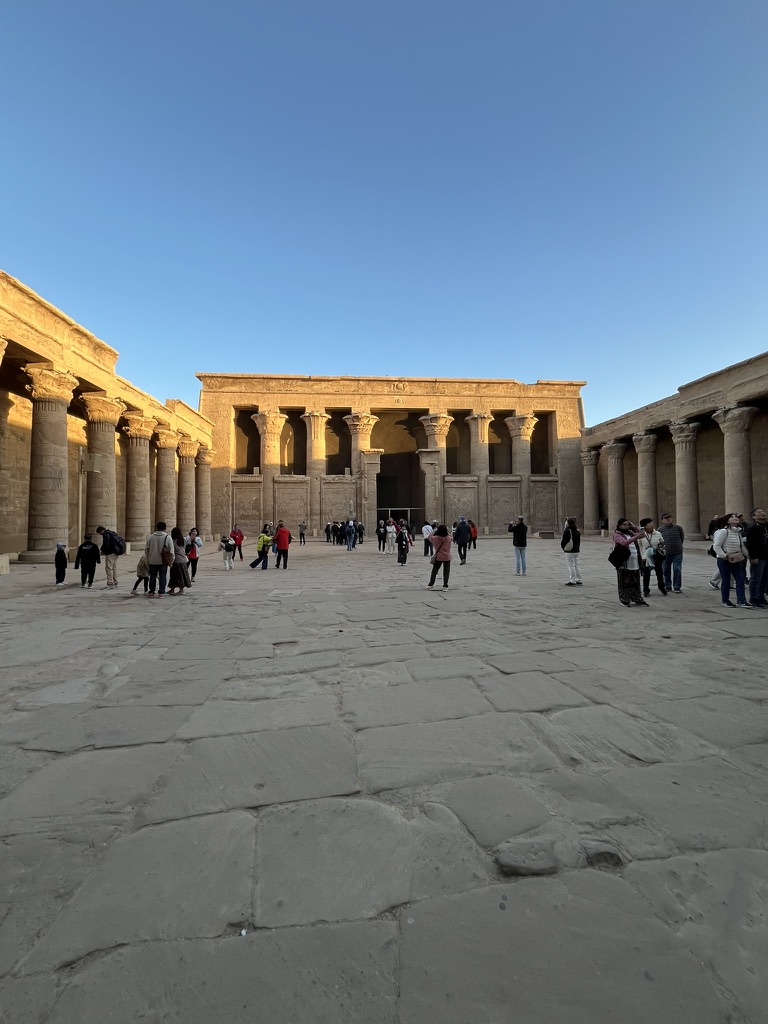
Pre-dawn convoy to Abu Simbel, then downstream from Aswan to Luxor. Cruise stops at Kom Ombo and Edfu. Three nights on the river, unpacking once.
Karnak Temple, Luxor Temple, Valley of the Kings, Hatshepsut’s mortuary temple, and — because you have the time — Medinet Habu, the Tombs of the Nobles, and Deir el-Medina on the West Bank.
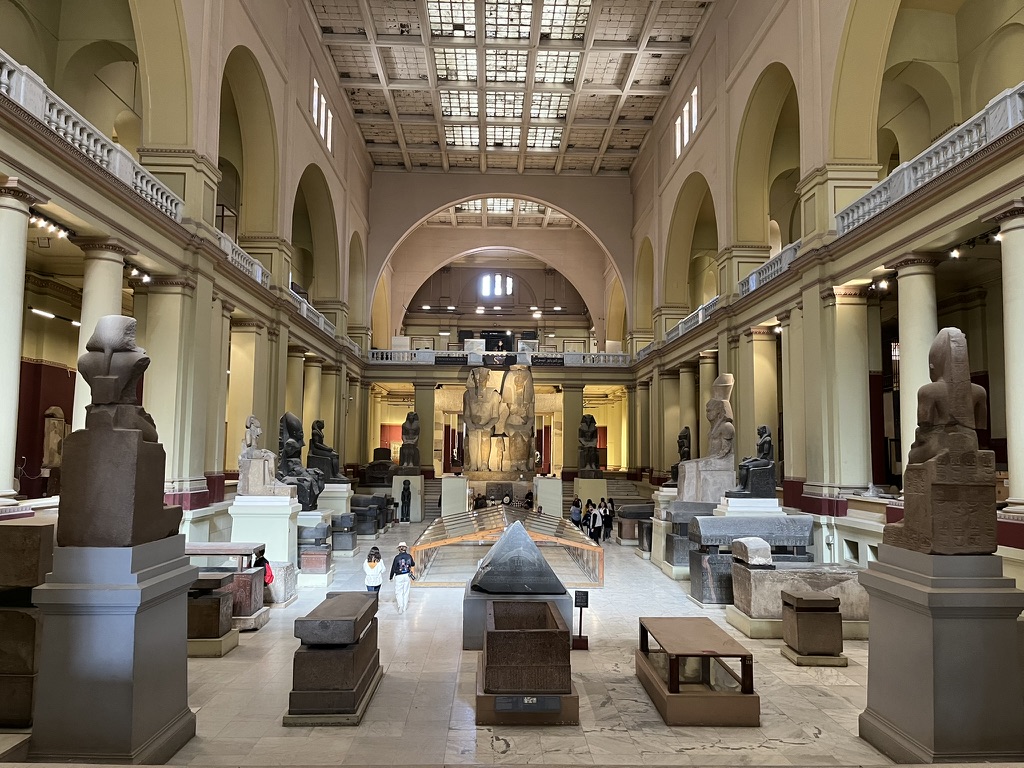
Afternoon flight back to Cairo. A final visit to the original Egyptian Museum on Tahrir Square — still one of the world’s most important collections — and a last souvenir run through Khan el-Khalili before the flight home.
💡 Don’t Reverse the Route
Start in Cairo, not Luxor. Moving from Cairo south to Aswan and then to Luxor follows the natural progression of Egyptian architectural history — from the Old Kingdom monuments at Giza toward the New Kingdom temples of Luxor. The historical narrative is far easier to absorb in this direction. Traveling in reverse can make the chronology feel muddled.
IV. Destination Deep-Dive: Logistics and Logic
Cairo and Giza: The Strategic Base
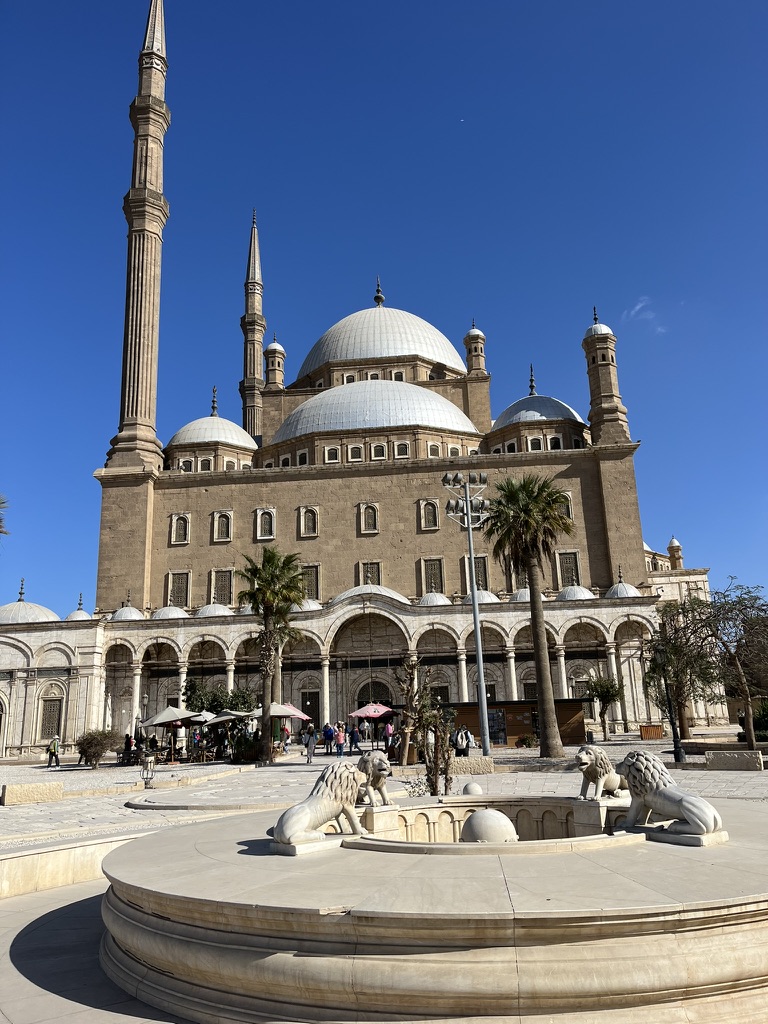
Where to stay: Stay in central Cairo, not Giza. The Giza hotels offer pyramid views, but the neighbourhood is isolated and has limited good food options. Central Cairo gives you walkable streets, a wider range of restaurants, and the Metro — which is genuinely useful for bypassing traffic to Coptic Cairo.
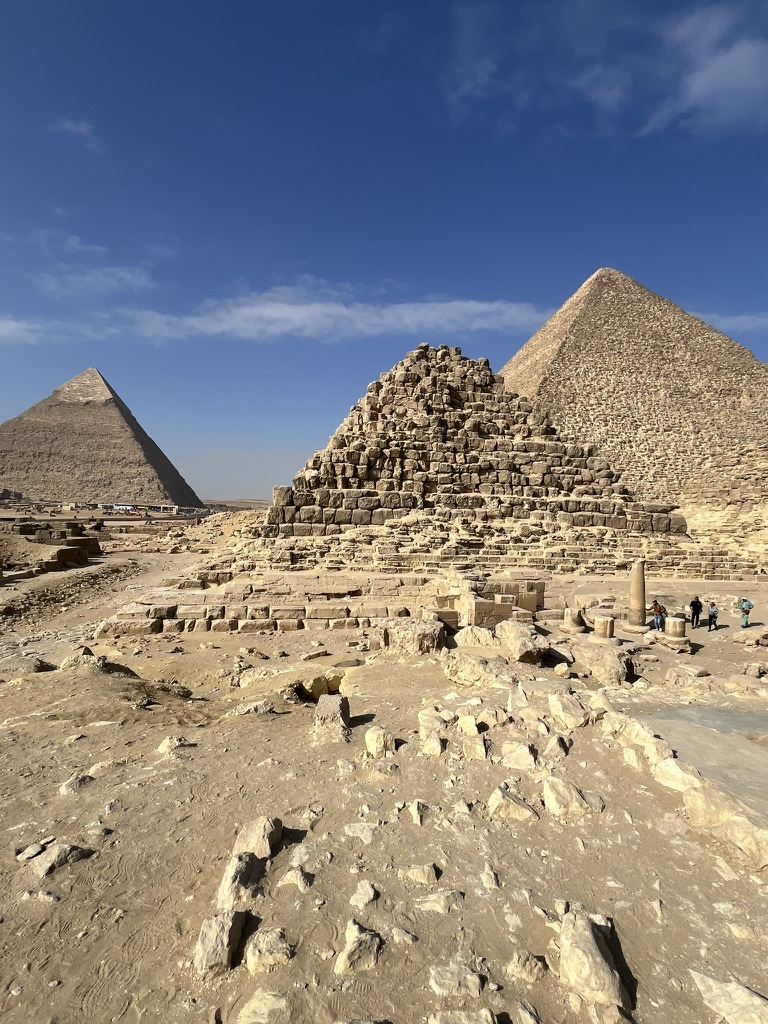
Navigating the Giza Plateau: The new internal shuttle bus system has transformed the experience here. Before my trip, I read countless accounts of aggressive vendors and chaotic crowds. In practice, the free shuttles run frequently between each pyramid and viewpoint, and the organisation is far better than older reviews suggest. You don’t need a guide to navigate the space — though a good one, if you find one, adds real depth.
Getting around Cairo: Uber works reliably across central Cairo and is the right tool for 90% of your journeys. At Cairo Airport specifically, Uber cannot reach the arrivals curbside — that lane is taxis only. Walk to the parking lot (follow signs for Section B5), wait inside the air-conditioned terminal until your driver has actually arrived, and approach only then. Being met by touts while waiting in the open is avoidable if you stay inside until the last moment.
Late-night arrivals: For arrivals after midnight, a pre-booked hotel transfer at around $15 is worth the peace of mind. Navigating the airport parking lot at 2 a.m. to find an Uber, while managing luggage and jet lag, is a solvable problem — but not one worth solving on your first night.
💡 Buying GEM Tickets
It is recommended to buy tickets for the Grand Egyptian Museum (GEM) on the official website to guarantee availability on the day of visit. Although if you are not planned, there’s also some ticket windows open on site, and you can purchase tickets online over there, providing there is availability for the day.
Aswan and Abu Simbel: The Efficiency Choice
Fly, don’t train. Domestic flights between Cairo and Aswan cost similar to the sleeper train for foreign travelers — sometimes less, using the EGP currency hack on EgyptAir. The flight takes one hour. The train takes twelve or more and is considerably less comfortable. The calculation is simple.
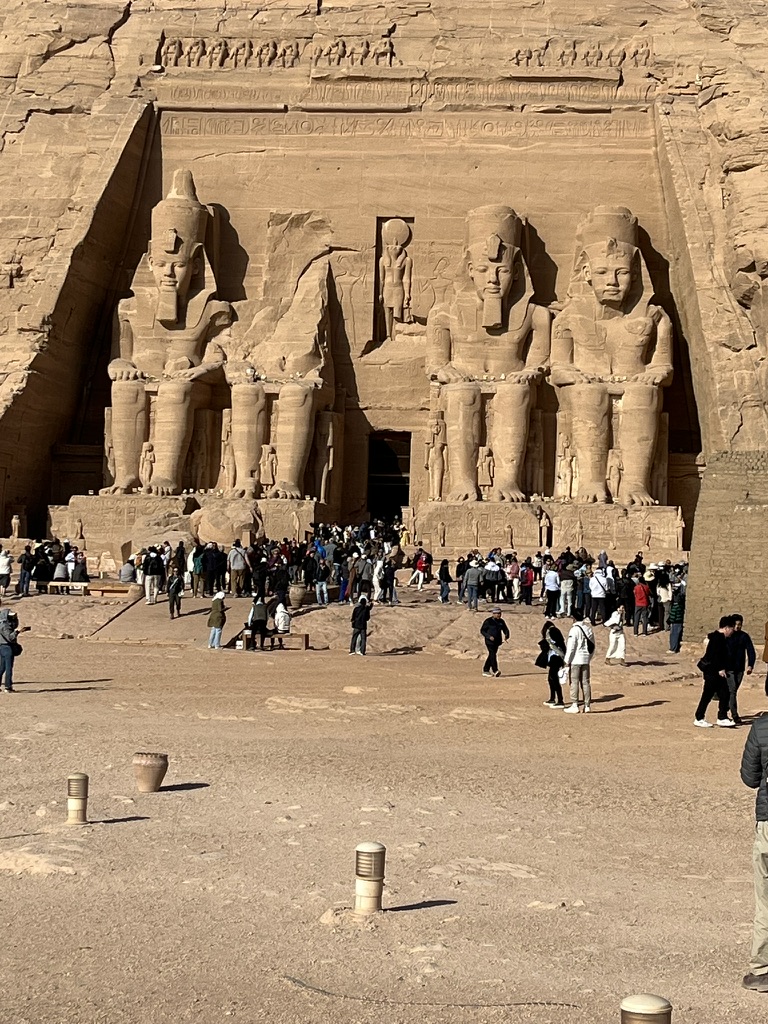
Abu Simbel timing: Most cruise groups depart Aswan at 4:00–4:30 a.m. to arrive before the main crowd wave. If you’re visiting independently, arriving around 10–11 a.m. — after the convoy has cleared — is genuinely quieter and better for photography. The tradeoff is that you’ll need to arrange your own transport and possibly overnight accommodation in Abu Simbel. For cruise passengers, the early convoy is the only practical option — but even arriving with the group, the site is extraordinary enough that timing barely diminishes it.
Aswan transport: Uber does not operate in Aswan. InDrive is available, but drivers sometimes ask you to meet them outside the airport perimeter — trust your instincts if a pickup arrangement feels off. Regular taxis are readily available and drivers are happy to negotiate if you show them a reference price from an app.
The Nile Cruise: Logistics and Pricing
Direction: Always book Aswan → Luxor (downstream). The upstream reverse route adds at least a day and the pace feels slower against the current. Four days and three nights downstream is the standard and the right call.
Booking strategy: Group cruise packages booked through platforms like TripAdvisor are practical for most travelers. Solo cabin bookings online are often significantly overpriced. If you’re flexible on dates, heading to the Aswan docks directly and booking last-minute can yield much better rates — boats frequently have unsold cabins the day before departure.
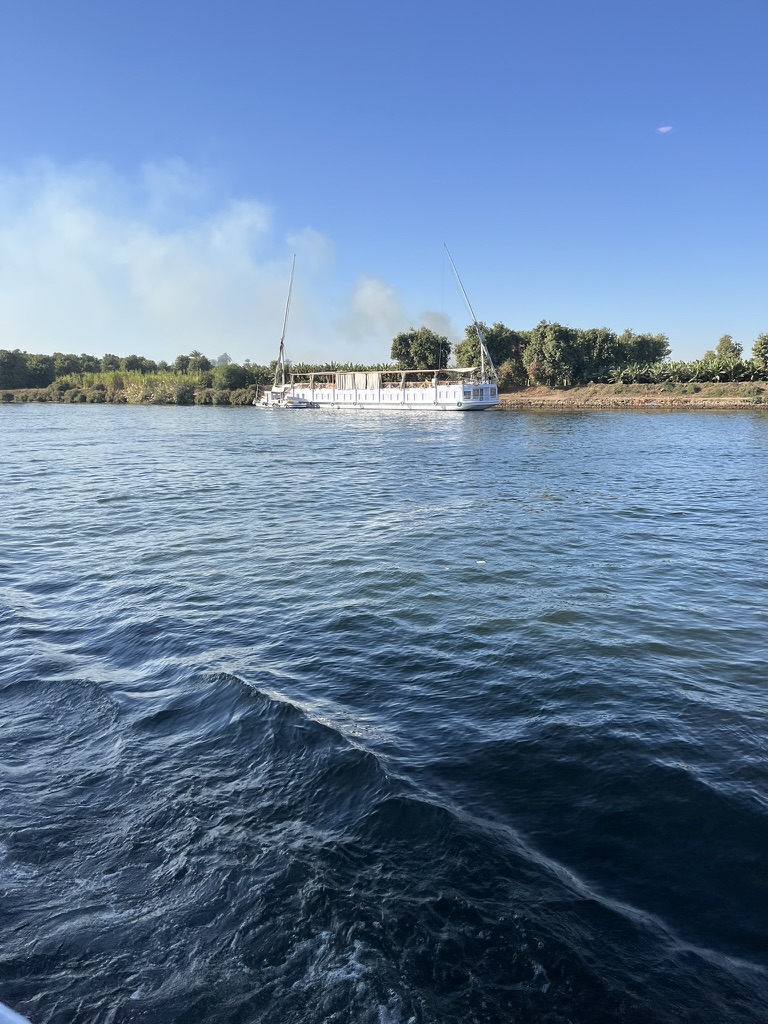
The “transport only” approach: You’re not obligated to do every group excursion the cruise includes. On our cruise, we joined the group for Aswan’s highlights and Abu Simbel, but once the boat reached Luxor, we split off and explored the Valley of the Kings independently — arriving after the tour groups had already cycled through. The cruise becomes a comfortable floating hotel and the group tours become optional extras rather than obligations.
Luxor: The Ticket Strategy
Luxor’s entry costs add up quickly if you’re not paying attention. The decision between individual tickets and a Luxor Pass depends entirely on how many days you have and how many sites you plan to visit.
| Option | Cost | Covers | Best For |
|---|---|---|---|
| Individual tickets | Pay per site | Your chosen sites only | 2 days or fewer, “Big Three” only |
| Standard Luxor Pass | $130 USD | All sites for 5 days (excl. Seti I & Nefertari tombs) | 3+ days, moderate tomb interest |
| Premium Luxor Pass | $250 USD | Everything, including all premium tombs | Serious tomb hunters, 3+ days |
If you’re visiting only Karnak, Luxor Temple, and the Valley of the Kings, individual tickets are cheaper. If you’re staying three or more days and plan to visit the West Bank sites — which I strongly recommend — run the math on the Standard Pass.
💡 The 50% Discount Rule
If you already hold a Cairo Pass, you receive 50% off your Luxor Pass (and vice versa). You must present the physical pass and a photocopy of your passport to claim this — it cannot be done digitally. Worth planning around if you’re buying both.
⚠️ Warning
The Valley of the Kings on-site cafeteria sells little beyond overpriced chips and biscuits. Bring a packed lunch and water.
💡 Buying Tickets
You can buy Luxor attractions tickets online at egymonuments.com. But in general, it is very easy to buy tickets on site, which is more flexible.
To buy tickets for the lesser known attractions such as Medina, Nobles and Habu, one need to go the the west bank ticket office, located near the turn off to the Valley of the Kings. often referred to as the Antiquities Inspectorate Ticket Office.
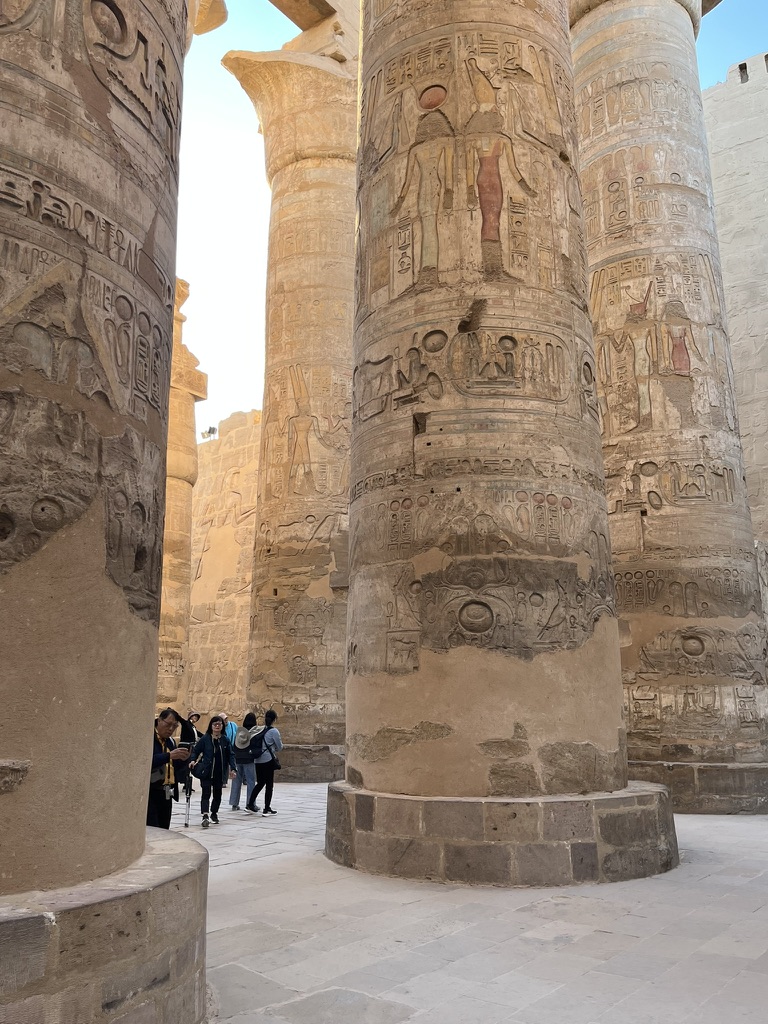
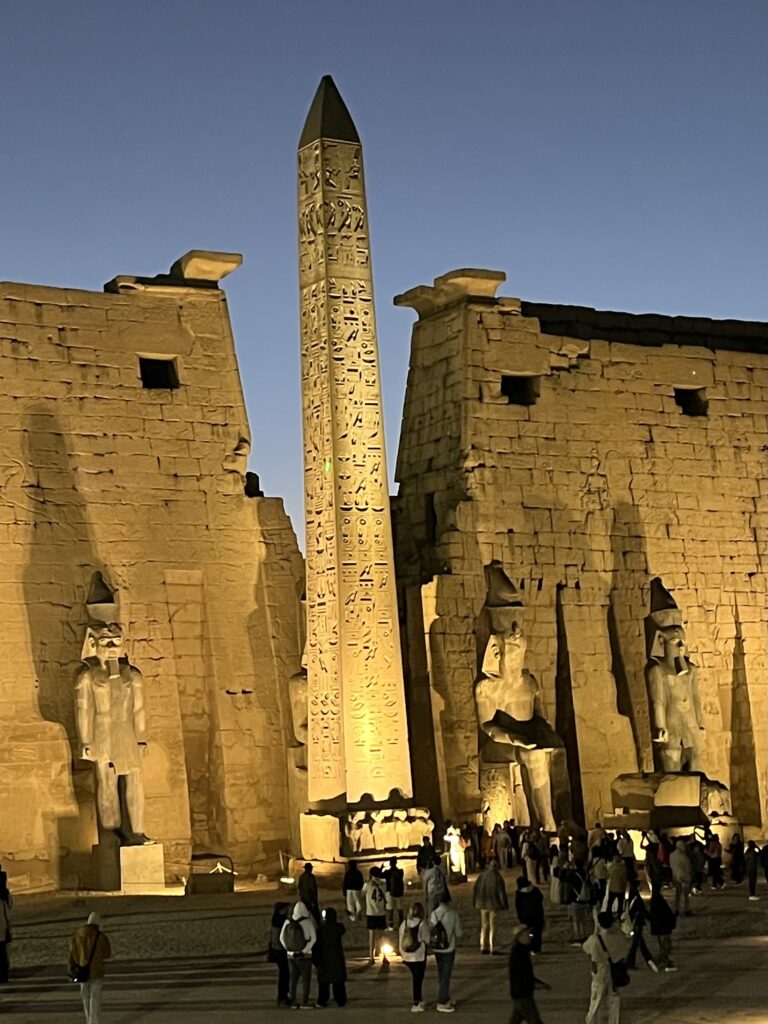
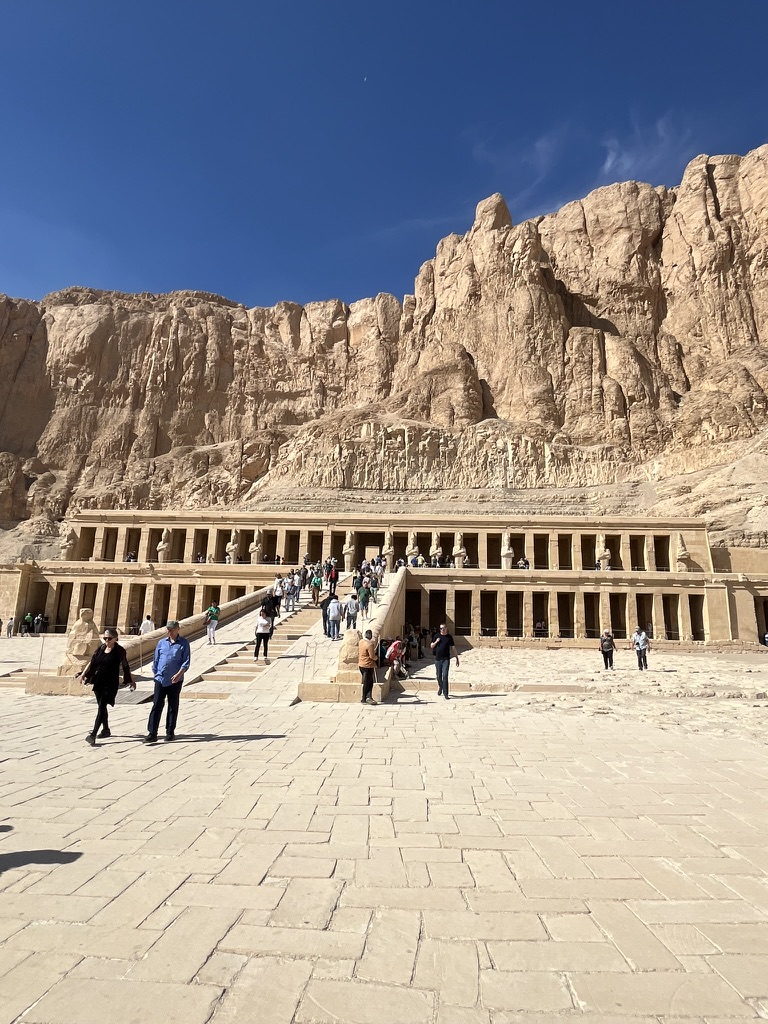
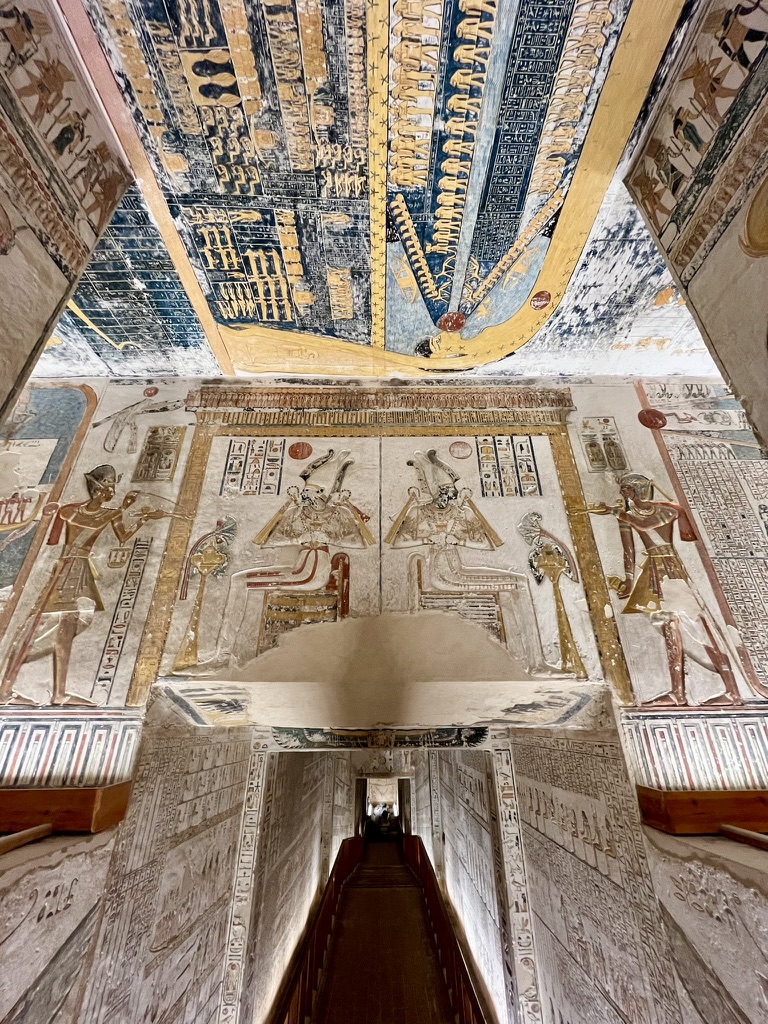
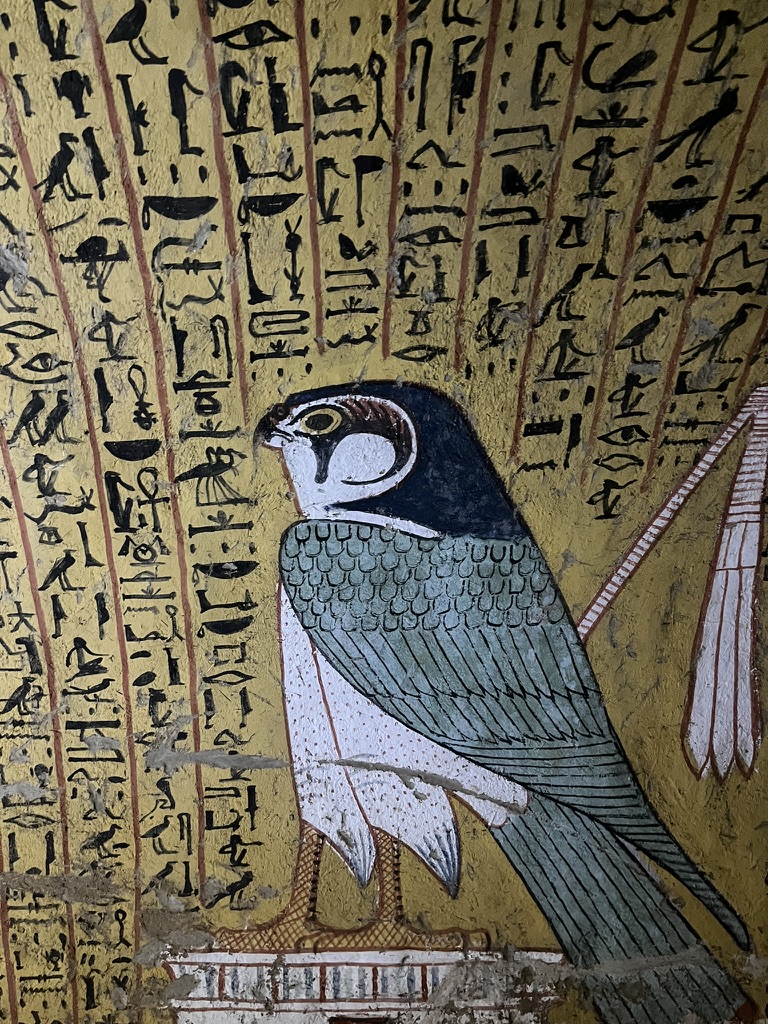
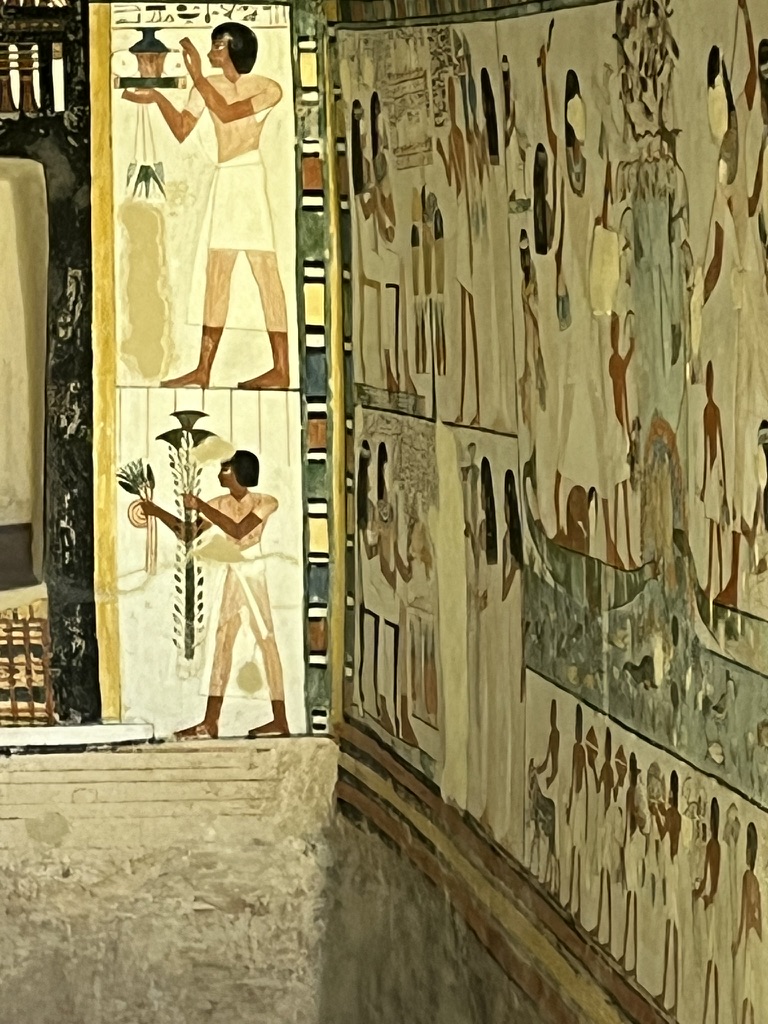
Wall paintings from the Tombs of the Nobles in Luxor, depicting offerings and agricultural rituals.
V. The Self-Guided Mindset: Survival Skills
Traveling Egypt without a pre-booked tour is one of the most rewarding things you can do — but it requires a specific mindset. You aren’t just a spectator; you are an active participant in the beautiful chaos. Here is the real-talk I wish I’d had before stepping off the flight.
Safety vs. Intensity
The most common question I get: “Is it safe?” Yes. We walked Cairo, Luxor, and Aswan solo, including at night, and never felt physically threatened. The distinction worth understanding is that Egypt is loud and persistent, but not dangerous. Most “scams” are simply sales tactics — someone walking you toward a shop, someone claiming to know you from the hotel. The people deploying these tactics are harmless. They just want a commission.
The moment that shift in understanding happens — usually somewhere around Day 2 — Egypt becomes significantly more enjoyable.
The “La, Shukran” Rule
Learn two words before you land: La, Shukran — No, thank you. Say it calmly, keep walking, and don’t elaborate. The moment you stop to explain why you don’t want the papyrus or the carriage ride, you’ve started a negotiation. A firm, polite “La, Shukran” with unbroken forward momentum ends almost every unwanted interaction in seconds. Breaking eye contact immediately after saying it also helps considerably.
Crossing the Street
Cairo traffic operates by its own logic, and crossing a six-lane road with no crosswalk is a genuine skill that takes a day or two to develop. The secret: walk at a steady, predictable pace and don’t hesitate. Drivers calculate their path around your current trajectory. If you stop or jump unexpectedly, you break their calculation. By Day 3 in Luxor, a local cyclist passed us and called out without turning his head: “Wow, you walk like an Egyptian.” It becomes instinct faster than you’d expect.
The Nile Cruise “Missing Boat” Mystery
If you return to the dock and your cruise ship appears to be gone — don’t panic. Boats dock side-by-side, three or four deep. Yours is almost certainly hidden behind another one. You may have to walk through the lobbies of two other ships to reach your own. This is normal, expected, and slightly surreal the first time it happens.
The Cairo Transport Matrix
Choosing the right transport tool in Cairo saves significant time and frustration. The options each have a specific use case:
- Uber — the right choice for 90% of Cairo journeys. Fixed price, no broken-meter arguments, digital record of every ride. At Cairo Airport, walk to Parking Section B5; Uber cannot reach the arrivals curbside.
- Cairo Metro — underrated and genuinely useful. Clean, cheap, and the only way to bypass the surface gridlock. The stop near Coptic Cairo makes it the obvious choice for that neighbourhood.
- InDrive — use this in Aswan where Uber doesn’t operate. The quoted price also works as a baseline for negotiating with local taxis, which is sometimes the more practical option near the airport.
- Taxis — useful when apps fail or when you’re leaving Giza. Always establish the price before you get in. Always look for marked vehicles with visible identification.
⚠️ Avoiding the 2026 Uber Trap in Giza
The area around the Giza Plateau and the Grand Egyptian Museum has become a known hotspot for a specific ride-share scam. Here’s exactly how it plays out — and how to handle it.
The pattern: A driver accepts your ride in the app, then immediately sends a message asking for extra cash — “for traffic,” “because he’ll return empty,” or offering a flat cash rate instead of the app price. This is always a red flag. Legitimate Uber drivers do not negotiate through the app.
If you’re already in the car and a driver starts demanding extra money, use this script: “I only pay the price shown in the app. Please stop here so I can get out.” Say it calmly. Most drivers back down immediately once they realise you’re not a soft target.
If the app keeps assigning the same driver after you cancel, walk 50 yards away from the main entrance before opening the app again. Alternatively, find a marked taxi, show the driver your destination on Google Maps, and negotiate from the InDrive price as your baseline.
We encountered this scam twice at Giza — both times resolved by canceling immediately and waiting three minutes for a legitimate driver. Don’t let it rattle you. It’s an inconvenience, not a threat.
Money and Connectivity
Cash remains essential throughout Egypt. ATMs from the National Bank of Egypt (NBE) and Banque Misr are the most reliable. Use a fee-refunding debit card where possible (Charles Schwab is the most widely recommended option for US travelers). For SIM cards: buy a physical Vodafone or Orange SIM in the luggage hall right after landing — around $10 for 30GB — rather than relying on an eSIM. Signal inside thick-walled temples is noticeably better on a physical card.
Arabic Numerals: The Practical Shortcut
Egyptian Arabic numerals look different from the 0–9 system most Western travelers use. Three are especially worth memorizing before you arrive: ٥ = 5, ٧ = 7, ٨ = 8. These are the ones most likely to trip you up when matching an Uber license plate in a crowded car park. This small skill — which takes about ten minutes to learn — pays dividends repeatedly across the whole trip.
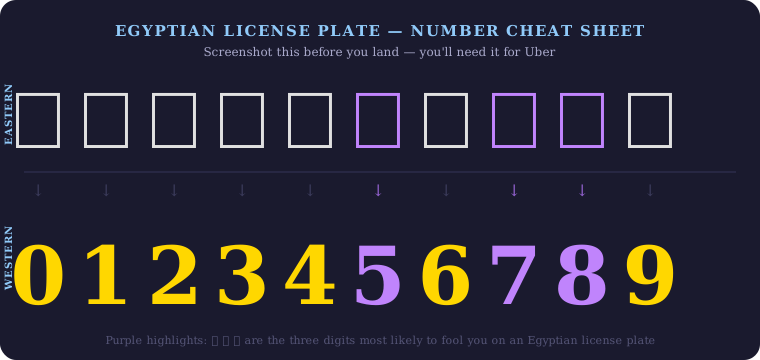
Screenshot this before your trip — it covers situations where you’ll need an answer fast.
📋 The “Save This” Egypt Cheat Sheet
| Category | The Pro Move |
|---|---|
| Cairo Airport Uber | Walk to the parking lot (elevators from arrivals level). The curb is taxis only. |
| Giza Uber | Cancel immediately if driver messages first. If keeps getting messages, negotiate with a taxi driver offering 1.5 to 2 times the uber price. |
| Taxi fallback (Giza) | Marked white taxi — agree price first — $10–15 to downtown Cairo. |
| SIM Card | Buy Vodafone or Orange in the luggage hall. Physical SIM beats eSIM for price and signal. |
| Arabic numerals | ٥ = 5, ٧ = 7, ٨ = 8 — screenshot the table to identify Uber plates. |
| ATM | National Bank of Egypt (NBE) or Banque Misr only. Skip small bank ATMs. |
| Small bills | Always keep 5s and 10s for tips, bathrooms, and street food. |
| Crossing streets | Walk steady and predictable. Don’t hesitate. Shadow a local if stuck. |
| Sales pressure | “La, Shukran” + keep walking. Works every time. Stay calm. |
| Khan el-Khalili | Set Uber to Bab al-Futuh, not the market itself. Walk in from there at dusk. |
| Restaurants | Ask “credit card?” before sitting. One block off tourist path = much better food. |
| EgyptAir booking | Switch website currency to EGP for lower prices. Check flight times manually — no email alerts. |
| Where to stay | Downtown Cairo, not Giza. Better food, walkable, metro access, evening energy. |
| Late night Uber | Cairo never sleeps. Allow 5-minute buffer. Cancel and rebook if driver messages for cash. |
| Valley of the Kings | Bring a packed lunch. The on-site café is expensive and the options are limited. |
| Aswan/Luxor transport | Uber doesn’t operate here. Use InDrive price as a negotiating baseline with taxis. |
| “La, Shukran” | No, thank you. Learn it, use it, keep walking. |
VI. Nile Cruise vs. Land Travel: How to Choose
If Cairo is the heart of Egypt, the Nile is its spine. The decision of how to travel between Aswan and Luxor is the single biggest logistical choice you’ll make — and the answer depends entirely on what kind of traveler you are.
The Nile Cruise: The Floating Hotel
Most self-guided travelers take the 4-day/3-night downstream route from Aswan to Luxor. The cruise bundles your hotel, meals, and transport to riverside temples into one package. You unpack once, the logistics are handled, and the temples at Kom Ombo and Edfu appear directly from the river bank — accessed by short walks from the dock rather than car journeys.
The constraint is the schedule. The boat leaves when it leaves, whether you’re ready or not. If you want to linger at a temple, you can’t — not without missing the boat.
One approach worth considering: use the cruise primarily as transportation rather than as a guided tour. Join the group for the temple stops — Philae, Kom Ombo, Edfu — but once the boat reaches Luxor, go independent. The Valley of the Kings visited at 11 a.m., after the morning tour convoys have cleared, is a different experience from the one the cruise group gets at 8 a.m. This hybrid approach gives you the river journey without surrendering all of your independence.
The Land Route: Total Freedom
Traveling by private car or train between Aswan and Luxor keeps you fully in control. You can time your arrival at every temple to avoid crowds, stop at sites most cruises skip — the Temple of Khnum at Esna, for instance, with its recently restored colours, is genuinely impressive — and set your own pace throughout.
The tradeoff: you manage all logistics yourself, book separate hotels in both Aswan and Luxor, and — most significantly — you don’t experience the Nile. The river views from a car window are not the same as being on the water.
Comparison at a Glance
| Factor | Nile Cruise | Land Travel |
|---|---|---|
| Effort level | Low — logistics are handled | High — you manage every stop |
| Pace | Fixed schedule | Fully flexible |
| Cost | Higher (food and lodging included) | Lower (pay as you go) |
| Crowd control | Difficult — you arrive with the convoy | Easy — you choose your timing |
| The Nile experience | ✅ Yes | ❌ No |
💡 A Note on “Seasickness”
The Nile cruise boats are large and the river is calm. If motion sickness is a concern, it genuinely shouldn’t be here. The boat is mostly docked — you’re not sailing for days on end, but moving between stops with long periods moored at the bank. Most people who board with seasickness concerns are pleasantly surprised.
💡 The Disappearing Boat
If you book a cruise, remember that boats dock side-by-side. To get to the shore, you may have to walk through the lobbies of two or three other ships! If you return to the dock and your boat “isn’t there,” it’s likely just hidden behind another one.
The verdict: Choose the cruise if you want three days of handled logistics and want to experience the Nile. Choose land if you’re a photographer or serious history researcher who needs full control over timing at every site. For most first-time travelers to Egypt, the cruise is the right call — and the hybrid approach (cruise for transport, independent for Luxor) gives you the best of both.
VII. Final Thoughts: Is Self-Guided Egypt Worth It?
After 12 days of decoding licence plates in Arabic numerals, navigating the Uber trap at Giza, crossing Cairo roads with steadily growing confidence, and standing in front of things that have no right to be as extraordinary as they are — the answer is yes. Unambiguously.
But the honest version of that answer comes with a caveat: only if you go with the right mindset.
What Self-Guided Egypt Gives You That a Tour Can’t
The group tour experience is a very good version of Egypt. The self-guided experience is a different country. By navigating independently, you accumulate the small moments that no itinerary can schedule: the conversation with an Uber driver about Cairo traffic that turns into a genuine exchange. The koshari restaurant three streets from the hotel that has no Google presence and no English menu. The Valley of the Kings at 11 a.m. with two other visitors in a tomb painted 3,000 years ago. The Deir el-Medina artisan tombs — some of the most vivid paintings in Egypt — with nobody else around.
These things require time, patience, and a willingness to figure things out in the moment. 12 days gives you enough of all three.
The Intensity Warning
Egypt is not a relaxing holiday. It is an adventure with a high stimulation level. The traffic is genuinely chaotic. The vendor persistence is real. You will be offered a camel ride, a papyrus, a perfume oil, and a “special local price” many times per day. If your baseline expectation is predictability and quiet, Egypt will frustrate you.
If your expectation is to be challenged, surprised, and to come home with stories you’ll tell for years — Egypt is unparalleled.
Final Tips for 2026
Patience is the most important thing you can pack. A slow queue, a persistent vendor, a delayed domestic flight — none of these are worth the mood they could ruin. A calm “La, Shukran” and refocused attention on the monument in front of you is the correct response to almost every frustration Egypt produces.
Fly whenever you can, and book in EGP. The EgyptAir currency hack on domestic routes saves real money, and the flights save real time. A one-hour flight versus a 12-hour train is not a close comparison.
Consider the hybrid approach. Use Uber and self-navigation for Cairo and Luxor. Take the Nile cruise with a group for the river section — the cruise guide’s expertise on temple history genuinely enriches the experience in ways that self-reading doesn’t replicate. Having an expert Egyptologist explain the hieroglyphs at Kom Ombo makes the stone come alive. You don’t have to choose between independence and expertise — you can use both, in the right places.
VIII. Frequently Asked Questions
Is it safe to travel to Egypt without a tour guide?
Yes — thoroughly and consistently. We walked Cairo, Luxor, and Aswan solo, including at night, without ever feeling physically threatened. The risks in Egypt are overwhelmingly of the “persistent sales pitch” variety rather than anything more serious. Using Uber in Cairo, staying in reputable hotels, and mastering “La, Shukran” covers the vast majority of situations independent travelers encounter.
How do I avoid Uber scams at the Giza Pyramids?
The most common scam is the in-app message asking for extra cash before or during the ride. The fix is simple: if a driver messages you to renegotiate the price, cancel immediately and request another. If you’re already in the car, say calmly that you only pay the app price and ask to be let out. Most drivers back down immediately. Also worth memorising: Arabic numerals ٥ = 5, ٧ = 7, ٨ = 8 — essential for matching licence plates in a crowded car park outside GEM.
What is the best way to get from Cairo Airport to the city?
Uber is the most reliable option, but you must walk to the parking lot — Uber cannot reach the arrivals curbside, which is reserved for taxis. Follow signs to Section B5 and wait inside the terminal until your driver has actually arrived before heading out. For late-night arrivals (after midnight), a pre-booked hotel transfer at $15–20 is worth the simplicity.
How many days do I really need in Egypt?
For a genuinely immersive trip that doesn’t feel rushed: 10–12 days. Ten days is workable if you’re disciplined. Twelve days is the version where you stop rushing and start absorbing — the West Bank sites in Luxor, the extra afternoon in Islamic Cairo, the buffer when something inevitably runs late.
Where is the best place to eat near the Pyramids?
Skip the vendors and tourist traps directly outside the Giza gates. Head to the Grand Egyptian Museum complex instead — Zooba and Bittersweet both offer high-quality Egyptian and international food in a clean, air-conditioned environment. We had lunch at Zooba mid-way through our GEM visit and dinner at Bittersweet afterward. Both were excellent and significantly better than anything near the pyramid entrance.
📍 Related Dairies and Guides
- [My 12-Day Egypt Diary (Part 1)]: Pyramids, Planning, and the Chaos of Cairo — arrival, the Citadel, Coptic Cairo, Giza, the GEM, and getting wonderfully lost in Islamic Cairo.
- [My 12-Day Egypt Diary (Part 2)]: Aswan, Abu Simbel, and Sailing the Nile — the cruise decision, Nubian village, Philae, Abu Simbel at dawn, Kom Ombo, Edfu, the Esna Lock, and arriving Luxor by river.
- [My 12-Day Egypt Diary (Part 3)]: Luxor’s Tombs and the Journey Home — Karnak, Luxor Temple, the Valley of the Kings, Hatshepsut, Deir el-Medina, Medinet Habu, feluccas at sunset, and a 3 a.m. farewell to Cairo.
- [Egypt Cultural Guide] — hospitality, food, hidden gems, and what Egypt gives you beyond the monuments.
- [Egypt Transport & Safety Survival Guide] — Uber logistics, the Giza scam breakdown, ATMs, flights, and the full cheat sheet.
If you’re working with less time, you can still experience Egypt. See the [3, 7, and 9-Day Self-Guided Routes] for a practical library of compressed itineraries built for independent travelers.

Hi, I’m Frank J – Egypt Self-Guided Travel. I explore Egypt solo and share tips, stories, and practical advice to help you plan your own adventures safely and enjoyably.